The best CGI movie moments have left cinemagoers transfixed over the years, drawing viewers into seemingly impossible fantasy worlds and presenting astounding characters. Visual effects in movies have changed a lot since they started to become commonplace in the 1980s, and the art of creating realistic looking environments, monsters, creatures and buildings continues to evolve – as we'll see in our collection of the best movie CGI below.
Many 2D and 3D movies rely on the creative talent of special effects companies to produce stunning VFX that enhances the storyline and immerses the audience. Industrial Light & Magic and Weta are two of the biggest names working in VFX but there are many smaller companies and countless individual VFX artists involved.
Below, we've chosen our personal top CGI movie moments from both old and new films. Read on to see if your favourite made the cut – and let us know if it didn't. Meanwhile, if you're a digital artist and you feel motivated to upgrade your setup, see our roundup of the best 3D modelling software, or best laptops for 3D modelling.
The best CGI movie moments
01. Dune (2021)
- Director: Denis Villeneuve
- VFX: DNEG
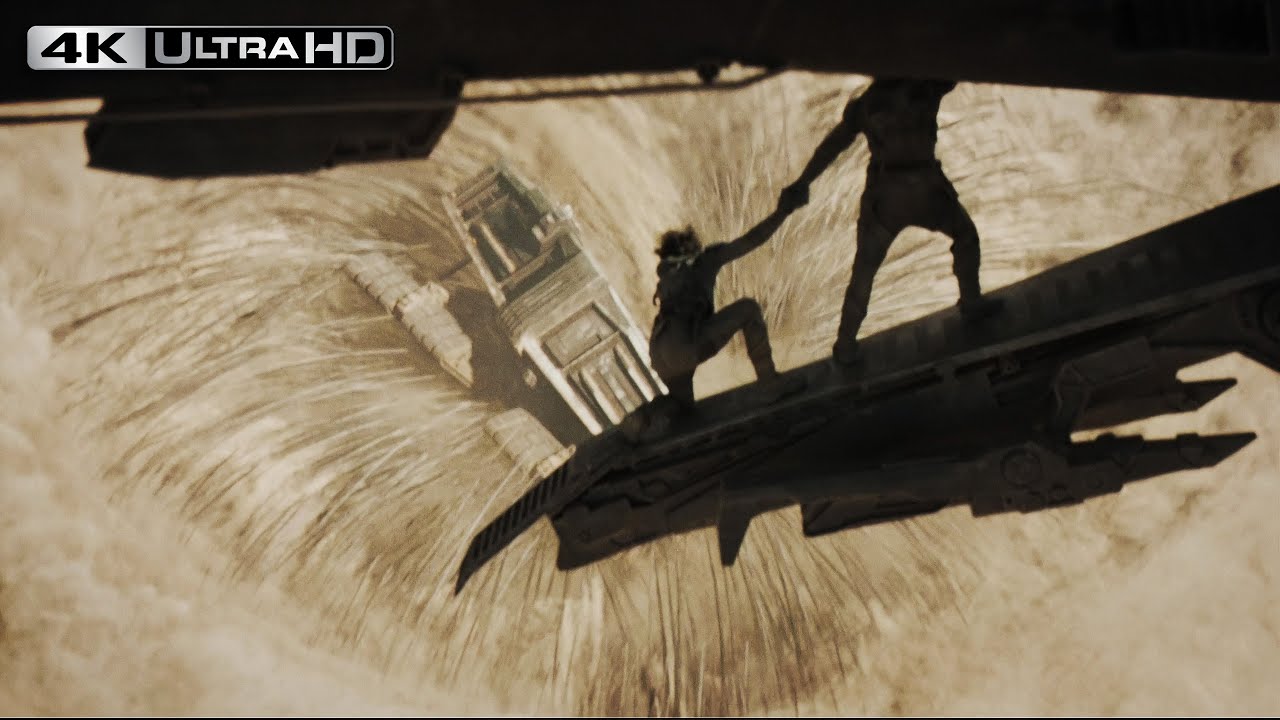
Released in 2021, Denis Villeneuve's Dune wasn't the first time Frank Herbert's sci-fi epic was brought to the big screen, but it was a lot more convincing than David Lynch's poorly received production. Of course, that wasn't only due to CGI, but great GCI did play a part. It made the landscape of Arrakis feel real, from small details to the very big sandworm. See our roundup of Dune design secrets.
Killer sequence: That sandworm. Incredible VFX made this fantastical monster feel real and created a sense of its sheer size as well as its speed and power under the sand.
02. The Irishman (2019)
- Director: Martin Scorsese
- VFX: Industrial Light & Magic
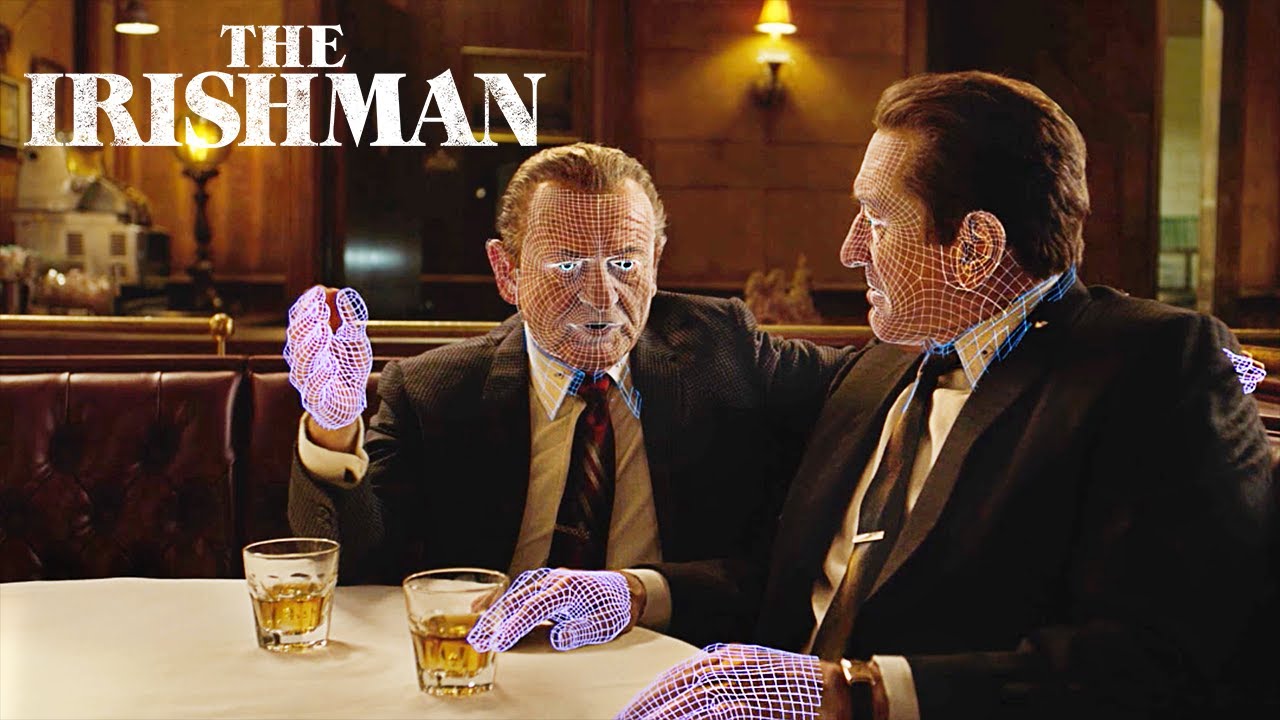
Martin Scorsese's The Irishman might not be the first film that comes to mind when you try to think of the best CGI movies. However, the film shows just how much de-aging special effects have advanced in recent years.
We know that as a method actor Robert De Niro has gone to extreme lengths to prepare for his roles over the years, but he can't travel in time. Only CGI can do that. In the video above, Netflix reveals how it was done.
03. Interstellar (2014)
- Director: Christopher Nolan
- VFX: DNEG
This fascinating exploration of space travel and the effects of time dilation features some beautiful effects work, including some truly realistic spaceship scenes (mainly done with miniatures) and a scientifically accurate CG representation of the supermassive black hole, Gargantua. But no one expected the final reel, in which astronaut Joseph Cooper (Matthew McConaughey) enters the ‘tesseract’, a four-dimensional construct of interlinked timelines, where he communicates with his daughter, Murph, in the far distant past.
VFX supervisor, Paul Franklin, told Art of VFX that the concept was based on a three-dimensional extension of slitscan photography (used to great effect in 2001: A Space Odyssey). All the elements of Murph’s bedroom were scanned at high-res and used to create a digital version, and from this they generated the multiple extruded timelines. The 3D team had to come up with clever ways of handling the huge data load so they could render it using Houdini’s Mantra. This digital model was used to extend the physical tesseract set to infinity… and beyond.
Killer sequence: That time-warping, mind-bending tesseract.
04. War for the Planet of the Apes (2017)
- Director: Matt Reeves
- VFX: Weta Digital
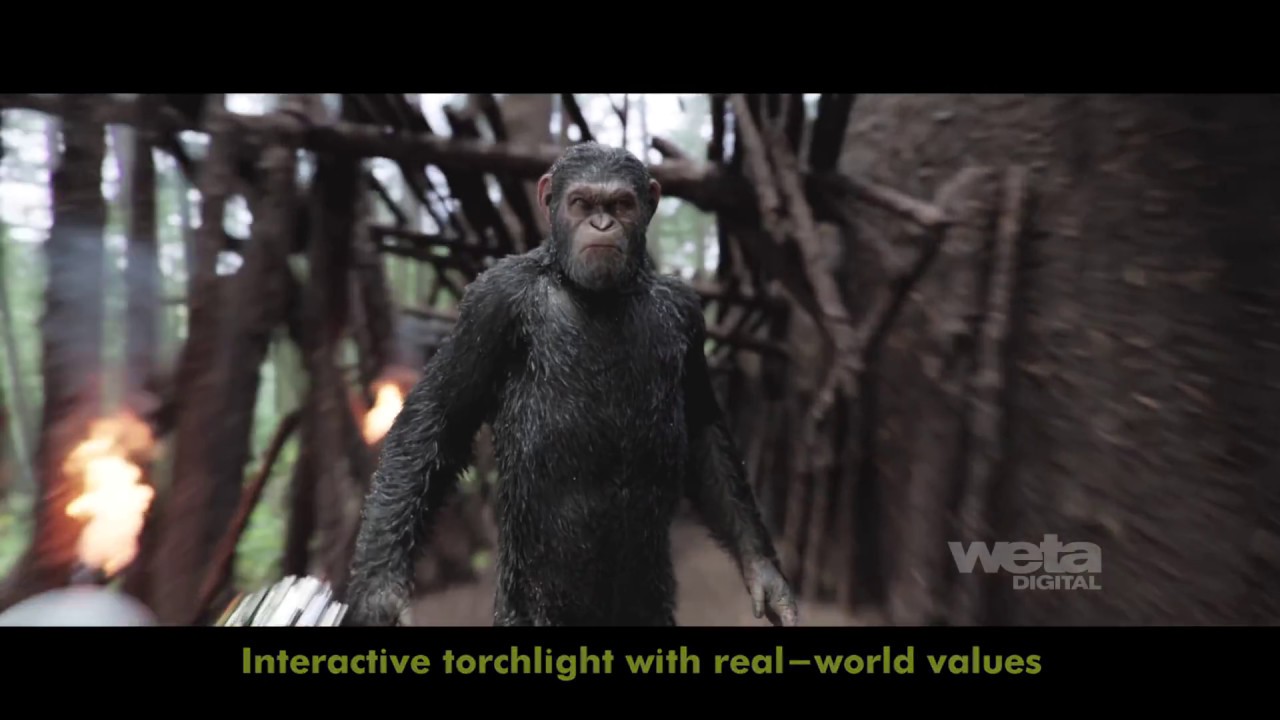
Watch it for the incredibly lifelike apes, of course. We could have included any of the three films, but with War for the Planet of the Apes, Weta Digital really nailed it, taking the levels of realism to new heights. There’s one scene where we see Caesar caged in the Alpha-Omega military base. Through the bars we see Woody Harrelson and his men, alongside a servile gorilla, and in the background is another cage full of apes. It’s night-time, it’s raining, the ape fur is wet and clumpy, and CG characters stand shoulder-to-shoulder with real actors… Despite being a compositor’s nightmare, it’s all totally seamless and utterly believable.
The New Zealand-based VFX house surpassed itself, not only with the incredible fidelity of the ape recreations, but also with entirely digital environments, water, weather and battle scenes. To do so it employed a range of in-house tools – Facets for facial performance capture; Tissue for muscle and skin; Wig for fur; Lumberjack for vegetation; Synapse for smoke and fire; Manuka for physically-based rendering – and the results speak for themselves.
Killer sequence: The final battle is great, but, really, all of the VFX are outstanding.
05 Pirates of the Caribbean: Dead Man's Chest (2006)
- Director: Gore Verbinski
- VFX: Industrial Light & Magic
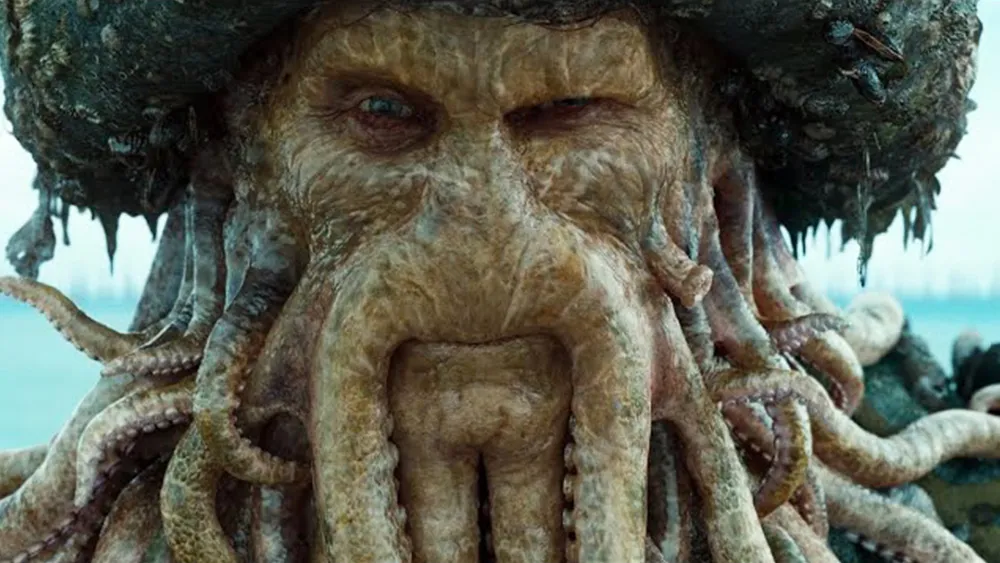
It's quite astounding how well the CGI in Pirates of the Caribbean 2 still holds up. Almost two decades after its release, it still looks amazing today, most notably the portrayal of the Cthulhu-influenced Davy Jones with his beard of tentacles. Industrial Light & Magic worked on the film, and its placement of CGI on top of Bill Nighy’s acting using its IMocap technology set a new standard in realisitic-looking effects. As we learn in the video above, the texture of those tentacles was created by scanning coffee-stained Styrofoam cups!
Killer sequence: When Davy Jones' 46 beard tentacles play the organ.
06. The Jungle Book (2016)
- Director: Jon Favreau
- VFX: MPC, Weta Digital
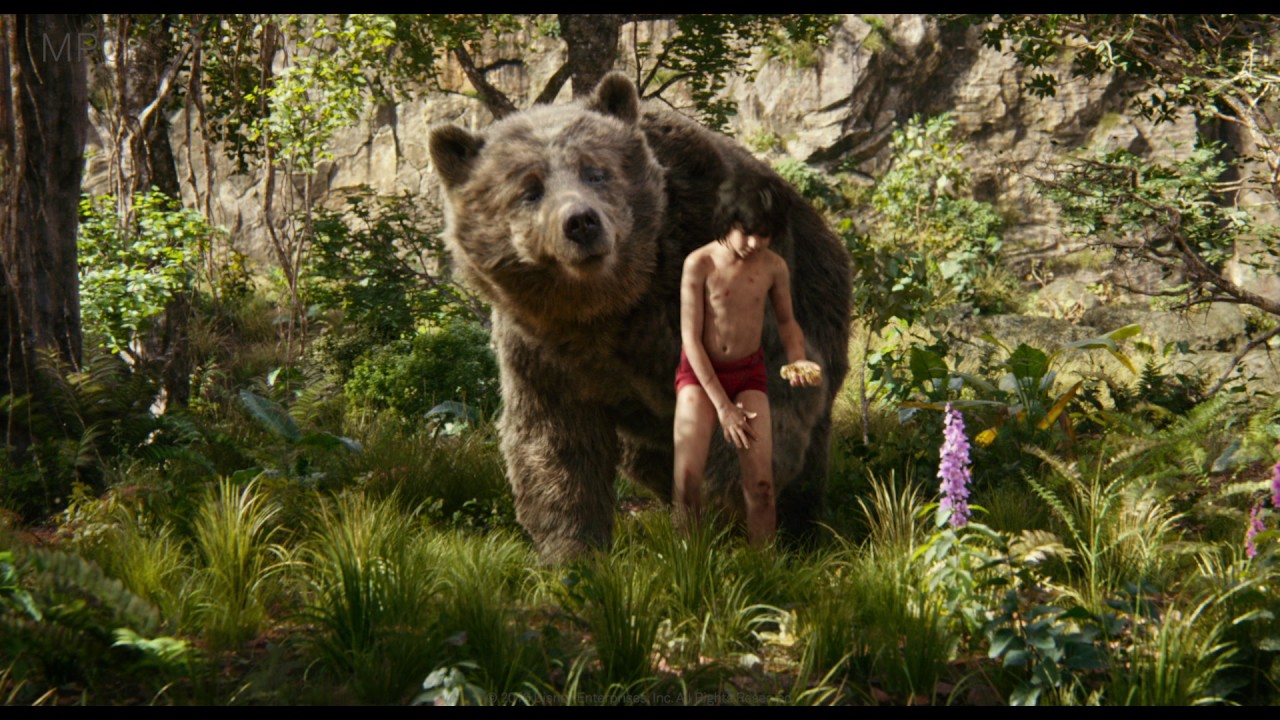
This reimagining of Disney’s classic 1967 animated feature is groundbreaking for the photorealism of its entirely computer-generated environments and animals – plus the fact that its a cracking yarn, beautifully told. Apart from a handful of props, the only real thing in the movie is Mowgli, played by Neel Sethi.
To create the panoply of creatures needed for the film – 54 species and 224 unique animals in all – MPC relied on its in-house hair system, Furtility, while developing new software to generate authentic musculature. Houdini, Flowline and Maya were used for water, mudslides and fire, and in-house program Kali handled object destruction.
The scale of the project meant some of the workload was handed off to Weta Digital, which handled shots of Bagheera the tiger, plus King Louis and the destruction of the monkey temple – which should have been a doddle for the experienced Planet of the Apes team.
Killer sequence: Baloo singing Bare Necessities while floating along an all-CG jungle river.
07. The Walk (2015)
- Director: Robert Zemeckis
- VFX: Atomic Fiction, RodeoFX, Universal Production Partners
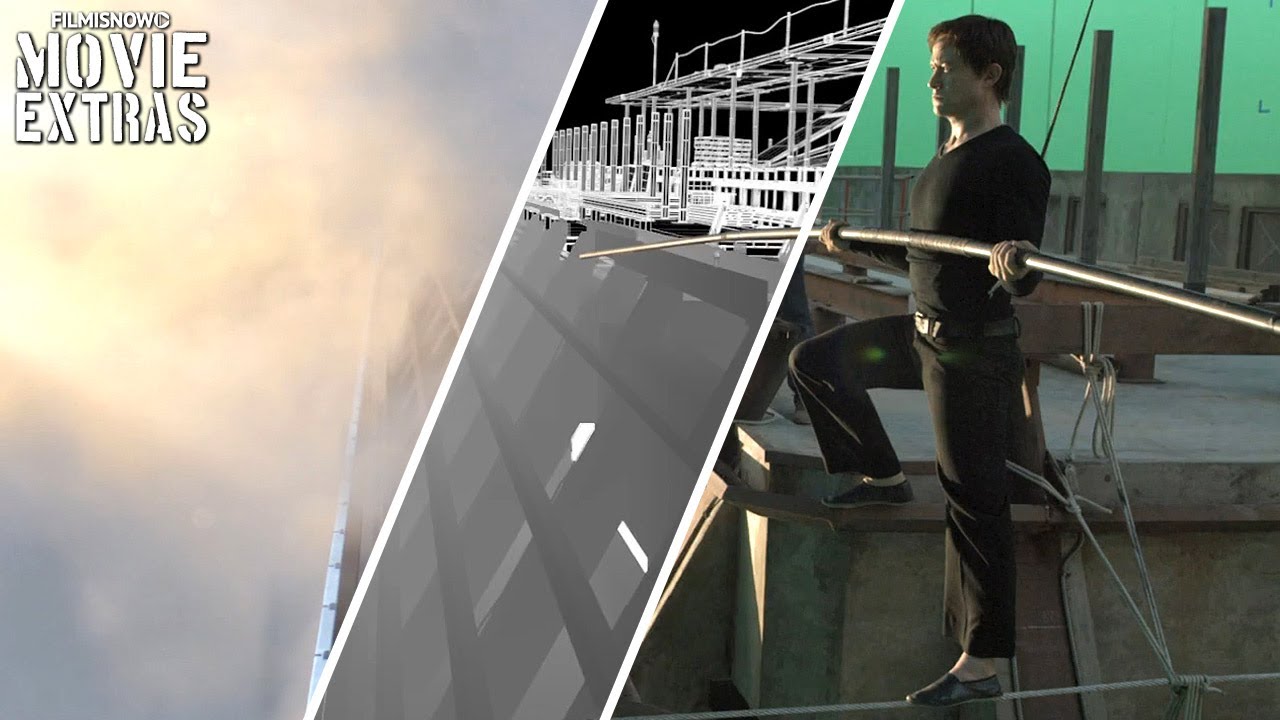
Watch The Walk to experience, at first hand, Philippe Petit’s vertiginous high-wire walk between the twin towers of the World Trade Center in 1974. With the destruction of the towers in 2001, every aspect of the buildings had to be recreated in CG – along with the city of New York stretching off to the horizon. The task fell to three vendors: Atomic Fiction handled the wire walk; RodeoFX saw to the creation of ground-level shots of the towers; and Czech Republic-based UPP contributed a number of shots, including digital recreations of Paris plus head replacements, swapping the face of a real wire walker for that of Joseph Gordon-Levitt.
Overall, the work is stylishly convincing, and the climactic walk – which in reality took place 1,368 ft above World Trade Center Plaza – is just as nerve-jangling and heart-in-mouth as you’d expect. Only the top corner section of the south tower was physically built, surrounded by acres of green screen. Everything else – towers, sky, clouds, cityscape, slack-jawed bystanders, precipitous drop to certain death – is all digital, which was lit in Katana and rendered using V-Ray.
Killer sequence: The dramatic walk between south tower and north tower – which Petit performed six times.
08. Avengers: End Game (2019)
- Director: Anthony Russo, Joe Russo
- VFX: ILM, Weta Digital, DNEG, Framestore, Cinesite, Digital Domain, Rise, Lola VFX, Cantina Creative, Capital T, Technicolor VFX, Territory Studio
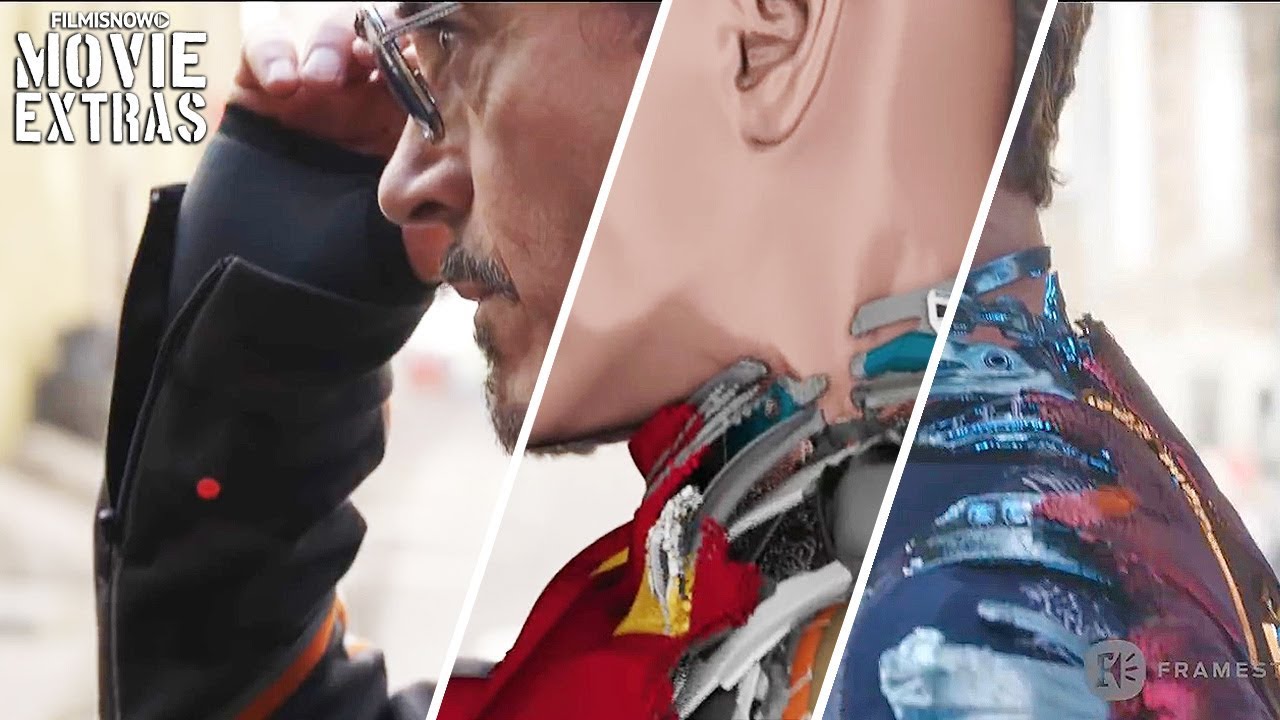
We couldn’t not include one of the biggest blockbusters of all time, which is the culmination of a decade of Marvel Universe movies and a damn fine adventure to boot. If you sat patiently waiting for the post-credit sequence, you’ll know just how many VFX studios worked to deliver this incredible visual feast; after all, there’s barely a single frame without extensive CG work.
Highlights include Digital Domain and Weta Digital’s brilliant work on Thanos, an entirely CG character who takes up an hour of screen time, plus ILM and Framestore sharing duties in bringing ‘Smart Hulk’ to life. For the climactic battles, ILM handled the assault on Wakanda, while Weta Digital was responsible for the spectacular final onslaught against Thanos and his massed armies – both of which were remarkable undertakings, pushing the possibilities of VFX to their limits.
Killer sequence: The final confrontation, which brings 21 films’ worth of characters together for the MCU’s equivalent of the Battle of Helm’s Deep.
09. King Arthur: Legend of the Sword (2017)
- Director: Guy Ritchie
- VFX: Framestore, ScanlineVFX, Method Studios, MPC
Despite a cameo by David Beckham, Guy Ritchie’s retelling of the Arthurian Legends received a critical mauling and its five (five!?) sequels were immediately cancelled. However the good news is that the one sequence worth watching takes place right at the start of the film, as the massed forces of Mordred lay siege to Camelot, a huge stone fortress atop a rocky outcropping. The battle is a truly impressive spectacle with destruction on a massive scale, and featuring some of the most complex simulation work Framestore has ever done.
The remainder of the film is a bit of a mixed bag, but does feature plenty of fantastical goings-on. There’s a battle with a giant snake, and some pretty cool Matrix-influenced sword fighting in the climactic encounter between Arthur and his uncle, the demon knight Vortigern – which you might want to fast-forward to.
Killer sequence: In a scene right out of the Lord of the Rings: The Return of the King, Mordred’s forces approach Camelot in their thousands, accompanied by 300-foot-tall elephants. No, really.
10. Paddington 2 (2017)
- Director: Paul King
- VFX: Framestore, Rodeo FX
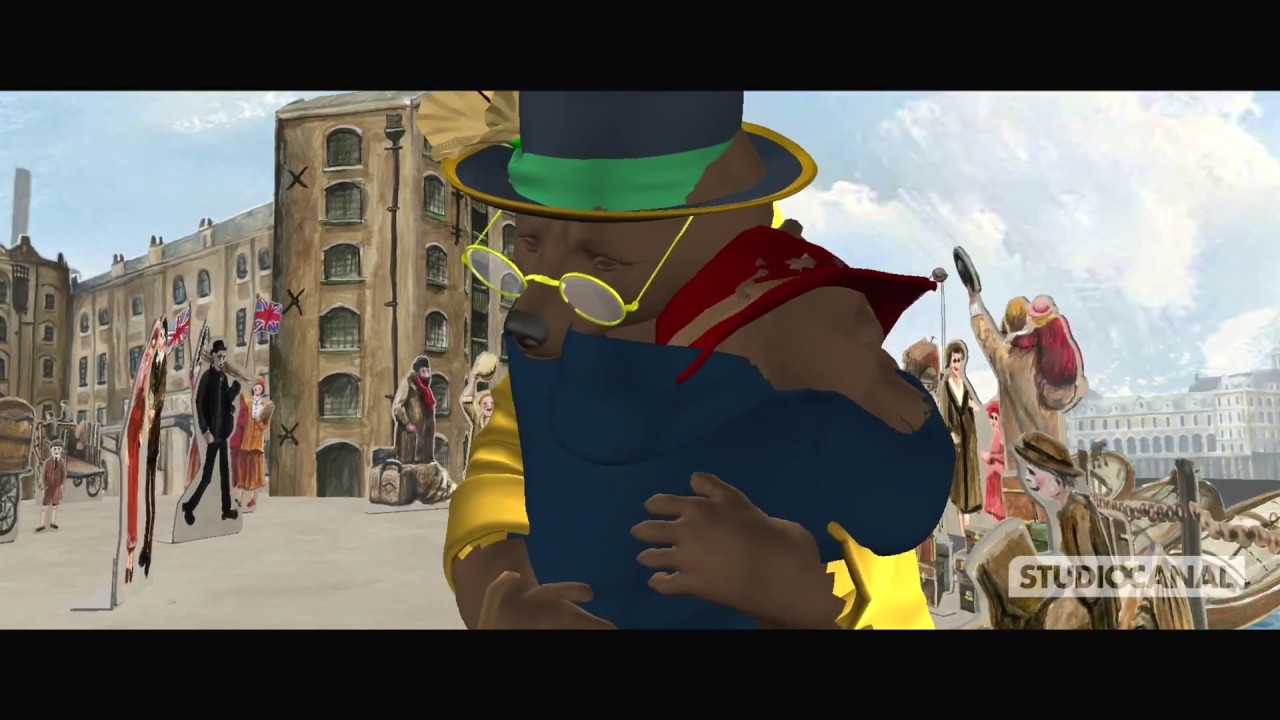
Not only is Paddington 2 a delightful, funny and heart-warming movie – garnering 100 per cent on Rotten Tomatoes and becoming the site’s best-reviewed film of all time – it’s also a technical masterpiece. The titular hero looks photoreal in every single shot (all 1,100 of them) and is integrated with the live-action footage flawlessly; kudos to Framestore for pulling off this incredible achievement. Indeed, as a sign of the team’s dedication, one time-lapse shot of the prison canteen changing into a chintzy tea room – a combination of CG bear, CG props and live action – took nine months to complete.
But it’s one thing to make a CG creature; it’s quite another to create a performance that elicits an entire spectrum of emotions. If you don't have a tear in your eye by the end credits, you really need to see a psychiatrist. (And how long before the Best Actor Oscar goes to a CG creation?)
Killer sequence: When Paddington decides to earn money by washing windows, there’s some beautifully choreographed slapstick, and a shot in which Paddington uses himself as a window sponge. Hilarious and technically sublime.
11. Doctor Strange (2016)
- Director: Scott Derrickson
- VFX: Industrial Light & Magic, Framestore, Method Studios, Luma Pictures
Marvel films are like Pokémon; you have to catch ’em all (at the cinema). But seriously, this slightly left-field entry in the Marvel Comics Universe really delivered in terms of an engrossing story and a hypnotic – if slightly bewildering – visual experience.
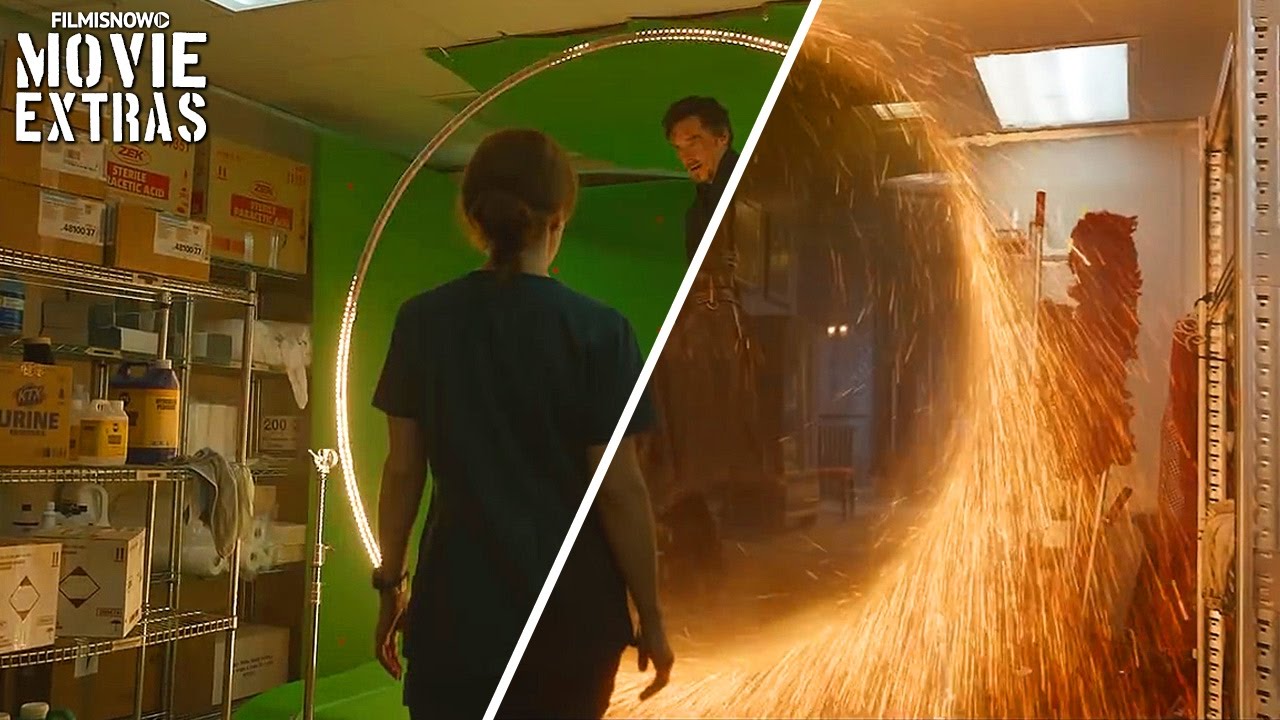
When the story deals with dimension-hopping sorcerers, alternate worlds and time travel, you know you’re in for a wild ride and it took a number of VFX vendors to deliver the 1,450 effects shots. From glowing magical spells and particle effects to an artificially intelligent CG cape to Inception-style cityscapes folding in on themselves, Doctor Strange has it all.
Killer sequence: Stephen Strange being chased by Kaecilius (Mads Mikkelsen) through a twisting, morphing, Möbius strip of New York City – it simply begs the question: How did the hell did they do that?
12. Blade Runner 2049 (2017)
- Director: Denis Villeneuve
- VFX: Framestore, Double Negative, Rodeo FX
For fans of the original, it’s heart-breaking that the sequel some of us waited 35 years for has been a box-office disappointment. But that’s not for want of trying: with a production budget of $185 million, it boasts some of the most amazing, beautiful and realistic visual effects ever to grace the silver screen. The entire film is mesmerising, but highlights include the work on Joi, Ryan Gosling’s holographic girlfriend, as she interacts with the real world, plus Framestore’s amazing visualisation of the vast junkyards of San Diego, which are utterly convincing.
But once again, the star of the show is the neon-festooned cityscapes of night-time LA, beautifully envisioned by DNEG and Rodeo FX, which employed hundreds of different buildings, consisting of billions of polygons. If you didn’t see Blade Runner 2049 on a big screen, you really missed out.
Killer sequence: The drone’s-eye view of the ruins of Las Vegas is simply breathtaking (and did you spot Deckard’s car from the end of Blade Runner, abandoned on the strip?)
13. Rogue One: A Star Wars Story (2016)

- Director: Gareth Edwards
- VFX: Industrial Light & Magic, Hybride, Ghost VFX
Arguably the best Star Wars film since Disney dropped $4 billion in George Lucas’s lap, Rogue One also delivered what Star Wars fans wanted: spaceships, likeable robots and tons of homages to the original trilogy. But, with the benefit of technology 40 years more advanced than that used on the first movie, Rogue One looks the business too.
ILM took some brave moves with the digital recreations of Grand Moff Tarkin (Peter Cushing) and a youthful Princess Leia (Carrie Fisher), which were surprisingly dodgy at times. However the VFX behemoth hit its stride with some incredible space battles and the jaw-dropping destruction of Jedha City – plus most of the surrounding terrain.
Throw in a handful of cameo appearances, and some seamless updates of X-Wing pilot footage from the '70s, and this entertaining sci-fi romp took fan service to another level.
Killer sequence: The attack on (a mostly CG) Scarif is a wonder to behold: the AT-AT walker battle on the beach, the rebel assault on the shield generator, and that bold move by a Hammerhead Corvette… (who knew Star Destroyers were so flimsy?)
14. Pearl Harbour (2001)
- Director: Michael Bay
- VFX: ILM
With a laboured script, leaden acting, turgid pace, and insensitive factual inaccuracies, the only reason Pearl Harbour is worth seeing is for the recreation of the infamous 1941 attack. Unbelievably, there are only four shots that are totally CG in the movie, including the two shots of the USS Arizona exploding, with the wide camera angle taking four months of constant effects work to perfect.
ILM used a combination of software for the attack sequence, including AliasStudio, Maya, and Softimage for basic modelling, and employed its proprietary software, Zeno, for the many rigid body simulations. To comply with environmental rules, VFX supervisor Eric Brevig also had to write a new piece of software to create the amount of smoke plumes needed. So while it's a dreadful film, we can't help but applaud the truly brilliant CG effects.
Killer sequence: A detailed recreation of the chillingly effective surprise attack by the Japanese on a US naval base.
15. Cloverfield (2008)
- Director: Matt Reeves
- VFX: Double Negative
This may be a spin-off of Godzilla, as mysterious and severely peeved creatures attack New York, but what a spin-off it is. Cloverfield is an amazing example of how to mix hand-held live-action with quality CG effects.
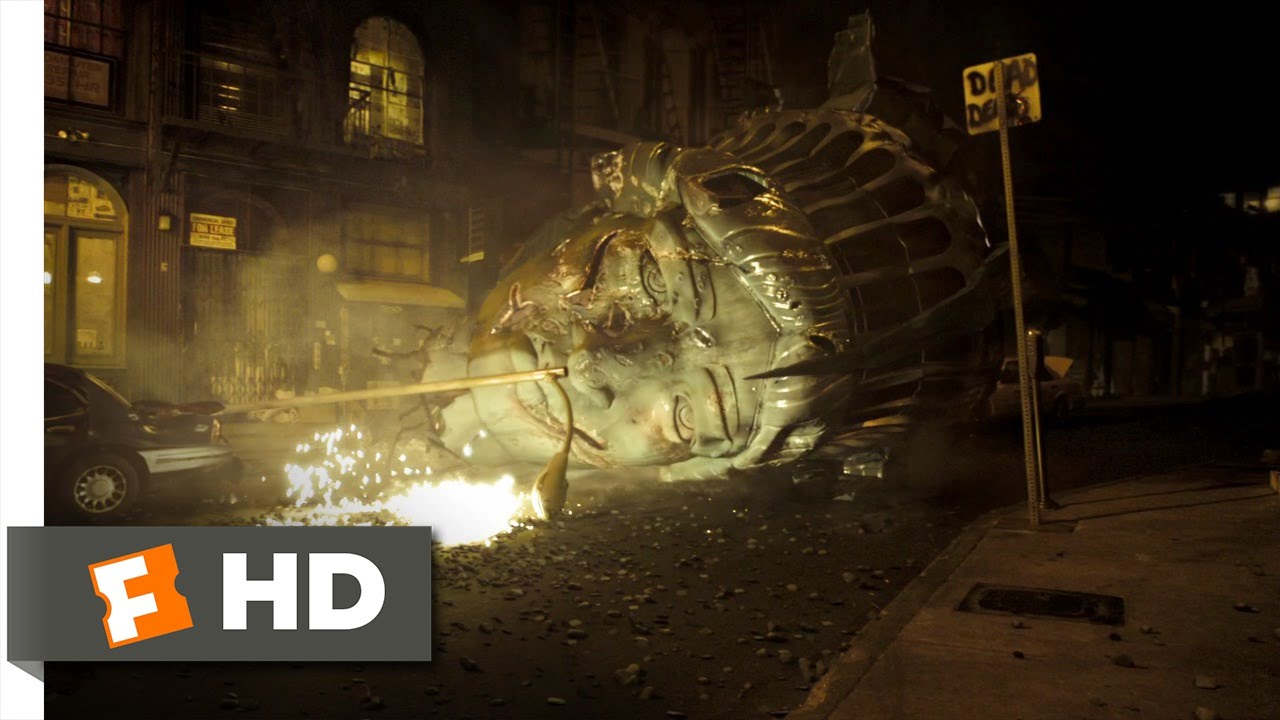
The most terrifying sequence happens early on, when the Statue of Liberty's head is catapulted down the road by an unknown and unseen force. Visible for several seconds in full frame, the head itself had to be built as an extremely detailed 3D model with precise texturing.
Production used 4 and 5K stills of the head that were placed online following the landmark's cleaning a few years ago. These detailed the head's panelwork and areas of grime that could be used as reference when texturing the model. The genius of JJ Abrams combined with great effects is clearly a recipe for success.
Killer sequence: The Statue of Liberty's scratched-up head comes sailing down a New York Street, hinting at the dangers to come.
16. Terminator Salvation (2009)
- Director: McG
- VFX: ILM, Asylum, Rising Sun Pictures and Matte World Digital
You've got to feel sorry for John Connor: his only real friend was a machine that once tried to kill him and is now dead. To his credit, though, he is very determined and returns in the fourth Terminator instalment, ready to kick more shiny metal ass. Among its 1,500 VFX shots, T4 features an impressive 60ft, headless, biped robot – the aptly named Harvester – on a rampage.
The huge cyborg has one of the film's most intricate rigs. ILM used techniques originally developed for Transformers to provide animators with extra flexibility when choosing which parts to control. ILM also integrated an energy-conserving shader set in RenderMan to achieve more accurate lighting and cope with the extreme contrasts of desert conditions. The ensuing segment with the truck, Moto-terminators and a giant Transporter isn't bad either.
Killer sequence: The headless Harvester robot smashes up a gas station in its hunt for humans.
17. 10,000 BC (2008)
- Director: Roland Emmerich
- VFX: Double Negative (wide shots) MPC (medium and close-up shots)
If you can ignore the script, the acting, the historical inaccuracies and the bizarre pseudo sci-fi ending, 10,000 BC is a pretty cool film, with some excellent FX work from MPC and Double Negative. The sweeping vistas over the Giza site are largely models built at 1:24 scale by Joachim Grueninger, constructed near the actual film set in Namibia, but they're enhanced with digital doubles, dust, and props.
The best sequence, however, is the stampede, where a pack of mammoths is unleashed to wreak havoc among a building site with 50,000 digital slaves. Fully CG sets integrate seamlessly with live-action and model shots and, all in all, it's a suitably epic climax for a fantastically overblown movie.
Killer sequence: A frightened pack of 50 captive mammoths is set loose in order to bring a pyramid building site to a grinding halt.
18. The Perfect Storm (2000)
- Director: Wolfgang Peterson
- VFX: ILM
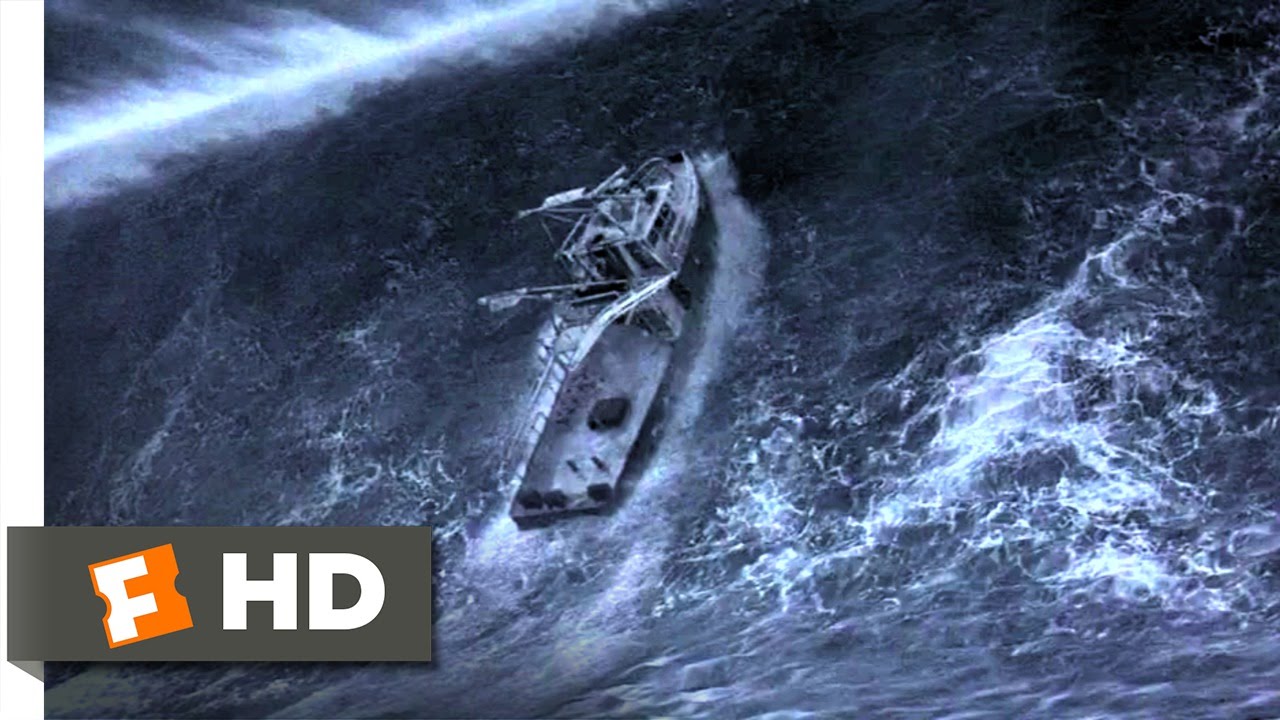
George Clooney may be a looker, but his character in this film isn't very smart. He plays Billy Tyne, a fishing boat captain who ignores weather warnings, in a tale that's based on the true story of the Andrea Gail from 1991. The end sequence is a CGI stonker, featuring a huge 100ft wave that finally capsizes the ship. In total, the film featured 90 completely CG shots, all of which include water elements.
A further 220 shots required CG seas to be composited with live-action footage shot on a huge, moveable fishing boat set. A custom fluid dynamics system was developed to create a realistic ocean and more than 30 plug-ins were written for Maya to achieve the intricate effects.
In addition to this, standalone applications for shaders and particle systems were also written in-house. In what is otherwise a slightly disappointing film, the mammoth VFX are what leave the longest-lasting impression.
Killer sequence: A fishing boat and its crew run into a spot of bother on stormy seas.
Next page: More of the greatest CGI movie moments of all time