
The best monitor for graphic design will help you be more precise with your professional work. Standard consumer screens, in contrast, artificially boost saturation and contrast, leading to catastrophic colour shifts when work is printed or rendered across different devices. Investing in a high-end display then, is a wise move indeed.
We've spent months testing displays across every price bracket and use case to find the ones that earn a place on a designer's desk. Our top pick is the BenQ MA320U, a 32-inch 4K monitor that pairs 98% P3 colour coverage with useful software and a price tag that doesn't punish you for wanting accuracy.
But "best overall" doesn't always mean "best for everyone." Apple loyalists will find their natural match in the Studio Display, while print specialists working in Adobe RGB and CMYK should look straight at the Eizo ColorEdge CG2700S. Meanwhile, if you need to complete your setup, read our roundup of the best laptops for graphic design.

Beren has well over a decade of experience writing about creative tech. As Creative Bloq's Ecom Editor, he's racked up hundreds of hours testing and reviewing monitors. He also oversees the curation of our buying guides, taking feedback on the products we've tested from contributing creatives.
The best monitor for graphic artists overall
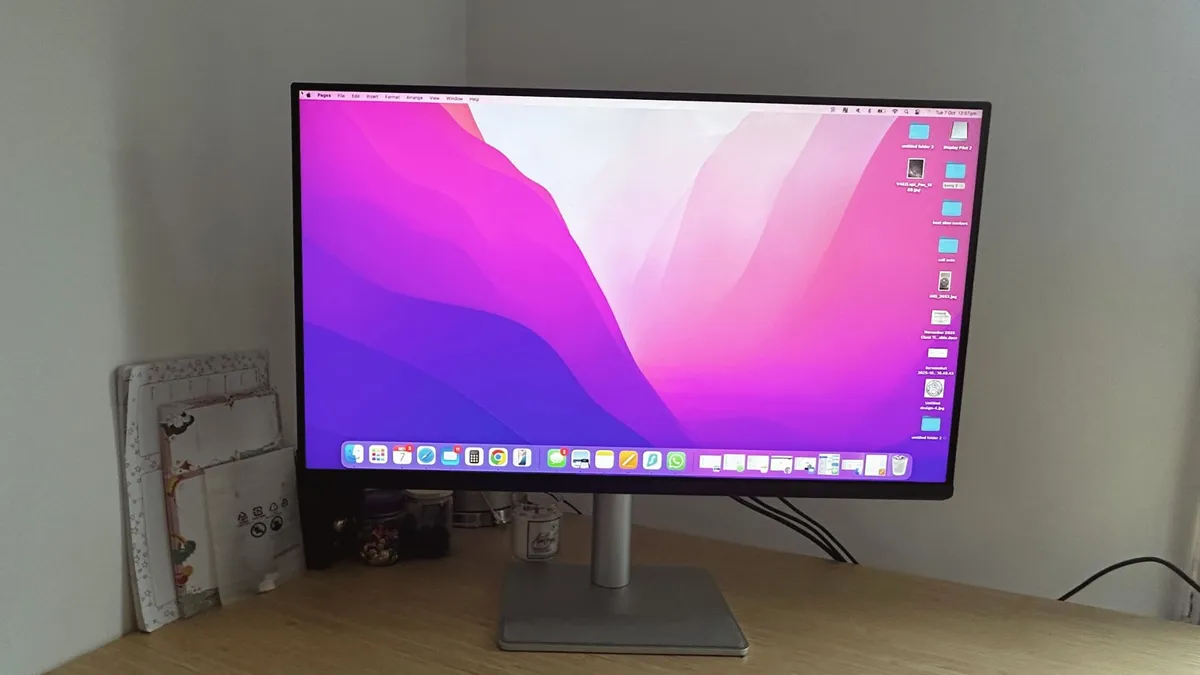


15-second review
- 32-inch 4K display with exceptional 98% P3 colour accuracy and 600 nits brightness makes this ideal for colour-critical design work.
- Display Pilot 2 software and USB-C with 90W power delivery streamline workflow; ergonomic stand with 90° pivot suits all orientations.
- $730/£600 on release (March 2024); frequently discounted to around $630/£550 today.
Design and build: The MA320U features an attractive, minimalist design with slim bezels and a clean silver chassis that looks professional in any studio environment. The ergonomic stand is exceptionally versatile, offering height adjustment, tilt, swivel, and a full 90-degree pivot capability for portrait mode workflows—ideal for working on vertical designs, web layouts, or long-form editorial projects.
The wide base provides excellent stability, though it does require adequate desk space. The Nano Matte coating delivers an almost paper-like texture that effectively reduces glare and reflections, making it remarkably comfortable for extended design sessions even in brightly lit spaces.
Port accessibility is straightforward, with connections located on the rear panel. A thoughtful silicone strip on the base provides a handy spot for storing accessories like styluses, USB drives, or your smartphone. Assembly requires no tools; the components simply click together securely.
Display: Our reviewer found the 32-inch 4K panel absolutely brilliant for graphic design work, delivering pin-sharp detail with generous screen real estate for working across multiple artboards or comparing design variations side by side. The MA320U delivers exceptional colour accuracy with support for 100% sRGB and 98% P3, ensuring professional-grade performance for colour-critical design work, photo retouching, and illustration straight out of the box.
Brightness peaks at 600 nits, which is impressively high and more than adequate for any studio environment. The anti-glare, anti-reflective panel performs beautifully even in rooms with natural light streaming through windows. The 60Hz refresh rate is perfectly suited to graphic design workflows, providing smooth scrolling through documents and seamless performance when working in Adobe Creative Suite or Affinity.
The Display Pilot 2 software is genuinely useful, allowing you to control brightness, switch colour modes, and adjust settings directly from Windows without navigating clunky on-screen menus, keeping you focused on your creative work. The USB-C connection with 90W power delivery is perfect for laptop users, allowing you to connect and charge compatible devices with a single cable, keeping your workspace clean and cable-free.
Read more: BenQ MA320U review

"This is a monitor that combines impressive 4K clarity with thoughtful features for creative professionals. The colour accuracy is exceptional, the Display Pilot 2 software streamlines your workflow, and at this price point, it's an absolute steal for graphic artists."
The best budget monitor for graphic artists


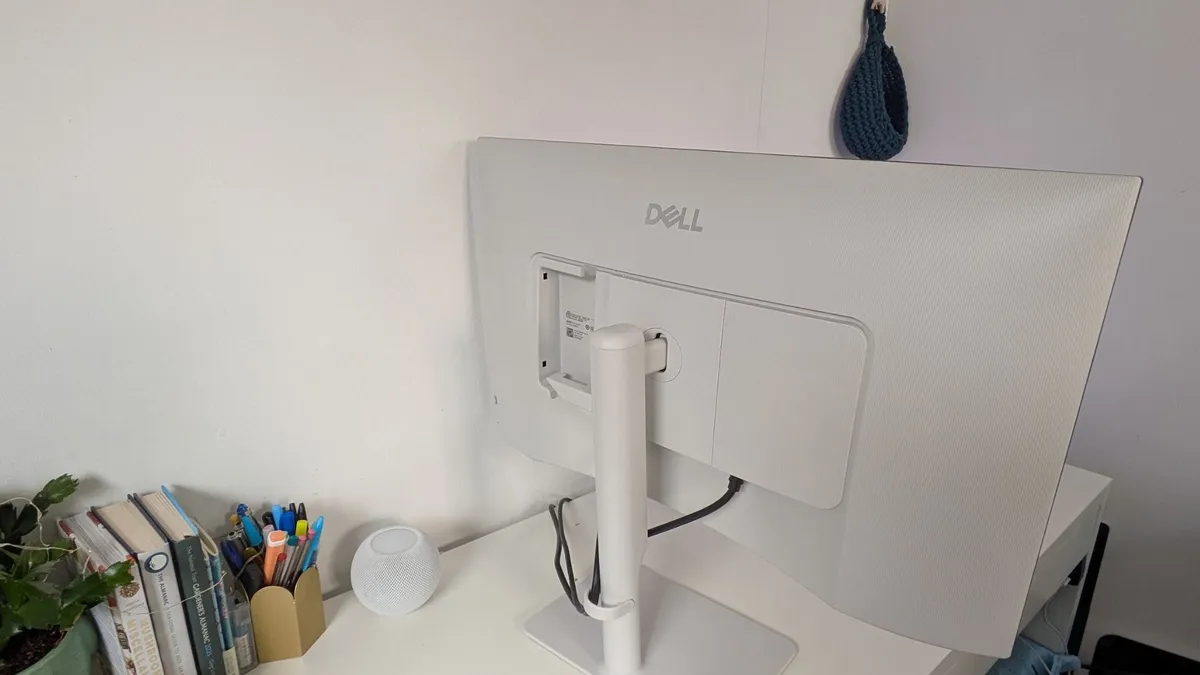


15-second review
- Affordable 27-inch 4K monitor delivers 99% sRGB coverage, 120Hz refresh rate, and professional-grade colour accuracy without premium pricing.
- Fully adjustable stand with height, tilt, and swivel (awkward pivot mechanism); anti-glare coating and ComfortView Plus reduce eye strain.
- Has retained its $329.99/£399 retail price, since its January 2025 release.
Design and build: The monitor itself is sleek and modern, with ultra-thin bezels on three sides and an attractive ash-white finish that suits most workspaces. The build is solid, with a sturdy metal stand that adds stability without feeling flimsy. Setup is refreshingly simple: the stand locks into place without requiring any tools, and the textured rear panel includes cable management features with a snap-on cover and an oval cutout for routing cables neatly. The directional joystick on the rear makes navigating settings straightforward. One thing to note: whilst the stand offers excellent height adjustment with smooth motion (ideal for standing desks), the pivot mechanism is somewhat awkward. The screen practically touches the base when rotating 90°, requiring you to tilt it outward first, which feels clunky.
Display: You get full 4K UHD resolution on a 27-inch IPS panel, with 99% sRGB coverage straight out of the box. The colours are vibrant and true-to-life, the detail is pin-sharp, and it's all backed by HDR support, making it great for graphic design and photo editing work. The 120Hz refresh rate ensures smooth scrolling and motion, which is particularly beneficial when working with detailed illustrations or reviewing design work. The IPS technology delivers excellent viewing angles, maintaining colour accuracy even when viewed from the side. Dell's ComfortView Plus Technology claims to reduce harmful blue light emissions without compromising colour accuracy, and during extended use, eye strain was notably minimal. The anti-glare coating performs well in typical office lighting conditions, though the 350 nits brightness, whilst adequate, could be higher for very bright environments.
Read more: Dell 27 Plus 4K review.
"The Dell 27 Plus 4K S2725QS is the perfect solution for anyone looking to upgrade to a 4K monitor without having to break the bank."
The best premium monitor for graphic artists


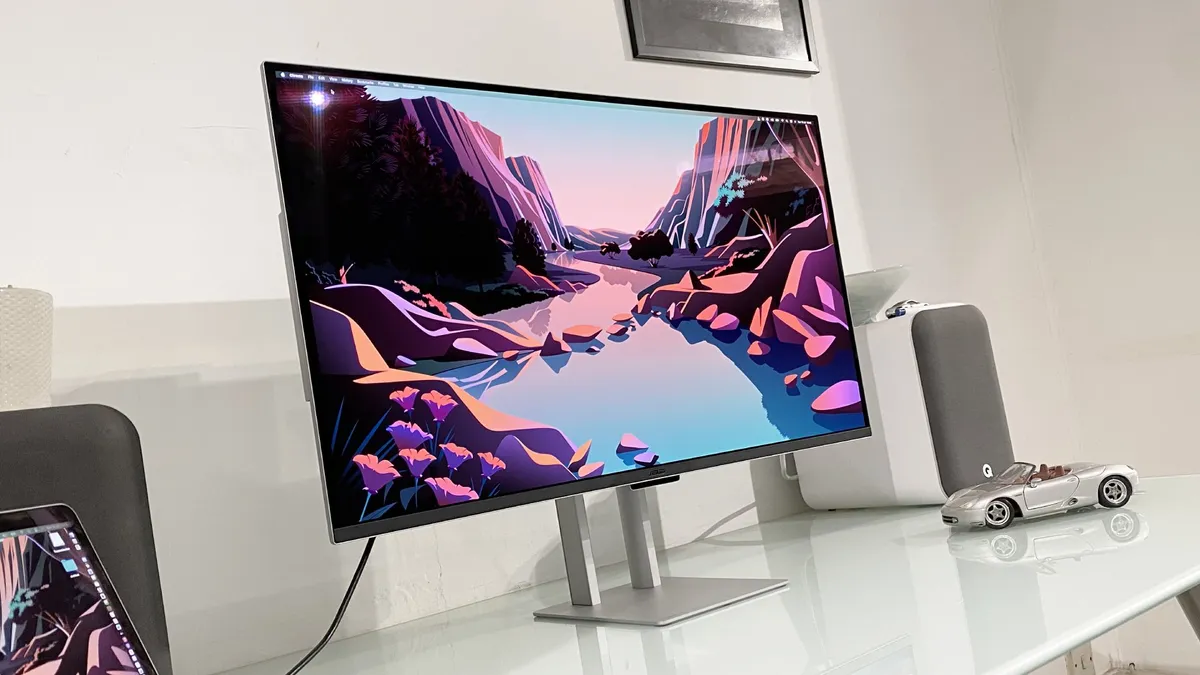


15-second review
- Stunning 32-inch 4K QD-OLED with perfect per-pixel lighting, 99% P3 coverage, and spectacular 1,000-nit HDR performance for premium creative work.
- Dual Thunderbolt 4 with 96W power delivery and hardware 3D LUT calibration; 240Hz refresh with 0.1ms response.
- $1,899/£1,599 on release (February 2024); sells for around $1,349/£1,349 today with promotions.
Design and build: ASUS has eschewed the typical gaming monitor aesthetic here in favour of ProArt minimalism, taking the design quality up a notch. A sophisticated adjustable hinge offers height (130mm), tilt (+20° to -5°), and rotation into portrait mode, mirroring the engineering of Apple's Pro Display XDR. The overall styling is understated and professional, making it suitable for any creative workspace.
Connectivity is mostly strong, with dual Thunderbolt 4 ports supporting display daisy chaining and 96W power delivery, plus HDMI 2.1. However, there's no dedicated DisplayPort: only DisplayPort alt mode via Thunderbolt. The USB hub is somewhat limited, with just one USB-A and one USB-C output, and there's no 3.5mm audio jack at all, which might be a deal breaker for some.
Display: At its best, this monitor is utterly stunning. The perfect per-pixel lighting means small, bright details on dark backgrounds pop with total precision, avoiding the light bleed and halos of backlit LCD alternatives. The dynamism and vibrancy of colour rendering is spectacular, accentuated by the glossy panel coating which heightens perceived contrast. HDR content truly sizzles, with peak highlights reaching 1,000 nits.
The ProArt PA32UCDM comes with comprehensive colour space presets ideal for graphic artists, including sRGB, Adobe RGB, P3, and BT.709 modes. The QD-OLED panel delivers 99% P3 coverage, along with excellent sRGB and solid Adobe RGB coverage. The 240Hz refresh and 0.1ms response make this display exceptionally responsive, though these specs are more relevant for gaming than typical graphic design work. However, OLED technology does have limitations. Full-screen brightness tops out at around 250 nits, which may not be ideal for bright environments.
The QD-OLED panel can also look slightly grey in very bright ambient light, though this isn't an issue in normal working conditions. Factory calibration is slightly over-saturated and crushes some shadow details, though this can be remedied using the hardware 3D LUT and ASUS's ProArt calibration tools or third-party options like Calman Autocal.
Read more: ASUS ProArt PA32UCDM review

"At last, ASUS brings us an OLED panel for creative pros with the ASUS ProArt PA32UCDM. The benefits are perfect per-pixel lighting, eye-popping HDR highlights and excellent colour coverage."
The best 5K monitor for graphic artists


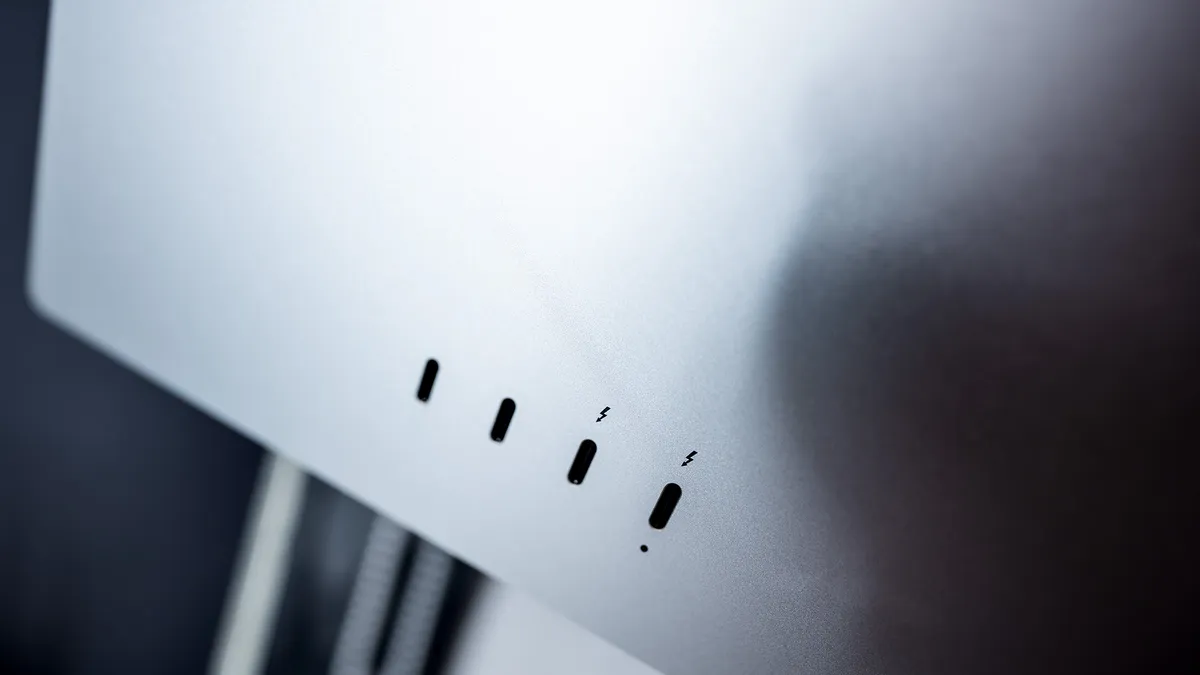



15-second review
- 27-inch 5K resolution (5120x2880) delivers razor-sharp detail with P3 wide colour and factory calibration; optional Nano-texture glass reduces glare effectively.
- Wide camera with Center Stage makes online meetings a breeze.
- Thunderbolt 5 with 96W power delivery; optional tilt-and-height-adjustable stand ensure connectivity and comfort.
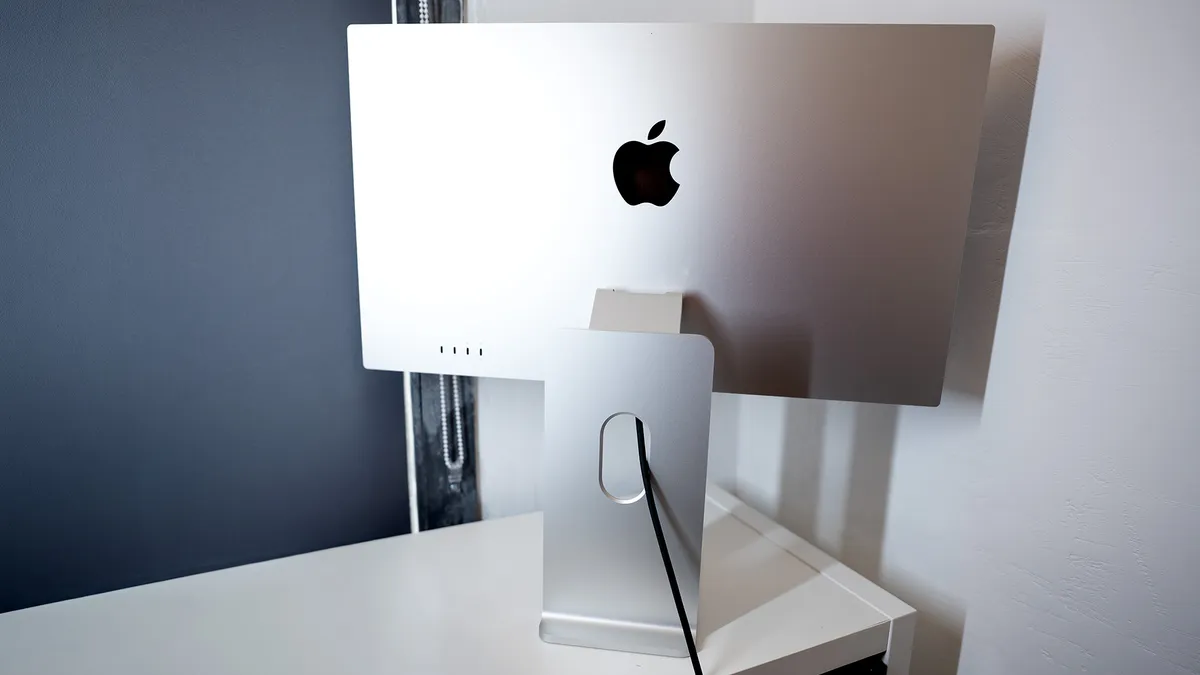
Design and build: The sleek, minimalist aluminium enclosure is beautiful and a perfect match for Apple computers and accessories. Updated connectivity ports include two Thunderbolt 5 ports (one upstream with 96W charging to power your MacBook, and one downstream supporting high-speed daisy chaining) along with two USB-C ports. Depending on your studio environment, you can configure it with highly anti-reflective Nano-texture glass and choose between a basic tilt stand, a height-adjustable stand, or a VESA mount.
Display: Colour accuracy is outstanding right out of the box, offering full P3 wide colour support and 1 billion colours. For print and digital artists, this precision rivals high-end pre-press environments, streamlining soft-proofing workflows. While the contrast ratio is excellent for an IPS panel—delivering crisp brights—it lacks the absolute deep blacks of OLED. However, for designers, this remains a balanced trade-off: IPS technology provides industry-standard viewing angles ideal for sharing your work with colleagues, and it protects against the image retention risks that can sometimes affect OLED panels during long, static design sessions.
Read more: Apple Studio Display (2026) review

"If you’re looking for one of the best monitors for graphic artists, it’s still got the goods and, perhaps just as importantly for many, the Apple logo."
The best monitor for print work

15-second review: The Eizo's ColorEdge CG2700S is built specifically for print and pre-press professionals who need colour they can trust without question. Its WQHD resolution trades pixel density for larger, more legible on-screen text and near-perfect coverage of Adobe RGB and the CMYK spaces used in commercial printing, backed by a built-in calibration sensor that keeps it accurate for years.
Design and build: The CG2700S has a compact round-footed stand that rotates 344 degrees and adjusts 15.5cm in height, tilting back 35 degrees and forward 5 degrees to allow rotation into portrait mode. A magnetically attached light shield hood, felt-lined to prevent internal reflections, comes bundled in the box, and a built-in carry handle makes the monitor easy to lift and reposition. Illuminated touch controls sit along the bottom bezel, and the whole thing feels engineered rather than merely styled.
Display: The 10-bit panel, driven by a 16-bit 3D LUT, covers 99% of Adobe RGB and 98% of DCI-P3, and comes close to full coverage of the ISO-coated and US web-coated CMYK spaces used in commercial print, making it a reliable soft-proofing tool. Colour stabilises within around three minutes of power-on, far faster than most monitors, and the built-in calibration sensor swings into view automatically on a schedule (every 200 hours by default) to keep colour and brightness in check without needing an external puck.
Deliberately choosing WQHD (2560 x 1440) over 4K at this size keeps pixel density at a comfortable 109ppi rather than 4K's 194ppi, meaning on-screen text and UI elements stay legible rather than shrinking to a squint-inducing size; a trade-off print and photo retouchers, who spend hours at the screen, tend to appreciate. Connectivity covers DisplayPort, HDMI and USB-C with 92W power delivery and DP alt mode, plus a built-in RJ-45 LAN port for feeding a network connection through to a laptop. The bundled USB hub adds two USB 3.1 and two USB 2.0 ports, though there's no USB-C or Thunderbolt output for connecting fast external storage, so heavy peripheral users may still want a separate dock.
The best ultrawide monitor for graphic artists


15-second review
- Porsche-designed 34-inch curved ultrawide OLED (3440x1440) with 240Hz refresh rate combines creative colour accuracy (97.4% Adobe RGB, 99% P3) with gaming prowess.
- Subtle 1800R curve minimizes edge distortion; three-side frameless design with matte finish; 1,000-nit peak brightness.
- $1,300/£1,049 on release (September 2024); frequently discounted to around $1,000/£599 today.
Design and build: Well, we've talked about this to an extent already, but yes, the AOC AGON PD34 is a good-looking monitor. With 'PORSCHE DESIGN' embossed in silver across the lower bezel, it advertises its pedigree for all to see, and the three-side frameless bezel design and matte finish all add up to making it look at feel like a premium monitor. At 9.1kg it's certainly not light, but it's not like you'd be carrying a curved monitor around much anyway.
Display: Given that curved monitors tend to be mostly made for gamers, it's pleasing to see that the AOC AGON PD34 has such strong graphic art credentials. The curvature is less severe than many gaming monitors, at just 1800R, meaning that it doesn't distort too badly at the edges. The colour coverage is as excellent as you'd expect from a premium OLED – 97.4% Adobe RGB, 99% DCI-P3 and 112% sRGB. Excellent stuff. The sheer resolution and width of the monitor meant that when he was reviewing it, Erlingur could always work on images in their entirety while still having enough space at the edges not to have to worry about edge distortion. It's undoubtedly a beast of a display that won't work for everyone, but if you've got the desk space, it's a brilliant option for immersing yourself in your work.
Read more: AOC AGON PD34 review

"Cars and computer monitors don't often enjoy big crossover moments, but the AOC AGON PD34 brings the sleek aesthetics of Porsche to the desktop in this classy, curved OLED monitor... the 3440x1440 resolution and 1000 nits of max brightness will be appealing to creative users. Beautiful and a brilliant performer, the only thing stopping me from buying one is the price tag..."
The best monitor for Mac users


15-second review
- 27-inch 5K IPS Nano Gloss panel delivers deep blacks, bright highlights and razor-sharp text at 450 nits: a genuine alternative to the Apple Studio Display at under $999/£899.
- Thunderbolt 4 with 96W power delivery, Smart KVM for seamless dual-machine workflows, FocuSync, M-Book colour matching, and ambient light sensor round out an outstanding Mac-focused feature set.
- Launched March 2026.
Design and build: The MA270S carries forward BenQ's familiar minimalist language: slim black bezels, a sturdy silver base, and a clean overall aesthetic that sits comfortably alongside Apple hardware. The panel choice is the Nano Gloss coating, a deliberate nod to Apple's own display finish: true blacks look deep and rich, highlights are clean and bright, and contrast holds up even at wide viewing angles. The ergonomic stand offers 150mm of height adjustment (enough to open a MacBook beneath it), ±15° swivel, –5° to 20° tilt, and full 90° pivot for portrait mode. A rubber grip on the front of the stand protects laptops placed beneath and doubles as a handy shelf for accessories. Ports are split sensibly between the rear (two HDMI, USB-C upstream, two Thunderbolt 4 with 96W and 36W power delivery) and the front underside (two USB-A, one USB-C downstream): no more groping around the back to charge a phone.
Display: The 5K Nano Gloss panel is the headline act, and it earns the attention. MacOS scales perfectly, text is crisp and sharp, and the overall experience genuinely rivals a MacBook Pro's own display in clarity. At 450 nits, it's bright enough for most environments, and the high-contrast panel means it holds its own even with ambient light. BenQ's M-Book colour mode in Display Pilot 2 matches the MacBook's colour profile with impressive accuracy, making the transition between laptop screen and external display seamless.
The real differentiator, though, is how deeply the MA270S integrates with Apple's ecosystem. FocuSync links the monitor's display settings to your device's Focus modes: switch to Do Not Disturb and the monitor automatically adjusts colour temperature, blue light levels, and audio to match. Smart KVM lets you move a single keyboard and mouse seamlessly between two connected machines (including cross-platform Windows and Mac combinations), with full copy-paste and file transfer support. An ambient light sensor on the front bezel detects your environment and adjusts screen brightness automatically: a feature Mac mini users will appreciate, given their machines lack any equivalent.
Read more: BenQ MA270S review

"The BenQ MA270S is an outstanding 5K monitor built with Mac creatives in mind. It's a serious alternative to the Apple Studio Display at a significantly lower price, and for anyone living in the Apple ecosystem, this is simply one of the best monitors you can buy right now."
The best portable monitor for graphic artists




15-second review
- Portable 16-inch OLED display with 100% DCI-P3 and Delta E <2 colour accuracy makes it genuinely viable for mobile creative work
- Ultra-compact (1920x1080) with single USB-C cable connection; includes 1/4-inch tripod socket for flexible positioning
- Has retained its $350/£450 retail price, since its August 2023 release.
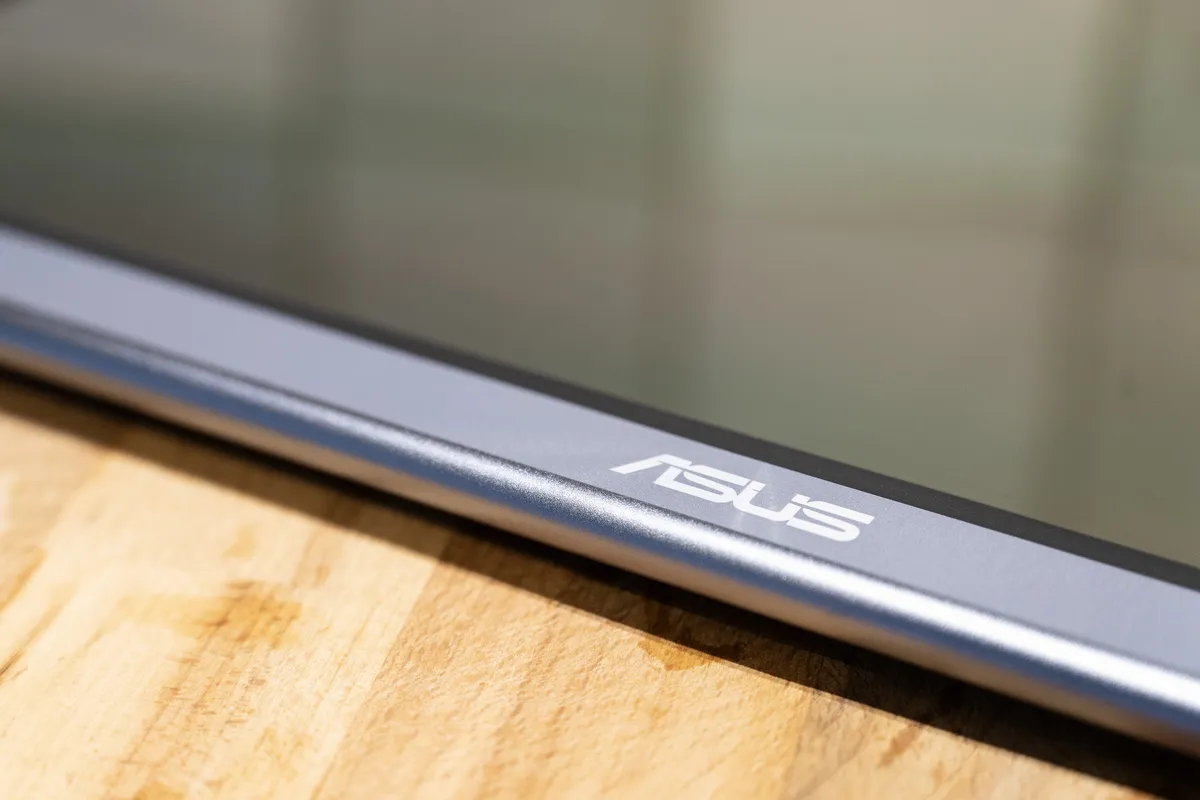
Build and design: A portable 16-inch OLED display is a niche device. It only makes sense if you regularly work on the move, for example in cafes, hotel rooms, co-working spaces or clients' offices. For situations like that, this device comes into its own. It's slim and compact, making it easy to slip into a bag and connect to a laptop using just one cable. We found it to be a flexible device that's equally suitable for graphic art and design as writing or coding. With a dongle, it’s possible to use the USB-C port to connect game consoles, a Raspberry Pi, or even a streaming stick.
Display: ASUS claims 95.5% of sRGB, and we got 100% in our tests, as well as 96% of Adobe RGB and 98% of P3 and Delta E < 2 colour accuracy. We didn't manage to get the 400 nits of brightness that Asus claims using USB-C (the alternative is to use mini HDMI), but the OLED screen was still very bright for a portable monitor and able to overpower most reflections in the office at 80% brightness. The 60Hz refresh rate gives a smooth picture.
Read more: ASUS ZenScreen MQ16AH review.
"Portable displays have long suffered from being dim and uninteresting. The ASUS ZenScreen MQ16AH fixes this problem with a very decent brightness level and a colour gamut that will appeal to creatives."
How to choose the best monitor for graphic artists
There are several things to consider when you're choosing a monitor for graphic design or art. One of the most important is colour coverage and accuracy. There are no minimum requirements, but if you're producing work for digital uses, you'll want the highest sRGB colour space coverage, ideally 100%, and good coverage for other colour spaces such as Adobe RGB and DCI-P3.
Another important decision is what size monitor you want. A larger monitor means that you can see your work at a larger size, and it can also make it easier to see all of your work if you have lots of layers or to navigate multiple windows, which is handy if you're jumping between different programs or if you're checking an image against a reference. However, a larger screen takes up more space and is going to be less portable if you work on the move a lot.
How we test the best monitors for graphic artists
We have chosen the best monitors for graphic artists based on our writers' experiences when carrying our our own hands-on tests and reviews. We have also taken on board recommendations and feedback from working artists and customer reviews. When reviewing monitors, we conduct benchmark tests to check brightness and contrast levels, colour coverage, accuracy and uniformity.
✅ We are solely focused on what creatives need
✅ Benchmark tests based on real workflows
✅ We consult actual designers and creative pros
✅ Over 50 monitors tested over 10,000 hours in the last two years
We also use the monitors over several days in real-life use cases, including for creating graphic design and digital art in programs such as Illustrator, Photoshop and CorelDRAW. As well as the quality of the display itself, we evaluate build, ergonomics, connectivity and price. We then seek to identify the best monitor for different needs and budgets.
FAQs
Do you need a 4K monitor for graphic art and design?
The best monitor for graphic artists or designers doesn't have to be 4K since resolution isn't as important for static design as it is for video. That said, your work will look better up close since details will be clearer, so 4K is generally worth the extra outlay if you have the budget. For print work specifically, some professionals actually prefer a WQHD resolution like the Eizo ColorEdge CG2700S, since it keeps on-screen text and UI elements at a comfortable, legible size.
What specs does a graphic design monitor need?
There's no definitive answer for what specs you need in a graphic design monitor, but there are certainly some factors you need to consider.
Resolution: Higher resolution means more detail and screen real estate for precise editing. Aim for at least QHD (2560x1440). 4K (3840x2160) is ideal for detailed work.
Size: 27 inches or larger is recommended for comfortable viewing and complex projects. In theory, the larger a monitor the better, but remember that huge monitos require more space, are less portable and can be pricier.
Colour accuracy & gamut: Accurate colours are essential for consistent reproduction. We'd suggest you aim for 95%+ coverage of Adobe RGB (for print) and DCI-P3 (for digital). sRGB is good, but secondary. As for colour depth, 8-bit is minimum, 10-bit ideal for smooth gradients. For more on this, read our article on What is colour gamut?.
Panel type: IPS panels generally provide wider viewing angles and better colour accuracy. VA offers high contrast but weaker colour accuracy. TN is fast (making this type ideal for gaming) but poor for design.
Ports: DisplayPort (essential for high-res), HDMI, and USB-C are useful. Also check whether you need specific versions for higher resolutions/refresh rates (e.g., DisplayPort 1.2, HDMI 2.0 for 4K 60Hz).
Brightness & contrast: These affect how visible the work on your screen will be in practice. For brightness, aim for 250 cd/m² (nits) minimum, or higher for bright rooms. For contrast, 1000:1 is standard, higher is better.
What's the best screen type for graphic artists?
Monitors mainly use LCD or OLED screens. LCDs are more affordable, while offering decent brightness and contrast, and recent advances make the best of these a viable option for graphic artists due to improved colour accuracy. Mini-LED, a sub-type of LCD screens, uses numerous LED backlights for enhanced contrast, black levels, and brightness. OLEDs, meanwhile, are pricier but offer superior contrast, black levels, colour accuracy, and viewing angles due to per-pixel backlighting control. While burn-in was a concern with this type of display, it's less of an issue now.
Is OLED needed for graphic design work?
OLED isn't essential for graphic design, especially for beginners. If you're looking to save money, LCD screens, inlcuding mini-LEDs, are also a strong contender. However, OLED offers superior black levels, contrast, colour, brightness, and viewing angles due to precise backlighting control, so it's worth considering if budget allows.
