In an age when almost everything has a built-in camera, from phones to glasses to toothbrushes, it’s somewhat surprising that more monitors don’t feature webcams. The advantages are numerous: slicker design, less desktop clutter, no more gazing up someone’s nostrils when they use their laptop for a Zoom call.
We’ve rounded up our picks for the best monitors with webcams, putting displays through their paces in terms of both image quality and video abilities. The Dell P2724DEB still comes out on top, combining a crisp QHD display with a high-quality 2K pop-up camera. New to this list is the Samsung M80F, an all-in-one unit with streaming apps.
Want to prioritise picture quality? Check out the best monitors for graphic artists.
The best monitors with webcams in full
Why you can trust Creative Bloq Our expert reviewers spend hours testing and comparing products and services so you can choose the best for you. Find out more about how we test.
The best monitor with webcam overall

Five-second review: The Dell P2724DEB is an outstanding all-round webcam display for everyday setups, combining a sharp 2K pop-up camera with robust single-cable USB-C connectivity and full ergonomic flexibility.
Pricing: Priced around $430–$540 / £350–£480 depending on the retailer, it sits in a sweet spot for productivity-focused users who need reliable video conferencing without paying premium creative-monitor prices.
Design and features: Dell has kept things clean and professional. The stand offers full adjustment: height, tilt, swivel and pivot into portrait mode. Build quality is solid without being flashy. The port selection is where the P2724DEB really earns its keep. You get USB-C with 90W power delivery and DisplayPort Alt Mode, HDMI, DisplayPort 1.4 with MST for daisy-chaining a second monitor, Gigabit Ethernet, and a generous spread of USB-A and USB-C downstream ports.
Display: The 27-inch IPS panel runs at QHD resolution (2560 × 1440, 109 PPI) with 350 nits typical brightness and 99% sRGB coverage. It is flicker-free and TÜV-certified for low blue light. While suited for general creative tasks, it lacks wide-gamut DCI-P3 coverage for colour-critical work.
Webcam: Here's where the P2724DEB genuinely excels. The 4MP pop-up webcam captures at 2K resolution (30fps) or Full HD (60fps), and it's noticeably sharper and more detailed than the cameras on the vast majority of laptops and even many standalone USB webcams. It supports Windows Hello facial recognition via an IR sensor, so you get fast, secure biometric login. Dual digital microphones and a pair of 5W speakers round out the package.
The best budget monitor with webcam

Five-second review: The Asus BE24EQK is a budget-friendly 23.8-inch video conferencing monitor that combines a built-in full-HD webcam, microphone array, and stereo speakers into a simple office display.
Pricing: Retailing at a wallet-friendly $150–$190 in the US and £150–£170 in the UK, it serves as an economical option for home offices needing an all-in-one conferencing monitor, or as a second screen for calls while you complete creative tasks on your primary screen.
Design and features: The practical but understated design here is surprisingly decent for a budget monitor. The stand only features tilt adjustment, but the integrated webcam can complete an owl-like rotation of 315° with a 10° tilt mechanism, and there’s an in-built privacy shutter. Ports include HDMI 1.4, DisplayPort 1.2, VGA, and dedicated audio in/out jacks, though it lacks USB-C connectivity.
Display: Featuring a 23.8-inch full-HD (1920 × 1080) IPS panel at 60Hz, it provides 178° viewing angles, 300 nits typical brightness, and a 5ms response time. Asus’ Eye Care technology provides flicker-free output and low blue light modes ideal for working deep into the night. While crisp enough for basic creative tasks, its standard 1080p resolution and basic colour gamut aren’t suitable for more advanced colour-based workflows.
Webcam: The integrated 2MP webcam shoots in 1080p resolution and is paired with a beam-forming dual-microphone array featuring echo cancellation. Dual 2W built-in speakers handle voice calls. It’s a complete out-of-the-box setup for Zoom or Microsoft Teams without extra desktop peripherals.
The best smart monitor

Five-second review: This is such a no-brainer. Samsung’s Smart Monitor M8 includes a webcam and a smart TV platform so you can catch up on your favourite shows after those all-important client calls.
Pricing: Starts at $699 / £699, although it's often discounted to $499–$599 / £499–£599. That’s a fairly hefty chunk of money for a monitor, but if you work, play, call, and binge entertainment in the same place then it makes a lot of sense to consolidate all your screens into one unit.
Design and features: Apple eat your heart out: this ultra-slim chassis features a clean footprint available in several pastel shades. Connectivity includes USB-C with 65W power delivery to charge your laptop, plus downstream USB ports and HDMI. It also includes an ergonomic height- and tilt-adjustable stand, and if that’s not enough there’s built-in Wi-Fi and Bluetooth for wireless device streaming.
Display: The advantage of using Samsung’s display over a straight-up TV is that it provides an expansive workspace with punchy visuals and sharp text. The 32-inch 4K VA panel packs 400 nits of brightness and 99% sRGB colour support, making it great for everything from Premiere Pro to Paramount Plus.
Webcam: The SlimFit 1080p camera includes face tracking and auto-zoom to keep you in the picture during calls, and it magnetically attaches behind the monitor when not in use. Built-in microphones and stereo speakers keep your voice clear and your setup clean.
The best 5K monitor with webcam


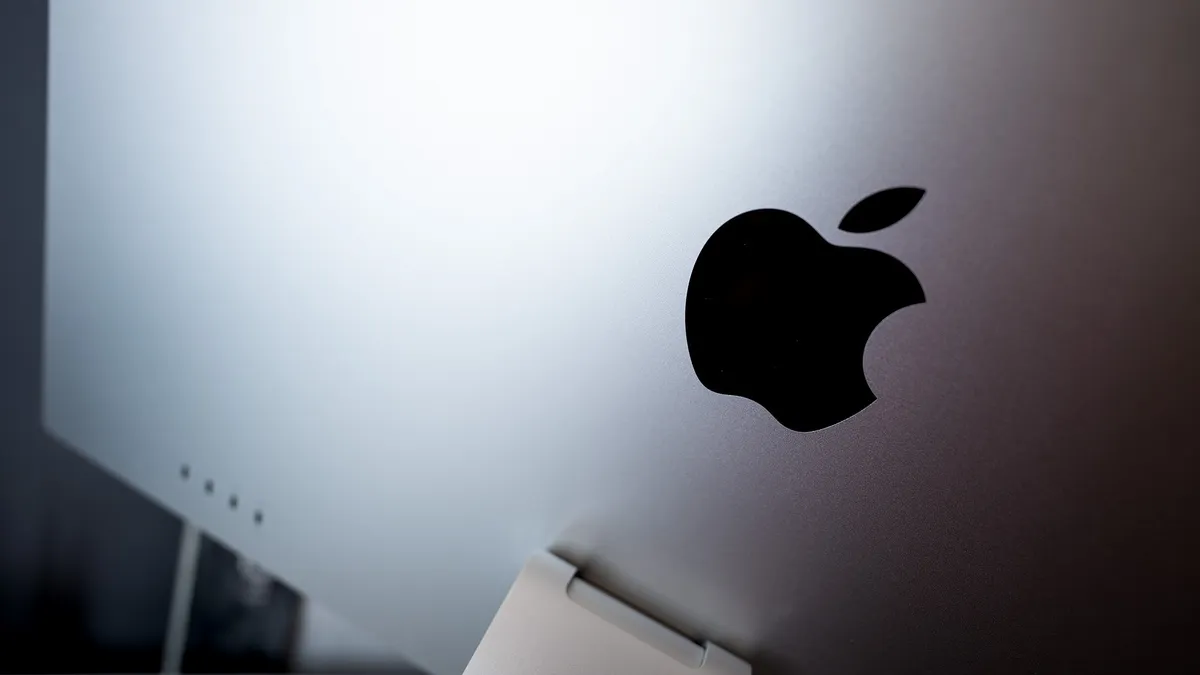

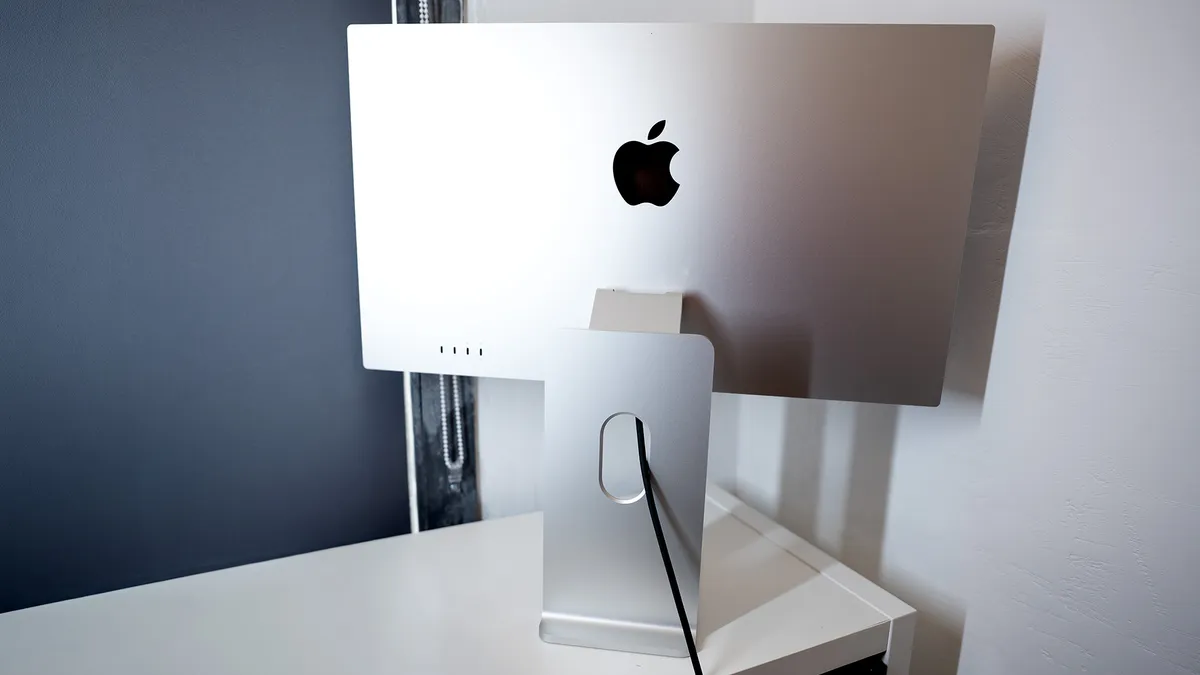

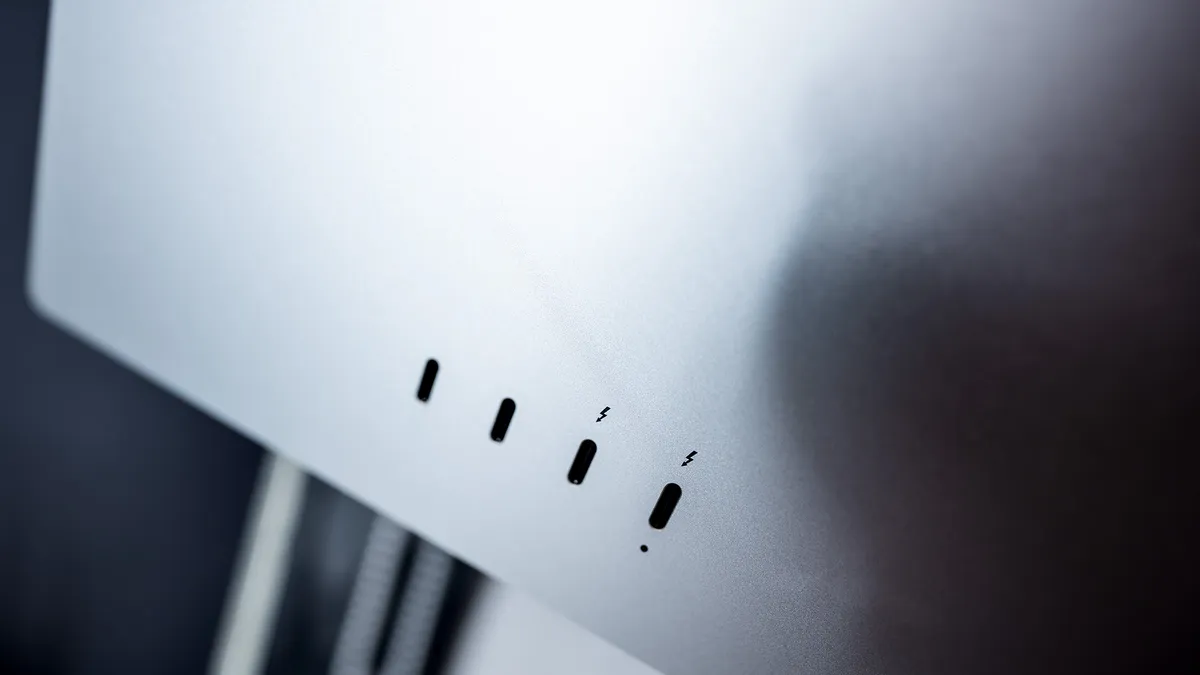


Five-second review: Apple’s Studio Display offers an all-in-one conferencing solution, bringing the company’s typically polished approach to its high-quality webcam, while providing a monitor that’s easy on the eyes and tidy on the desk.
Pricing: Starts at $1,599 / £1,499. It's a premium investment, it arguably pays dividends by consolidating your workspace, integrating a high-fidelity sound system, studio-grade microphones, and an advanced camera. It could even replace your TV, depending on your living arrangement.
Design and features: The clean aluminium design features a minimalist desktop footprint. Connectivity is a major highlight, utilising Thunderbolt 5 to provide 96W of host power delivery alongside high-speed downstream data transfers and support for simple, cable-efficient display daisy-chaining. For optimum ergonomics, you can configure the screen with a VESA mount for a monitor arm, or choose between a standard tilt or premium tilt-and-height adjustable stand.
Display: As you'd expect from Apple, the Studio Monitor is a top-tier 5K creative workspace that prioritises visual precision. With 600 nits of brightness and extensive P3 wide colour support, the panel offers the consistent, colour-critical accuracy necessary for professional photo retouching, intricate design layouts, and high-fidelity video production.
Webcam: The upgraded 12MP camera captures clean, colour-balanced video even in dim home-office environments. Its studio-quality three-microphone array isolates your voice while filtering out typing or desk background noise. Backed by a newly revised six-speaker audio array delivering even deeper bass, your clients and calls will sound full-bodied and clear.
Best 6K monitor with webcam


Five-second review: An extraordinary monitor that doesn’t hold back on any features, the U3224KB packs 6K’s worth of pixels into a 32-inch IPS panel. The icing on the cake is a 4K HDR webcam, which is among the best we've tested.
Pricing: The original retail price of $3,199 / £2,542 was hard to stomach, but at around $1,800 / £1,800 today, it's cheaper than the Apple Pro Display XDR while offering many more features.
Design and features: The design is understated and professional, but the real story here is connectivity. Thunderbolt 4 with 140W power delivery charges power-hungry laptops. You also get HDMI 2.1, mini DisplayPort 2.1, five USB-A ports, two USB-C ports, Gigabit Ethernet, and a front-facing pop-out panel with quick-access USB-C and USB-A ports. The built-in KVM switch lets you seamlessly switch between two computers from a single keyboard and mouse.
Display: The 6K resolution (6144 × 3456) delivers extraordinary clarity on the 32-inch panel. Colour accuracy is exceptional straight out of the box, and the IPS Black panel technology pushes the contrast ratio to 2000:1, delivering deeper blacks without sacrificing the wide viewing angles IPS is known for.
Webcam: The 4K HDR webcam sits in a distinctive circular housing at the top of the monitor and can tilt up or down by 20 degrees. Digital Overlap HDR captures multiple exposure levels simultaneously to prevent your face from being washed out and AI auto-tracking keeps you centred in frame. Image quality is sharp and natural, comfortably outperforming standalone webcams costing £100 or more.
The best curved monitor with webcam

Five-second review: Not only does the HP Series 7 Pro 734pm include an excellent display and stunning webcam, but it’s also the most connected monitor on our list: it’s a docking station, conference room, and productivity hub rolled into one.
Pricing: The RRP of around $999 / £899 puts the 734pm firmly in premium territory. For a 34-inch ultrawide at UWQHD resolution, that's a lot, but finding these features in one package is a real boon.
Design and features: HP has built this well, with an alloy stand base and support arm. The gently curved 1900R panel is framed by slim bezels, offering height, tilt and swivel adjustments. You get two Thunderbolt 4 ports (one in with 100W PD, one out with 15W), a USB-C input with 65W PD, DisplayPort 1.4 in and out, HDMI 2.0, Ethernet, and a generous USB hub. The KVM switch and HP Device Bridge 2.0 let you run two machines from a single keyboard and mouse.
Display: The 34-inch curved IPS Black panel delivers a 2000:1 contrast ratio and 98% DCI-P3 colour coverage. It's Pantone Validated with a punchy 400 nits brightness and a smooth 120Hz refresh rate. At 109 PPI (3440 × 1440), text is slightly softer than 4K, but the ultrawide format is superb for multitasking.
Webcam: The 5MP Poly Studio AI webcam pops up from the top bezel and retracts fully into the chassis for physical privacy. Image quality is sharp and well-exposed, backed by AI auto-framing, dual noise-cancelling microphones, and four 3W speakers.
How to choose the best monitor with webcam
Resolution and pixel density matter more than screen size. A 27-inch 5K display and a 32-inch 6K display both deliver exceptional sharpness, while a 34-inch ultrawide at UWQHD can look noticeably softer. If your creative work involves fine detail (retouching, illustration, UI design), prioritise pixel density (measured in PPI) over raw screen dimensions.
Colour coverage should match your workflow. If you work in photography, video or print, you'll want a panel covering at least 95% of DCI-P3. For web design, UI/UX, or general productivity, 99% sRGB is perfectly sufficient. Don't pay for wide gamut coverage you won't use, but don't skimp on it if your work depends on colour accuracy.
Webcam quality varies enormously. A 2MP Full HD camera is a step up from most laptops, but a 4K or 5MP webcam delivers a noticeably sharper, more professional image; especially important if you're presenting to clients. Features like HDR processing, AI auto-framing and adjustable field of view make a real difference in mixed-lighting home offices.
Check connectivity carefully. USB-C with Power Delivery means one cable for video, data and charging. Thunderbolt 4 adds fast data transfer and daisy-chaining capability. If you use a laptop as your primary machine, a monitor with sufficient power delivery can replace your dock entirely. Ethernet, USB hubs and KVM switching are bonuses that reduce desk clutter further.
Don't dismiss older models automatically. The webcam monitor market moves slowly. Several monitors on this list have been available for two or more years, but they remain the best in their categories because manufacturers simply haven't released better alternatives. A 2023 release date doesn't mean outdated technology; it often means proven, well-reviewed hardware.
How we tested the best monitors with webcam
When reviewing monitors, we measure their brightness, contrast, colour accuracy and coverage to make sure they deliver on the specs they promise. But that's only part of it. We also put them through real-world tasks like design, photo editing and video editing, to see what it's like to use them in practice. For monitors with webcams, we evaluate camera performance during video calls and conferences. We also compare specs, gather feedback from contributors, and check customer reviews. To learn more, read our guide to How we Test.
FAQs
Why are there so few monitors with built-in webcams?
Despite the explosion of video conferencing since 2020, most monitor manufacturers still treat integrated webcams as a niche feature rather than a standard one. The main reasons are cost (adding a quality camera, microphones and speakers increases the bill of materials), the assumption that most users already own a laptop with a camera, and the engineering challenge of fitting a good camera into a slim bezel.
Is a built-in monitor webcam better than a separate USB webcam?
It depends on the webcam. The best integrated cameras on this list — particularly the 4K webcams in the Dell U3224KB, Samsung ViewFinity S9 and Dell P2724DEB — match or exceed many popular standalone webcams in image quality. The main advantage of an integrated camera is convenience: it sits at the top of your display at a natural eyeline, doesn't clutter your desk, and can't be knocked askew. A high-end standalone webcam may still edge ahead in absolute image quality, but for most professionals, the integrated options here are more than sufficient.
Do I need 4K or 5K resolution for creative work?
Not necessarily, but it helps. For photography, video editing and graphic design, higher resolution means you can view more detail at native size and fit more content on screen without scaling. 5K at 27 inches (218 PPI) is the sweet spot for sharp text and detailed imagery on macOS, which is why Apple and Samsung both target this resolution. 4K at 32 inches (around 140 PPI) is also excellent. QHD (2560 × 1440) at 27 inches is fine for web design, writing and general productivity, but you'll notice the difference if you're comparing it directly with a 4K or 5K panel.
Can I use these monitors with both Mac and Windows?
All six monitors on this list work with both macOS and Windows, though the experience varies. The Apple Studio Display is optimised for Mac and some features (Center Stage, Spatial Audio) only work fully within the Apple ecosystem. The Samsung ViewFinity S9 supports both Thunderbolt 4 and AirPlay, making it the most versatile cross-platform option at the 5K tier. Dell and HP's monitors are platform-agnostic and play nicely with anything that has the right port. Windows Hello facial recognition (available on the Dell P2724DEB, among others) is obviously a Windows-only feature.
Are these monitors suitable for gaming as well?
Most are limited to 60Hz, which is fine for desktop work but won't satisfy serious gamers. The exception is the HP Series 7 Pro 734pm, which offers a 120Hz refresh rate with AMD FreeSync Premium; enough for smooth casual gaming and a noticeably better experience for scrolling and animations in everyday use. If gaming is a priority alongside creative work and video conferencing, the HP is the pick; otherwise, you'll want a separate gaming monitor.