I've spent years obsessing over audiophile headphones, and this list is my personal take on the best-sounding sets.
One thing I've learn along the way is that price and sound quality tend to correlate within a bracket, but paying more brings diminishing returns past a point. All the headphones on this list, in my view, offer excellent value.
Neutral tuning tends to please most listeners, though I've included other distinct colourations too, to cover all bases. It's also worth acknowledging that comfort matters as much as tuning.
My favourite of the lot, and the one I'd reach for if I could only own one, is the HEDDphone D1. Meanwhile, if you want some in-ear options, check out my list of the best budget headphones.
Best open-back


20-second review: If I could only have one headphone, this would be it. Upon its release last year, I suggested HEDD was aiming for perfection with the D1, and although I know that unattainable, D1 is currently as close to perfect that any headphone brand has got for the majority of people. Crystal clear, detailed, and supremely balanced, this is the reference headphone that I compare all headphones to... and none can equal.
Price & value: At $799 / £599, this is an investment. But as I think this could be the only headphone that you own, for both audiophile, critical listening purposes and as a pro, mixing engineering tool, I still think it's good value.
Sound: Colourations such as elevated bass or treble, or dips in the midrange to give a sense of space... none of that is going on here. What the D1 is aiming for is to represent each recording as neutrally and realistically as possible. The down side to this is where a bassy headphone might cover up the sins of a thinly recorded track, you get no such generosity with the D1. The up side of that is that when you listen to well-recorded and mixed music, everything shines!
Comfort: Although the headband padding could have been softer, I don't have any meaningful comfort issues with the D1. Some reviewers have had issues with that band, and so have bought an extra Capra strap to make the headphone feel like it's floating on your head, and having tried that, it's nice, but not essential for me.
The ear cups are incredibly well-cushioned, and the otherwise metal shell feels utilitarian and like it'll last a lifetime.
Best closed-back


20-second review: The Sennheiser HD480 Pro (add a Plus – and $50 – to the end of that if you want a hard case with it) only came out in the summer of 2026, but it quickly became clear that it was a rare bird in the world of closed-back audio. It's remarkably well tuned, incredibly comfortable and looks that part too. It may ostensibly be a headphones for audio professionals, but it's a treat for audiophiles.
Price & value: At $399, it sits above the FiiO FT1 ($169) and below the Focal Azurys ($549), and the one I would personally buy out of the three (though they're all excellent). The Sennheiser 480 Pro just sounds correct. And it's so well priced that it's a no-brainer for me.
Sound: It offers a very clear, neutral and largely uncoloured sound profile while avoiding the most common issue that closed-backs suffer from: boomy bass and unrealistic timbre. The chaps at Sennheiser have managed to make a closed-back that does a great job of passive noise isolation while delivering a very mature, assured tuning. This sounds great with all music, at all volume levels, and is supremely comfortable to boot. It's the closed-back headphone to get right now.
Best budget open-back

20-second review: The Sundara has long been the go-to for anyone dipping a toe into planar magnetic sound without spending a fortune. It's a step up from HiFiMan's cheaper HE400se, with a fuller metal build, a leather suspension strap and excellent resolution for the money.
Price & value: At $249 / £299, this iss easily the best-value entry point into planar magnetic headphones.
Sound: The Sundara follows HiFiMan's usual neutral-bright house sound. Bass is flat rather than boosted, but it has real depth and control, with none of the mud that plagues cheaper dynamic headphones. The midrange is where it shines: lively, energetic and slightly forward in the upper mids, which gives vocals and lead instruments real presence, though it can occasionally tip into a touch of dryness. Treble carries a bit of extra lower-treble energy that keeps things sounding detailed and engaging, though it can turn sibilant on brighter recordings.
Comfort: The full metal build feels substantial without being heavy, and the leather suspension strap spreads weight evenly across the head. The pads are a soft perforated fabric/pleather mix, and overall it's a comfortable set for long listening.
Budget closed-back


20-second review: The FT1 headphones are giant slayers and value kings, and a lot of fun. Whereas bass can get bloated very quickly on a poorly tuned set of commercial headphones, the FT1 offers bass quality as well as quantity – it's textured and punchy and a lot of fun for everything from rock to EDM. It also looks cool and is super comfy.
Price: At $159, I think these are one of the best-value options on sale in the closed-back market. You can definitely spend less for headphones, but there's a reason why I choose this the best overall headphone in my list of the best budget headphones. The balance of price, value and sound quality elevated this above its peers.
Sound: Usually closed-back designs can spell problems for a resounding bass and a lack of nuance in the rest of the tuning, but not so with the FT1. The bass is big and bold, but also textured and punchy. None of which would matter if the rest of the frequency response was a mess, but it isn't. The midrange is remarkably balanced for a closed-back, and the treble, although a bit spicy, makes this a highly enjoyable V-shaped sound signature.
Comfort: A bit hit and miss, to be honest. The headband is on the thin side, and I've bought a Capra strap, which elevates the comfort to close to perfect (though that is an extra $35). The ear cups, however, are big and cushioned and very comfortable.
Mid-price open-back


20-second review: These were the first audiophile headphones I ever bought, and what an introduction to the hobby they were! It's all about the midrange with these headphones, but with a more extended bass response than their older brothers the HD 600 and HD 650. The HD 550 also has slightly different emphasis in the treble to those classics, and depending on who you ask, it comes across as brighter. I think there's more action around the 5 and 6kHz region of the HD 550, so things like vocals are presented in a brighter light, which also diminishes the timbral accuracy of the presentation, but the up side is things feel a bit cleaner with more perceived detail.
Price: At $350, this is a step up from the budget bangers that I recommend. Still, for the experience of neutral/bright, I think this is exceptional value – and that crisp profile also works excellently for gaming, extending its potential use for you.
Sound: When I first heard the HD 550, I had that cliché 'first audiophile listening experience'. I heard details in familiar music that I had never heard before, and I was more fully engaged with the totality of the music than before. That's because the HD 550 is an incredibly well balanced headphone that verges on bright, and so puts a spotlight on a lot of instruments and vocals. Its midrange is the star, which is rich and full, and its bass plenty punchy too.
Comfort: The HD 550 are some of the most comfortable headphones I've tried. That's largely because they are so light at 237g, but also the design allows for room around the ears, so you never feel cramped, and the clamp force is less than many other Sennheiser models. I'd understand if someone thought the light, mainly plastic shell felt a little cheaper than the heftier models out there, but I think that's a compromise I'd take every day of the week.
Mid closed-back

20-second review: The Azurys is Focal's entry point into closed-back headphones. It's voiced on the warmer side of neutral, with a satisfying low-end kick and a smooth, non-fatiguing top end, wrapped in the kind of leather-and-magnesium build you'd expect from a French hi-fi specialist.
Price & value: At $549 / £499, it sits above the FiiO and Sennheiser closed-backs, but you're paying for the handcrafted materials as much as the audio. For a closed-back this well made and this easy to live with day to day, I think it's fair value.
Sound: Everything through the Azurys sounds musical and inviting rather than clinical. Bass is present and controlled, with a bit of extra weight in the low end that gives music a satisfying kick without ever turning boomy. The midrange stays clean through vocals and acoustic instruments, and the treble is smooth rather than sparkly. The trade-off is a soundstage that's a little more intimate than the open-back sets here.
Comfort: The leather headband, breathable braided textile and memory-foam pads make this a comfortable closed-back for long sessions, and the closed design means it isolates well enough for commuting or the office. It comes with a proper zippered carrying case too. The fit runs a touch snug, though, so if you have a larger head it's worth trying before you buy.
Smooth treble

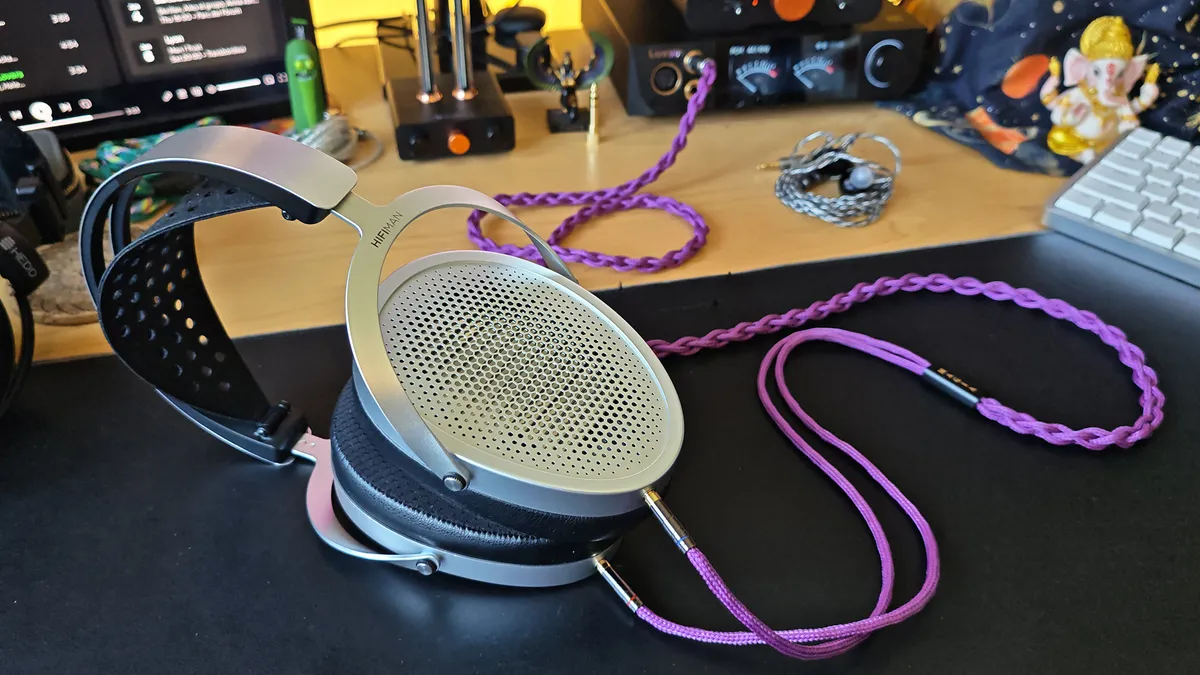
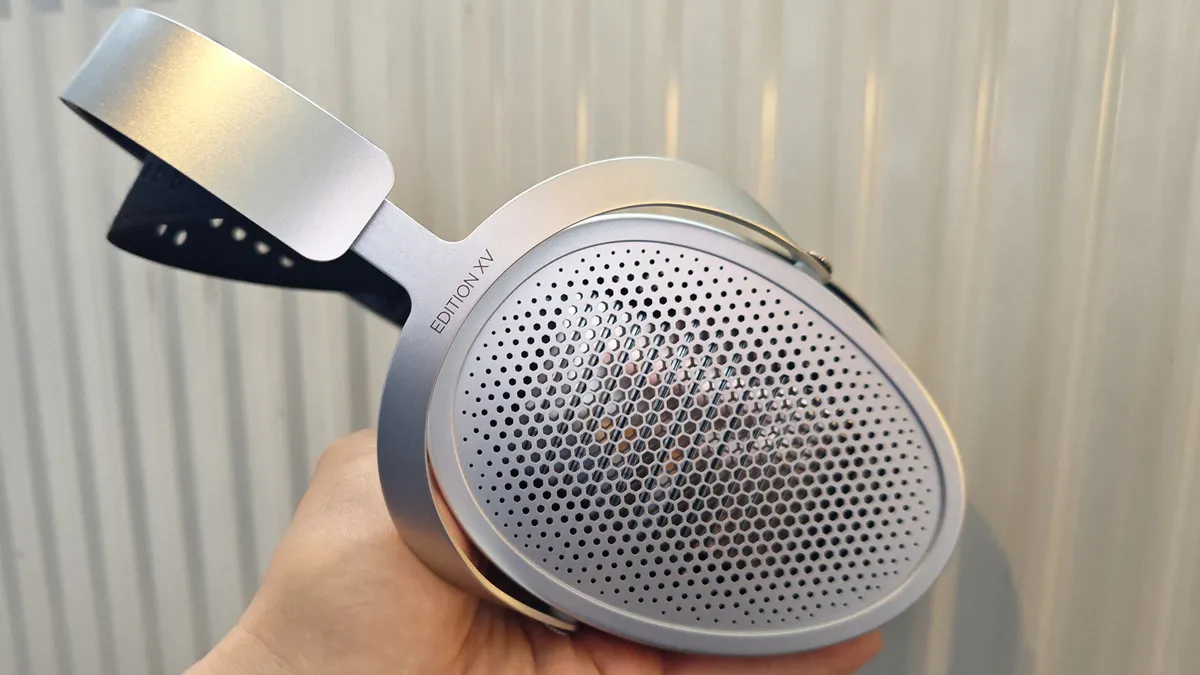
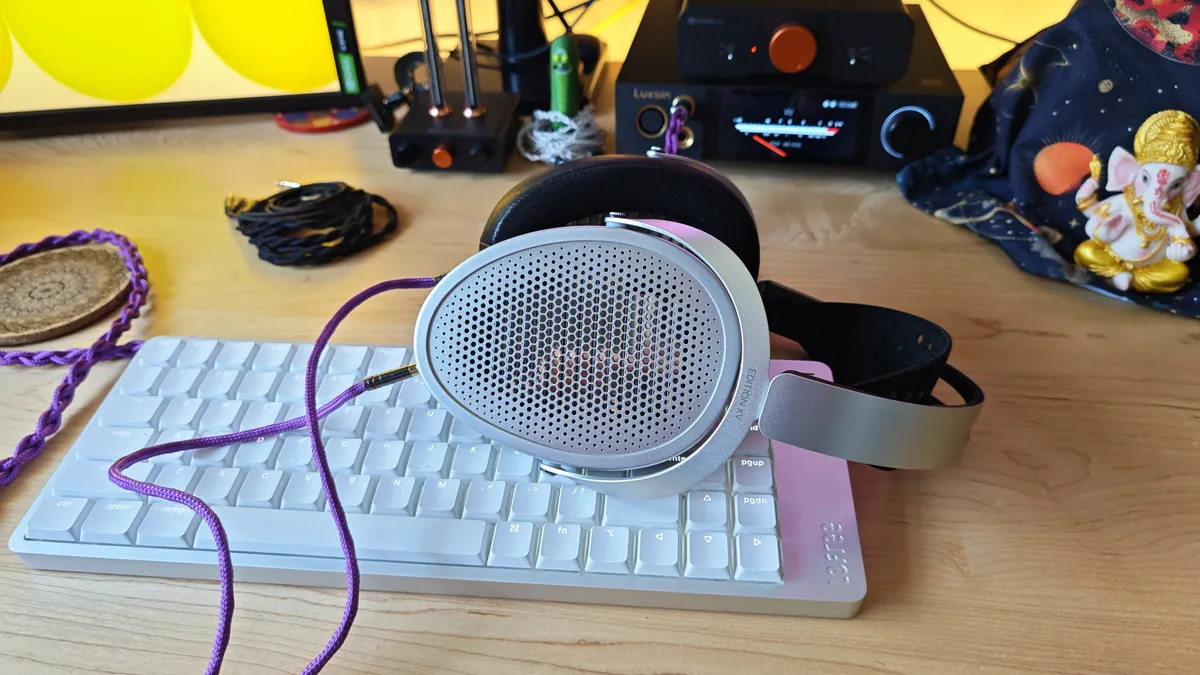


20-second review: The Edition XV gives a very open, detailed experience, but not at the cost of your ear health – unlike most audiophile headphones, it does not have a treble-forward or bright tuning. That means you probably won't get the perceived details that come with bright cans, but it also means that if you're sensitive to treble frequencies, you're in safe hands with the Edition XV.
Price: This is $400, and to my mind it's worth every penny. Again, I would suggest this could be someone's one and only pair of headphones, especially if this is the warm/dark tuning for you.
Sound: As mentioned, this has a warm upper bass/lower midrange, a slightly pulled back upper midrange, and a smooth, though still extended, treble. The result is that you can listen to these for hours on end without your ears getting fatigued from elevated upper midrange/treble burnout. I actually think there's plenty of detail on show here, it's just more measured than the treble screechers out there. The Edition XV really is a quintessential open-back headphone, and I feel that there's plenty of room given to instruments.
Comfort: With its in-built faux leather head strap, and massive ear cups that wouldn't even touch Dumbo's ears, this is a very comfortable headphone. And just as well, as it can definitely be used for multi-hour listening sessions with its inviting sound profile.
Best for mixing


20-second review: This headphone was specifically made as a tool for mixing engineers, and so has a tuning philosophy in contrast to 'what sounds pleasing'. The MM-500 is tuned to put a microscope over the upper midrange, and so the vast majority of instruments and all vocals. And what helps a mixer nail down the midrange of a mix allows the audiophile to bask in music in a very specific, analytical way. This is absolutely the maximum elevated midrange that I can enjoy, and the result is a very intense, fun listen.
Price: These bad boys are $1,699, and personally I think that pricing is very much aimed at studios and mixing engineers that want a pair of headphones to use for the rest of their working lives. With an exceptional build quality, that makes sense. It only makes sense to me for an audiophile is this is your absolute favourite tuning. They are special, but not for everyone.
Sound: Manny Marroquin tuned the MM-500 to remind him of the classic Yamaha NS10 mixing monitor speakers, which were absolutely unforgiving in their presentation of the midrange (they also had no bass to speak of, and way too much treble, but Manny didn't copy those traits thankfully). And so, the MM-500 are primarily designed to identify issues in the mix. And they will do just that! Play well-mixed tracks, and you'll be rewarded with an energetic, vibrant take on the music. Play crappy mixes, and my god they sound crappy on the MM-500. If you don't like vocal-forward tuned headphones, stay far away. If you do, these are in a league of their own.
Comfort: Although I've found mention that the MM-500 have a little too much clamp force, I found them to be incredibly comfortable. These things are also beautifully made, with their leather and aluminium chassis and spring steel headband all feeling excellent in the hand on on the head. Definitely designed for long listening sessions.
Quality build


20-second review: These are beautiful-looking, well-made headphones that sound both warm and dark, which means they're a good option for the treble-sensitive. I found that warm-dark tuning showed up as slightly muffled on some tracks, and unfortunately the HiFiMan Edition XV (above) is also a $399 headphone that goes for a similar tuning, and for my ears does it much better. But we all hear things differently, so if you prefer the look of these to the Edition XV, and you're after a warm-dark tuning, these are well worth checking out.
Price: These are competitively priced at $399/£350, but as I've said, this price band is competitive as hell. The HiFiMan Edition XV is $399, and is a fully open-back headphone, where I think the Cypher is somewhere in between closed and open. Still, for this build quality, it's still good value.
Sound: At a glance, you're getting a well-extended bass, an enjoyably-full midrange and a 6kHz elevation that brings a bit of extra detail, then a lack of upper treble which overall means it's warm, dark but with detail. That's an appealing tuning overall, but the odd track will sound muffled a touch too dark. Definitely not one for those looking for that classic 'Hi-Fi' bright, detail-rich sound. I'd go for the HD-550 for that, at this price range.
Comfort: For my slightly large head, I found the Cypher a touch clampy, but I enjoyed the excellent build quality and the plush ear cups were excellent. At 411g, this is an above average heavy set, but the in-built headband is very comfortable.
FAQs
What's the difference between commercial, pro and audiophile headphones?
Commercial headphones are characterised by extreme V-shaped sound signatures – elevated bass, elevated treble, and whatever midrange can be discerned between the two. Anyone that is coming from using this type of headphone – Beats by Dre, for example – is in for a detail shock when picking up any of the headphones above.
Then there are pro headphones, that generally serve a specific purpose other than making music sound 'good'. There are closed-back studio headphones mainly used for tracking in a studio – they need to isolate sound, prevent mic bleed, and withstand heavy use. You can also find open-back pro headphones, used for mixing and mastering. They can be tuned to spot mistakes in the mix, so it's common that you'll get an elevated upper midrange or treble to put that range of instruments / vocals under the microscope.
Then there are audiophile headphones that are just for the sheer joy of it all. There's no one 'good' tuning for these, but the Harman research found that what people describe as 'neutral' was also what they described as 'good', so that can often be a tuning goal.
However, there are as many differently tuned headphones as there are tastes in music, so choosing an audiophile headphone is a fundamentally personal journey.
Do you need a DAC (digital-to-analog converter) and amplifier to use these headphones?
Yes, but you likely already own them, and if you don't you probably don't have to spend a lot of money on getting them.
If you own an Apple Silicon (M-series) MacBook, it will have an in-built DAC/Amp that you use when you use the 3.5mm jack. Actually all laptops with a 3.5mm jack port do, but the quality varies – MacBooks are universally well-regarded. With most of the headphones in this list, a laptop will suffice in making the most of your new headphones.
There's a whole industry based on DACs and amps, and you might hear that the better the DAC/Amp the better the audio experience you will have. I broadly disagree with this.
There are now a number of excellent, affordable DAC/Amp dongle options out there that will do the job of letting your headphone shine – after all, that's where the vast majority of sound characteristics come from.
I have expensive desktop DAC/Amps because I've got them through work, but my MacBook would suffice if I didn't. Whenever I write a review, I test headphones across all my source gear. Aside from peak volume limits on harder-to-drive units, I hear no meaningful sound quality benefit when running them through a $700 desktop setup versus a cheap portable dongle. I'm listening to the D1 headphones right now, through my $33 FiiO dongle, playing lossless Spotify on my smartphone, and it sounds just as great as it does through the Luxsin X8.
Ultimately, your ears may pick up differences that you find meaningful enough to justify spending lots of money on desktop DAC/Amps. Perhaps I'm just blessed that mine haven't. But if you're in doubt, you can blind test different DAC/Amps and find out for yourself. I have done this, and I cannot find meaningful differences between various DAC/Amps that are not broken or designed to distort the frequency response.
Of course, a nice-looking DAC/Amp is more than just a source of power – they can be designed beautifully, and using them can be a lot of fun. Again, that's a very personal thing. So, do you need to spend as much on a DAC/amp as you did on your headphones? In my humble opinion, hell no.
What is the best audiophile headphone?
I wish I had an easy answer to this question, but the fact is we all hear sound slightly differently, we all interact with headphones slightly differently, and we all have different ideas of what sounds 'good'.
Depending on your age and other factors, you might not be able to hear above a certain frequency; when we put headphones on, they actually interact with our heads differently, accentuating treble for some, elevating bass for others; a treble-elevated set can bring undiscovered detail to familiar music for one listener, but could be unbearably piercing to another.
So, what's even the point of making a list like this then?!
Well, build quality and design can be objectively evaluated. A sturdy, lightweight pair of headphones that have a modular design so parts can be replaced for a lifetime's use, is obviously better than an uncomfortable set that breaks a week after you've bought it.
When it comes to sound, there are preference targets that are useful in determining how most people will respond to a pair of headphones. The more in that target range, the more people will like the tuning, the more deviations from those targets, the fewer people will dig it (though those few people may dig it a lot).
Ultimately, this is a very personal list of my favourite headphones, and I've tried my best to explain my reasoning behind my choices. However, I totally expect people to disagree with some of my choices.
For me, the main joy of this hobby is for each individual listener to find their own 'best' pair of headphones. Hopefully my list can help them in that journey.