
The best free 3D apps allow many 3D designers to avoid the high cost that comes with some professional software. Some also provide the flexibility for viewing and creating 3D models online or via mobile apps, and they can be a great place to start if you're getting into 3D printing.
Many free 3D apps are stripped-down versions of more fully featured programs, making them good primers for those starting out. Some can lack certain functionalities (see our pick of the best 3D modelling software overall if you do need something more powerful), but there's such a variety of free 3D apps available that you may be able to find a workflow that works for you by combining different tools. Our top choice, Blender, has enough functionality to serve many people's needs.
Below, we've picked out the best free 3D software based on our own reviews and feedback from 3D designers who contribute to the site and our magazine 3D World. We've compared their features and performance and suggest what each is useful for. Some are browser-based tools. For those that don't support mobile use, you might want one the best laptops for 3D modelling.
The best free 3D apps today
01. Blender

- Operating system: Windows, MacOS, Linux
The undisputed king of best free 3D apps, Blender is an immensely powerful open-source tool for 3D creation that can handle a lot of what more expensive packages can do, from modelling and texturing through to rendering and compositing.
Blender is available for all major operating systems, and while it's traditionally had a bit of a reputation for being just a little too open-source in its look and feel, it has transitioned to a more user-friendly and industry-standard interface. So now it has a right-click context menu, as well as keyboard shortcuts that do what you'd expect if you're used to other packages. There are plenty of helpful Blender tutorials around to help you learn the ropes too. See our full Blender 4.1 review for more details. The latest version of Blender available at the time of writing is Blender 4.3 beta, released in November 2024.
02. Tinkercad

- Operating system: browser-based, plus iPad app
Designed as an introduction to Autodesk's more heavyweight CAD tools such as AutoCAD and Maya, Tinkercad is one of the best free 3D apps for beginners. It's a set of free online tools to get you started not only with 3D, but also with electronics and designing with code.
Built with teachers, kids, hobbyists and designers in mind, it's all about placing, adjusting and combining objects to create designs. With a bright drag-and-drop interface, it's accessible for those with no CAD experience, and it comes with a whole stack of tutorials to get you started. You can move, rotate and scale shapes, make them solid or “hole” and grouping them to create more intricate 3D models. When you're done you can export your work for 3D printing or export a slice as an SVG file for laser cutting.
03. Wings 3D

- Operating system: Windows, MacOS, Linux,
If 3D modelling's something you want to try, Wings 3D is a great way to dip a toe in the water. It's a pure modelling app that lets you build a basic 3D model out of polygons and then smooth it out by subdividing the mesh.
It's a fairly basic experience with a slightly unusual customisable interface, but it's designed to be easy to use and supports lights and materials as well as having a built-in AutoUV mapping facility.
04. SculptGL

- Operating system: browser-based
Another basic option for beginners wanting to get a feel for sculpting in 3D is Stéphane Ginier's SculptGL. It's a free digital sculpting app that runs in your browser, and it comes with plenty of features to get you started with 3D sculpting with a mouse or tablet.
There are assorted brushes and manipulation tools to try, plus PBR vertex painting and alpha texture support, as well as multi-resolution sculpting, voxel remeshing and dynamic topology, and it'll export your work as an OBJ, PLY or STL. Ginier's no longer working on the app apart from minor fixes and has moved on to the iOS and Android app Nomad Sculpt, which is free for Android but costs $14.99 for iOS. However, SculptGL is still available to work with.
04. Daz Studio

- Operating system: Windows and MacOS
3D modelling isn't for everyone, and if you can't get your head around it, there are still some great options for creating 3D art without having to deal with polygons and subdivisions. The free scene creation and rendering tool Daz Studio doesn't have any modelling tools, but it allows you to build complex 3D scenes and animation using a vast library of ready-made people, animals, props, vehicles, accessories and environments.
For beginners, there are plenty of in-app interactive tutorials to help you get to grips with the features, so you can start learning about things like lighting, texturing and rigging, and once you've completed your 3D masterpiece, you can render it at photo-realistic quality to use however you want. Daz Studio is free with the 3D asset manager Daz Central.
05. Vectary

- Operating system: browser-based
Browser-based Vectary claims to be the “easiest online 3D and AR design tool” around, and we agree that its interface is very simple to use for mesh and parametric modelling, even if you have only very limited knowledge of design. It also offers more resources than, say, Tinkercad. With a focus on rendering it's aimed mainly at graphic design and product design, so it's focus is on rendering, but it can be put to other uses too.
You can make use of pre-rendered models, including 3D typography and web headers (most of these have a cost though). There's also the ability to collaborate on projects by creating teams, but again this feature is locked in the free version (a Pro subscription costs $12 a month, and a Business subscription to remove watermarks costs $25 a month).
06. FreeCAD
- Operating system: Windows, macOS, Linux
If you find Tinkercad to be too limited for your needs, you might want to dive into FreeCAD. This open-source parametric modelling software is free to use, modify, and distribute and extendable using the Python programming language.
While Tinkercad is designed around ease of use, FreeCAD is more fully featured with a wide range of tools for creating and modifying 3D models through a history-based, constraint-driven workflow. It's suitable for generating 2D drawings from 3D models, BIM (Building Information Modeling) and CNC manufacturing. The downside is that it's less intuitive and presents a much steeper learning curve, but there are lots of tutorial videos on line to help you learn how to use it.
Another benefit of open-source software like Blender and FreeCAD over proprietary free 3D software is that there's less risk of the tool suddenly being shut down or switched to a paid plan after you've committed to using it for your work. Just the last couple of years have seen the closure of several free 3D apps, including ZBrushCoreMini and Clara.io.
07. Bforartists

- Operating system: Windows, MacOS, Linux
With Blender having adopted a more standardised look, there's possibly less of a need for Bforartists, but it's definitely worth checking out this free 3D app if you're still not keen on Blender's user interface.
It's a fork of Blender that's aimed primarily at artists, and which has been created to be much easier to use, with a much improved and intuitive graphical UI. This shouldn't come at the expense of functionality, though; the development team promises that every feature that works in Blender should also work in Bforartists.
08. Meshmixer

- Operating system: Windows
Meshmixer is another tool developed by industry-leader Autodesk. It's a lightweight Windows app based on triangle meshes, and while it's good for repairing and tweaking existing work, it has an array of modelling tools as well. It may take some getting used to for beginners but is well worth sticking with, and it's ideal for 3D printing (see our pick of the best 3D printers here). Note that Autodesk is no longer supporting Meshmixer (it's incorporated many of its functions into the paid software Fusion 360, but it says it has no plans to retire its free app.
09. Terragen

- Operating system: Windows and MacOS
When you're thinking big on a 3D project, you need something that can create a suitably impressive world, and Terragen fits the bill in every respect. It's a powerful tool for building and rendering realistic natural environments; if you can imagine a landscape, Terragen can make it.
The free version is for personal use only (although you can use it commercially on a 30-day trial basis) and comes with a few limitations over the full version, but it's an ideal way to explore Terragen's stunning world-creation tools.
10. Adobe Substance 3D Viewer
- Operating system: Windows and MacOS
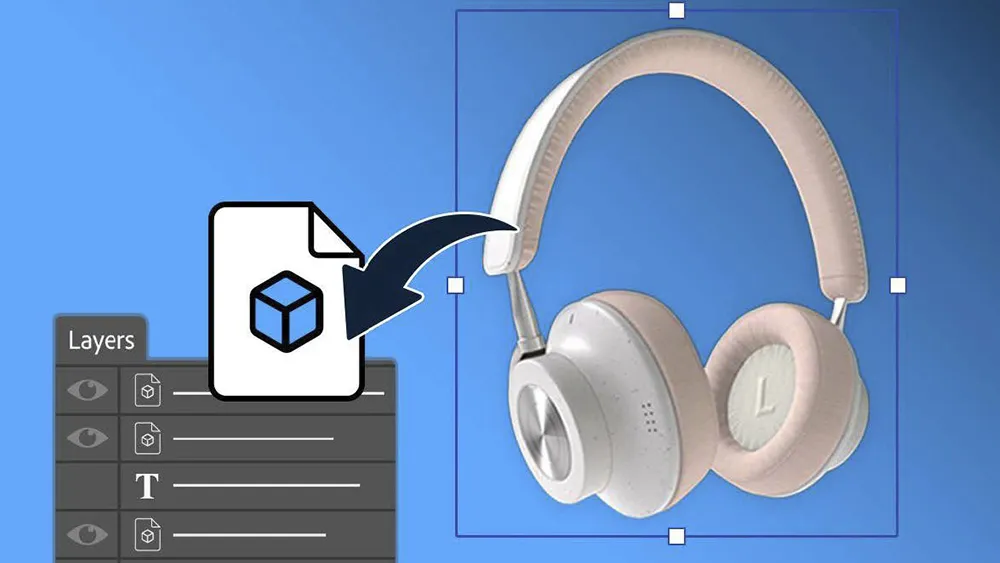
Newly released in beta in 2024, the Adobe Substance 3D Viewer is a free 3D app for viewing rather than creating 3D models, but it's one that should be useful for Photoshop users in particular, since it allows 3D models to be opened in the industry-standing image editing software again.
Substance 3D Viewer can be used as standalone app to view, customize, or create imagery from a wide range of 3D files or as an integration with Photoshop (beta) app, when it can allow designed to incorporate 3D models into 2D designs as editable smart objects. It also supports the generation of 3D models as gaussian splats, which could save users from having to use so many different tools.
Alas, the rest of the Adobe Substance 3D apps still require a separate subscription from Creative Cloud.
To improve your experience with 3D apps you might want to check out our pick of the best laptops for AutoCAD. We also have a guide to the The best 3D pens for making physical 3D designs.

