When I was a kid in the 1970s, I loved cartoons. Possibly more than anything else in the world. And that wasn't particularly unusual. We all loved cartoons. My only issue was that I couldn't get enough of them. When I heard that American kids with cable had the option of watching cartoons all day I almost fell off my chair in jealousy.
I still love cartoons, although now as a fully grown man I call them "animations" or "anime" and tend towards stuff that's a little more cerebral than Wile. E. Coyote having an anvil fall on his head. But realistically, I am still a big kid at heart. And so you'd think the fact my dreams have come true – that I could theoretically now stream cartoons 24/7 – would make me very happy.
But like most things in life, the more you get of something, the more it all starts to feel the same. Even my beloved Pixar, these days, no longer excites me visually. Yes, it's all so astonishingly detailed these days, as I celebrated in my article Mind-boggling facts about the making of Toy Story 4. But it also feels like something is being lost. Everything looks slick. Everything looks incredible. And yet, increasingly, everything looks the same.
How Laika's different
Laika, the stop-motion studio behind Coraline, ParaNorman and Kubo and the Two Strings, though, is the shining exception. And its new film Wildwood, about a teenager called Prue who enters a magical, hidden forest to rescue her baby brother, is making me far more excited that anything coming out of Disney, Pixar or Dreamworks.
Based on Colin Meloy and Carson Ellis's 2011 novel, Wildwood has been in development for 15 years. And from a production standpoint, it's a huge step up from anything the studio has attempted before.

The movie has been crafted across 136 unique locations (more than twice Kubo's 60), with everything built as physical, tangible sets. That's more than even most live action films can boast these days, right?
And "craft" is exactly the word to use in this context. Because let's face it, stop-motion is not exactly the easiest way to make a film in 2026. Every gesture, every blink, every gust of wind through a puppet's hair has to be built and moved by hand, one frame at a time. It's slow, it's expensive, it's wildly inefficient.
Then again, what would be the exact opposite of that? AI animation, of course. Which absolutely makes me want to run into the street and shout: "Give me slower and inefficient, or give me death!"
Watch the Wildwood trailer and you can see this philosophy in action. There's a shot of Prue cycling, hair swaying in the breeze, and you can practically feel the individual strands being placed, frame by frame, by a real hand.
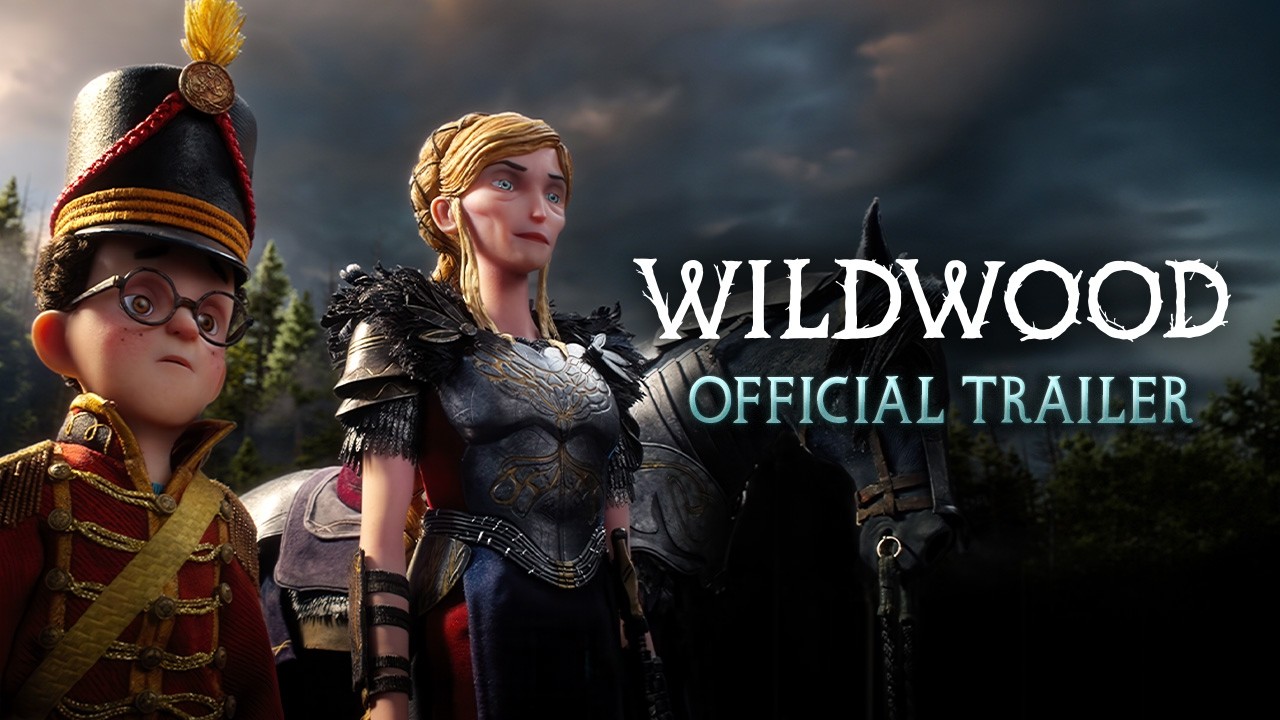
It's the same quality that made Coraline's Other Mother so unsettling: not the design of her buttoned eyes, but the tiny, imperfect flicker in how she moved, a flicker no algorithm would ever generate.
Why it works
Kubo's giant skeleton fight had the same effect: a colossal puppet lumbering across a beach, its joints catching the light in ways that felt weighty rather than simulated. Wildwood's crows, swarming down to snatch Prue's baby brother, evoke that same unnerving physicality. You believe they could actually grab him, because in a physical sense, something in that studio actually did.
It's not like Laika doesn't use digital technology to help make its films; it definitely does. But it's the manipulation of physical objects that lies at the heart of its process. So you're not just watching a story, you're watching thousands of individual creative decisions, made by actual people.

Screenwriter Chris Butler has said he hopes Wildwood becomes something of a rallying cry for the industry against AI. And I reckon it well might.
Because whether or not you're a creative yourself, we all have a deep-down craving for work that visibly bears the fingerprints of the people who made it. And Wildwood looks like being the perfect vehicle to remind us all of that.
Making your own? See our best laptops for animation guide.