Our Verdict
This is how you make a 'neutral with bass boost' IEM. Clearly based on the JM-1 tuning target, the Light Shuttle is a bassy boy, with a natural-sounding midrange and a really impressive, balanced treble. There are IEMs with more sense of detail, but the Light Shuttle is engaging and fun with absolutely no red flags, and all for just $190. This will be appealing to the majority of people.
For
- +Great value
- +Fun bass
- +Exciting and engaging yet still balanced
- +Fits well
Against
- -Odd look
- -There are so many JM-1 tuned IEMs at this point
Why you can trust Creative Bloq Our expert reviewers spend hours testing and comparing products and services so you can choose the best for you. Find out more about how we test.
Audio reviewers are the worst! We complain that brands release the same old tuned IEMs, just with different skins, only to balk when a genuinely new tuning comes along, dismissing it as 'specialised'.
So what happens when an IEM gives us bold and exciting and familiarly balanced? That's what Juzear and Super Review's Mark Ryan have done with the Light Shuttle, and I think all we can do is rejoice (and nit-pick).
Price: $189.99/£175
Release: August 2026
7 drivers: 1 x 10 mm dynamic driver; 4 x custom balanced armatures; 2 x custom micro planar drivers
Materials: CNC-machined solid aluminium alloy faceplates, DLP 3D-printed resin shells
Cable: 1.2 m
Impedance: 32 Ω
Sensitivity: 113 dB (±1 dB)
Weight: 6.4 g each
Let me be clear – the JM-1, New Meta, neutral with a bass boost is not my favourite tuning. I certainly prefer the aesthetics of most other Juzear IEMs over this weird organic metal and dull bling thing. But you might love it, and what's really important is how well the IEM implements the chosen sound profile. The Light Shuttle absolutely nails the JM-1-style, neutral-with-bass-boost brief, offering a balanced and exciting sound profile, that the majority of listeners should like, and all for under $200. That is really impressive, really rare, and should be celebrated.
At several times the price of the best budget IEMs out there, the Light Shuttle is also several times better, and it will definitely feature in my upcoming list of the best IEMs under $500.
Sound profile

Bass: The Light Shuttle is a bassy IEM, but it's well-controlled. It's warm with a sub-bass focus, and though I enjoy the punch that I get with it, compared to the bass profiles that I love, such as the $350 Xenns Tea Pro, it lacks a little attack and sense of grip.
There's always going to be pros and cons with the slight dip between 150-300Hz that the Light Shuttle offers. This recess creates a clean separation between bass and midrange, so the former doesn't bleed into the latter, and the mid-bass delivers more pronounced punch. But it also runs the risk of taking a touch of body out of the sound – in the worst cases, IEMs with this dip can sound lean.
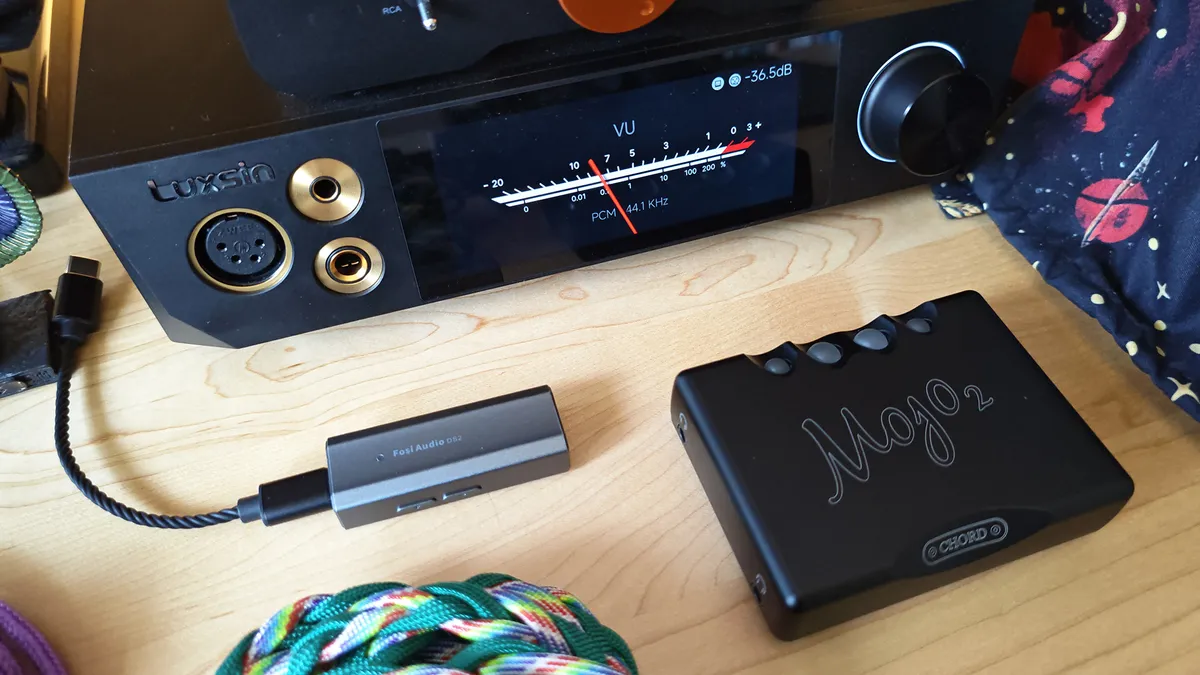
For all my headphone and IEM reviews I play them with my Luxsin X8, Chord Mojo 2, and Fosi DS2 DAC/Amps, as well as straight from my MacBook Air (M4) and Denon RCD-M41DAB player. They all provide a transparent source for a clean, detailed signal. My music sources are Spotify Lossless and CDs.
However, it's done really well here, and that added sub and fuller midrange means things don't sound lean. Ultimately, for $200 I'm impressed with the level of punch and bass detail I get, though if you pay more, you will find punchier, grippier bass.
Midrange: The lower midrange is fairly dead-on neutral, offering more body to instruments than an IEM tuned to the Harman target.
The upper midrange is also fairly neutral, though it's a beat behind the JM-1 target, with that JM-1 target already being a little dipped when it comes to upper mids compared to Harman. Detractors of the JM-1 tuning might want a bit more presence or bite in vocals in the upper midrange, which would add more attack to guitars, snare drums, brass and woodwinds and of course vocals.

I think the Light Shuttle does a great balancing act here, and although it pulls things back a touch from 1-3kHz, instruments never sound lean or soulless. That's thanks to the warm upper bass, and a really well-executed treble, though this combination also means that the Light Shuttle isn't the most technical-sounding IEM on the block... but at $190, I'm really nit-picking there.
The treble of the Light Shuttle is really good. Unlike most other lower frequencies, when it comes to treble, you don't need to have too much or too little before it starts grating. Treble is often the part of the frequency response that's most divisive, and it's certainly the hardest to tune.
I think the treble of the Light Shuttle is carefully balanced and pulls off a great feat – it's crisp, clear and well extended with no dark patches, but is never overdone or sibilant. It contributes to a well-detailed, tonally correct overall sound, and I just can't imagine anyone finding any hot spots within it. Now, that's rare in some $500 IEMs, so it's super impressive in a sub-$200 set.
Price & value
The $200 price range of IEMs is super competitive, but often you'll get a set that does one or two things really well, but falls short elsewhere (usually the treble).
The one that springs to mind is the Kiwi Ears KE4. It was one of the first affordable IEMs to be tuned to the JM-1 curve, and had really impressive midrange for a set around $200. But, as I cover below in the in-depth comparison section, it just has too much bass.
Now, whether you like the JM-1 / neutral with bass-boost style of tuning – and plenty of people don't – the Light Shuttle is a very good implementation of it. And though it has a whopping big bass shelf, it's always balanced with the rest of the tuning.
An IEM this balanced – an all-rounder that's also exciting – is usually reserved for the $350-and-up sets. The Xenns Tea Pro, for example, although going for a slightly different sound profile, is equally balanced, with lower, mid and highs all working together to create something cohesive.
In short, the Juzear Light Shuttle definitely represents good value for $190. Great value, in fact.
Competition

I've chosen to compare the Juzear Light Shuttle with the Juzear Harrier ($330) and the Kiwi Ears KE4 ($199), because it's cheaper and better than the Harrier, even though they're both tuned by the same guy, and they're largely going for the same style. And because the KE4 is seen as one of the original JM-1/'New Meta'-tuned IEMs, and I want to see how the Light Shuttle compares to the OG.
Light Shuttle vs Juzear Harrier

The bass is very similar between these two, though I'd say the extra sizzle up top gives the edge to the mid-bass of the Light Shuttle – that, and the slight 250Hz mid-bass depression that separates the bass and mids better. The result is a slightly more satisfying bass to the Light Shuttle (though it's not massively different).
The lower midranges are very similar, again, with maybe a smidge more body to the Light Shuttle. It's when you get North of 1kHz that things start sounding noticeably different. The Harrier is more forward in the 1-3kHz region, giving more attention to vocals in comparison to the Light Shuttle. This is a style thing, so I don't think one is better than the other, though I will say that the extra information here on the Harrier ends up doing the heavy lifting of detail retrieval in lieu of a lacklustre treble.
When we get to the treble, the Light Shuttle steals the show. It has more attack to hi-hats, cymbals and brings a higher edge to vocals than the Harrier. But it stops short of sibilance, and just sounds more detailed, more decisive, yet – paired with that dip between 1.5-3kHz – also balanced, smooth even. The Harrier's treble in comparison sounds good... until it doesn't. Lucinda Williams' treble-feast track Sweet Old World, seems to sound both sharp and dark. It ends up sounding a little smeared in comparison to the assured Light Shuttle.
The Juzear Harrier costs $330, the Juzear Light Shuttle costs $190, but for me the Light Shuttle is twice the IEM that the Harrier is. They also share the exact same cable (which is pretty great). There's a clear winner here, and it doesn't rhyme with barrier!
Light Shuttle vs Kiwi Ears KE4

The Kiwi Ears KE4 takes a slightly warmer route to the JM-1-style tuning, but still has a whopping big bass boost, like the Light Shuttle. I found it really hard to find a clear winner out of these two, and think as good as the Light Shuttle is in 2026, the KE4 is still a strong consideration two years after its release.
Things are a little cleaner in the bass with the Light Shuttle, with the KE4 offering a bit more warmth in the mid-bass.
In the midrange, there's a smidge more incisiveness with the Light Shuttle, and the KE4 sounds a little more lush. Vocals are a foot or so closer to you with the Light Shuttle. Personally I don't find either one more appealing than the other – both approaches are enjoyable and really well executed.
If you own the Kiwi Ears KE4, I wouldn't be in a rush to buy the Light Shuttle – there's just not enough difference between them. However, if you've specifically thought your KE4 could do with a smidge less warmth, a touch more forward vocals, and a better cable with modular terminations, then sure, the Light Shuttle is for you.
The KE4 is a little smoother, the Light Shuttle a little more exciting, but they are both absolutely the best $200 IEMs I've heard to date. You can't lose with either of them.
Upgrade/downgrade?

If you've got the Juzear Defiant, getting the Light Shuttle would be an upgrade worth considering. Now, I love the Defiant for its exciting tuning and excellent value for money at $100. But the Light Shuttle's tuning is more sophisticated, while still being plenty exciting too.
The Defiant has a nice bass boost, but it's a little sloppier than the Light Shuttle, and has a touch messier transition into the mids. The Light Shuttle's mids are subtler and more impactful, whereas the Defiant's mids can come off as a little shouty in comparison. I also find the treble better done in the Light Shuttle, though we're talking slim margins.
My review of the Juzear Defiant is four and half stars out of five, while this review remains four. That's because the Defiant is just $100, and for that it represents insane value for money, as it also comes with a quality modular cable. So, I prefer the Light Shuttle's sound profile, but when you look at the bigger picture of value, build quality and comfort, the Defiant has the edge.
Should you buy it?

The Juzear Light Shuttle is a very good IEM that I strongly recommend to anyone who wants one of the better 'neutral with bass boost' tunings. The fact you get an excellent modular cable and plenty of decent ear tips as well, sweetens the deal.
The fact that the Light Shuttle sounds better than the Juzear Harrier – an IEM that costs $140 more and which goes for a very similar sound profile – while having the exact same cable, makes it a no-brainer for me.
I didn't give the Light Shuttle a four and a half stars because as fun as the bass is, it's not amongst the best I've heard (I prefer the bass of the Truthear Pure, which costs $90, for example), and I really think the weird faceplate is off-putting.
This is a really well tuned IEM, managing to be an all-rounder that doesn't bore you to death. It's balanced and exciting, and it's one of the best IEMs to be released this year so far.
out of 10
This is how you make a 'neutral with bass boost' IEM. Clearly based on the JM-1 tuning target, the Light Shuttle is a bassy boy, with a natural-sounding midrange and a really impressive, balanced treble. There are IEMs with more sense of detail, but the Light Shuttle is engaging and fun with absolutely no red flags, and all for just $190. This will be appealing to the majority of people.