






If you’re in the market for a pair of in-ear monitors (IEMs) that sound warm and smooth for under $200, here's a new option that's well worth checking out (though I advise you to look at our list of the best budget IEMs under $100).
I say this sensing that many people will be turned off by the brand's name, which is natural to read as "Awful". The fact, too, that its press release is set in the Comic Sans font means even some journalists might not take them seriously. But they should!
Marketing is one thing; technical achievement is another. And after getting a few days listening to these new earphones, what's important to me is that the MiracleOne, on sale today for $199.99, prioritises comfort and design just as much as sound quality. It's enough for me to consider it for our list of the best IEMs under $500.
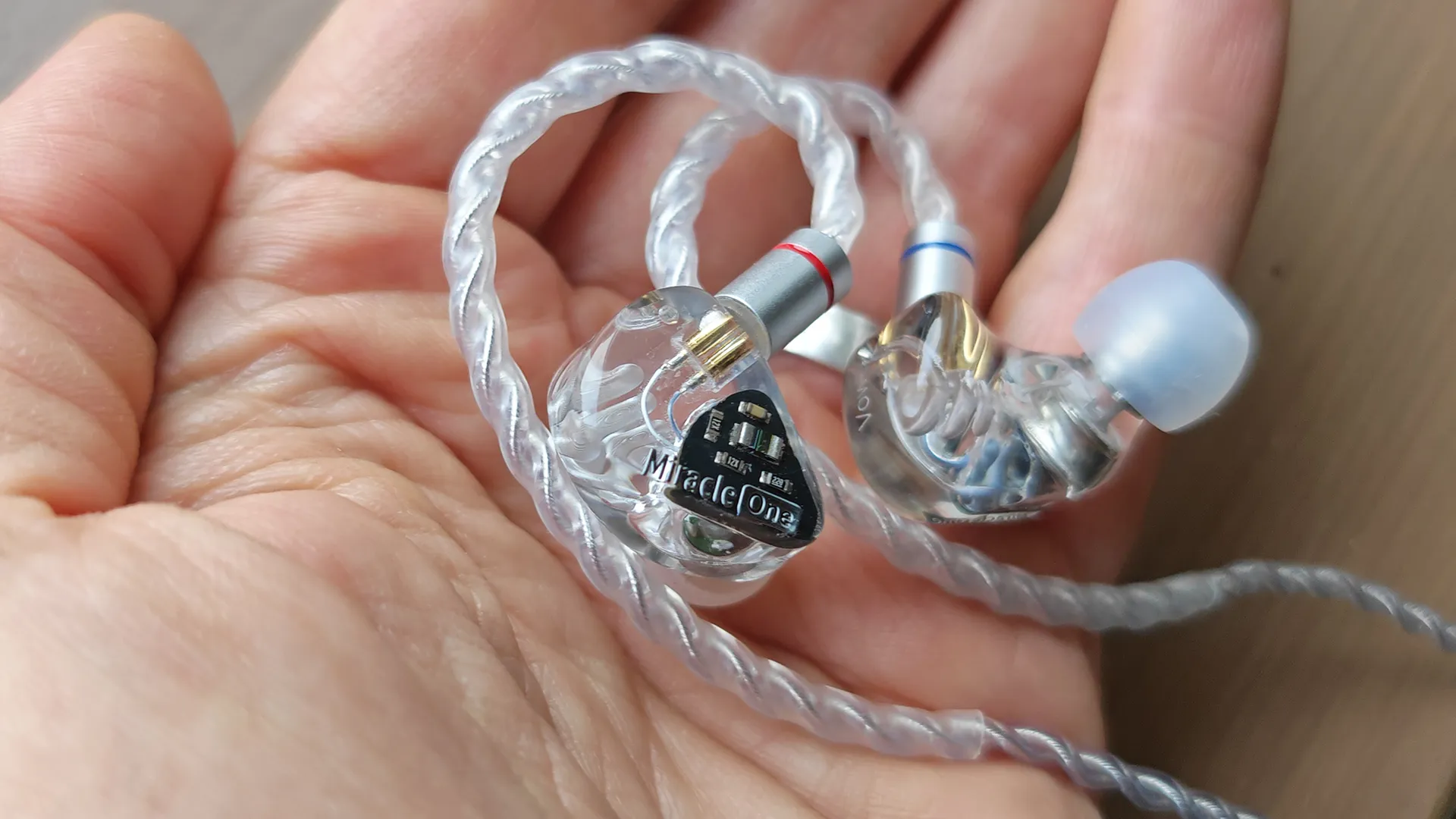
What am I talking about? Well, the MiracleOne uses just one driver, so it’s tiny (6mm across, where most single-driver sets use 8-10mm). That means smaller shells, lessening the strain on your ears over long sessions. And the design is a really cool transparent resin that allows you to see what's going on inside. A design choice I can definitely get behind.
Looks and specs
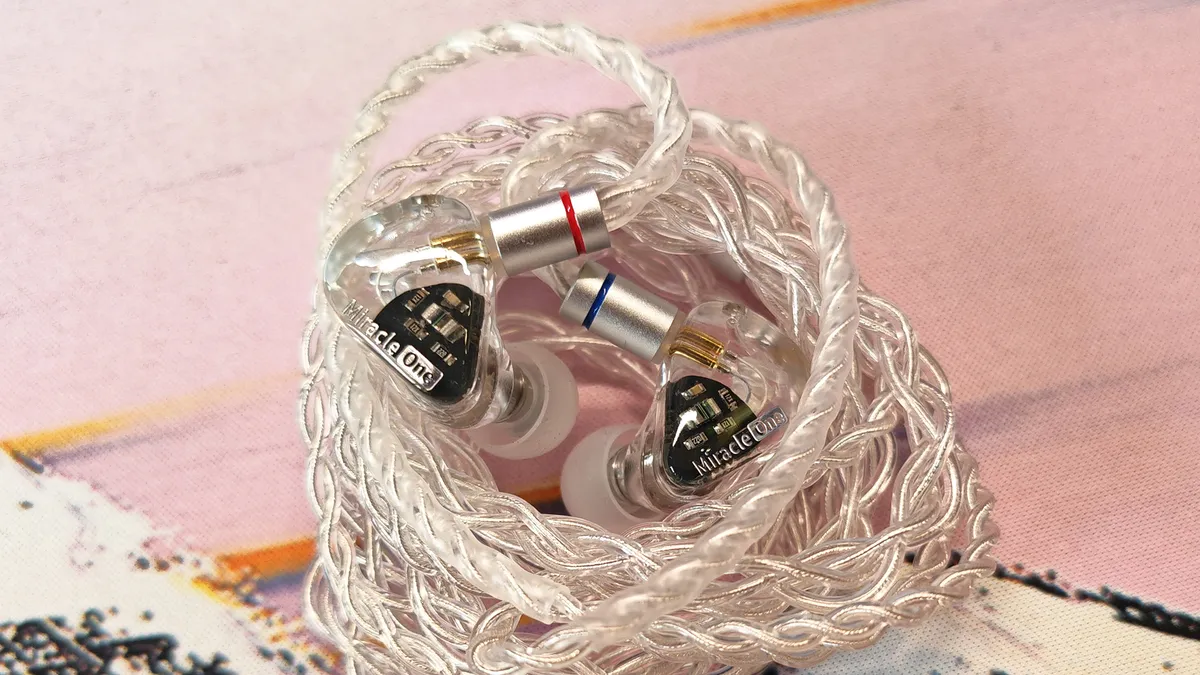
The shells are made from transparent resin, so you can see the gold 2-pin sockets, the acoustic tubing and a small black circuit board, finished off with a polished metal nozzle. In short, if you like seeing the gubbins in your gear – the sort of approach popularised by the Nothing range – you’ll love it. If you don't, you won't.
The driver is made from a soft, springy silicone material, and sits inside two small sound chambers designed to tune the sound. One of these is designed to take the harsh edge off high notes. The other keeps the bass tight.
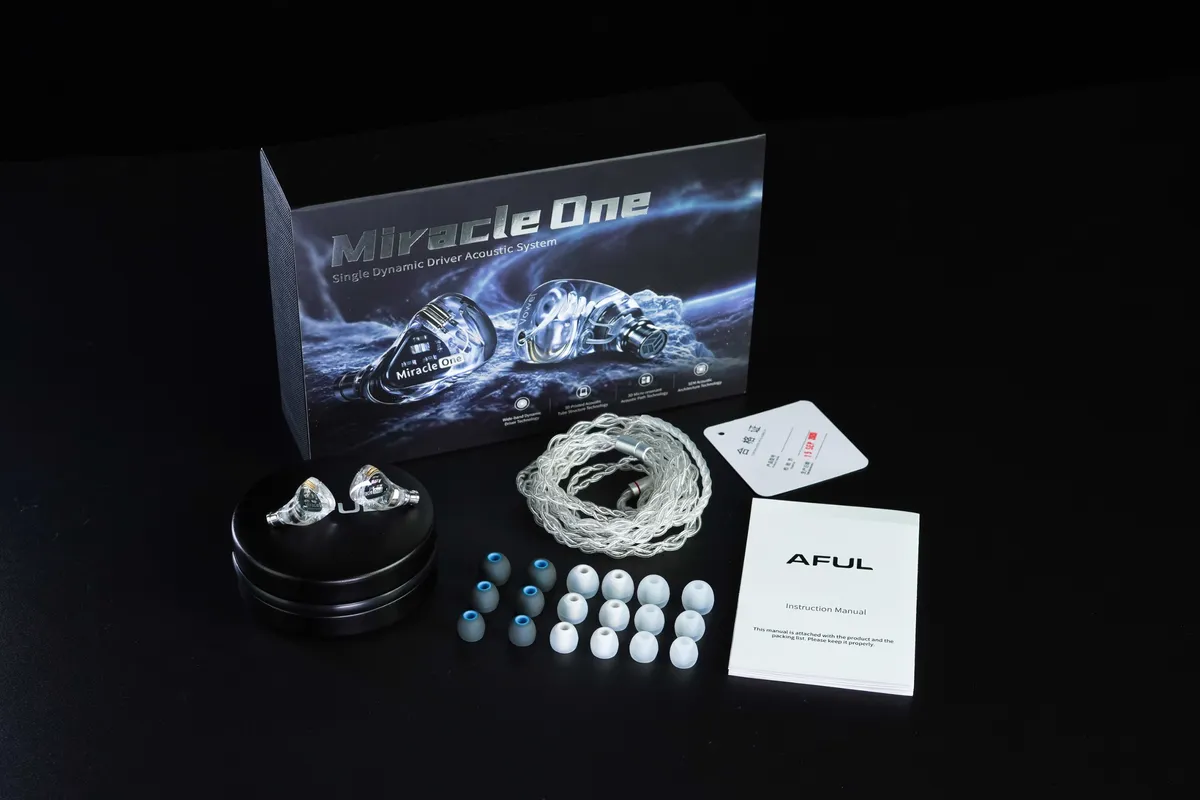
Handily, the cable detaches from the earpieces, so you can replace it if it breaks. You also get a carrying case and ear tips in three styles, each of which tweaks the sound slightly (fuller, clearer or more spacious). Note that you’ll need to pick your plug when you order. The standard 3.5mm suits most people, while the 4.4mm might be better for dedicated music players and headphone amps.


Here's the killer question, though: how does it compare with similarly priced IEMs? Well, listening to the MiracleOne, I immediately thought of the classic New Meta Kiwi Ears KE4 – one of our choices among the best IEMs under $500?
The KE4 is a hybrid with two dynamic drivers and two balanced armatures, while the MiracleOne relies on just one driver. Both have a warm, easy-going sound, but the KE4’s big strength is its midrange – vocals and instruments come through rich and detailed, backed by a wad of bass that can sometimes get a bit boomy.
I'd say that both the KE4 and the MiracleOne share a similar deep, rumbling bass, but MiracleOne has better separation between that bass and the midrange. They're both smooth in the upper mids, but I feel that vocals are a little more forward with MO than the KE4.
Ultimately, I think this is a strong single-dynamic IEM that trades punches with an established classic, so it's well worth checking out. The fact that it looks better than 90% of IEMs isn't going to hurt its chances of success either.