







The best in-ear monitors (IEMs) can cost around the same, use similar drivers, yet not actually sound similar at all. This makes shopping for them a bit of a challenge.
To help you out, I've organised this list by sound rather than by specs. Whether you want bright, airy detail, warm and lush musicality, or a dark, smooth treble, there's a set here for you, and they're all under $500.
My top recommendation overall is the $350 CrinEar Reference: the best balanced IEM I've heard, and neutral without being boring. Also check out my guides to the best budget wired headphones, and the best-sounding wired headphones overall.
Best IEM under $500


5-second review: Released in 2026 at $349.99, the Reference is CrinEar's flagship attempt at building a truly neutral IEM, and the result is one of the best balanced sets money can buy, thanks to exceptional timbre and top-notch imaging.
Sound profile: The midrange is where the Reference truly sings, with a spacious, natural presentation and outstanding imaging and clarity. Bass, meanwhile, has real grip and detail rather than being boosted for effect, restoring a sense of physicality that flat-tuned IEMs often lack without adding unwanted colour. Treble, finally, is controlled and refined, rounding off a balance so complete that it's tough to find anything worth faulting.
Comfort and build: The Reference uses a 5-axis CNC aluminium shell with mirror-polished trims, a build that's among the best in its price class, alongside a silver-plated copper cable with swappable 3.5mm and 4.4mm terminations. So far, I've found the fit and seal excellent over hours of continuous wear.
Best IEM under $100


5-second review: Retailing at just $89.99, the Pure is Truthear's follow-up to the well-regarded Hexa, pairing a single dynamic driver with three balanced armatures. At this price, it's impressive how natural and mature it sounds.
Sound profile: The Pure delivers natural, full-bodied audio with bass detail that stays clean and controlled rather than bloated. The midrange is the star, carrying plenty of weight and warmth, giving vocals and instruments a full-bodied, intimate tone. Treble is smooth and easy to listen to for hours, though it does have a bit of a dip, so it can lack a little sparkle right at the top.
Comfort and build: The Pure's small triangular resin shell, made with DLP 3D printing, sits comfortably in my ears, but there are reports of discomfort online. I've also not had any issues with getting a good seal with the Pure, though I've read that some people have. A silver-plated copper cable with a 0.78mm 2-pin connector completes a really good package that includes a cook leatherette bag and plenty of ear tips.
For more details, read my full Truthear Pure review.
The best bright IEM under $500


5-second review: The EP321 pairs a six-driver hybrid setup with a MEMS driver for treble, tech previously found only in a $1,800 flagship set. That leads to detail that goes beyond its price point alongside an engaging, analytical sound.
Sound profile: The EP321 is built around a detailed, airy treble that's revealing without turning fatiguing (for me). Bass is solid and textured rather than a headline feature, with a touch of bleed into the lower mids, so they're not lean. The midrange is clean and clear, if a touch less rich and natural than other rivals like the CrinEar Reference (above).
Comfort and build: The EP321 combines 3D-printed resin shells with stainless steel faceplates that outshine even some pricier rivals. At 7.5g each, they're light enough for long listening sessions, and the set includes a cable with swappable 3.5mm and 4.4mm terminations, giving flexibility across different sources.
For more details, read our full Binary EP321 review.
The best dark IEM under $500


5-second review: Released in November 2025, the Harrier was tuned by YouTube channel Super* Review's Mark Ryan, who gave its nine drivers a bass-boosted take on Crinacle's In-Ear Fidelity Neutral target. The result is grown up and easy to live with, if not the most thrilling listen.
Sound profile: The treble mostly sits below the Harman target, with scoops around 7-11kHz, making this the darkest tuning on my list, yet there's plenty of detail, and harsh mixes are tamed without being neutered, though a few treble-heavy tracks can sound a little smeared. Bass is big and confident, with an extended sub-bass that can dominate bass-forward mixes without swamping the midrange. The mids stay full and natural, with voices and instruments standing their ground.
Comfort and build: The 3D-printed resin shells weigh 7.1g each and stayed comfortable for hours once I'd found the right tips, which didn't take long with 15 pairs in the box. The faceplates look as grown up as the tuning sounds, and the 1.2m cable is pliant and pleasant to handle, with swappable 3.5mm and 4.4mm terminations.
For more details, read my full Juzear Harrier review.
The best warm IEM under $500

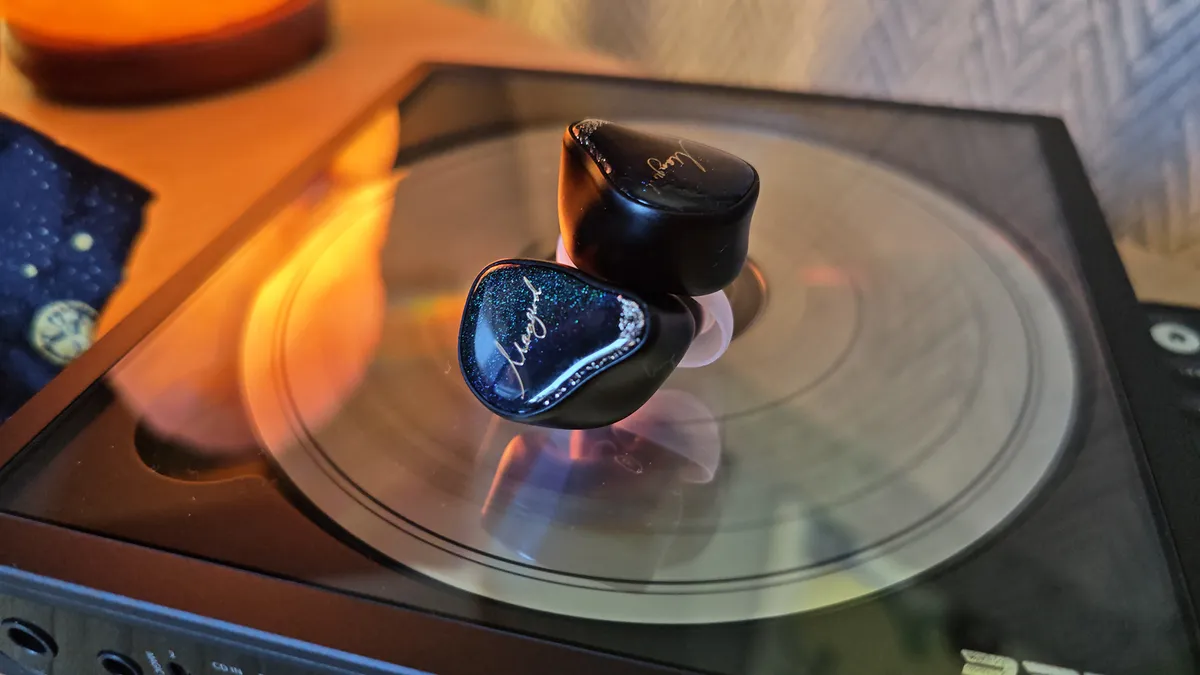
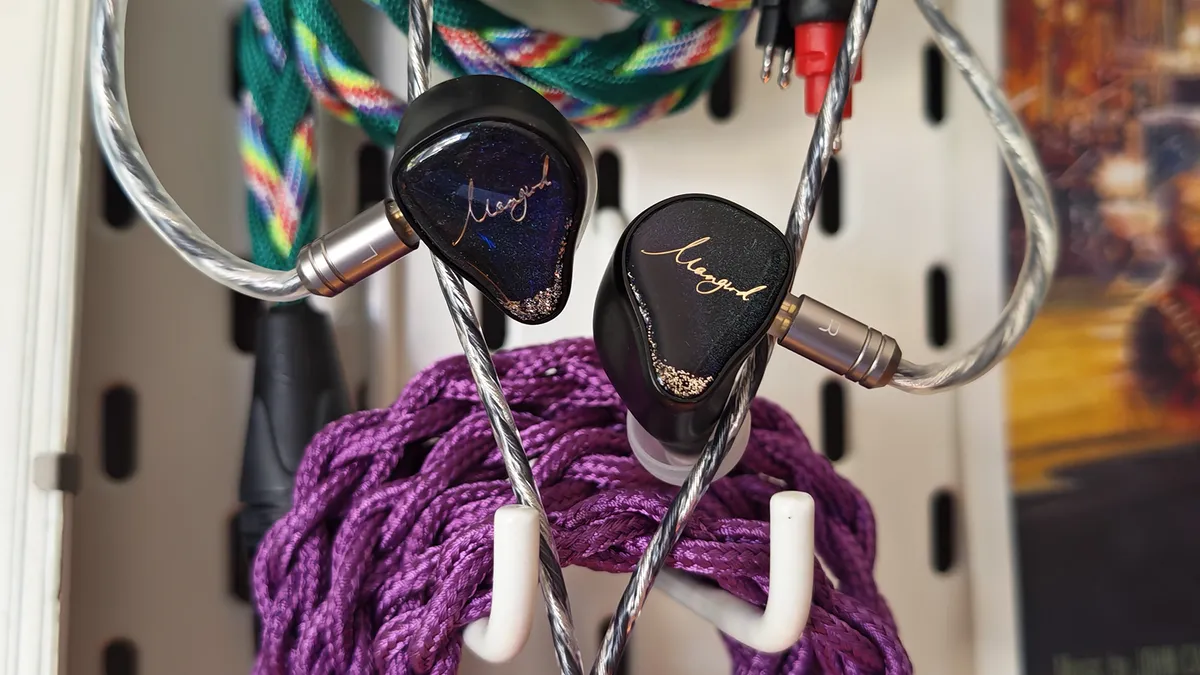


5-second review: The Tea Pro pairs two dynamic drivers with six balanced armatures for a warm, U-shaped sound. The resulting audio is engaging enough to reach for daily over sets with sharper, more analytical tunings.
Sound profile: The Tea Pro is warm, musical and immersive rather than clinically detailed, with big sub- and mid-bass that bleeds slightly into the lower mids without becoming distracting. Trading outright resolution for a presentation that's easy to listen to for hours on end, vocals sit forward and full-bodied in the midrange, and the treble stays smooth and non-fatiguing with tasteful air.
Comfort and build: The Tea Pro combines an aluminium alloy shell with a UV resin faceplate, alongside a cable offering both 3.5mm and 4.4mm terminations. At 6.65g each, comfort is high, though in terms of aesthetics, the ornate gold-and-glitter faceplate design does divide opinion.
For more details, read my full Xenns Mangird Tea Pro review.
The best JM-1 tuned IEMs under $500


5-second review: Released in 2024, the KE4 was an early affordable example of the JM-1 (or "New Meta") tuning target. It's still a good choice today, offering comfortable fit and unusually strong midrange for the price.
Sound profile: The KE4 leans on an elevated bass shelf paired with a flattened, JM-1-style upper response, giving it fuller, thicker bass than a true neutral tuning without overwhelming the mids. The midrange is its standout, staying detailed and well-balanced despite the bass boost, while the treble is relaxed and non-fatiguing.
Comfort and build: Built from smooth, fingerprint-resistant 3D-printed resin with a 0.78mm 2-pin detachable cable, the KE4 is comfortable enough for multi-hour sessions. Its two dynamic and two balanced armature drivers are rated at 28Ω impedance and 102dB sensitivity, making it easy to drive from a phone or laptop without extra amplification.
For more details, read my full Kiwi Ears KE4 review.
The best IEMs under $500 for gaming


5-second review: Released this May, the Gamefidelity Edition is a mic-equipped variant of Juzear's original Defiant. Developed with audio reviewer ZeosPantera, it combines exciting sound with useful swappable cable terminations.
Sound profile: The Defiant delivers a crowd-pleasing V-shaped sound, with boosted sub- and mid-bass that slams without bleeding excessively into the mids, and a forward upper midrange that keeps vocals clear and upfront, if occasionally a touch lean and edgy. The treble is smooth, well-extended and fatigue-free even during long sessions, giving strong perceived detail and imaging, traits handy for gaming.
Comfort and build: Made with 3D-printed resin shells with mother-of-pearl faceplates, these headphones are lightweight and comfortable even during extended gaming or listening sessions, though the nozzle is slightly chunky and may need tip-rolling for some ears. The standout feature is a modular cable with both 3.5mm and USB-C terminations, a flexibility that's rare even on IEMs several times the price.
For more details, read my full Juzear Defiant review.
FAQs
Do wired earphones sound better than wireless?
Not necessarily. In 2026, wireless earphones, aka true wireless stereo (TWS) earbuds, can sound just as good.
A wired connection does have advantages over wireless. There's no Bluetooth compression or latency to worry about, there's no battery to charge or wear out, and if the cable fails, you can simply replace it. But the benefits can be little overstated when it comes to sound quality.
Where wired IEMs really win over wireless ones is when it comes to tuning. Most TWS earbuds are tuned with a V-shaped sound profile, which can sound generic. All the wired IEMs on this list have distinct sound profiles, which allows you to find your perfect tuning and fit.
Yes, technically, you can EQ most TWS earbuds. But in practice, most people don't, and even if you do, there are limits to how far it'll get you. You might only have a few EQ bands to play with, and if you don't know what you're doing, it's hard to make them sound the way you want.
Do I need a special digital-to-analog converter (DAC) and amplifier for these IEMs?
If your smartphone has a 3.5mm jack, then no, you're all set.
However, if you don't, you'll need a dongle, which is in fact both a DAC and amp combined. For years the industry standard for an affordable, reliable option was the Apple DAC dongle for $9, and that's still a great option. The only issue with these is that they will wear out after a bit of use, so there are plenty of slightly more sturdy options out there, but for value, there's no beating it.
Of course, you can choose to go for a proper desktop DAC/Amp set up, especially if you're wanting to listen to your IEMs at your desk, and interchanging with some of your over-ear headphones.
But for just playing off your phone, the Apple DAC dongle is the place to start.
What specs are important with IEMs?
You're going to get a surplus of information when it comes to IEM marketing.
Case in point, human hearing can generally pick up frequencies from 20Hz to 20kHz (though many people, such as myself, cannot hear as high as 20kHz... it's more like 15kHz for me). And yet you'll see many brands boasting that their IEMs play frequencies from something like 10Hz to 45kHz. That is mostly irrelevant. Nice, but irrelevant.
The number and type of drivers in an IEM can be important, in so far as they can suggest what tools the tuners of the IEM had to reach their sound profile goals... but it won't tell you what the IEMs sound like.
The most important thing to consider with IEMs – other than getting them in your ears and finding out if you like the sound of them or not – is the frequency response graph. Squiglink is the go-to platform for recording and displaying the frequency graphs of IEMs and headphones, and it's an incredibly helpful tool.
Don't get me wrong, graphs aren't all you need. As I say, the only real way to find out if you like an IEM is to listen to it. But if that's not an option, looking at the graphs – especially those uploaded by people who use the same equipment, and whose taste you vibe with – is so, so helpful.