







Want to send out newsletters? The good news is, there are a bunch of tools and platforms to help make that easy for you.
However, it's important to note that different tools do different things, so you need to find the right one for you. For instance, if you're writing a newsletter on a specialist topic you want to charge for, you'll have different needs to a studio wanting to send out newsletters for multiple clients.
For this roundup, I've focused on three main types of newsletter tools. Kit, Beehiiv and Substack are for people whose newsletter is part of what they sell. Ghost and GetResponse help you to add a website, memberships or courses to the mix. Finally, Flodesk, MailerLite, Mailchimp, Campaign Monitor and Brevo are more traditional email tools, which are the best choices if email is mainly there to promote your work or company.
So first, decide what you want your newsletter to do, then check the size of your list against the relevant price. I've included current prices at time of writing, but these change regularly so make sure you check the provider's website and read all the small print. Also read How to build an unskippable newsletter.
The best email newsletter tool for free subscribers
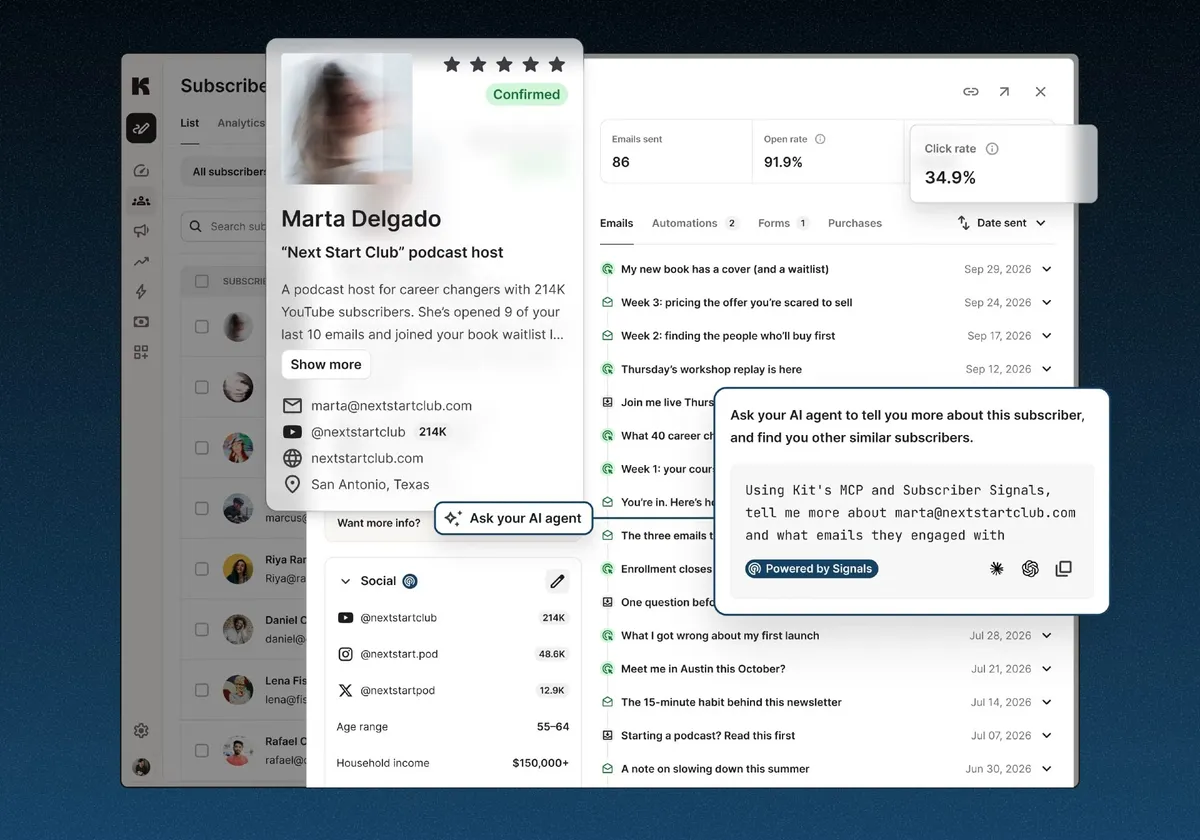
Are you a freelancer or small shop who doesn't want to pay anything for sending out newsletters, at least yet? Then Kit is the one to start with.
This tool would suit, for example, an illustrator who wishes to email around 3,000 subscribers every month about what they've been up to. You'd pay absolutely nothing, because the free plan covers up to 10,000 subscribers. What if you started charging $10 a month for your newsletter? In that case, the fee for Kit would be 65 cents per payment.
The free plan only lets you set up one series of emails that send automatically, such as a welcome series for new subscribers. If you wanted to set up more, this would cost $39 a month for 1,000 subscribers. Finally, note that you can sell digital products here too, but you get fewer design options than with Flodesk.
The best email newsletter tool for paid subscriptions
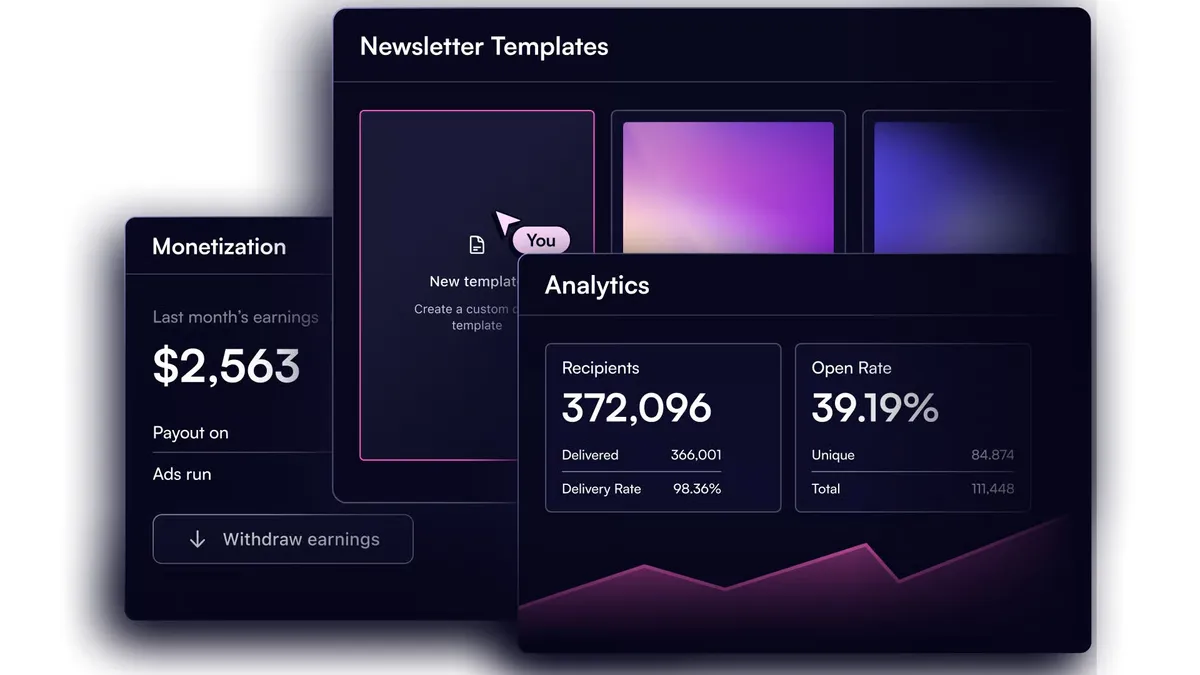
If you already have a large mailing list or social following, and want your newsletter to make money through subscriptions, Beehiv is the one I'd opt for. This tool would suit, for example, someone who runs a weekly design newsletter that 10,000 subscribers are willing to pay for.
If you paid Beehiiv $139 a month, which is its Lite price at this list size, you'd keep all your subscription income, beyond Stripe's fees for processing payments. You'd also be able to run ads through Beehiiv's network rather than hunting for sponsors yourself. Beehiv is able to host your website and podcast too.
Note, though, that you'd get Beehiiv's branding on your newsletter; this is only removed on the Pro plan. There's also a free plan, which covers 2,500 subscribers, but it doesn't allow you to charge subscriptions or run ads.
The best email newsletter tool for aesthetics
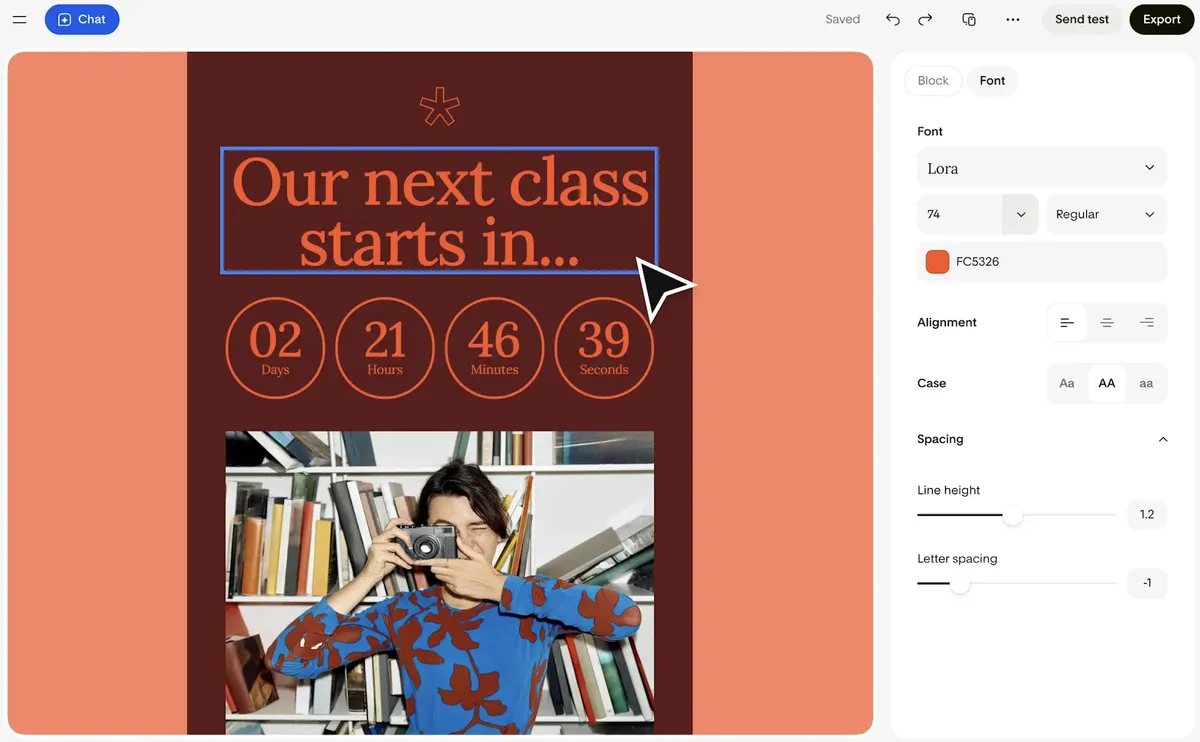
If you work as a creative professional, chances are you'll want your newsletter to look as good as possible. If that's your number one priority, then Flodesk is the tool for you.
This tool was built specifically for creatives that prioritise visual presentation, and has been widely praised for its superior aesthetics. It would suit, for example, a photographer who wants every email to feel like a page from their portfolio.
For up to 1,000 subscribers, the Lite plan costs $25 a month, but the Pro plan is only three more dollars at $28 and you'll unlimited automations and a checkout, making it a slam-dunk if you have anything to sell to your readers.
Note that there is a free plan, but that's purely for forms and landing pages, not sending email. Also, ignore older reviews that praise Flodesk's flat rate, because that closed to new members in 2025.
The best basic email newsletter tool
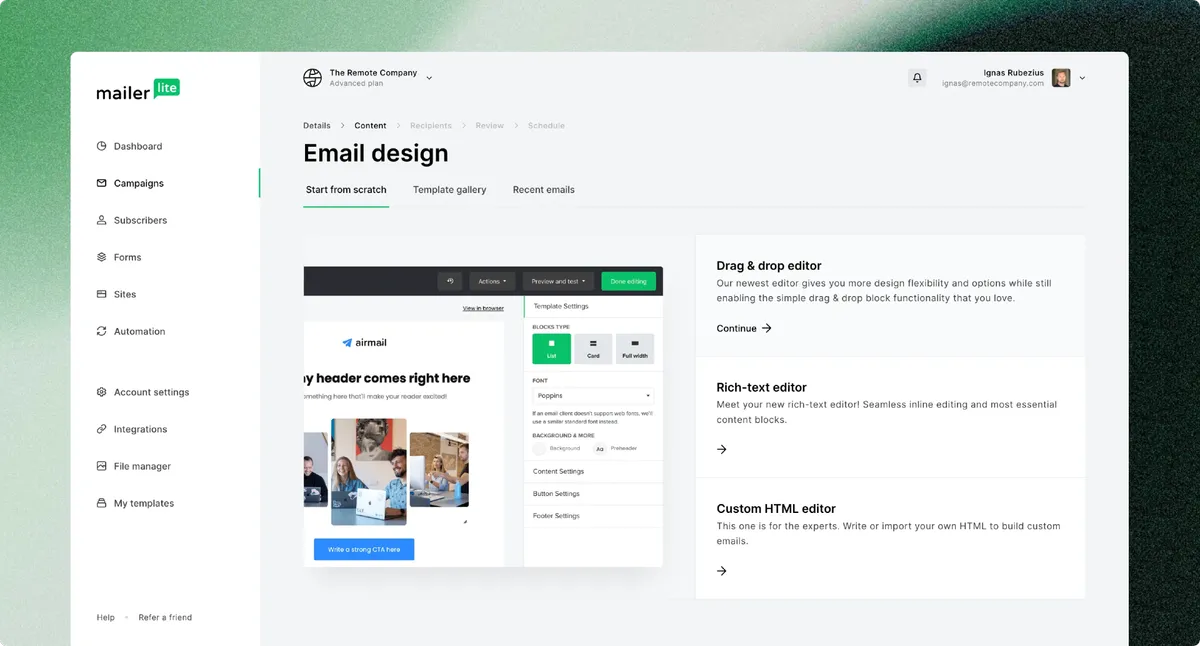
Want to keep things simple and cheap? Then consider MailerLite the best "no frills" option here. This tool would suit, for example, a small studio emailing 200 clients and contacts. The free plan would allow you to email everyone about 12 times a month, and you'd also get automations, a website and a landing page. You'd only have to upgrade once you exceed 250 subscribers.
With MailerLite, you can build newsletters using its drag-and-drop editor, or code your own emails in HTML: whatever is easiest for you. Just watch the limit of 250 subscribers. Paid plans start at $12 a month.
The best email newsletter tool for marketing features

Mailchimp is the grandday of email newsletter tools, and still remains very popular. If you run a small business and want a familiar, all-round marketing tool, this is the one I'd choose. The newsletter builder is easy to use, and you can create templates from your logo and colours.
The free plan allows you to have 250 contacts and 500 sends a month, with no automation. The Essentials plan, at $13 a month for 500 contacts, allows 5,000 sends, while Standard, from $20, includes AI writing tools and advanced automation.
The best email newsletter tool for bloggers
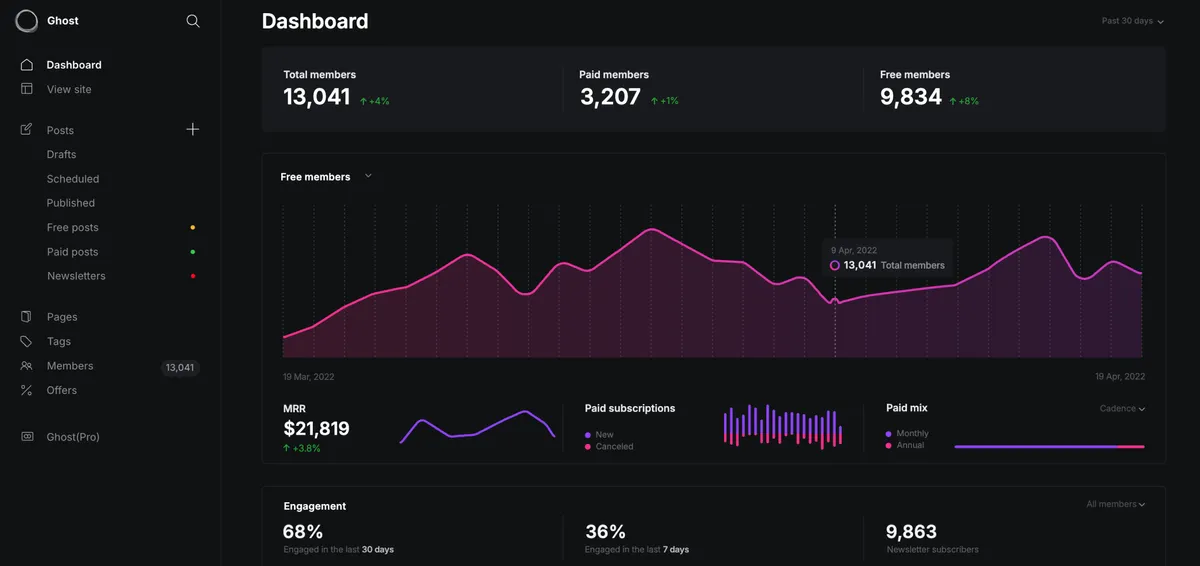
Do you want your some or all of your articles to live online as blog posts, as well as sending out newsletters? Then Ghost is the one to choose. You get your own website, where your articles live, and you can give readers the choice of signing up for free or paid access to your newsletter.
The Publisher plan, from $29 a month billed annually, adds paid subscriptions and custom themes, and Ghost takes zero cut from any of that. This beats Substack's 10% fee once you starting earning above $290 a month.
The $18 Starter plan, meanwhile, stops at 1,000 members and doesn't include paid subscriptions. Ghost won't help new readers find you, though, so you'll need to bring your own audience.
The best email newsletter tool for building a subscriber base
Want to ultimately make money from newsletter subscribers, but don't yet have a subscriber base? Substack makes it easy to get started with sending out free newsletters that you can monetise further down the line when you've convinced people to pay for them.
Substack is easy to set up and if your newsletter is free, you pay nothing to send it out. It also provides good features for being discovered: Notes, Chats and Recommendations all connect you with other writers and their readers.
When you start to charge for your newsletter, that's when Substack makes its money. Let's say 200 people pay you $10 a month, adding up to $2,000 of income: Substack will keep $200 before Stripe's fees. Also note that there's also no automation or integrations, and only basic reports.
The best email newsletter for agencies
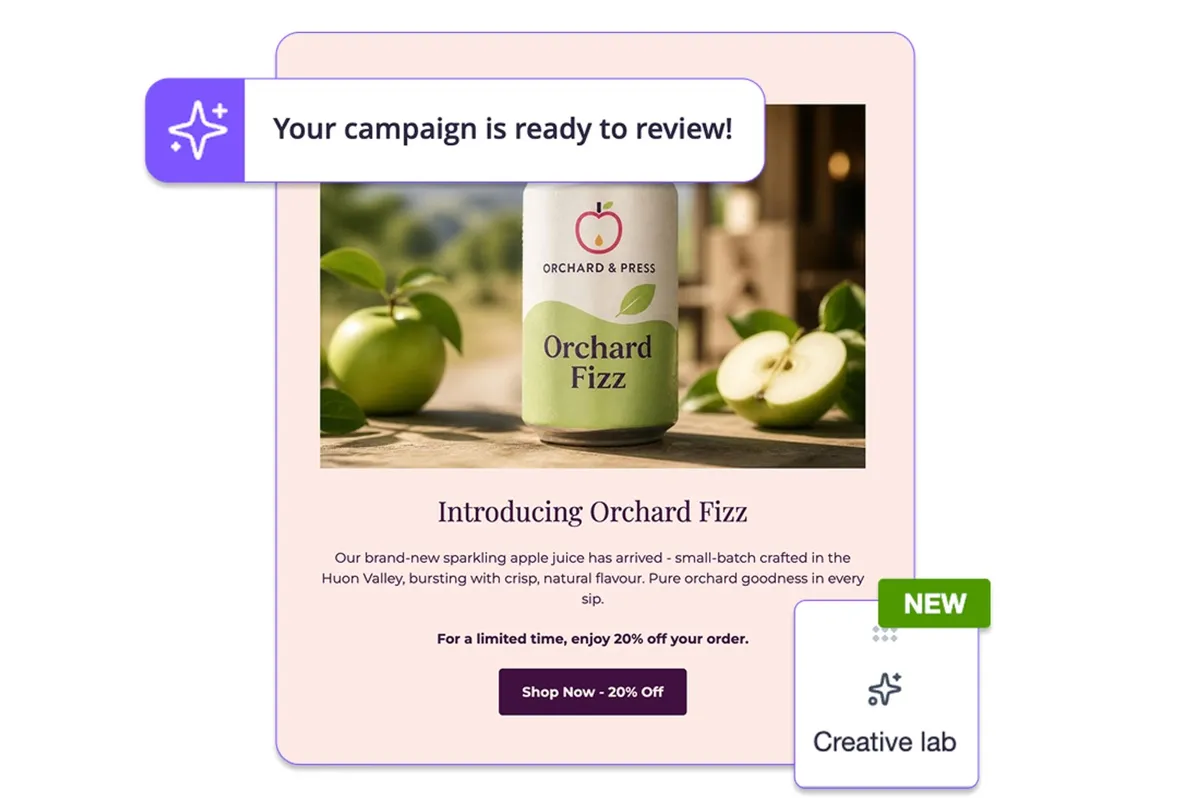
If you're an agency who wants to send out polished emails for several clients, Campaign Monitor is my pick. The focus here is on templates, design control and account management, as opposed to earning money.
There's no permanent free plan. The Lite plan allows around five sends per contact each month, at $13 for 500 contacts. Essentials, from $31 a month, gives you unlimited sends and automations. The cost rises considerably if your contact list grows: you'll pay around $182 a month for 10,000 contacts on Essentials.
The best tool for a big list but few emails
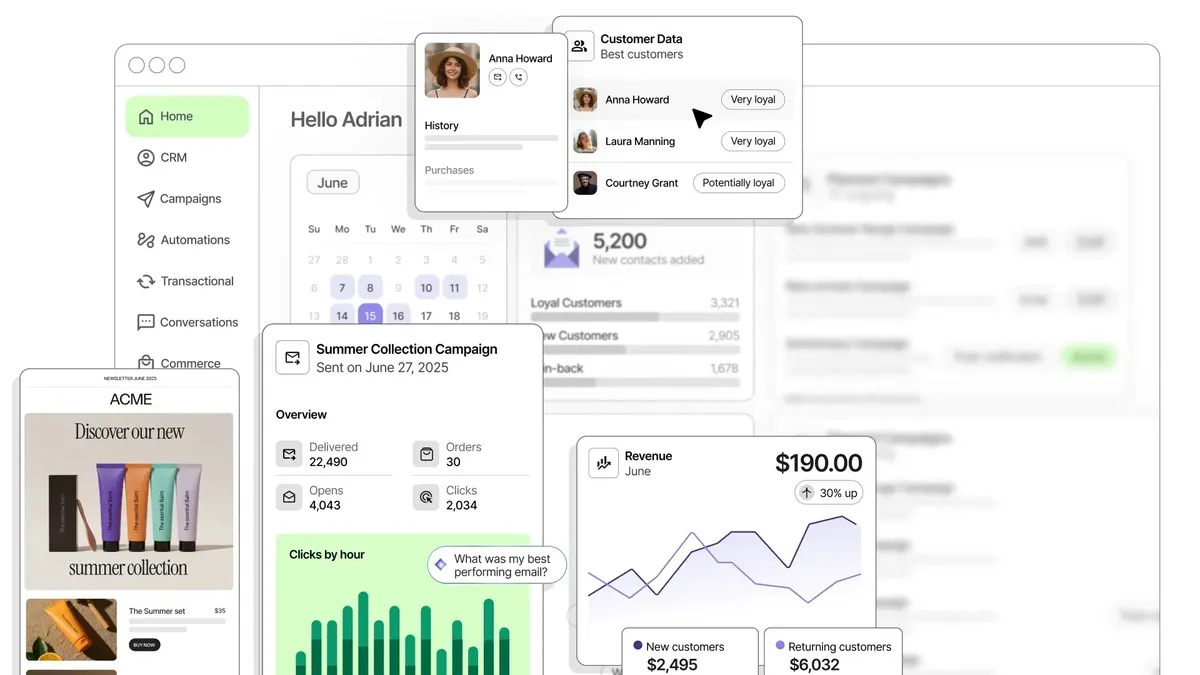
If you have a big list but don't email it often, pick Brevo. Because what you pay with this service mainly depends on the number of emails sent, not the number of people on your list.
Say you have 10,000 contacts and send one newsletter a month. The cheapest Brevo plan that allows that many contacts costs $29 a month and covers 20,000 emails, so you could send two newsletters. By comparison, Campaign Monitor’s Essentials plan would cost about $182 a month for the same list (although admittedly that includes unlimited sends).
If you email more often, Brevo stops being so economical: a weekly newsletter to the same list would cost about $55 a month. If you hit your monthly limit, your campaigns are paused until you buy more emails, renew your plan early or the next billing month starts.
Note that there is a free plan, but its limit of 300 emails a day means a mailing to 1,000 people would take four days, so it’s only really worth using to try the service for size.
The best email newsletter tool if you're selling courses
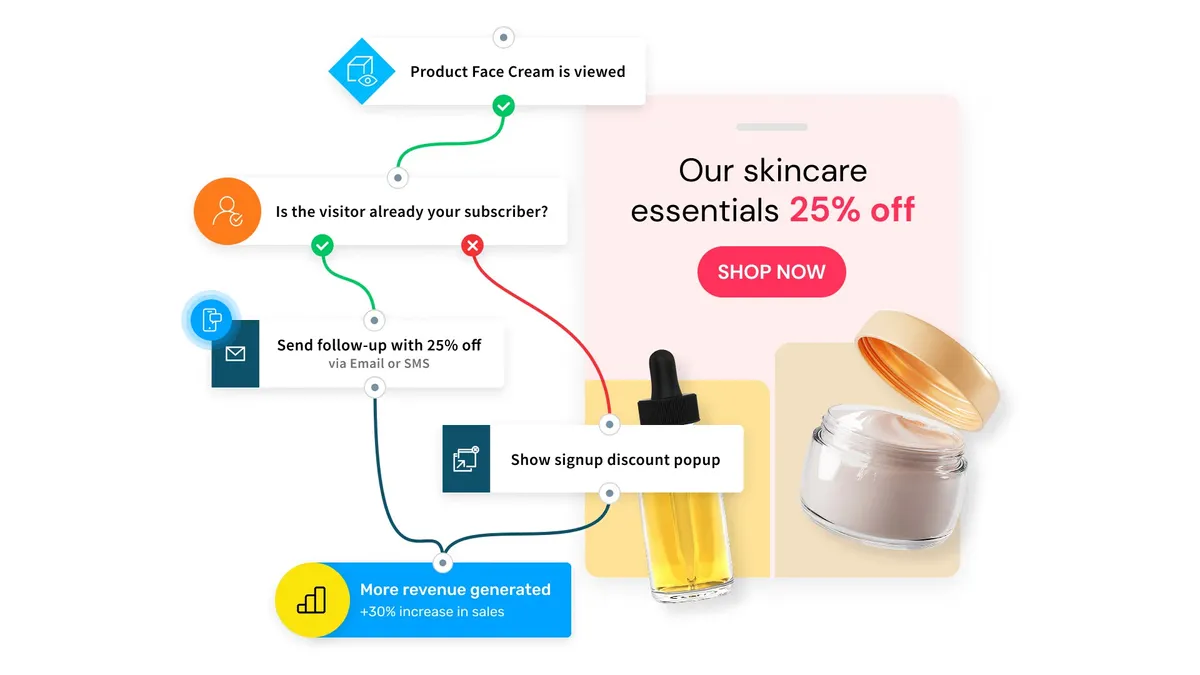
If your newsletter is one part of a bigger teaching business, GetResponse is a strong choice. This would be a good choice, for example, for an illustrator who's focused on selling a course in how to draw with Procreate. The $69-a-month Creator plan, at 1,000 contacts, would enable them to build a course, run webinars and manage members as well as sending email newsletters.
If you only need a newsletter, though, the Starter plan at $19 a month, makes more sense. You can try this for 14 days without a card. After that, accounts drop to a free version capped at 2,500 emails a month, without automation.