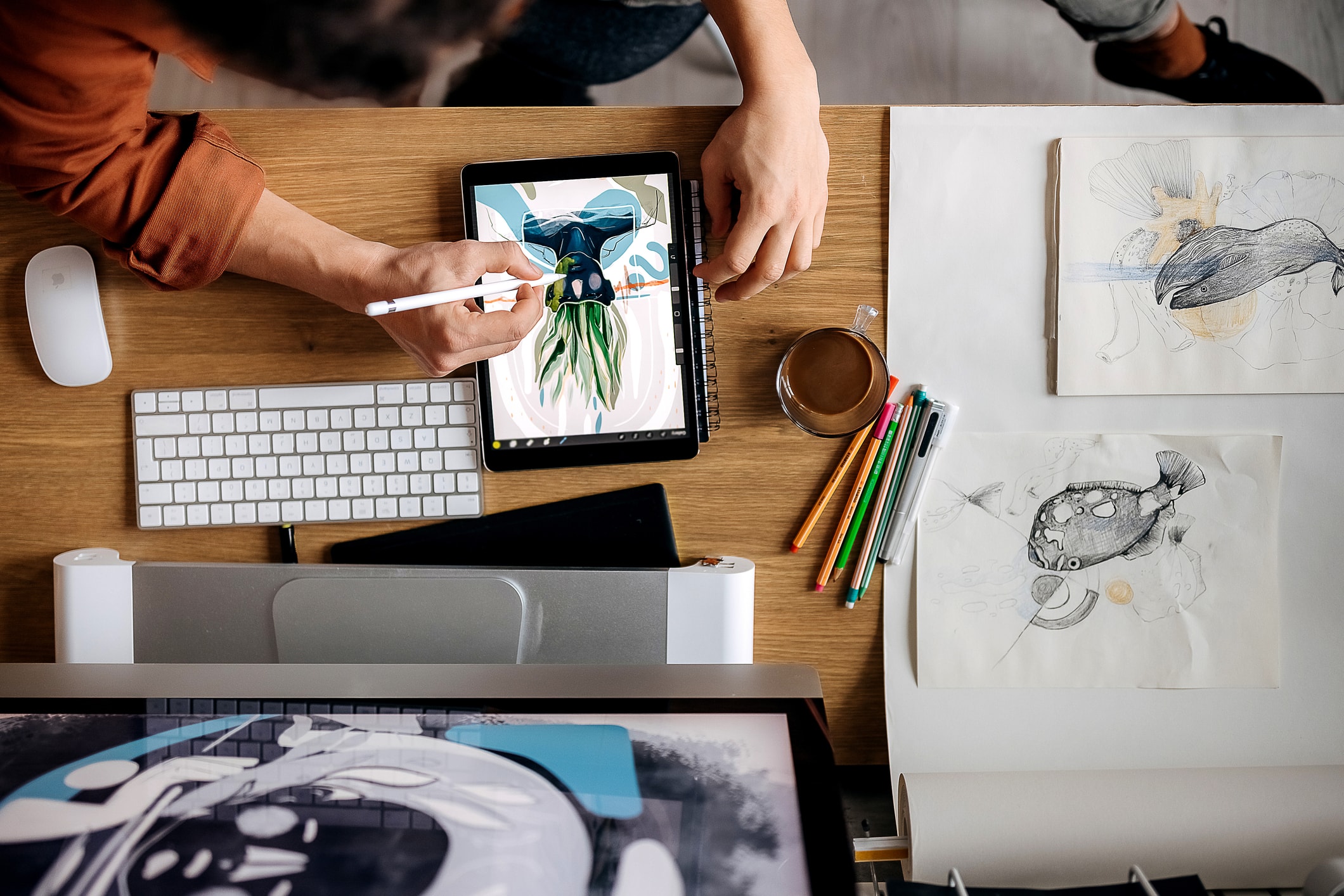







Android tablets have become powerful tools for creative professionals, offering portable screens, precise stylus support, and responsive performance for drawing, painting, and illustration. Even the cheapest Android drawing tablet can compete with the base-model iPad, and some offer displays and styluses designed for artists.
For a list that includes all budget options, read my guides to the best drawing tablets or the best drawing tablets with a stylus. This guide examines the top five Android tablets designed for artists, balancing performance, design, and, importantly, cost. I compare each tablet’s display, pen capabilities, portability, and workflow flexibility to help you choose a device that fits your creative style. I've also kept the price low, around $400-$500.
While I've focused on the cheapest Android drawing tablets, don't be put off; these tablets feature displays and styluses designed for art (and even come with pre-installed apps), or, in the case of Lenovo and Samsung, can easily be used to sketch and paint. These selections ensure artists of all levels can find a tablet that matches their needs and budget.
Cheapest Android drawing tablets in full
Why you can trust Creative Bloq Our expert reviewers spend hours testing and comparing products and services so you can choose the best for you. Find out more about how we test.
Cheapest Android drawing tablets: best overall

Cheap Android drawing tablets live or die by the pen, and that’s why the Wacom MovinkPad 11 is still my top pick. The 11.45-inch IPS screen runs at 2200 x 1440, and its textured anti-glare finish does two jobs at once: it keeps reflections and fingerprints at bay, and it gives the nib a paper-like grip. It’s smaller than the Huion Kamvas Pad 12 (below), but I like the trade-off. You still get plenty of room to draw, and it’s far easier to take out and sketch with.
The bundled Wacom Pro Pen 3 is battery-free thanks to EMR tech, with 8,192 pressure levels and tilt recognition. Specs only tell part of the story, of course, but this pen feels accurate and dependable, with the control I expect from Wacom. That’s most obvious on fine lines and small details, where Huion can show a little latency. That’s why I’d still put the MovinkPad ahead of the newer Kamvas Pad 12, even though Huion offers a bigger display and double the storage.
The MovinkPad 11 runs on Android 14, a MediaTek Helio G99 chip, 8GB of RAM and 128GB of storage. Don’t expect it to replace an iPad for huge canvases or demanding creative work, and the best Android drawing apps are a patchier selection, which is still a limitation. But this is a tablet built around drawing, not a general-purpose slate with a stylus bolted on (check out the more powerful, more expensive MovinkPad Pro 14 for an alternative). If pen feel and precision matter more than screen size and extra storage, this is the one I’d buy.
Cheapest Android drawing tablets: best value

Huion’s standalone tablets have always had promise, but the pen let them down. Not here. The Kamvas Pad 12 comes with the new battery-free PenTech 4.0 (PW600C), and it’s the first Huion Android stylus I’ve genuinely enjoyed using (similar tech makes the desktop Kamvas 22 (Gen 3) a joy). It registers a mark with just 2g of pressure and is far steadier than the pen on the older Kamvas Slate 13. Quick flicks stay smooth, slow lines go where you put them, and accuracy holds right out to the edges. When I push it into very fine detail, I notice a touch of latency, and palm rejection can get fiddly unless you wear the supplied drawing glove. For loose sketching, inking, and painting, though, it’s a different league from what Huion offered before.
At 12.2 inches and 2400 x 1600, the screen is a nice size to throw in a bag. The nano-etched glass gives the nib some bite, so you’re not skating across a slippery slab. I put it through its paces in ArtRage and Heavy Paint, and the oil brushes smeared and pushed paint around without the stalling I’ve seen on other Android tablets. Storage is generous too, with 256GB on board, a microSD slot for more, and HiPaint, ibisPaint X and Clip Studio Paint already installed.
In my Kamvas Pad 12 review, I note how the Huion doesn’t match the Wacom MovinkPad 11 for precision, and the folding case makes for a wobbly stand. But for the price, you get a bigger screen and more space. Android’s art-app choice still lags behind Apple’s, and the chip isn’t made for heavy creative work, so this isn’t a tablet for pushing big, layered files. As a budget-friendly option for sketching and painting on the go, it does the job well.
Cheapest Android drawing tablets: best budget

The XPPen Magic Drawing Pad’s big boast is its 16K pressure-sensitive X3 Pro stylus, but the spec sheet isn’t the whole story. This is a standalone Android tablet designed for drawing from the ground up, not a regular tablet with pen support bolted on, and you notice it as soon as you start sketching.
The 12.2-inch, 3:2 display has a matte, micro-textured surface that tames reflections and gives the nib some grip, so it feels much less slippery than an iPad’s glass. I took it outside to sketch and the screen stayed readable in bright light. It’s light enough to hold in one hand while you draw with the other, and the laminated display keeps the line right under the pen tip.
The X3 Pro stylus is responsive, with plenty of sensitivity for varying line weight, and the customisable Quick Key is handy for shortcuts. XPPen also throws in a lot: a clip-on case that doubles as a stand, spare plastic and felt nibs and a drawing glove, so you can start drawing straight away.
It’s not without flaws, and indeed the Magic Drawing Pad is nearly three years old so some tech is dated now compared to Wacom and Huion above (and the new but more expensive XPPen Magic Pro 13). The stylus is shorter and lighter than some artists will like, and heavy brush simulations can make apps like ArtRage Vitae stutter. At 300 nits the screen is dimmer than some rivals, and the case won’t protect the display in a bag. The biggest thing to consider os the stylus resolution is 2,540 LPI, meaning its half the accuracy of other tablets on this list.
Even so, if you want a portable tablet that’s all about drawing, comes with lots of extras and is usually discounted, Magic Drawing Pad is a solid budget choice.
Cheapest Android drawing tablets: best all-rounder

The Samsung Galaxy Tab S10 FE+ is basically a big digital sketchbook. Its 13.1-inch display is the main draw, giving you plenty of space to draw, paint and take notes without paying for Samsung’s pricey Ultra range. The S Pen is in the box too, so there’s no extra stylus to buy.
The wide 16:10 screen isn good for reading, browsing and watching video, but it’s an awkward shape for sketching if you’re used to a squarer canvas. The LCD is bright (Samsung claims 800 nits) and colours look punchy, though it’s reflective and lacks the pop of Samsung’s OLED tablets. There’s no paper-like texture either, so you’re drawing on slick glass with none of the grip you’d get from a dedicated pen display like the MovinkPad 11 or Kamvas Pad 12 above.
The S Pen is a good one and makes use of Wacom tech so, it’s low-latency and pressure-sensitive, and it works with Samsung’s note-taking tools, including handwriting recognition and a handy trick that straightens wobbly lines. For drawing, Android apps like Krita, Sketchbook and Clip Studio Paint all run here, but the choice still trails iPadOS.
Performance is solid without being thrilling, and the Galaxy Tab S10 FE+ copes with everyday creative work and multitasking, but if you want to play demanding 3D games or push heavier workloads, you’ll want a more powerful tablet. Battery life is strong, and the microSD slot makes adding storage easy.
This isn’t a specialist artist’s tablet, but if you want a big-screen Android sketchpad that can handle the rest of your day too, the FE+ is a smart buy as a good all-round tablet.
Cheapest Android drawing tablets: best large display

The Ugee Trio Pad UT3 gives you a big drawing screen for not much money. The 14.25-inch 2.4K IPS display has loads of space for sketching, painting and larger illustrations, and the NanoMatte anti-glare glass cuts reflections and takes the shine off the surface. I’m a fan of the three display modes, Regular, Ink Paper and Color Paper, which flip the screen between a normal tablet look and something closer to paper.
Inside, you get a MediaTek Helio G99 chip, 8GB of RAM and 256GB of storage, running Android 14. That’s plenty for most popular Android art apps and everyday tablet jobs, and the 10,000mAh battery should see you through long sessions. The box is generous too: a U-Pencil stylus with tilt support, spare nibs, a drawing glove and an adjustable Smart Folio case.
The name references the three ways the UTC3 can be used, with you able to swap between three display modes to focus on art creation, media and games or reading (the display cuts colours and bumps contrast to look like an eReader). It's a nice idea, and the eReader mode is genuinely easy on the eye for text and comic book reading.
It does cut corners. The screen tops out at 60Hz, the stylus’s 4,096 pressure levels trail pricier drawing tablets (or those at No.1 and No.2 on this list), and the pen doesn’t feel as refined as the ones from Wacom or XPPen. But the UT3 sells itself on screen size for the money, and it delivers.
If you want a large Android drawing tablet on a budget, this is a strong pick.
Cheapest Android drawing tablets: Fastest display

If you want a drawing tablet that feels fast, the Lenovo Idea Tab Pro is the one to look at. Its 12.7-inch 3K (2944 x 1840) display runs at 144Hz, which is the fastest refresh rate of the Android drawing tablets here, and it shows. Scrolling is silky, app switching is slick and the line follows your pen with very little perceptible trail. It also covers 96% of the DCI-P3 colour gamut, so illustrations, paintings and photo edits look rich on screen.
The MediaTek Dimensity 8300 processor, 8GB of RAM and 256GB of storage in the version I’d go for keep things moving, whether you’re running an Android drawing app or hopping between creative tools. The Lenovo Tab Pen Plus offers a decent but not brilliant 4,096 pressure levels, but it does have tilt detection and palm rejection, but it only comes in some bundles, so check what’s in the box before you buy.
In my hands-on testing, including when I swapped an iPad Pro for the less powerful model, the Idea Tab, on a long-haul flight, it handled sketching and note-taking efficiently. While colour accuracy and pen precision don’t match premium tablets, its portability, battery life, and reliable performance make it a solid, affordable option for basic illustration as well as games and movies.
The standard screen is glossy, which feels slicker under the nib than the matte surface on a dedicated pen display. A Matte Edition adds a paper-like anti-glare finish if that bothers you. Android’s art app selection also still trails iPadOS, especially for professional illustration software.
But if smooth, responsive drawing matters most, the Idea Tab Pro’s 144Hz screen is hard to beat at this price.
Cheapest Android drawing tablet: what to consider

- Pen & stylus support: check tilt, pressure sensitivity, and latency. While 4096 is usable and found in older or cheapest stylus, ideally you want 8,192 levels (XPPen's 16,384 is fun but also overkill).
- Display quality: Evaluate colour accuracy, resolution, screen type (OLED/AMOLED/IPS/LCD), and refresh rate. New and high-spec Android tablets offer OLED, but a good-res IPS is fine. Look for frame refresh, ideally 90Hz and above, but 60Hz is solid. Worth knowing: one of the cheapest tablets on my list, the Lenovo Idea Tab Pro, offers 144Hz.
- Portability vs. size: Balance workspace with comfort for long sessions. I love the size and flexibility of the Magic Drawing Pad, but UT3 is larger. Wacom now offers a larger version of the MovinkPad 11, the new Wacom MovinkPad Pro 14, but it's more expensive.
- App compatibility: Ensure your preferred drawing apps run smoothly on Android. You won't get Procreate on Android, but I find ArtRage is a good paint sim app, Heavy Paint is wonderful for digital illustration, and Clip Studio Paint is a great all-rounder. Read our best drawing apps for Android for more.
- Budget: High-end tablets like MovinkPad 11 and the Samsung Galaxy Tab range offer more features and power, while the Lenovo Idea Tab Pro and Ugee UT3 are more affordable. Consider if you want it for art only or media too.
Cheapest Android drawing tablet: FAQs

Which tablet is best for professional illustration?
The Wacom MovinkPad 11 provides high-precision pen input, a high-resolution IPS display, and reliable workflow performance.
How does the Samsung Galaxy Tab S10 FE compare to Wacom?
Samsung offers a sharp WUXGA+ display, responsive S Pen, and portability, while Wacom excels in pen precision and color fidelity.
Are budget tablets suitable for beginners?
Yes, tablets like the Lenovo Idea Tab Pro or Ugee UT3 are good starting points for sketching and learning digital art.
Can these tablets connect to a PC?
The MovinkPad 11 is primarily an Android tablet, but some workflow apps can integrate with PC; other tablets function independently on Android.