R-Type Delta has always felt slightly out of step with its own era. Released late in the PlayStation’s life, it arrived as arcades were waning and shooters were being pulled in new directions. It was recognisably R-Type, yet undeniably different, darker, stranger, more experimental and… 3D. Tied to the PlayStation era, one of the best retro game consoles, this shooter remains iconic, experimental, and often underplayed.
The series has continued to evolve, but as Kazuma Kujo revealed, it always remains true to the original. R-Type Delta HD Boosted matters because it's the game that launched the era of retro shooters we have today, bridging the eras of pixel art and 3D polygons. This isn’t just a resolution bump or a nostalgia play. It’s the result of years of technical reconstruction, creative restraint, and a clear-eyed look at what Delta really was, and what it still could be.
For Takehiro Eda, director of R-Type Delta HD Boosted's team TAKExOFF, the starting point wasn’t technical at all. Rather than focusing on mechanics or difficulty curves, Eda points first to something less tangible.
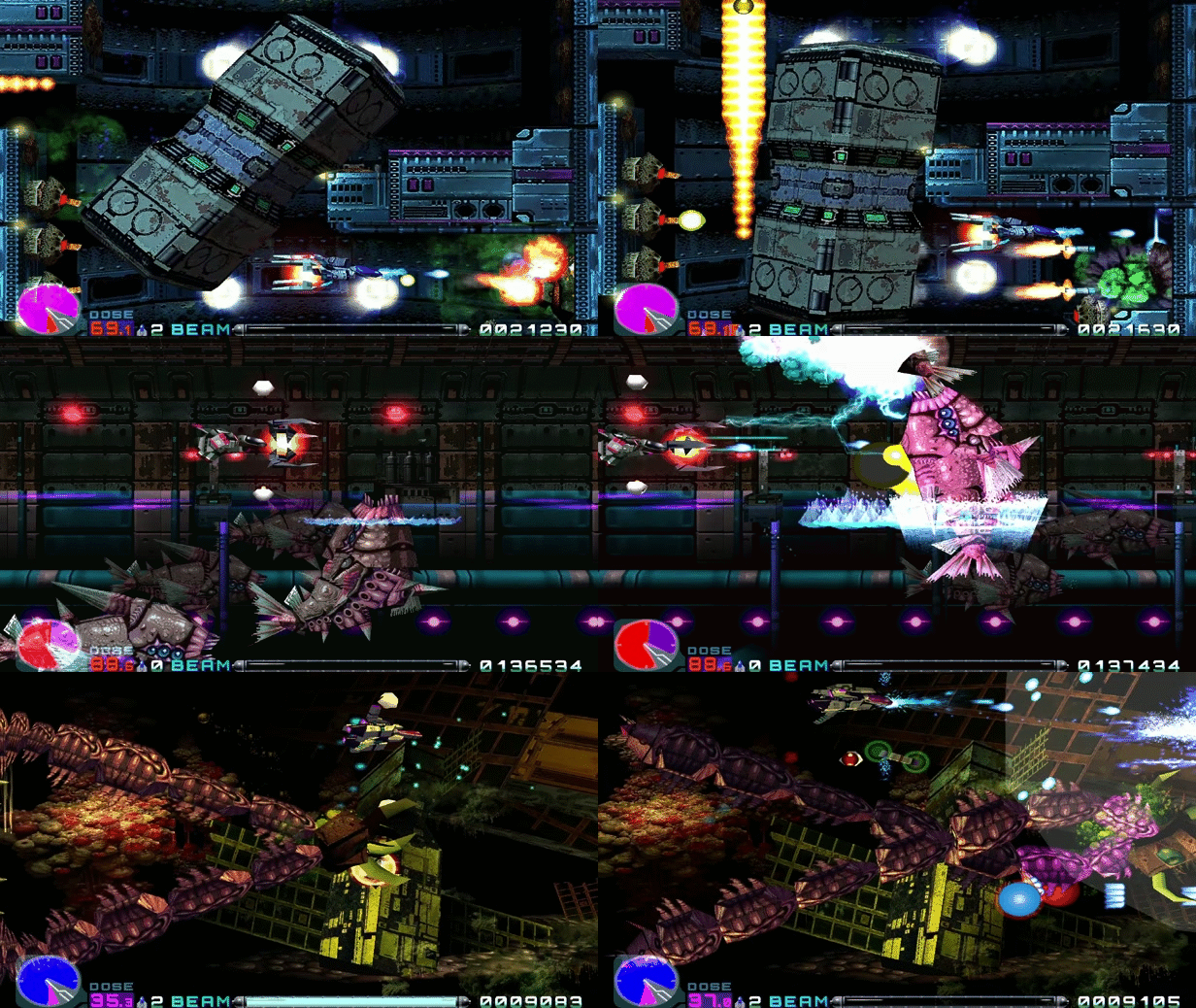
“The PS1-style graphics option. I didn’t experience the game at the time, but it somehow feels charming and warm,” says Eda.
Delta’s original visuals sit in a very specific late-90s space, where the familiar mix of sci-fi detail and H.R. Giger-inspired bio-innards was given a larger-than-life design. 3D models spin, zoom and explode with unnerving 'realism' – for the '90s – and everything is cast in darker tones and illuminated dynamically. Retaining that look as an option isn’t about freezing the game in its era; it’s about recognising that mood is part of the design, not a side effect of ageing hardware.
Touching the untouchable: slowdown
If visuals were treated gently, performance was always going to be more contentious. Few topics divide shooter fans more sharply than slowdown, whether it’s a flaw or a feature.
Eda doesn’t shy away from the risk. “It’s definitely a hot topic which can attract criticism, but I felt that it might be okay to reduce the slowdown so it ran smoother than in the original. In today’s world of diverse entertainment, I thought (players have less time to invest), so reducing playtime can also enhance replayability, while also providing a fresh challenge for players who were very familiar with the original.”
What’s striking here is the framing. This isn’t about modern players being less capable, but about modern play habits. Sessions are shorter. Attention is fragmented. Smoothing performance becomes a way of sharpening the experience, not diluting it, especially for players who already know Delta inside out.


A game held together by three studios
Behind the scenes, the collaboration for R-Type Delta HD Boosted's development between City Connection, ZeroDiv, and Irem wasn’t simply cosmetic, but it became a game of digital archeology.
“Without the opportunity to make this a reality [provided by Irem and City Connection] and the technology to execute it (thanks to ZeroDiv), the game wouldn’t have come to fruition.”
ZeroDiv’s engineers were tasked with reconstructing a fragmented source, working out what existed, what didn’t, and how to make it all function again. Only once that groundwork was stable could Irem step in to guide the project with the authority of the original creators.


Delta as an experiment, not an exception
R-Type Delta has sometimes been described as an odd one out due to the shift to a 2.5D visual style, multiple ship choices, and a risk/reward mechanic that changes how the iconic Force module is used. Eda sees it differently.
“Delta introduced new approaches when compared to previous entries in the series, such as the Dose system, eliminating terrain-related collisions, and shifting speed changes away from item-based mechanics. It actually carries a strong sense of innovation. And that image of being innovative helped steer our decision regarding the slowdown.”
Seen through that lens, Delta is a deliberate pivot. One that questioned assumptions the series had previously taken for granted. Making changes in HD Boosted, then, becomes less about rewriting history and more about continuing a conversation Delta started back in 1998.
Asked why classic games continue to resonate, Eda doesn’t reach for easy answers. “Honestly, I’m not entirely sure. Personally, I find the appeal in elements like the length of a single session, the fact that there’s no opponent or co-op partner, and that finishing the game requires either skill or a certain sense of intuition.”
Living with the Force
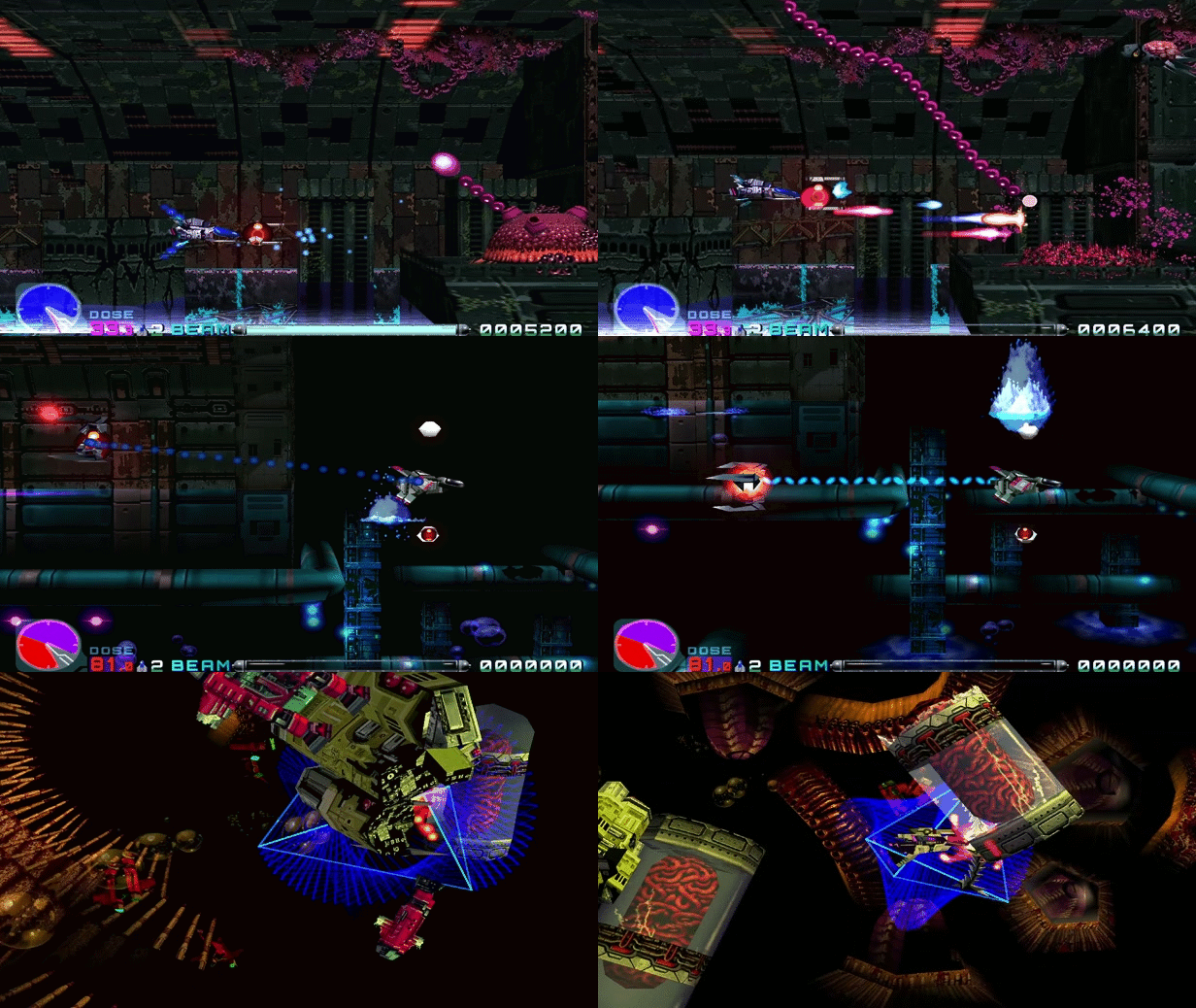
The Force pod is one of the most analysed mechanics in shooter history, but for Eda, it’s simply always been there. “I’ve lived my whole life with that system being the norm, so maybe I don’t really get any other than how cool it is.”
Sometimes longevity doesn’t come from constant reinvention, but from a design so right it fades into the background, until you try to remove or drastically change it.
Technically, Delta posed challenges that went far beyond resolution or frame rate. “With regards to putting the source code back together, I imagine ZeroDiv had a tough time with many things. Honestly, I don’t know much beyond what was said in previous Japanese interviews.”
Those interviews later revealed the extent of the problem: incomplete source code, missing data, and more than a year of engineering work just to reach the point where a port was even viable. R-Type Delta HD Boosted exists because the team refused to accept that some games are simply lost to time.
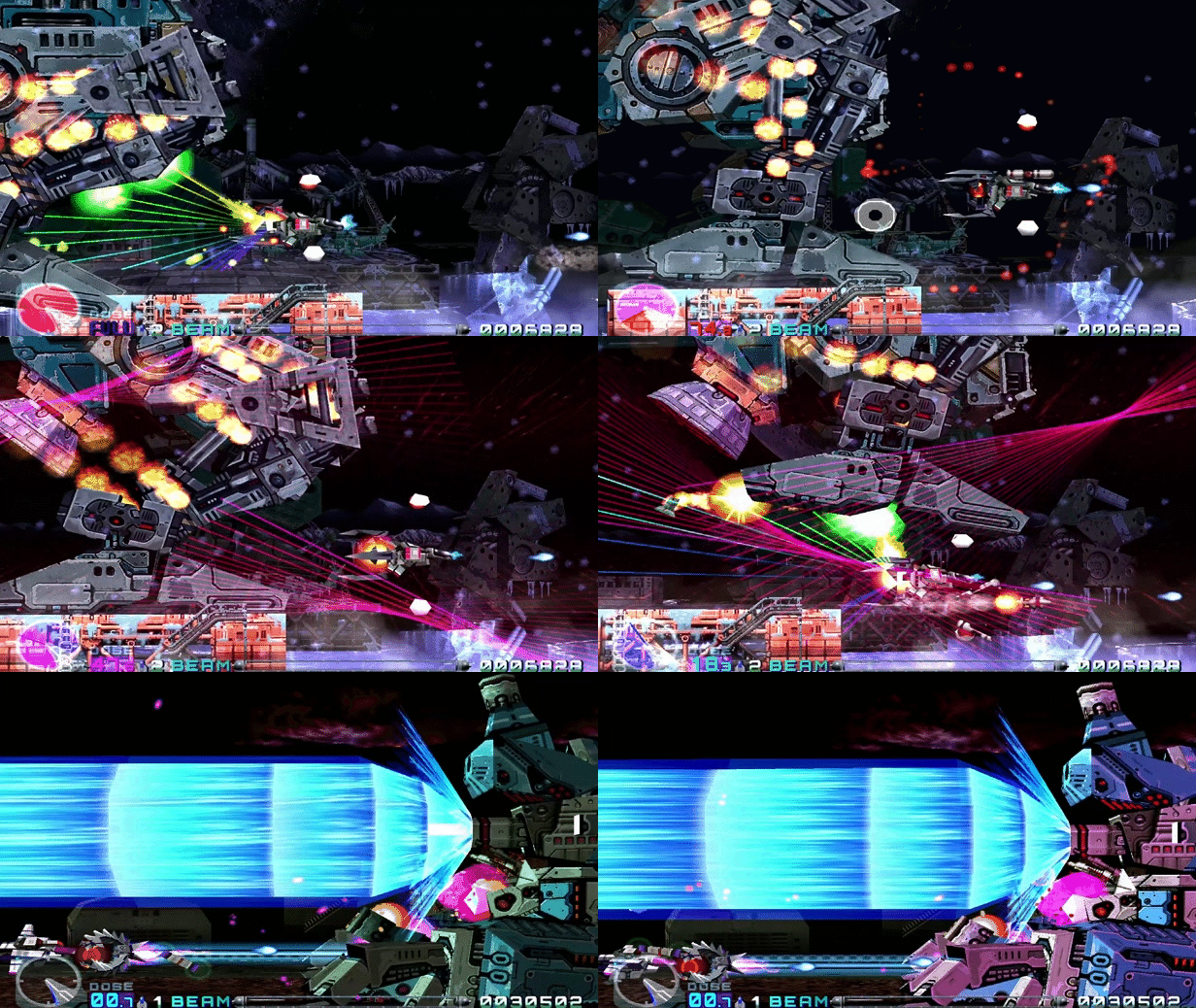
For Eda, the case for returning to Delta is straightforward. “Compared to other titles in the series, I think it’s important to note many players simply haven’t had the opportunity to play due to the lack of ports.”
R-Type Delta HD Boosted isn’t about elevating Delta above the rest of the series. It’s about finally letting it stand alongside them, accessible, playable, and complete.
For developers inspired by the past, Eda offers measured encouragement. “I’m hardly in a position in my career to make any definitive statements about that, but if their intention isn’t just nostalgia or imitation, then I think (creating games like) that’s perfectly fine.”
The most telling lesson Eda shares isn’t about design at all. “I think it’s all about letting someone else know your passion. In my case, if it hadn’t been for Mikado’s [a retro game arcade in central Tokyo] livestreams and interacting with the regular players, I would never have met Yoshikawa-san [CEO/Exec producer at City Connection], and I’d never have gotten this opportunity.”
Clear River Games' release of R-Type Delta: HD Boosted is out now for Nintendo Switch, PlayStation 5 and PC via Steam.