




The Legend of Zelda's 40th anniversary is upon us this month, as witnessed by the wealth of Zelda collectibles vying for your money, but you can also celebrate by playing the games from indie devs that have been influenced by the iconic series. One of these is Ratcheteer, which takes the classic top-down Zelda structure and gives it a mechanical, subterranean twist. Originally released for the black-and-white indie handheld console Playdate, it's now getting a full-colour release on Switch and Steam, aptly titled Ratcheteer DX.
"As a child of the '80s, I was weaned on the NES and the Super NES, and so when Cabel [Sasser, co-founder of Panic, developer of the Playdate] was like, 'Hey, do you want to port your game to the Nintendo Switch?', it was kind of a dream come true," Ratcheteer DX's solo dev Shaun Inman tells me. "Ratcheteer was inspired by Link's Awakening on the original Game Boy, and so obviously I took inspiration from the Link's Awakening DX remake on Game Boy Color."
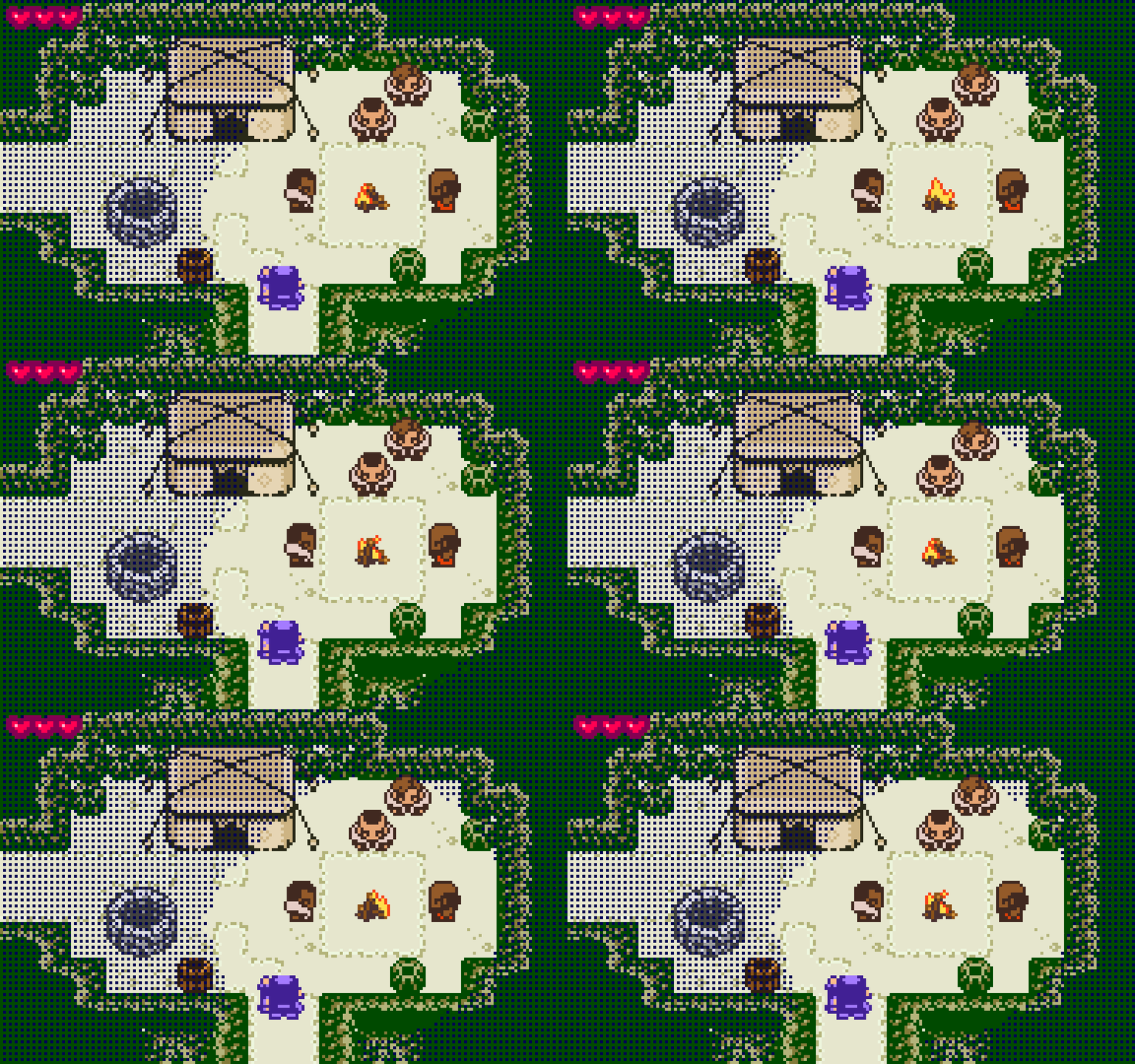
It's not the only Game Boy Colour-inspired game to look forward to, as there is also Mina the Hollower, the highly anticipated follow-up from Shovel Knight creator Yacht Club. However, the original Ratcheteer had started with more limitations than Nintendo's handheld.
"The original visuals were just stark black and white, no grey or anything, whereas the original Game Boy has two areas of grey between the lightest and darkest," Inman explains. "So when adding colour, I had the opportunity to add more volume and shape to really flesh out the characters, so all that stuff is brand new."
Let there be light
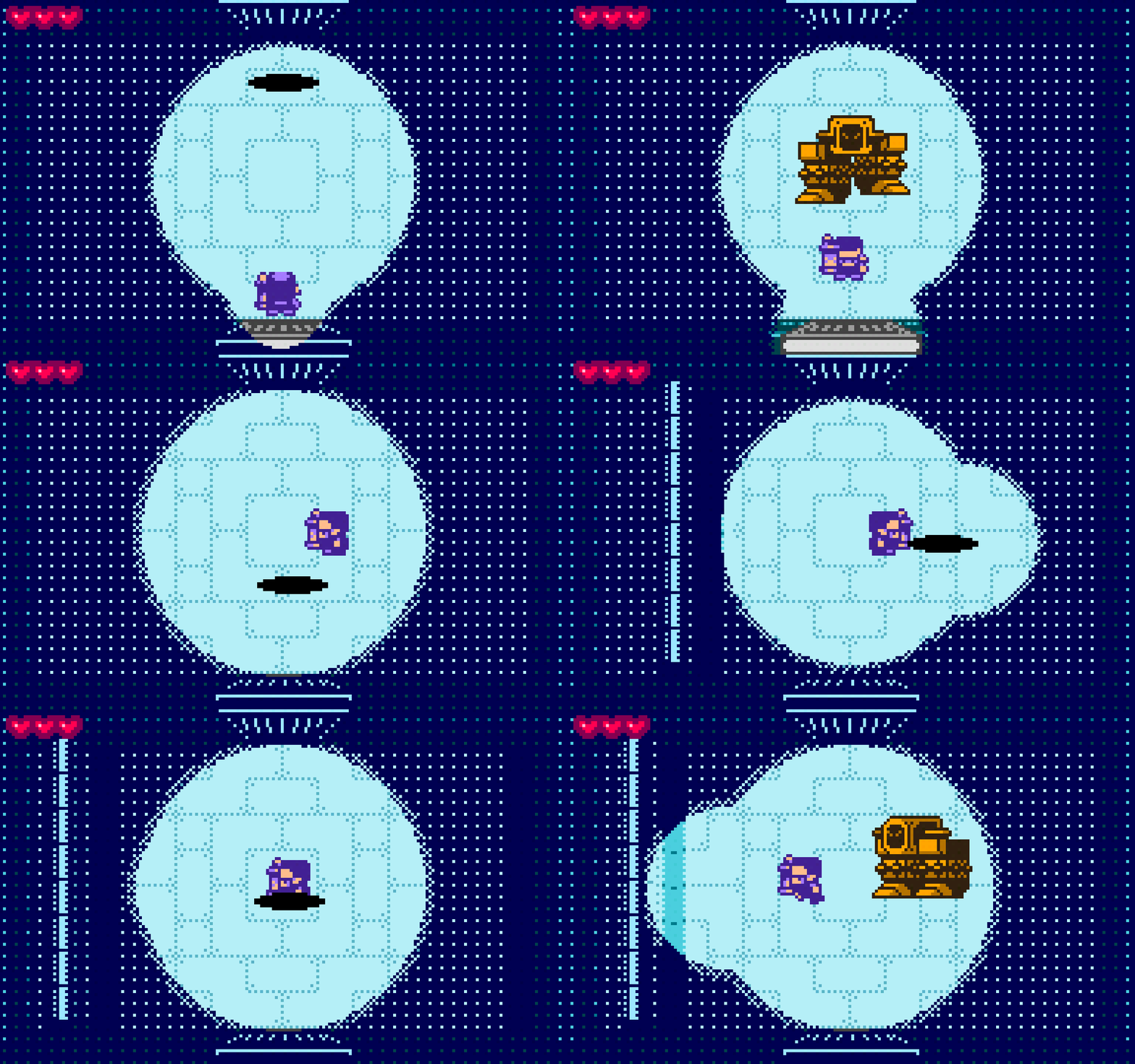
Set in a world where the surface has been affected by impact winter, mankind has largely hibernated underground, so much of the adventure takes place in subterranean caverns where having a light source is essential, and so before you even get hold of a Wrench Sword (which can also perform a familiar spin slash move), your first tool is actually the Crank Lantern. This also makes for an intriguing lighting system design, where the visuals don't just get dimmed.
"There's a whole dynamic lighting system where each active sprite has a little highlight sprite version so that when they're in the dark, you can still kind of get a hint of where they are," says Inman. "Then, as you play through the game, once you clear an area, the darkness level drops by one level, then suddenly you can see a little bit more of where you are. So as you play through the game, it starts to get brighter and brighter."
We've also seen examples of indie devs doing incredible things on Playdate, including even getting in video as with Blippo+, so there's a lot that can be done beyond its monochrome restrictions. However, Inman also enjoys working within constraints as if he were developing Ratcheteer for the 8-bit Game Boy from the start. (Read our best retro game consoles guide.)
"One of the things I like about constraints is that it forces you to really look at all the possibilities within that space, whereas when I think about a modern game, if I can do anything, I just don't know where to start," Inman explains. "So starting small and then exploring that space and finding unique things that may not have been done is always interesting to me. It's kind of like a fun puzzle to play while I'm working: if I can't do this, what can I do instead with what I have?"
Button mapping dilemas
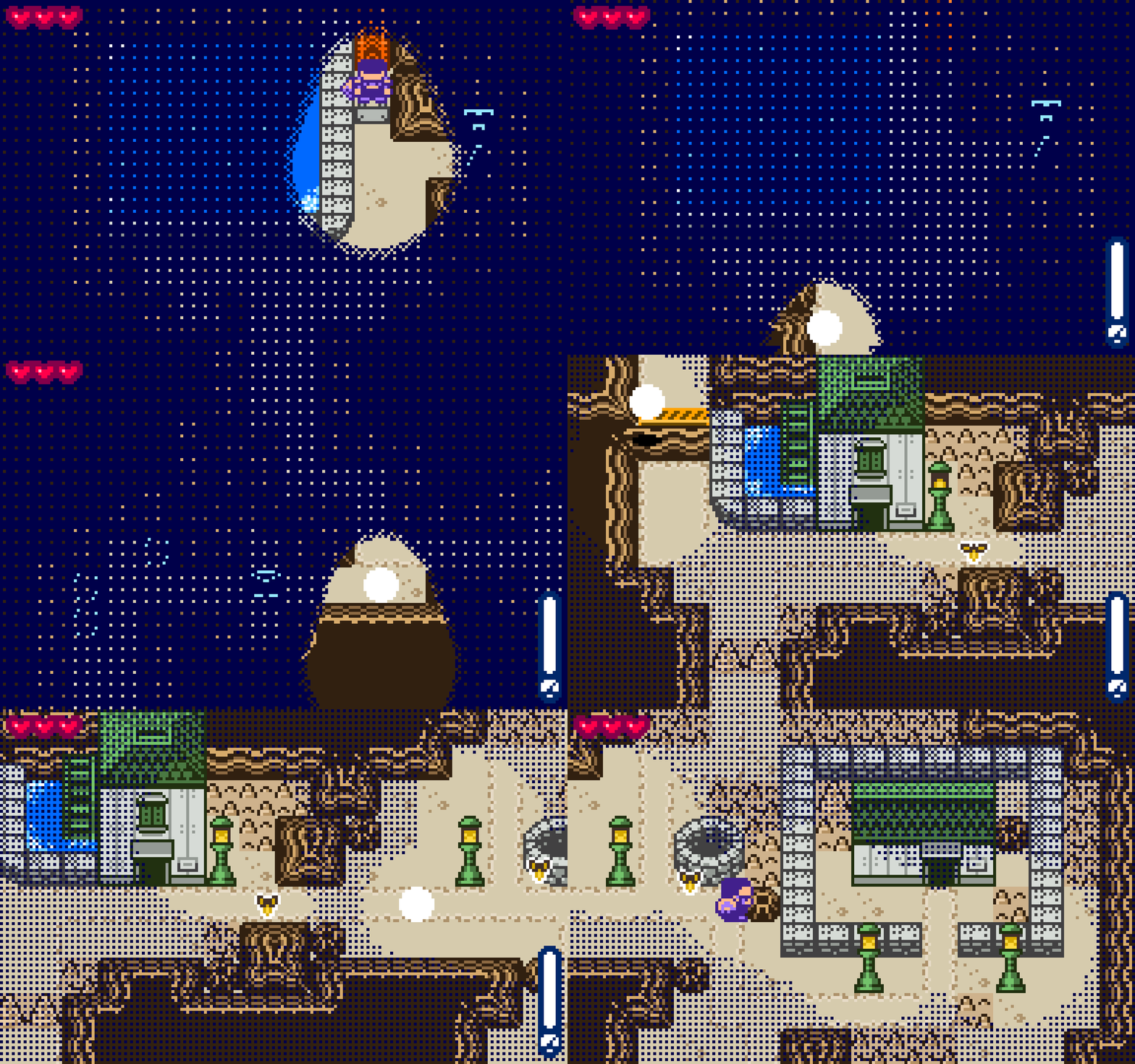
There was, however, one benefit of porting Ratcheteer DX over to other platforms. Given the number of tools you can unlock, which even includes something inspired by Metroid's Morph Ball, changing between them was a lot fussier on Playdate when there are just two face buttons, whereas the Game Boy at least had start and select buttons for accessing a menu.
"We came up with a system where you use the A button to use your primary tool, and then you swap to your secondary tool by tapping B, but if you hold B, a menu pops open for you to switch it, which made something as simple as jumping and slashing kind of complicated," Inman admits. "So on modern devices with all these face buttons, I basically just assigned a tool to each button. I rewrote the entire input engine so I could also accommodate keyboard inputs."


Although this version does look like the unique crank-based inputs of the Playdate, there are also options to change the colour display to mimic the Playdate's monochrome palette, or even the original Game Boy's pea soup colouring.
But Inman is far from done with Playdate, where he has already released another game, Word Trip, and created Pulp, Playdate’s web-based game maker inspired by Bitsy. For now, he's very content with experimenting within its constraints.
Ratcheteer DX releases on Nintendo Switch and PC on 5 March, and you can try the demo now on Steam.