




When it comes to 3D platformers, the genre is impossible to talk about without mentioning Mario, whose first 3D outing back on the N64 set a high bar that other contenders have fallen short on. That doesn't stop developers from trying, such as the upcoming Demon Tides. But when Chris Wade started the prototype for Big Hops nearly seven years ago, it followed Super Mario Odyssey, a game he describes as "perfect" and "the last word on 3D platformers".
It was, however, not the only Nintendo game that was on his mind when he spent the first two and a half years of development by himself.
"With Breath of the Wild, it was the Zelda reinvention that was really inspiring, and I was really jealous that nobody had made a 3D platformer like that. So I [was] really like, what if you started with the best 3D Mario as your base, and then add this kind of design sensibility and intention from the way they reinvented Zelda."

Picking from Zelda's art direction
Indeed, the visual design is perhaps more likely to remind you of Zelda, from the way young frog Hop poses when discovering a new item or critters much like Link did from Ocarina of Time onwards to the implementation of a stamina wheel first seen in Skyward Sword, and is it just a coincidence the amphibian shares a similar colour to the Hylian hero's iconic tunic?
But while Big Hops also seems to be following the trend of indie games featuring frogs, from Frog Detective to the upcoming co-op game Frog Sqwad, there's also a cool mechanical reason that Wade landed on having a frog protagonist. "I brainstormed a bunch of animals with a unique gameplay affordance that could be a gimmick to base a whole game around, and a frog was so obviously great, the tongue could do so many things and it's honestly pretty weird that nobody has made a serious tongue-focused 3D platformer."

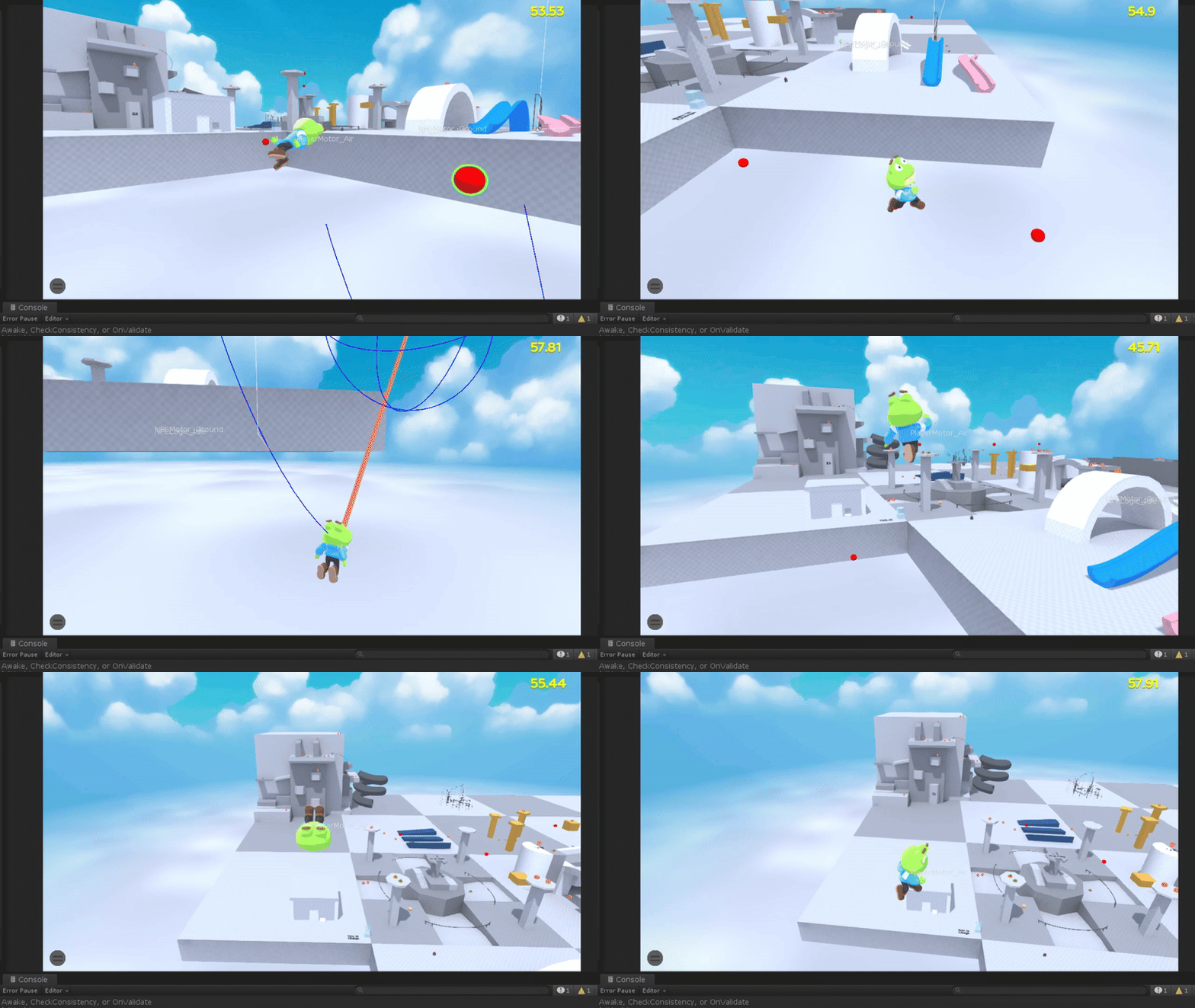
In Big Hops, your tongue is essentially your innate grappling for traversing environments with ease. Along with the parkour movement, including a wall-running mechanic that can also activate when Hop runs out of stamina instead of immediately slipping off a wall, Wade says once other members joined the project, a common discussion was that while there were retro inspirations from a visual perspective, such as the GameCube era, he was keen to avoid aping the same old game design.
"A very specific example was our designers would make the where you go into a [2D] wall section and then you have to wall-jump back and forth to get up to the next level, and I always vetoed it because it's such a retread from every platformer with a wall jump," he explains. There's so many good games and there's so many repeated tropes that we should be trying to do new stuff with the time we have."
That drive to explore more unique ideas did, however, mean expanding the scope from a shortish 3-5-hour game into a "bigger budget" indie game that spans four large sandbox worlds, which also accounts for Big Hops' long development time.
Wade adds, "Early on, I really wanted the game to have different biomes, and that means you have to do concepting, make environment art kits and do the design work of who lives here, what kind of architecture do their homes have, and what's the plot and premise that's driving why you're here. We kind of ended up having to make each world twice too because we'd make it once and then when we make the next world, our team had gotten so much better that we would revisit and redo a lot of the previous worlds."

The appeal of Unity
There was, however, a benefit to developing the game in Unity, which the team was already experienced with: the ability to write custom tools quickly. "For this game, everything you walk on is basically made with procedural tools that you drag points around on the ground, and then you can change the height of the ground, change the shapes and you can make them have grounded corners," Wade explains this one example.
Adding: "If we hadn't built these tools, it just wouldn't have been possible to build the amount of stuff that we built. A level designer can also come in later and change things, but it's not like an artist has spent a week fine-tuning and locking it down – everything can be tweaked as late into the game as we want."

But while Wade cites the usefulness of procedural generation (which uses algorithms to generate content but isn't the same as generative AI), he also makes clear that parts of the environments in Big Hops, such as the textures, have been "painstakingly" hand-painted and hand-placed.
"This is where we took inspiration from a lot of older games like Wind Waker, Kingdom Hearts, and Skyward Sword was a big reference," he says. "They have painterly textures that are kind of low-detail and it kind of relies on composing a lot of different pieces instead of each individual texture being totally perfect, beautiful painting."


Big Hops releases for PC, Switch and PS5 on 12 January, and you can play a free demo on Steam.