A new year is always a time for optimism, but as we approach 2026, it's hard not to acknowledge that 2025 has largely been a repeat of 2024 as the games industry continued its implosion with more layoffs and studio closures.
Yet it's also not been without its successes: most triumphant of these has been Clair Obscur: Expedition 33, a poster child of what Unreal Engine 5 can do for small teams, as it went up against the AAA big guns and cleaned up all the awards and game-of-the-year accolades going. The launch of the Switch 2 has also been terrific for Nintendo, having sold 10.36 million units worldwide as of September, a number that is likely to have surpassed 15 million following holiday spending. Read my roundup of 2025's best indie games that went under the radar.
2026 will then see whether the Switch 2's momentum can continue, whether we'll see more games that take advantage of its unique features and hardware boost, and if indies will also benefit from it in the same way they did with the original Switch. However, we'll also be seeing new hardware with the return of Valve's Steam Machine (also nicknamed the GabeCube for its compact design).
Following not one but two delays, the juggernaut that is GTA 6 will also be looming through 2026, which will no doubt affect other developers rushing to get their games out or delaying to avoid getting sucked into Rockstar's black hole.
But despite the challenges that come, games are still being made, with many of the indie devs we spoke to this year also with their releases planned in 2026. With that in mind, it felt right to get back in touch with some of them to discuss not just their predictions but their hopes for 2026, whether that's on how the industry grapples with AI, the value of Game Pass versus supporting the games you want to play, and how indies will survive or thrive in the year to come.
Game Design Trends 2026
01. Switch 2 proves its worth, at the expense of indies
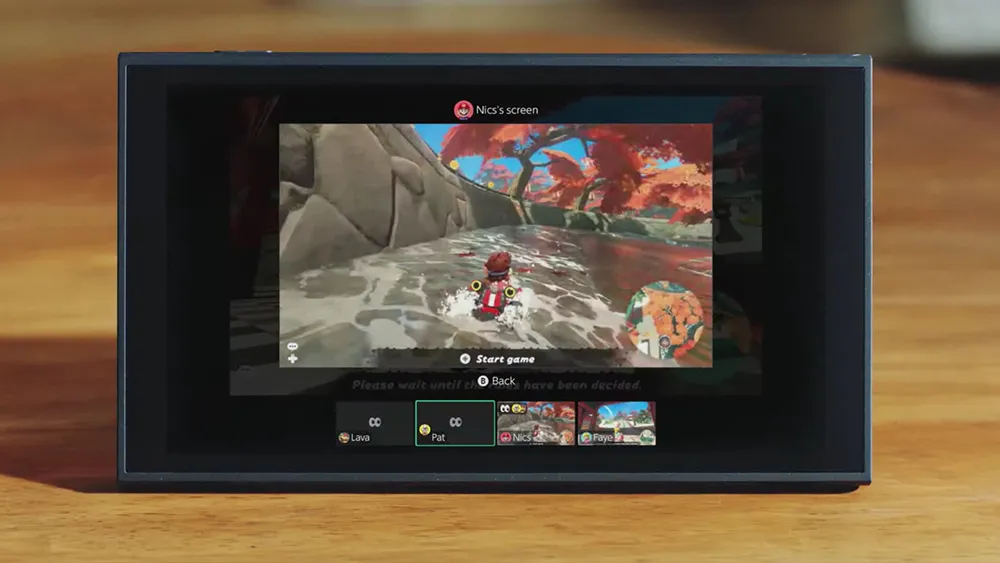
There may have been grumbles that the Switch 2 isn't just Nintendo's most expensive console to date, but also its most iterative in the same vein as upgrading to a new iPhone. That hasn't stopped it from selling like hotcakes, outselling its predecessor in the first six months of launch by double. Compared to pricier alternatives like the Xbox Ally X and it actually looks like a bargain.
"Nintendo has made sure the price is right, and then it sells shitloads again because they realise what the formula for making one of these things sell," says indie publisher No More Robots founder Mike Rose. "In general, companies are just entirely misunderstanding that no one has any money and you really, really need to be considering that."
So far, however, the console still has to prove itself for those who've forked out on the upgrade, as 2025 mostly saw cross-gen releases or ports. While the start of 2026 will see more ports like Final Fantasy VII Remake Intergrade and Elden Ring, there will at least also be more new releases coinciding with other platforms, such as Yakuza Kiwami 3 and Resident Evil Requiem. There are, nonetheless, concerns about whether indies will also benefit, given the continued shortage of dev kits getting out to anyone.
"Indies are struggling to gain access unless they hold a well-known IP," says Nitrome's Mat Annal. He is among many indie studios still trying to get their hands on a Switch 2 dev kit, despite making Mouse Works, a party game that's designed to leverage the console's exclusive mouse functionality. "Switch offered the best returns out of the three consoles, so not being able to leverage the latest console's audience will be a concern."
02. The Super Mario Galaxy movie releases

Nintendo is, of course, much more than just games and hardware these days (they also have far too many phone apps for their own good). Besides expanding its theme parks (we might even see a Super Nintendo World in the UK following government approval for a Universal Studios to be built in Bedfordshire), the company's big screen ambitions continue growing, with the filming of a live-action Zelda movie already underway, while The Super Mario Galaxy Movie is headed to cinemas this April.
This, however, also makes it nine years since the release of the last 3D Mario game, Super Mario Odyssey, which remains one of the best Switch games. To be fair, the same team had been working on Donkey Kong Bananza, but aside from the re-release of Super Mario Galaxy 1 and 2 to coincide with the mascot plumber's 40th anniversary, we're long overdue for a new 3D platformer to raise the bar again. It's going to be a tough pill to swallow if Mario Tennis Fever is the only Mario game Switch 2 owners have to look forward to in 2026. (It's likely why everyone keeps craving those Mario 3D fan games.)
03. Steam Machine 2.0's impact

The success of the Steam Deck, one of the best game consoles, has meant that Valve is giving its idea of having a PC in your living room another go with a beautifully compactly designed Steam Machine 2.0 that will have beefier specs than its handheld and connect to your TV. It's an obvious boon for Steam users who will be able to access their whole library from the comfort of their sofa, though no confirmation on price other than that it will "be priced like a PC" dashes any prospects of it being an affordable rival competitor to the other console platforms.
Videoverse developer Lucy Blundell, who knows a thing or two about designing (fictional) consoles, hopes it could be a more accessible option: "I would like to see Steam's hardware in stores, reaching a wider audience of casual gamers and even newcomers." Even if Valve doesn't go the route of mass retail, it may influence other manufacturers in much the same way the Steam Deck saw more powerful handheld PCs entering the market.
"It's for a small but going-to-be-happy demographic of people who have a big Steam library who can't be bothered to build a PC who will spend enough money for the quality of life features of picking up a controller, pressing a button, and having your games run," says Poly Fighter developer Osama Dorias. "They're showing other computer manufacturers what they could do to also support their own platform and store. I see this more as 'Make a machine, put a loader on it, and you'll benefit.'"
04. Steam Frame gives VR another lease of life

Things haven't been looking great for VR in 2025. The biggest headline was that Meta, having essentially monopolised the market with its Quest headsets, made a loss of $70 billion over four years. According to Jake Kazdal, whose studio 17-Bit previously made VR survival game Song in the Smoke, "There's not a market for bigger projects," like Half-Life: Alyx, which still remains the gold standard for a full-length VR blockbuster.
He's, however, more hopeful about the possibilities of the Steam Frame, a new headset that Valve announced alongside its Steam Machines, which is designed to be streaming-first, meaning you can play beefy VR games from your PC rig while enjoying it in your living room. "They're very much looking into stereoscopic 3D, which would be my dream. I want to come home, lie down on my couch, and have a giant screen in stereoscopic 3D. That to me is the ultimate use of VR."
05. GTA 6 swallows up the games industry

We thought it was coming in 2025, but Rockstar delayed GTA 6 first to May and now to 19 November 2026. For all we know, it could end up getting a further delay, given the disruptions that will have been caused by the sacking of more than 30 staff members, which is being alleged as union-busting, and which is still ongoing.
Given its predecessor, GTA 5 being only behind Minecraft as the best-selling game of all time at over 220 million copies, experts predict its release to be seismic for the games industry, where spending has been going down. For devs with other games coming out, though, Crescent Country dev Anna Hollinrake describes it as a "nuclear bomb" that everyone will be trying to get out of the blast radius when it finally releases and takes away all the attention and money from other games.
Earth Must Die dev Dan Marshall at least thinks Rockstar has been rather considerate about its plans. "Rockstar knows what a black hole they are for the industry in a lot of ways. They are being very transparent about giving people six months' notice, and then another six months' notice, which is pretty good. What the Silksong devs did, with a thousand other indie developers all scurrying to work out whether they're going to release early or late, I consider that slightly less thoughtful."
06. Better game discoverability and incentives to buy games

Conversation around GTA 6 has also included some analysts floating the idea that it could be priced at a staggering $100, which might spur other AAA publishers to raise their prices. But GTA 6 is also the exception, not the rule, and higher prices could risk backfiring with lower sales overall, especially when higher quality free-to-play games also exist, from Fortnite to Ananta, the upcoming Chinese anime clone of seemingly every open-world game ever.
"Huge blockbuster four years ago and now have $70-80 price tags on it, then these other games on Steam pop up, and they're $20, and then publishers are like, 'Why are people not buying our expensive games?' and it's staring them right in the face - no one has any money," Rose reiterates. "Normally, when you launch a game, you will try to price it reasonably, and you will do a little launch discount, and that's not really working anymore, so you really need to try and entice people with less money."
Besides game prices, the bigger issue that developers face is just getting people to find out about their games. For every viral hit, there are thousands upon thousands more games no one knows about, and while Nintendo has attempted to clean up its eShop with the launch of Switch 2, discoverability remains a huge issue on digital storefronts, although independent apps such as Ludocene, described as 'Tinder for games'.
"If you're asking me about what tools I would like to see, I would like to see a bit of curation just to raise the quality bar," says Marshall. "I want to scroll through a list of things I want to play, and not see endless expansion packs for a one-pound game about an anime girl playing snooker."
07. Game Pass still has value despite the price hike

Although there have been no new statistics since 2024, subscriptions to Game Pass – Microsoft's Xbox game subscription service – have been growing year-on-year, which you might assume has continued growing thanks to Microsoft's acquisition of Activision Blizzard, which now means Call of Duty is part of the service that brings new games on day one. That may have changed following Microsoft's decision to raise the price of its highest ultimate tier – the tier required to access new day-one games since 2024 – by more than 50%, prompting some fans to cancel their subscriptions.
"I think it’s still good value if you play a lot of games," says Friday Sundae's Anil Glendinning, whose game There Are No Ghosts At The Grand is coming to the service in 2026. "I think Game Pass is a really great place for indies and for lovers of indie games. It’s a good way to try out new games that you might not normally buy."
"Clearly it's still growing, so I do think as a model it works," says Kazdal, whose next game, Awaysis, is also coming to Game Pass. "I still think it's of value if you're the kind of gamer who wants to check out a bunch of stuff that you're probably not going to spend a ton of time on. I do think the heyday of [Microsoft] paying big bucks for exclusives is probably harder now."
08. Forget live service, it's all about friendslop

Live service games had some huge failures in 2024, notably Concord's failed launch. But there have also been notable successes, from free-to-play open world wuxia game Where Winds Meet to Arc Raiders, a mainstream extraction shooter that could actually warm people up to Bungie's Marathon, which is targeting a March release at a more attractive $40 price point.
But the bigger success story from 2025 was Peak, a low-budget co-op climbing game that sold 10 million copies in just a couple of months. Not bad for a game made from a game jam in the same year. While Peak can be grouped along with other co-op games like Lethal Company and Phasmophobia with the derogatory term 'friendslop' (though Peak developer Aggro Crab has embraced this term), these quickly-made and inexpensive games clearly resonate with a post-Roblox audience looking for games to play with their friends.
Big Walk, from Untitled Goose Game developer House House, looks to capitalise on this in 2026 in a co-op game that also makes use of proximity chat. With its GameChat and built-in mic, we could perhaps see more of these kinds of games coming to Switch 2 as well.
09. The industry embraces and pushes back on AI use
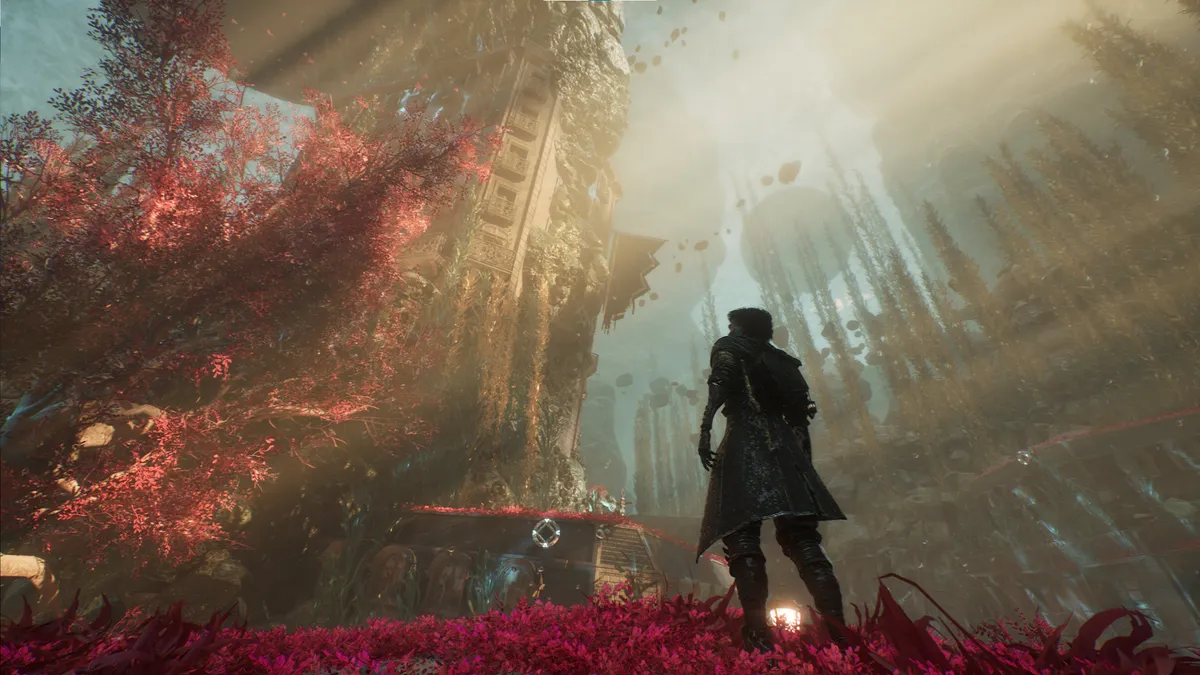
AI continues to be a hot topic, not just in games but in our daily lives, as tech companies sneak in AI features into operating systems and tools. While Steam now requires devs to disclose whether their games use AI, its usage has been creeping into commercially released games, including some art assets in Clair Obscur: Expedition 33, chatbot-powered NPCs in Where Winds Meet, and speech generated from text-to-speech for NPCs in Arc Raiders, while PUBG developer Krafton has restructured itself as an 'AI-first' company.
There's nonetheless a lot of pushback against the use of AI, notably following comments from Baldur's Gate 3 developer Larian's CEO Sven Vincke about "pushing hard" on genAI, and it seems ever more like indie devs are picking a side on whether or not to use AI.
Lucy Blundell raises her concerns that increased AI usage "will lead to unsatisfied players and independent, human-made games becoming buried, perhaps resulting in even more studio closures."
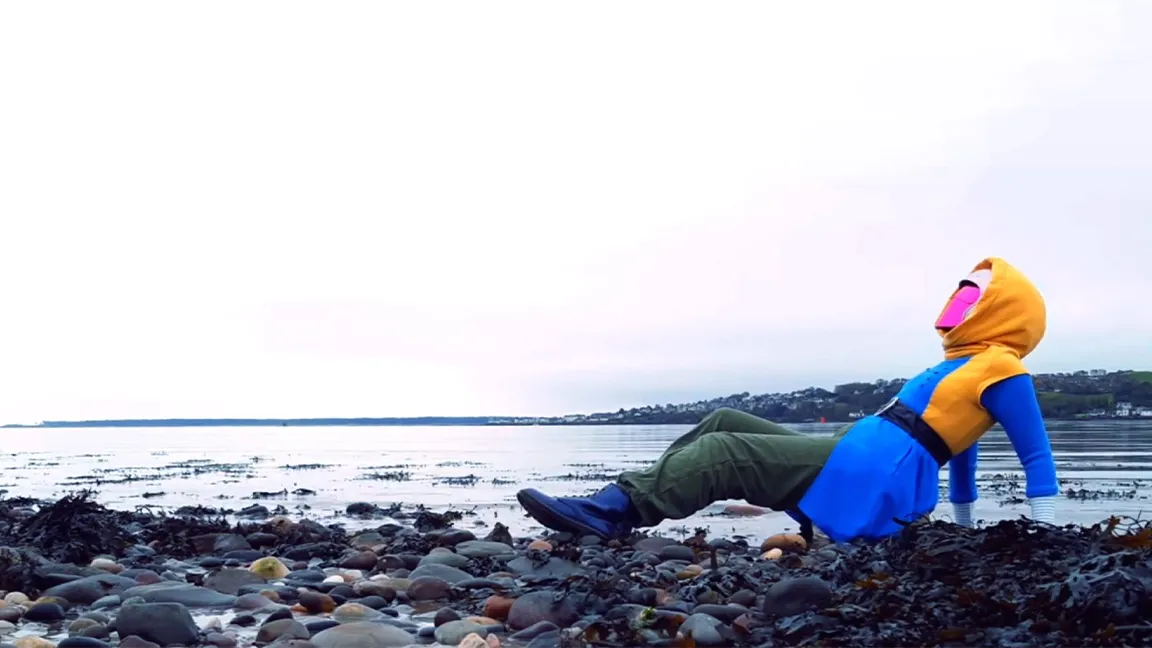
While AI is often cited as a time saver, Claire Morwood, who released the completely hand-crafted indie game Asterism earlier this year, says "the more AI is relied on as a tool, the harder it will become not to use it, since the baseline of 'productivity' is pushed higher and it becomes harder to complete creative tasks in a more human-friendly timescale."
"Indies have to carry the good guy image, and AI is frowned upon as a shortcut," Mat Annal adds. "Indie work typically also works best when it stands out, which is helped if you can make it look distinct, and AI is not great for that as it really builds on styles that have already been heavily established."
There are nonetheless benefits that Jake Kazdal says AI can be useful for, such as training LLMs on game documents so that all information can be accurately sourced instead of having to wade through pages of a huge document, while it can also be efficient when it comes to brainstorming early ideas, from rough sketches to building mood and style boards that then help inform the human design. "There's definitely a lot of sensitivity around it, but I'm sure some big game is going to be like, 'Yep, we did it, and we sold a zillion units, so we don't give a shit.'"
10. More stylised and hand-crafted games

Perhaps the antidote to the prevalence of gen AI is for more indie devs to innovate with more stylised and hand-crafted games. Unreal Engine 5 may make it easier than ever to create photorealistic characters and worlds, though there's also a distinct art direction that makes Clair Obscur: Expedition 33 stand out, while VR game The Midnight Walk made use of the engine's tech for digitally scanning in its own hand-made clay sculptures. The upcoming Awaysis, meanwhile, is a UE5 game that has very stylised characters with its own custom-built physics engine.
Given her own experience in hand-crafted games, Morwood's also taking inspiration from other games, being creative, experimenting with other mediums, from stop-motion animation to FMV. "My hope would be to see more blending of these boundaries, and games that push the art form creatively, without always pursuing new and shinier technologies in order to do so."
With the industry still in a rocky place as we go into 2026, it's the smaller nimble teams who can also validate their ideas to the market quickly that are going to fare better. The success of Clair Obscur: Expedition 33 is proof that there is a place for new original ideas at the AA scope, though Anna Hollinrake gives a caveat, as someone who had to take their game to Kickstarter. "Funding still hasn't seen much of an uptick in the last twelve months. Perhaps with increasing concerns about the AI bubble bursting, money will start flowing toward more interesting, more focused projects again."
Get a new game console for 2026