


Making a living as an artist got harder in 2025, whether it was because of job losses in the creative industries or a reduced amount of work for freelancers due to the impact of generative AI.
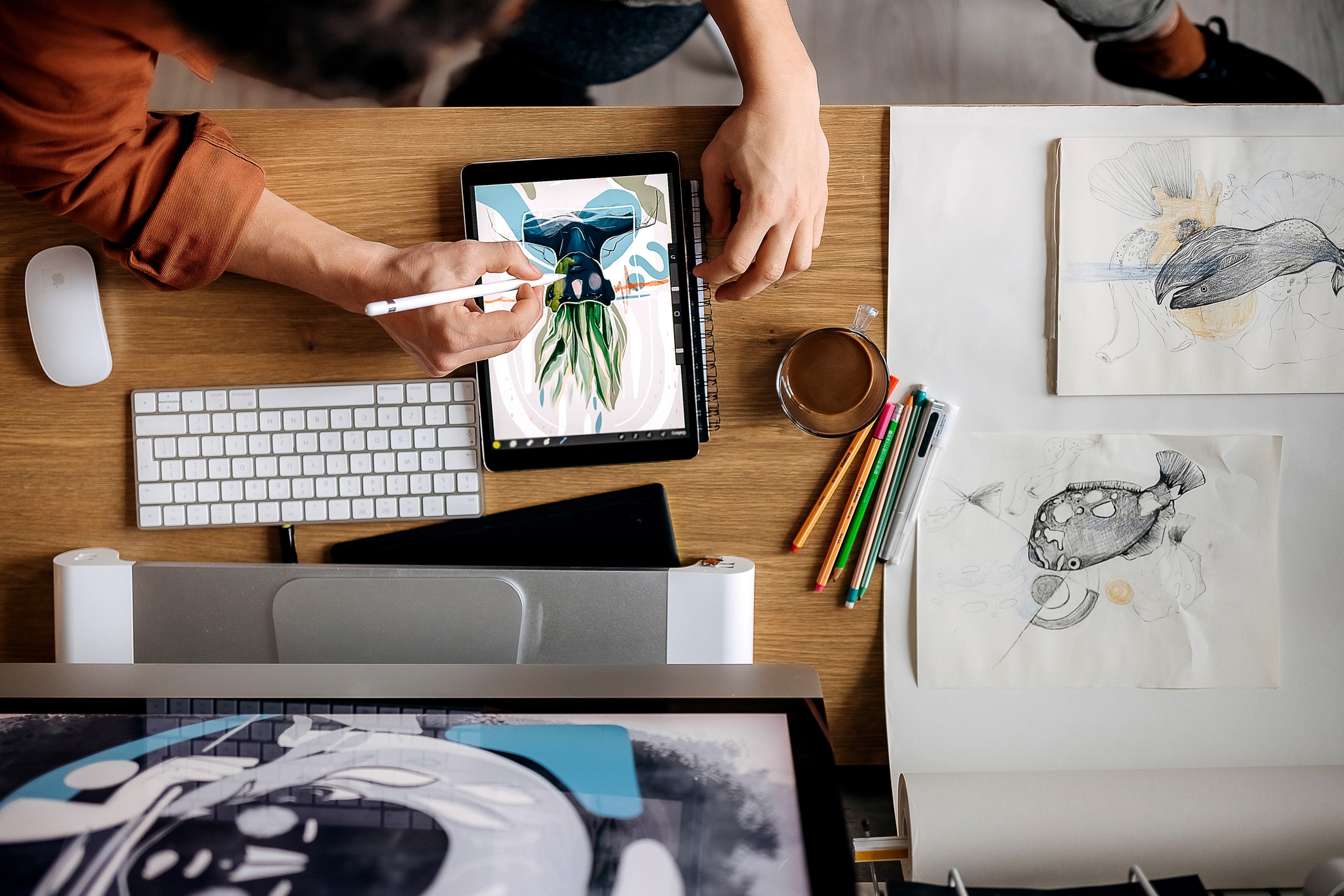
Some artists are leaving their chosen industry entirely, but others are hanging in there and boosting their options by learning new tools and art styles. Artists who usually work in 2D are starting to learn 3D and looking at creative sectors like AR and VR. Some artists are even going back to traditional media as an antidote to high-tech overload.
In response to a changing landscape, artists are reshaping themselves by reaching out into new media, creative sectors and learning new skills for a new year. 2026 will be a time of expansion, as artists look for alternative ways to make an income from their work.
Read our guides to the best digital art software, best drawing tablets and best Blender tutorials if you would like to expand your skills, too. While learning new apps is daunting, many are actually free, so you can experiment.
Below, I cover the leading digital art trends for 2026, from colour palettes to pivoting to new media.
2D and 3D merges

As 3D software has become faster and easier to use, and in the case of Blender, free, more and more 2D artists are taking advantage of it. Concept artists often find it faster to build scenes in 3D and paint over them, especially if they have to create images of the same place from multiple angles, or work with complex perspectives. It’s also useful when concepting something that eventually has to be built, such as a film set.
As well as helping with the technical aspects of image-making, artists are also using 3D software to great creative effect. New art styles are emerging as 2D artists apply their painting tools to 3D surfaces. This is particularly visible in the field of animation, where we’ve seen teams create unique art styles for animated films in recent years, from Spider-Man: Into the Spider-Verse and how 2D and 3D workflows are merged for Puss in Boots to some of the best animated films coming in 2026.
More accessible 3D apps, many are browser-based 3D apps, are emerging for 2D artists; apps like Womp, Adobe's Project Neo, and even Substance 3D is now free to use. The Substance 3D Viewer in Photoshop also makes using 3D objects easier for artists who have yet to try models.
Colour trends

Pantone recently unveiled their colour of the year for 2026 and it’s a shade of off-white they’re calling Cloud Dancer. The company has made a bunch of colour palettes with Cloud Dancer in them, and they’re fairly representative of the colour trends we can expect to see going into 2026. Many are a continuation of trends that have been around in fashion this year, and next year, we’re going to see them moving further into other kinds of visual design.
One palette is a selection of desaturated, pastel shades. Another, "Atmospheric", is similar to the so-called Mermaidcore aesthetic that’s based around the shimmery look of light as it’s reflected on water. Then there’s “Comfort Zone” too; this one is made of earthy, natural tones that evoke that sense of authenticity we’re all apparently hankering after. And “Tropic Tonalities” covers the hot pinks and shocking greens.
You can see all seven of the palettes that sum up what’s happening with colour in 2026 at the Pantone website.
AR & VR is back

2D artists are discovering new creative opportunities as they experiment with new tools. Many artists find that 3D is a gateway that leads them into other formats and techniques. Some find a desire to experiment with placing their work into AR or VR settings, or even to make their 3D creations into real-world objects. There are accessible VR apps for sculpting like Gravity Sketch and Shapelab Lite, which feel like creating in a physical space. You don't need a costy VR headset either, these work on the best VR headsets like Meta Quest 3s.
Others are discovering that things like photogrammetry and motion capture are fairly easy to implement. These high-end workflows can now be done using an iPhone, and new AI apps are making these complex pipelines easier to grapple with and use day to day. Read our What is photogrammetry? and What is motion capture? guides for a quick lowdown.
Often, this kind of exploration can be done without the need for new hardware or software - for example, Procreate has a built-in AR view and 3D objects can be generated using AI from a sketch using Autodesk Fusion. In general, creators are less contained within their silos than they used to be, and it’s easier for people who used to work exclusively in 2D painting programs to branch out into other kinds of digital - or even physical - work.
Artists embrace game engines

The best game development software, such as Unreal Engine 5, Unity, and Godot have a lot of functionality that is interesting and useful to artists, so many 2D and 3D digital artists are learning how to use them - especially as they’re free. It’s not surprising that once they’ve mastered the tools, some people feel moved to make their own games as a way to give new life to their artwork and engage new audiences.
Cosy and idle gaming is popular, and there's a big audience for games that are less about gameplay and more about vibes and immersing the player in a visual world. Likewise, the retro-modern art style of games like Dragon Quest II HD-2D Remake is popular with artists as it is with gamers. Look out for Threads of Time in 2026 (image above) as well as Neverway from solo artist-developer Pedro Medeiros. For artists, this type of gaming can be a new canvas for their work that enables people to experience it differently.
To get inspired, read our list of the best indie games and hidden gems of 2025; many have been made by artists turning to game design to express themselves. Particularly 2D game art thrived in 2025 and the best indie game devs made the step from art to game creation.
Digital artists go traditional

As AI and turmoil in the creative industries make it harder to make a living as a digital artist, many are moving into traditional art such as painting and sculpture.
For some it’s a side hustle or backup plan. In uncertain times, artists are creating additional income streams that live alongside their main work as illustrators, concept artists or animators, and these alternative sources of revenue can be grown as needed, should the digital art work dry up.
For many it’s a case of going back to first principles, focusing on the core of who they are as a creator, and pivoting to a medium that’s viable as an income source.
If you are looking to try or return to traditional, physical media, read our guide to the best acrylic paints, as well as the best watercolour paints and best pencils for artists. Or you could mix digital and physical media using one of the best laser cutters or best 3D printers.
Imperfection is good

The proliferation of cheap, AI-generated art knockoffs is creating a kind of fatigue among audiences. People complain of “AI slop” taking over the internet and feel short-changed by fake, soulless images.
The result is an attraction towards things that carry the fingerprints of human artists: the gestures, quirks and timing in animation that can only come from an experienced human creator; the details, little surprises and in-jokes that tell a story in an image; the tone, inflection and context that reflect a person’s unique life experiences.
People want to see brushstrokes, rough edges and textures sampled from the real world - anything that shows what we’re looking at was human-made. To serve this need, artists are striving to create work that foregrounds the idiosyncrasies and unpolished elements that convey personality and craft.
Digitally, apps that celebrate human mark-making, like Procreate and Rebelle, could become more popular. 3D artists could see more clammer for models that haven't had the push and pull of digital clay ironed out.
Subscription fatigue

Consumers in general are getting tired of everything being a subscription, and art software users are no different - especially as free alternatives exist. Many digital artists are disgruntled about price hikes in Adobe subscription fees and the hashtag #boycottadobe is seen a lot on X.
On top of the fees, Adobe alienated artists last year with a Creative Cloud Terms of Service update that seemed to grant the company rights to access users’ creative work and possibly even use it to train AI. They backpedalled quickly and clarified that users’ files will never be used to train AI without consent, but the damage was done - trust was broken and a movement to ditch Adobe solidified.
Switching to the best 3D free apps or low-cost software is feasible for many artists as tools such as Affinity Studio, Krita and Blender are all free, and Procreate and Infinite Painter are available for a small, single fee. Wherever you look, there's a free alternative to existing subscription software. With professional-quality software packages like these around, artists are finding they can avoid costly subscriptions altogether.
Micro animation makes an impact

We've all experienced photos that have a second or two of motion added; that technique is inspiring a rise in 'micro animations' slipping quietly into illustration, ideal for web and digital books.
Eyes blink, smoke drifts, and cloth blows naturally. These tiny loops draw in readers and can bring a cover or page to life. This new layer can help bring rhythm to still art and comics find a new audience, and it's likely to be one of 2026's more subtle art trends.
This art is built with tools including After Effects for layered subtlety, Procreate Dreams for hand-drawn motion, Blender for soft environmental loops, and Rive for lightweight, interactive images.
For publishers and studios, micro-motion stretches shelf life, boosts discoverability, and turns artwork into living surfaces without becoming full animation. It fits feeds, storefronts, and interfaces where restraint feels premium, intentional, and quietly human rather than loud or cinematic.