




If there's a lot of hype and anxiety over AI in the creative industries, with a viral video of an AI-generated fight sequence between Tom Cruise and Brad Pitt sending ripples through Hollywood, it doesn't seem to trouble independent filmmaker Albert Birney. His new film Obex, which he writes, directs and stars in, feels like the complete opposite of the slick production values and VFX that the latest AI tools that no-budget filmmakers can potentially use to rival Hollywood studios.
"AI takes away the joy that I would have in the process of filmmaking," he tells me ahead of his film's UK premiere at the Glasgow Film Festival. "To just type in, 'make this' and then have it make something that's 'perfect': it actually is soulless to me when I look at it. I can just tell that there was no time put into it by a human being."
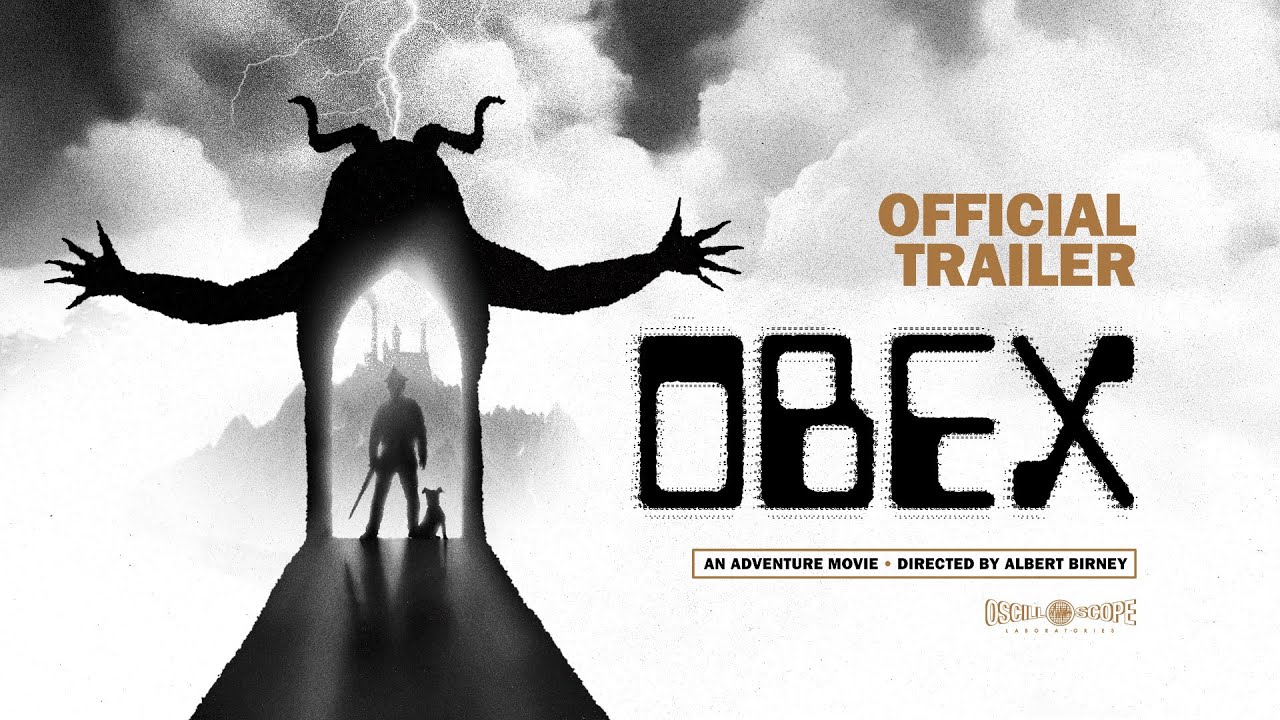
Obex instead leans into a deliberate lo-fi style of filmmaking, even though it has a video game-themed premise that has often meant using the most state-of-the-art technology to realise, from Tron to Ready Player One. The plot sees Conor Marsh, played by Birney, play the titular new game, when the worlds of reality and the game begin to blur.
Of course, this game is new in the context of the film's setting in 1987. It's played on a Macintosh computer on a floppy disk. Setting the film in this era was an important personal decision, since the time coincided with when Albert discovered games.
"I got a Nintendo on my seventh birthday, and that was the beginning of a lifelong obsession with video games," he says, though it was at a friend's house that he experienced the original Mac.
"He had these early Sierra games like King's Quest and Space Quest, and even though they were very simple, black and white, they were just so vivid to me. Some of my earliest gaming memories were getting lost in these pixelated worlds, and so I think this movie is just trying to marry all these different ideas and feelings I was having."
Obex is in black and white, and there's attention to detail in tangible physical media, including a peculiar sight of three CRT TVs stacked on top of each other in Conor's room – Birney happened to salvage them from a friend who was going to get rid of them.


There is some creative licence in the presentation of the game itself, though, unlike many fake fictional games seen in films or TV shows that are usually just animations, the Obex you see was actually made in Unity by indie game developer Gabriel Koenig. Albert previously worked with Gabriel to make a game called Tux and Fanny (itself an adaptation of an animated film of his you can watch free here).
"I asked Gabriel to do it because I knew he would most likely build it in Unity and just control the character walking around, then he just screen-recorded it and so what appears in the movie is him playing this little demo he made," Albert explains.
As for creating the elements where the game world is part of reality, Albert takes an old-school approach with physical costumes and practical effects. This is all part of the fun in world-building that he enjoys taking the time to do. Even when there are special effects, he intentionally doesn't use the slickest methods available.


"I really love just using the stupidest programs like Photoshop and Premiere, and just going frame-by-frame, layering, drawing on them and cutting them out, so it's almost like collage-based special effects," Albert explains. "There's many smarter, faster ways to do it, but they lose something when I try those ways. When I use something like After Effects, they lose the kind of shakiness."
In other words, there's intention behind this lo-fi style with its imperfections that's an antidote to the slick facade promised by AI.
"Where AI feels now, it is missing that crucial step which is I think where the soul appears in artwork," Albert says. "Art is a transference of the artist's soul out into the world. So hopefully as the AI craze keeps going, more and more people are kind of craving the personal films from people and to feel that human touch in them."
Obex will be available on Blu-Ray and digital from 9 March.
For more inspiration see our interview with Florence Miailhe, director of Oscar-nominated animation Butterfly.