






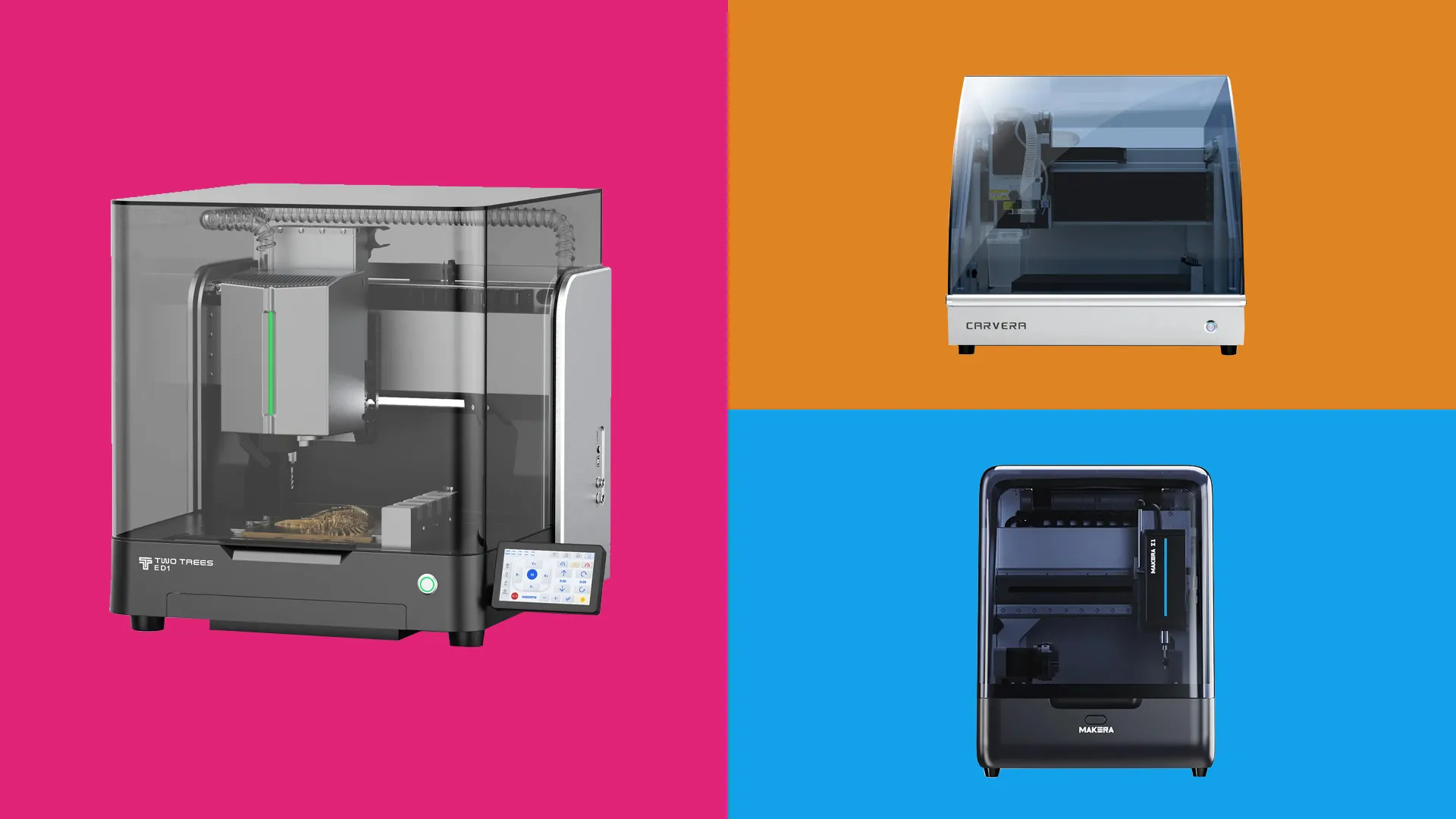
The best CNC machines let you make precise, repeatable cuts in metal, wood and other materials right from your desk, and we think it's the start of a revolution in small business crafting. The latest generation of desktop CNC machines are typically enclosed, work quietly, and are automated enough that you don't need to be a trained machinist to use them.
They do cost a fair few bob, starting at $1,199 but venturing into the $5000 territory, so they aren't craft machines for the people at this stage.
CNC machines work in the opposite way to the best 3D printers or the best UV machines. Rather than building an object up layer by layer, they carve it out of a solid block with a spinning cutter. That means you can create strong, precise parts in metal, wood and stone, built to last.
I've picked the best CNC machines available to consumers today, along with two promising Kickstarter models that we're excited to see materialise.
The best CNC machine for beginners
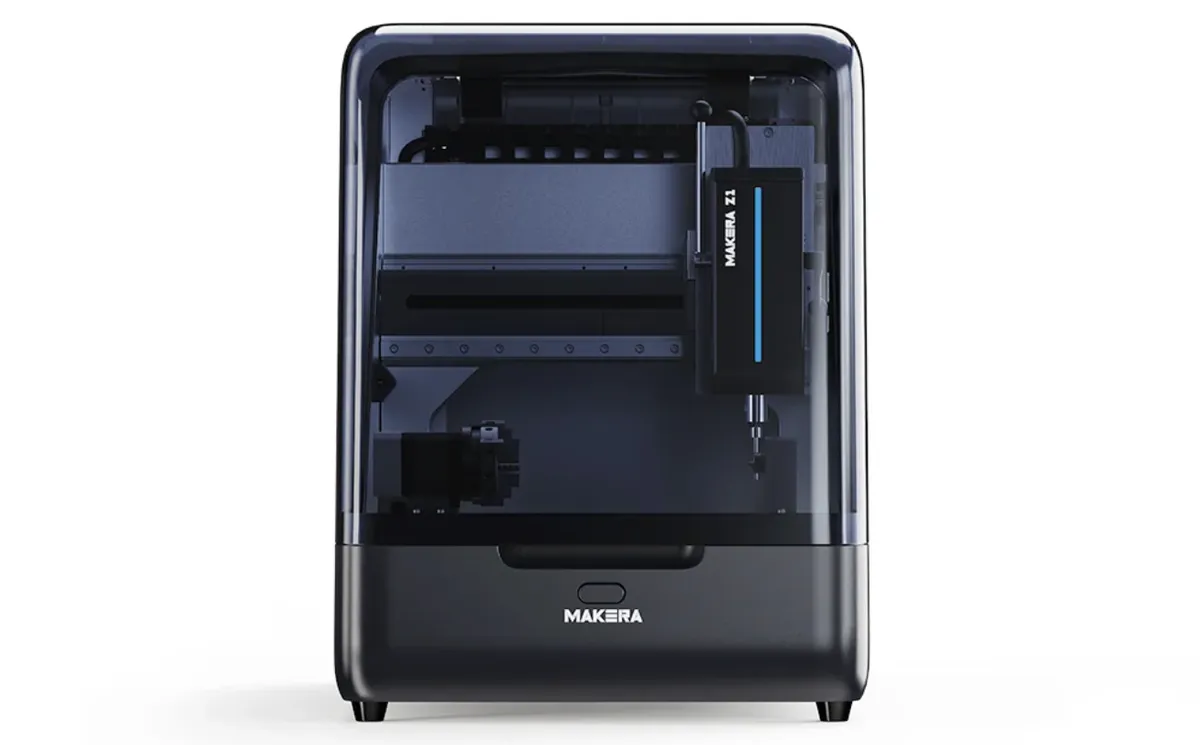
Makera launched as a company in 2019, with the aim of lowering the cost of precision desktop manufacturing. Two years later they made a big splash with their first CNC machine, Carvera, which debuted on Kickstarter and is still popular today: we've put it as number two on our list. But the Z1, which launched in 2025, again on Kickstarter, has shaken up the market by driving the cost of entry even lower.
Despite being the cheapest on this list, it does everything a beginner will need. It's built on a cast aluminium frame and fully enclosed. It offers automatic probing and levelling, a built-in camera you can connect to your phone, and an air blast that clears chips as it cuts. And its software offers one-click toolpaths, so you don't need to learn complex software before you get started.
The tradeoff for the cheap price is that it's more limited in terms of size and power. The 200 x 200mm work area also means you can only work with small parts, while the 150W spindle requires shallow, patient passes in metal. Another drawback compared to the Carvera is that you'll need to change tools by hand via a quick-release lever.
If you're seeking your first CNC machine, though, this is our top pick.
The best CNC machine for experienced users
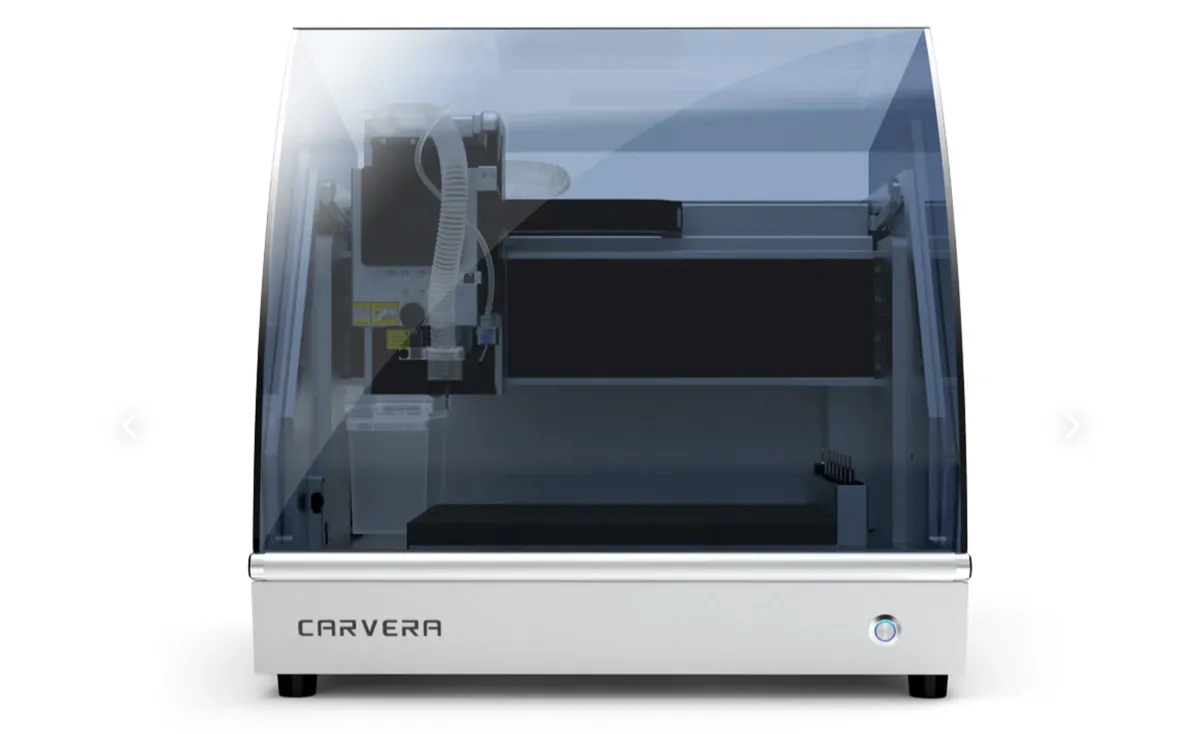
The Carvera has been around since 2021 but remains Makera's flagship. With this CNC machine you get a six-slot automatic tool changer, letting you swap between different milling bits mid-job, saving you from having to fiddle about with your hands. It's capable of cutting and milling wood, plastics, acrylics, carbon fiber, FR4 (PCBs) and non-ferrous metals like aluminum and brass.
Other features include an automated wireless probe for surface mapping and bed leveling, built-in dust collection and a 2.5W laser for engraving and engraving and PCB labelling. The enclosed design keeps noise to around 65dB: not silent, but still quiet for a CNC. You can cut wood, plastics, PCBs and non-ferrous metals like aluminium and brass well, and if you want to make circuit boards at home, Makera will sell you a dedicated bundle for that.
The 200W spindle is modest, and Makera doesn't recommend you try to cut steel or titanium. And while the crowdfunded rivals below promise more power at a similar price, remember that they're not actually available yet. This is, and has years of independent tests and positive customer reviews behind it.
Up-and-comer
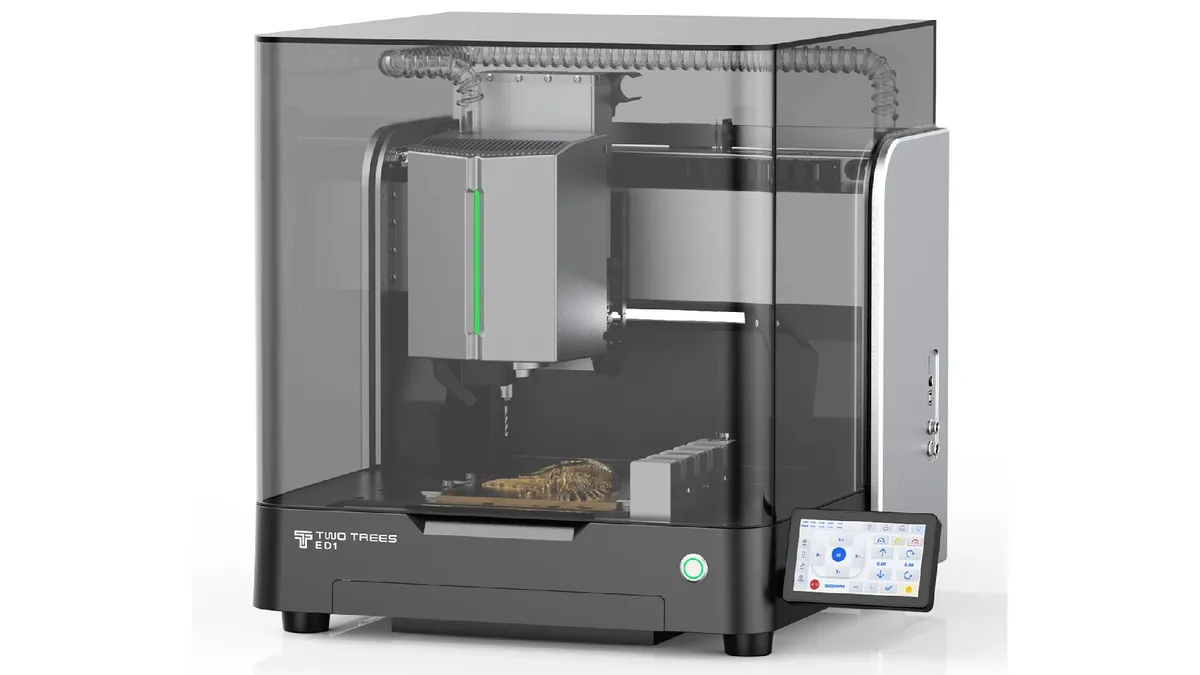
Twotrees produces affordable laser engravers and 3D printers, and the ED1 is its latest CNC machine. It offers automatic tool changing, like the Carvera above, but at a more affordable price.
While the ED1 is closer to shipping that the CNC machines below, it's only available for pre-orders, which will ship from January 2027. That means it hasn't yet been independently tested, so at this stage we can only go on the specs.
They do, though, look very impressive. The five-slot changer is said to swap cutters in around 10 seconds, the 600W spindle has three times the power of the Carvera's – Titanium is on its list of materials – and the 300 x 200mm work area is a decent size. You'll also get auto levelling, a built-in camera and AI-assisted software.
Kickstarter products to watch
These CNC machines haven't shipped yet, so we haven't included them in our main list. Both are due to arrive in early 2027, though, so assuming all goes well, they're well worth keeping an eye on.
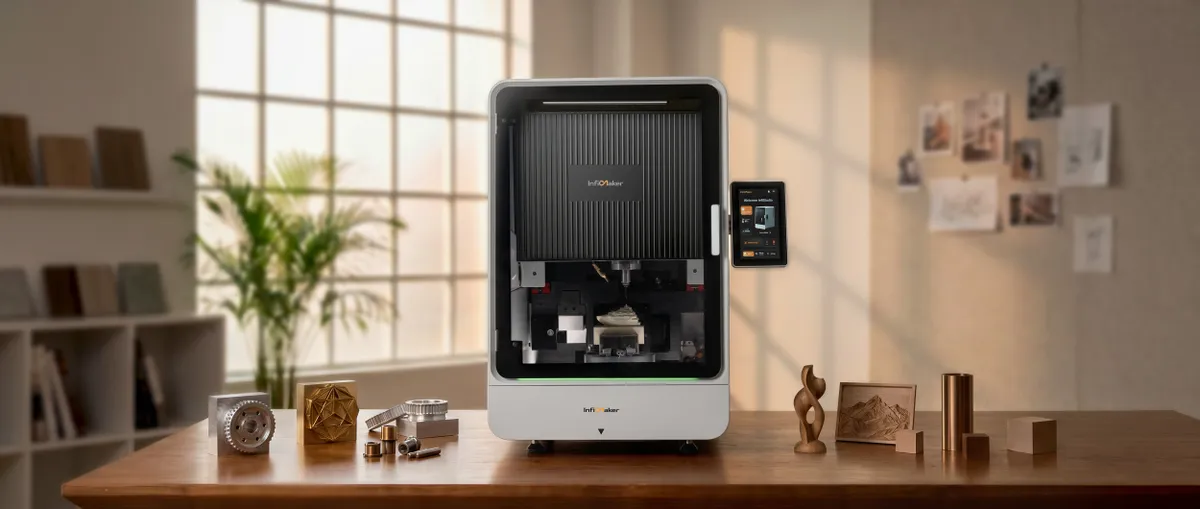
Infimaker was founded in Shenzhen in 2024 by former DJI engineers, and the K1 is not just its CNC machine but its first product at all. The Kickstarter closed in September, but late pledges are still open, with delivery estimated for February.
So what's different about this one? Well, most desktop CNC machines are 3-axis: the cutter moves left and right, back and forth, and up and down. This adds two more axes: tilting and rotating the workpiece as it cuts, which allows you carve complex shapes like impellers and sculptures in a single setup, rather than having to re-clamp the part by hand.
This CNC machine features a 1.5kW spindle, a six-tool automatic changer and AI-assisted software. Be aware, though, that you'll need a strong desk, as this weighs a hefty 110kg.
Tooldance X1
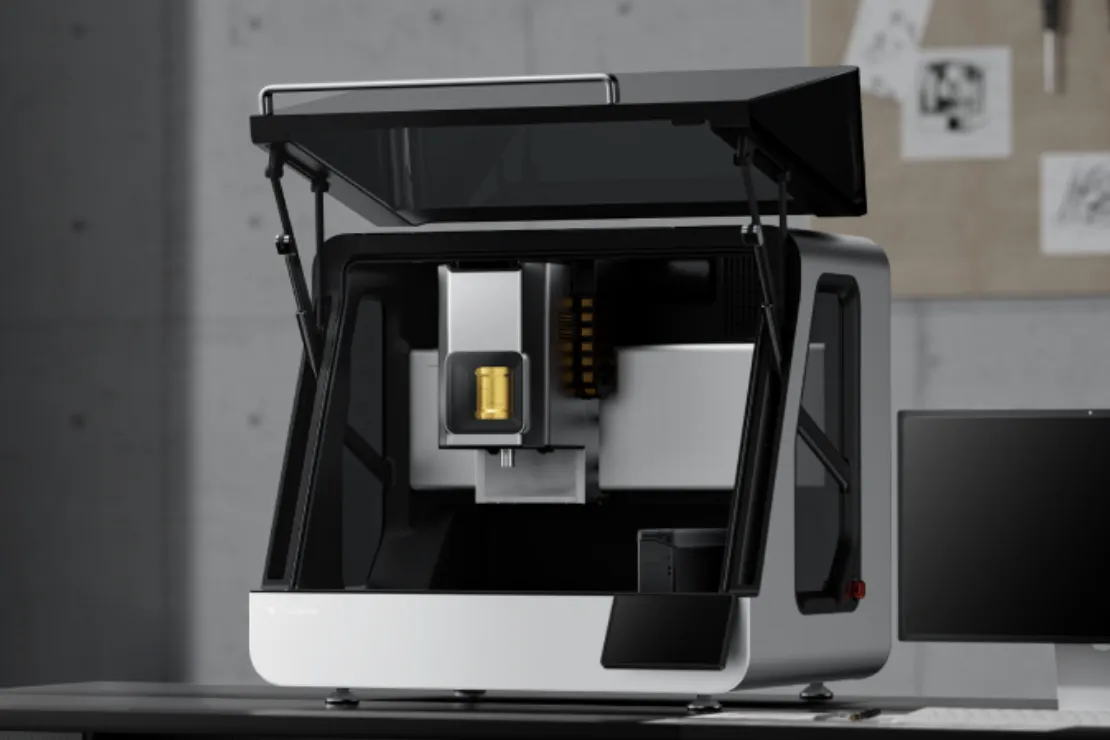
The Tooldance X1 is a crowdfunded CNC machine with a 1.5kW permanent-magnet spindle that aims to deliver high torque at low speeds, enabling you to work with stainless steel and titanium. It promises the largest work area on this list at 400 x 265 x 180mm, along a nine-slot automatic tool changer that uses RFID tags to track its cutters, and sensors that measure your stock for you.
The Kickstarter is still live, with delivery estimated for March 2027. So as you'd expect, there've been no independent tests yet. If you're in the US, also note that the spindle's output drops to around 1kW on a 120V supply.
FAQs
What's the difference between a CNC machine and a 3D printer?
CNC machines and 3D printers work in opposite ways. A 3D printer is additive: you build up objects up layer by layer, usually from plastic. A CNC machine, in contrast, is subtractive. You begin with a solid block of material and it carves sections away with a spinning cutter.
Should I buy a CNC machine rather than a 3D printer?
If you want to make parts from wood, aluminium, brass and even steel, a CNC machine is a better choice than a 3D printer. You'll typically get a stronger, smoother finish than most 3D prints. Be aware, though, that it's much more difficult to make hollow or enclosed shapes than with a 3D printer.
In CNC machines, what does 3-axis, 4-axis and 5-axis mean?
A 3-axis machine moves the cutter left and right, forwards and back, and up and down. This is usually all you need for flat parts, signs and reliefs. With 4-axis machine, you also get a rotary attachment that turns the workpiece. This allows you you to carve around cylinders. A 5-axis machine adds the option to tilt the part, so the cutter can reach almost any angle in one setup. This makes it easier to make complex shapes.