


Creative Bloq Verdict
The original’s clumsy controls and camera have been reworked, but Croc 2’s simple level design still shows its age. The insightful Croc2pedia museum is the real reason to pick up this remaster.
Reasons to buy
- +
New graphics, controls and improved camera
- +
Option to switch back to tank controls and original visuals
- +
Croc2pedia is a fascinating archive of design documents, models and cut content
Reasons to avoid
- -
Level design is still basic
- -
No rewinds or quick saves
Why you can trust Creative Bloq Our expert reviewers spend hours testing and comparing products and services so you can choose the best for you. Find out more about how we test.
Publisher: Argonaut Games
Developer: Titanium Studios
Release date: 29 October
Format: Nintendo Switch (reviewed on Switch 2), PlayStation 4, PlayStation 5, Xbox Series X|S, PC
Engine: Zetta Engine / The Forge renderer
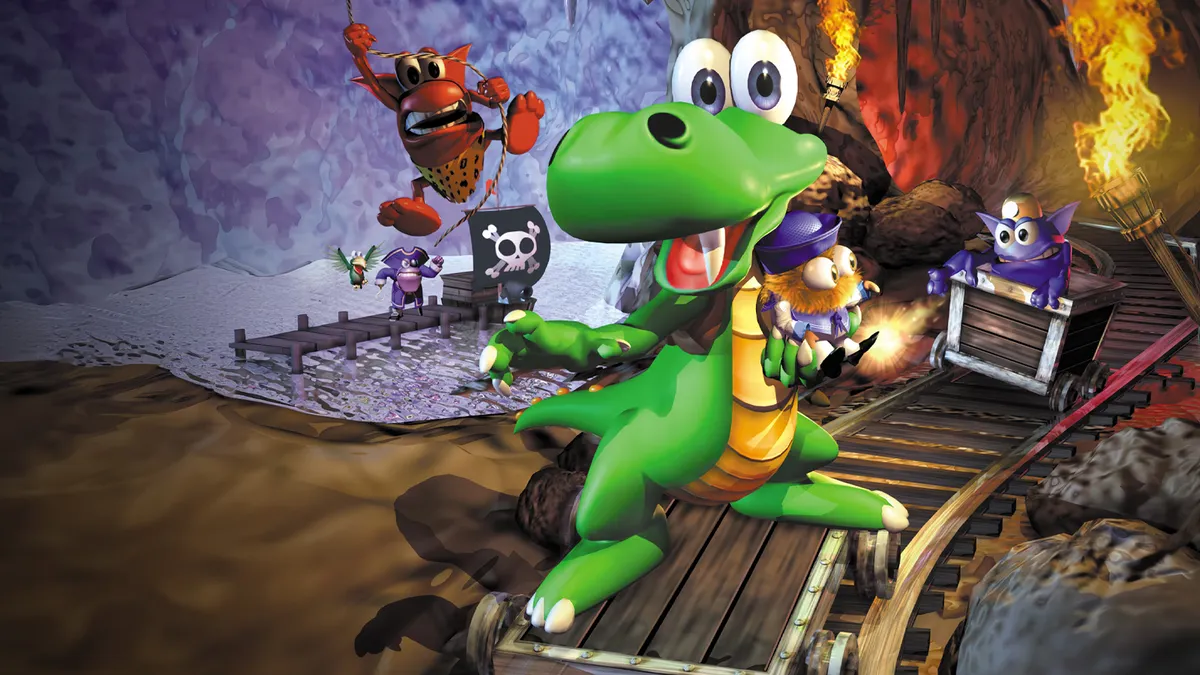
I’ve always had a love-hate relationship with Croc. I remember playing a demo in a Virgin Megastore in Canterbury and falling in love with the little green crocodile, the daft characters, and the bright worlds, but then I played the full game, and it tested my patience. You’d line up a jump, the camera would disappear, you'd misjudge the distance, and you'd end up back at the start of the level. Charming? Yes. Infuriating? Also yes.
Croc 2: Kingdom of the Gobbos arrived in 1999 as an ambitious sequel for the time, with larger levels, hub worlds to explore, more secrets, and fuller controls. It was also a time when 3D platformers were still figuring out how to work in three dimensions. Super Mario 64 had set the standard for camera-relative movement, while Crash Bandicoot and Spyro the Dragon found their own ways to make 3D spaces feel natural. Croc, like Gex and Bubsy 3D, stuck closer to tank-style controls, which could feel stiff and unresponsive.
Twenty-seven years on, that background and context matter because Croc 2 remains a curious bit of gaming history, but Argonaut has done something sensible and simple with this remaster: it’s made Croc less annoying.
Croc learns some new tricks
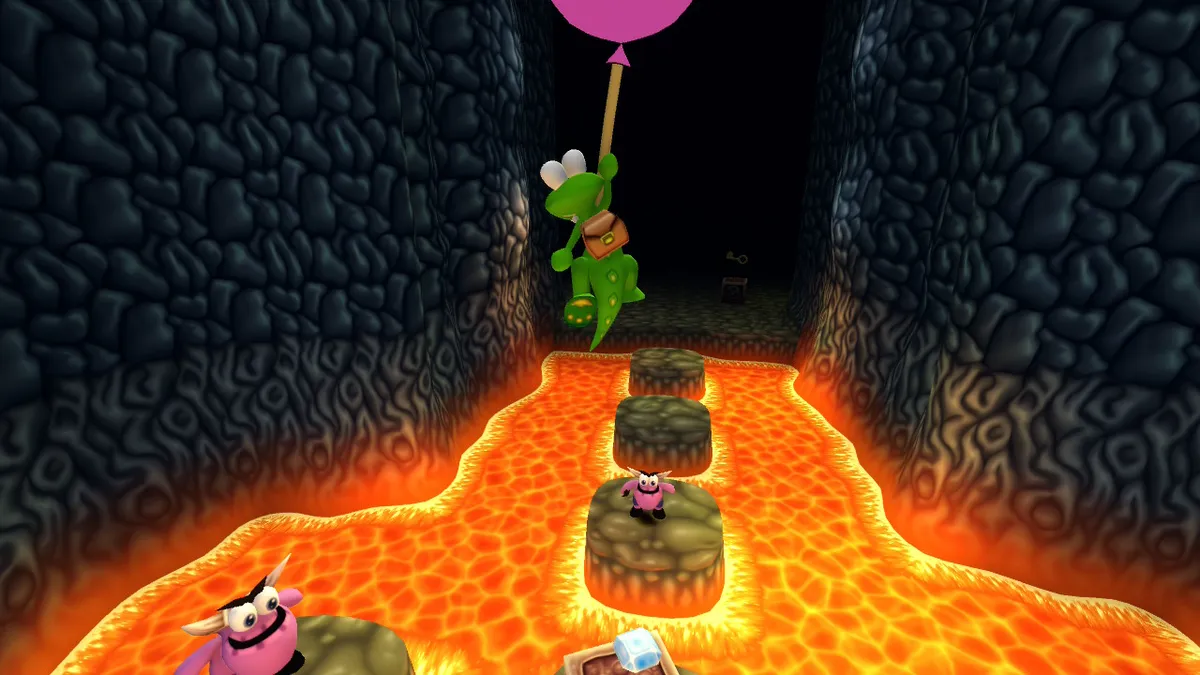
The big change is the controls, and the difference is immediate. Croc now moves with the freedom you’d expect from a modern 3D platformer. Running, turning and jumping feel natural, transitions are smoother, and the new triple jump gives you the height to reach platforms that once demanded a fiddly mix of positioning and luck.
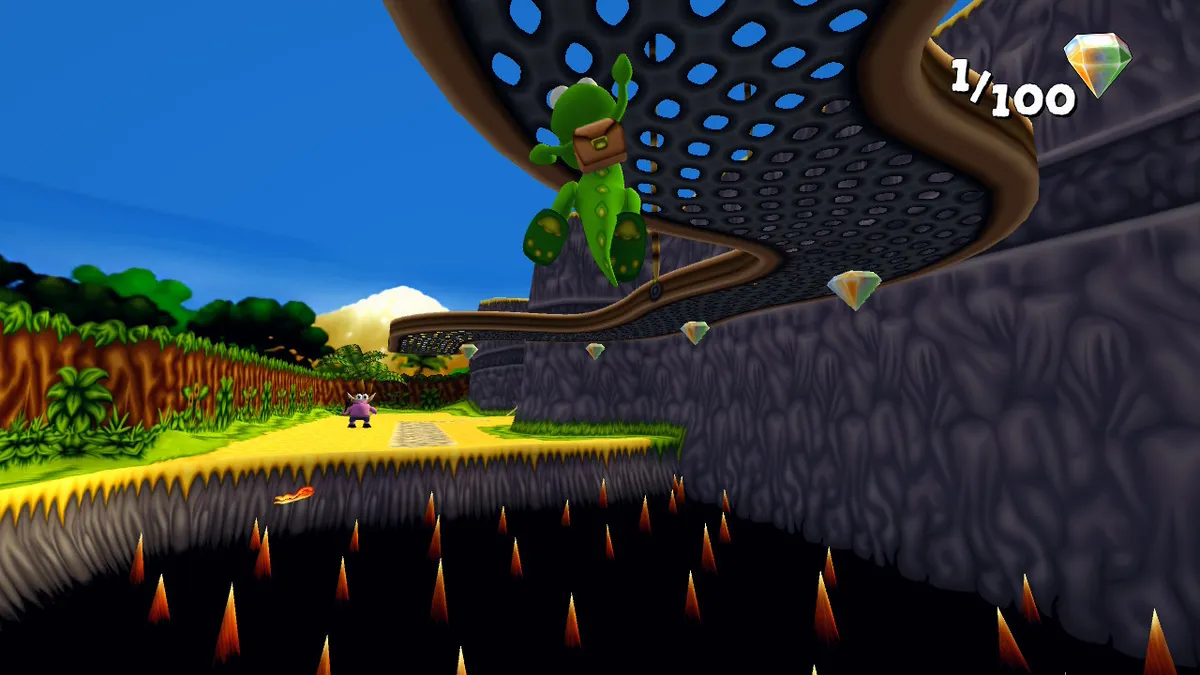
The improved camera helps too, especially when you’re judging a leap and trying to work out where a platform sits; those spiked pits, rope swings, and elevator platforms no longer have me tearing my hair out, thankfully, because nearly 30 years on, I have less of it to tug out in frustration. None of this sounds revolutionary, but it’s exactly what the game needed to be playable in 2026.
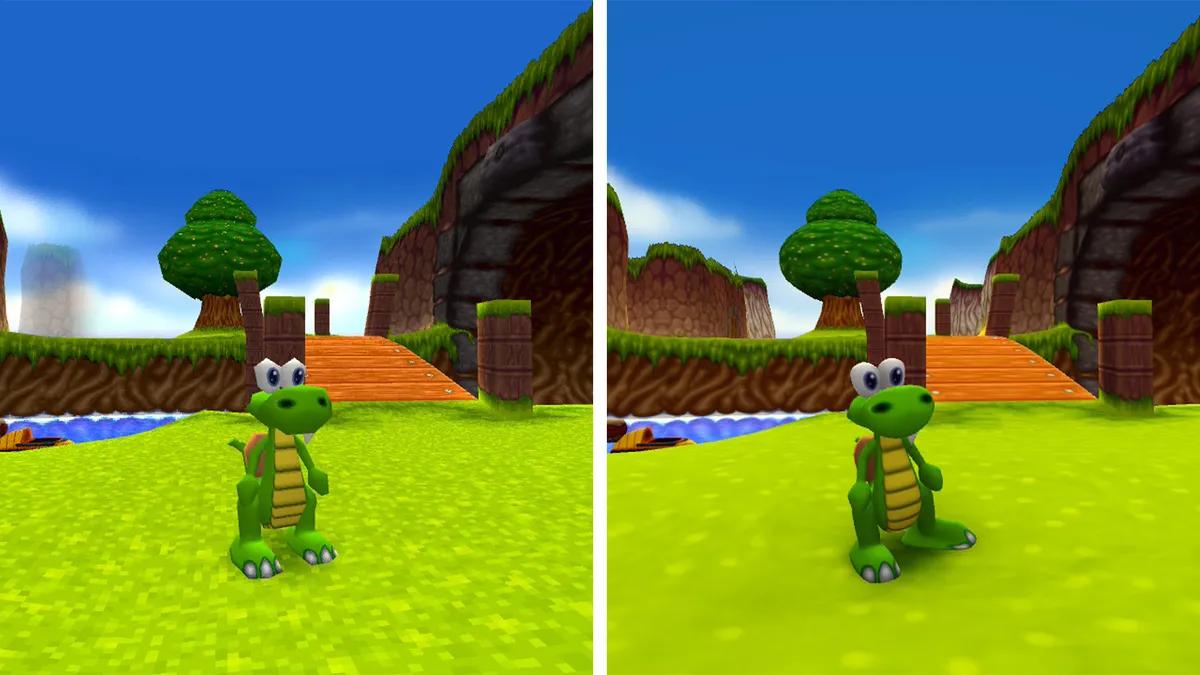
If you grew up with the original and prefer the old tank controls and all the pain that comes with them, you can switch back. You can even mix things up, using the shoulder buttons to sidestep and line Croc up for a jump, while still using modern controls. The original experience remains: longer levels, tricky jumps, weird little characters, and collectables; you just don’t have to put up with its flaws.
The graphics get the same light touch. The old worlds are brighter and more colourful, with updated textures that freshen things up without losing the charm of those chunky, low-poly characters. Croc still looks like Croc, with boggle eyes and a little squat run, but it's sharper, cleaner, and brighter. You can flip back to the original visuals, complete with CRT scanlines, at any point from the Pause menu, and the old textures have their own scruffy charm that will take you right back to playing on the first PlayStation.
A bigger adventure, with some very odd characters
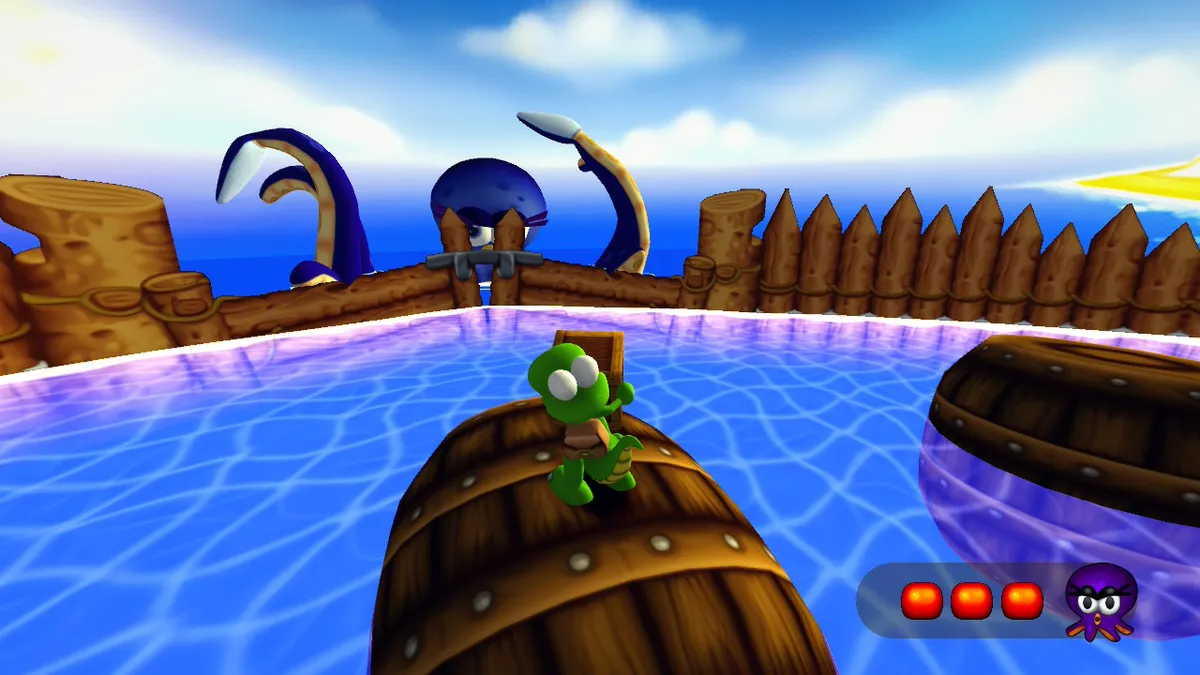
The adventure spans more than 40 levels across four villages: Sailor, Cossack, Caveman and Inca. It offers more variety than the first game, with different environments, missions, and vehicles. Croc can ride minecarts, race cars and speedboats, glide through the air and even fly a wooden aeroplane. But some of these mini-game-like additions are fairly basic; for example, calling them ‘speedboat’ races wouldn’t pass the Trade Description Act, maybe ‘trundle-boat racing’. Essentially, don’t expect Mario Kart.
Putting aside the remaster’s updates, Croc 2 remains a fairly straightforward platformer, and some levels feel like a string of small rooms with obstacles rather than carefully built playgrounds. You can collect crystals, rescue Gobbos and hunt for secrets, but don’t expect the intricate design of a modern indie platformer or even the sandbox of Toy Story 3 Complete Edition.
Even with the better controls, the levels often lack depth. Some are short and sweet, others drag, and the challenge can still come down to nailing a jump rather than solving an interesting bit of level design.
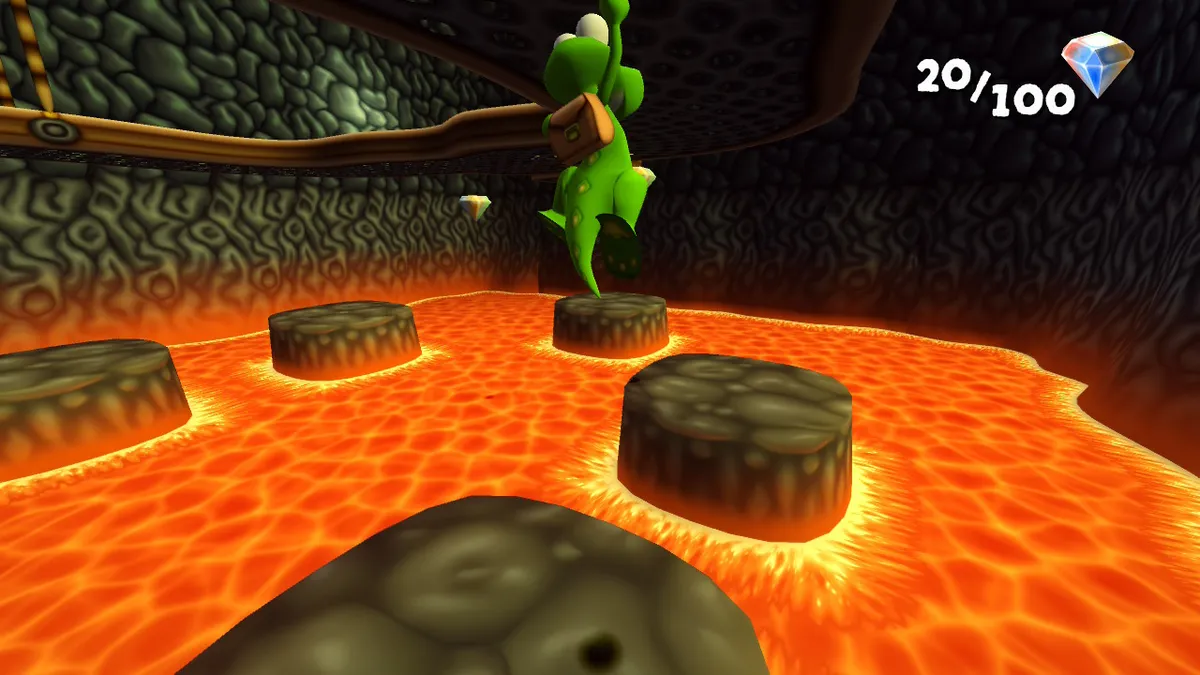
Argonaut has made some useful behind-the-scenes changes. Footprint Gongs have been refined so respawns put you closer to where you fell, meaning less ground to cover. Anyone who remembers the original will appreciate that. You can still lose all your lives and get booted out of a level for a hard restart. There are no rewinds or quick saves to bail you out. I don’t mind, though there are moments when you wish the game were a little kinder, such as when you get close to the end of a level with one Heart remaining and a series of platforms you know will slide the little fella into a lava pool, because the game still has some historic design choices like slightly drifting momentum.
But for those of us who liked the character but struggled with the originals, this Croc 2 remaster is a much more enjoyable way back into a semi-classic game.
The Croc2pedia is a little treasure
I could happily have played the remaster just to see how much better it feels, but the Croc2pedia is what makes this release interesting.
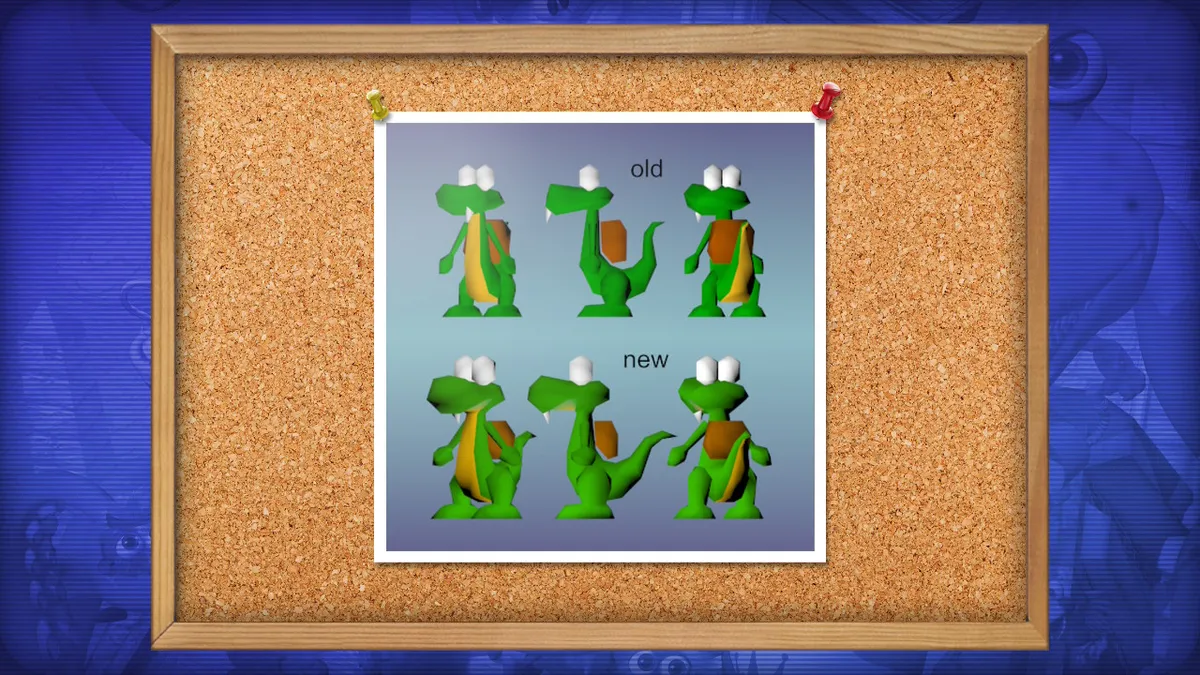
This in-game museum is packed with original development material: design documents, marketing assets, 3D models, animation tests, and cut content. Poking around these old files and seeing how the game came together is a real treat. I especially liked the design files that detail how the game was pitched and what the developers wanted to achieve at the time – 360-degree movement, yay! – and the character and level models, which show the thinking behind the finished game and the ideas that were dropped along the way. Stuff like this usually vanishes into a studio archive or ends up scattered across fan sites.
The 90-minute Croc2mentary is another highlight. It pulls together interviews with members of the original and remaster teams, split into five- and ten-minute chunks, so you can dip in, watch a few and get back to the game without committing to a full documentary.
And for a series with a complex history, Croc began life as a 3D Yoshi platformer before becoming its own thing; it’s a reminder of how projects change direction and how characters and mechanics evolve as a team wrestles with creative and technical problems.
I ended up spending more time in the Croc2pedia than I did playing the game itself. Even if you’re not a Croc 2 fan, it’s well worth a look if you’re into game art, character design or world-building. As I said in my recent Joe & Mac Retro Collection review, the more remasters that offer historical extras, the better, and Croc 2 does it better than most.


Croc 2: Kingdom of the Gobbos is a fun time capsule
Is Croc 2: Kingdom of the Gobbos a great game? Not really, and it never was (don’t hate me, Croc fans). It’s cute, colourful and fun in short bursts, but the level design is simple, and it still carries the limitations of its era. It does play better than I remember, though. The new controls, triple jump, and improved camera remove much of the original's frustration.
And if you really hate yourself, you can set everything back to the original settings and remind yourself just how awkward ‘90s platformers could be. The option to switch back to tank controls and old-school visuals means you lose nothing. You can play Croc 2 as it was, or give the little mascot the freedom it probably should have had all along.
For me, the Croc2pedia is what makes this worth buying. The interviews, design documents, artwork, curated insights and cut content give an otherwise solid remaster a reason to exist beyond nostalgia. As a platformer, Croc 2 is an enjoyable little curio, but as a window into how games were made, it has teeth.