






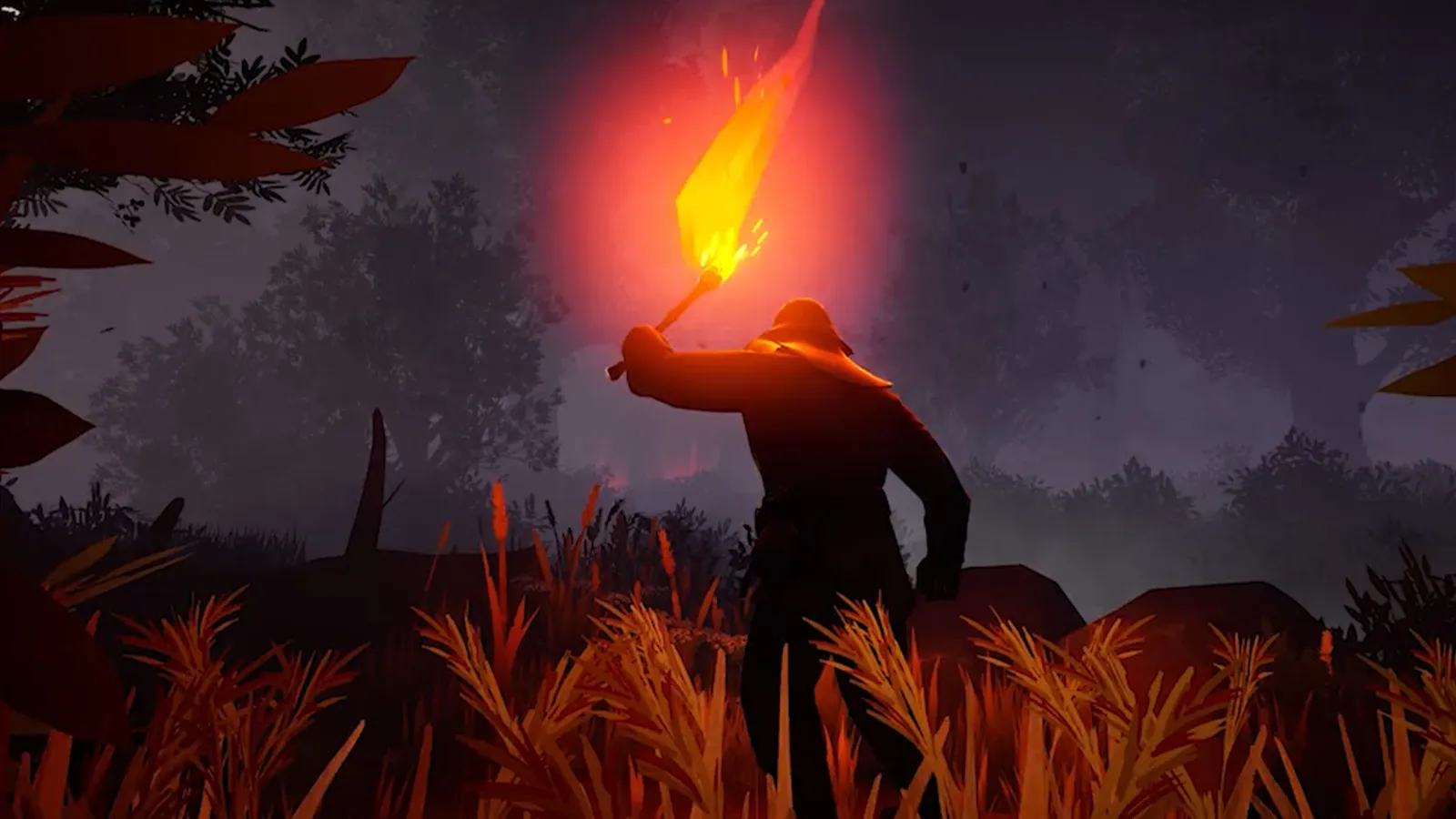
As a PlayStation 5 exclusive, you'd be forgiven for thinking Twin Swans' first game, Hunter's Moon, might relate to Bloodborne, but with a folk-horror twist and a neat release date of 26 October, timed for the titular hunter's moon. Yet while it's a narrative indie game set in a 17th-century Yorkshire village, I was surprised to learn that FromSoftware's gothic, Lovecraftian, masterpiece-inspired indie studio Twin Swans made its debut game in Unity.
"There's this mechanic in Bloodborne where you can knock on a door and an NPC will tell you some lore, or you can listen at a window and get a bit more of the backstory that way," writer-director Alicia Contestabile tells me. "That sparked this idea for a game that would be about eavesdropping, knocking on doors, and talking to people in this mysterious village. And I thought, why wouldn't they come outside to talk to you? Oh, you must be the monster!"
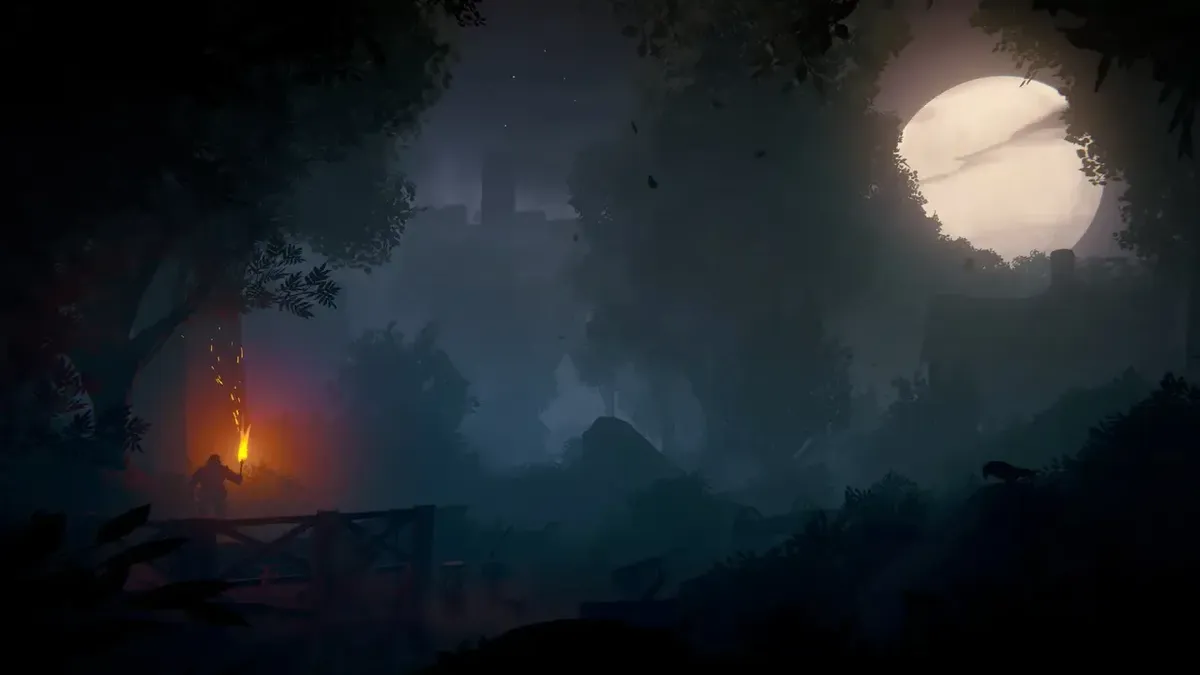
How Bloodborne inspired Hunter’s Moon
While she admits to struggling but being engrossed by FromSoftware's hardcore game, and wanted to make a "smaller tourist version" that would be accessible but still atmospheric, the core inspiration of Hunter's Moon actually came from a book by author and modern-day practising witch Pam Grossman called Waking the Witch, which delves into the history and culture of witches.
"I happened to be reading it, and I had that lightning bolt moment: 'Oh, the monster is a witch, and there's a witch hunt happening,'" she adds. This led to further research of the witch hunts that took place in the early modern period, including the East Anglian Witch Trials led by self-styled 'Witchfinder General' Matthew Hopkins, whose methods would also be used in the infamous Salem witch trials.
The real witch hunts behind the game
In creating a first-person historical narrative game where "the horror are the people", the team consciously subverted the stereotypical representation of witches in media, where they are treated as magical figures or, in video games, as a supernatural power fantasy like Bayonetta or 1666: Amsterdam.
"I wanted to treat this history in a way that was true to what happened," Contestabile explains. "The hunters are just men. And the truth is that the people who put others on trial and sent them to their deaths were just people. They just deeply, deeply believed that witchcraft was real."
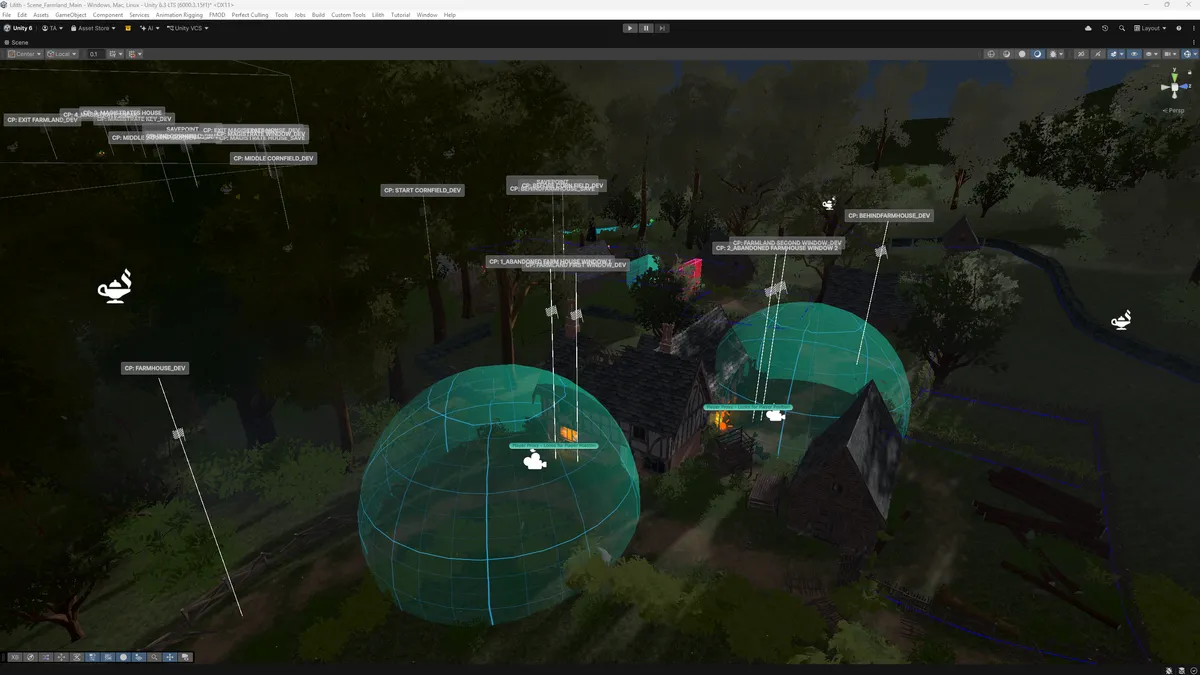


Building a 17th-century Yorkshire village
That focus on realism includes creating an authentic 17th-century Yorkshire village, with its own hamlets, surrounded by forests and moors. With 48 voice actors playing around 100 roles, it comes close to simulating the size of a small village from that time, and the team used Behaviour Designer, a Unity tool for designing sophisticated NPC AI behaviour. Yet it's also deliberately juxtaxposed by giving Hunter's Moon a stylised art direction that's part immersive theatre and part stop-motion puppet animation.
Set on the night of the Hunter's Moon, the witch hunt has a festival atmosphere, with villagers dressed like mummers and wearing masks. Given the game's first-person perspective, this art choice naturally suited the team's limitations, as the team never exceeded 10 people at any stage of production.
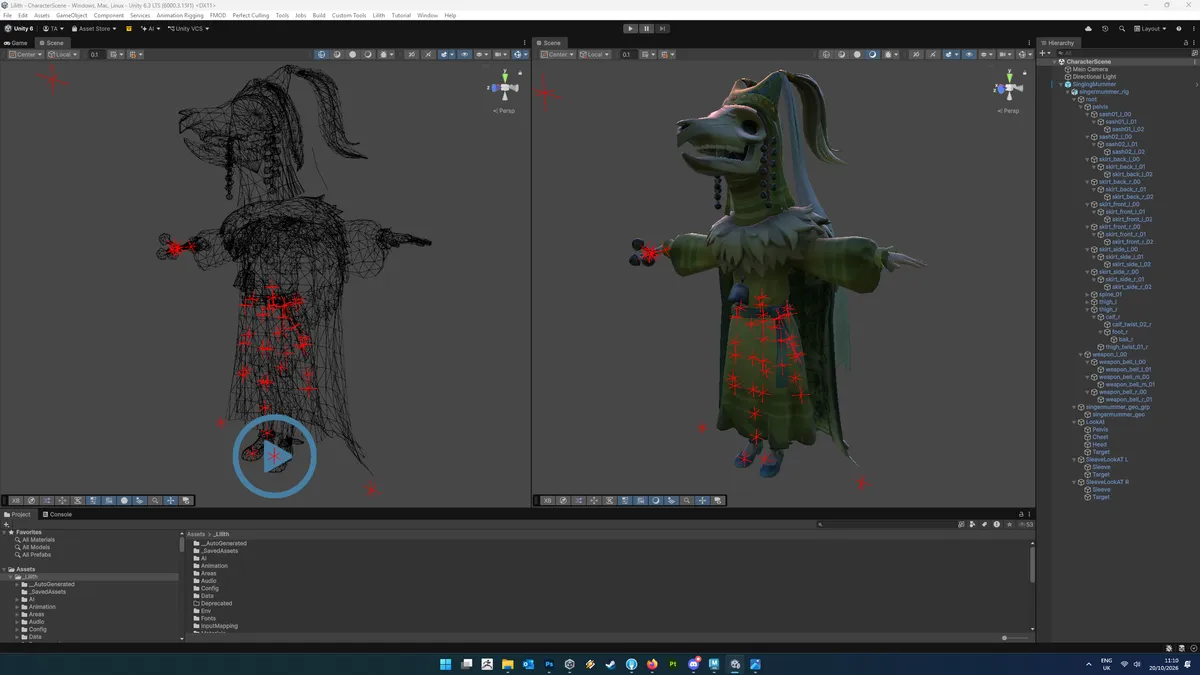
Why Hunter’s Moon uses stop-motion-style puppets
"I've always really been drawn towards stop-motion animation for a really long time, such as the films of Laika; they're really beautiful and go against this race to have the most realistic graphics and highest FPS," Contestabile explains. It can also be a great way to go with a more lo-fi approach, as she recalls her previous role as producer on The Stanley Parable Ultra Deluxe, where the team used 3D figures with 2D faces.
She adds: "I thought we can do this in a way that is still evocative and still feels good to play. We don't need to complicate matters by adding facial animation if you know it's a dark night, the hunters are in shadow, the mummers have masks on, and the villagers are obscured by the windows. This allowed us to focus on a more rudimentary style of animation."


Funding new IP in a risk-averse industry
Having pitched Hunter's Moon back in 2020, at the height of COVID, she's grateful PlayStation took a chance on the project with a new studio, though she also laments the current landscape, when funding is becoming much harder to come by. "There's a real lack of risk-taking lately with the kinds of projects that are being financed," she says. "It seems that everything is based on already-existing IPs, and as a creative person, I really love to see new IPs."
With that in mind, Contestabile's long-term plan includes possibly adapting Hunter's Moon for other media, much like how PlayStation is also leveraging its back catalogue of franchises. Given her background in film, including writing the original story as a screenplay, a film or series seems like a logical next step. That said, she has more immediate plans once the game launches: "I've been saying to everyone that I'm going to lie down and take a really long nap when the game is out. I need a big holiday."
Hunter's Moon releases on PS5 at midnight UTC on 26 October.