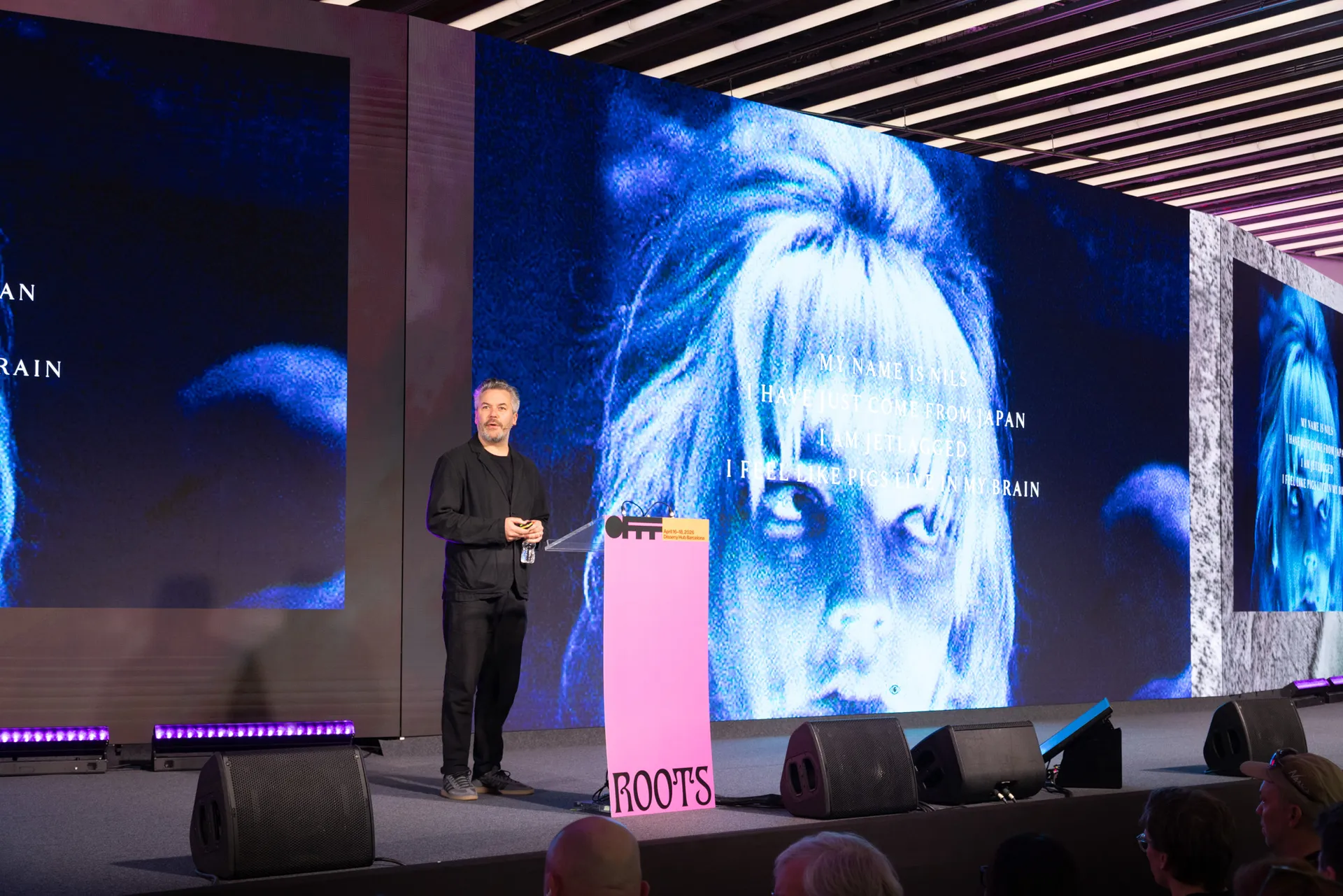
"Stop wanging on about AI," Nils Leonard says, "and just do some good work". It's a philosophy that underpins much of the way he approaches creativity, and the way Uncommon (the studio he co-founded) functions. He can't bear the endless meetings, the talking that comes with a project. "If you’re with us for three months and you haven’t made anything, we charge you 25% more," he explains. "We don't give a shit about the money... we’re not getting paid to turn up to meetings. We’re getting paid to make."
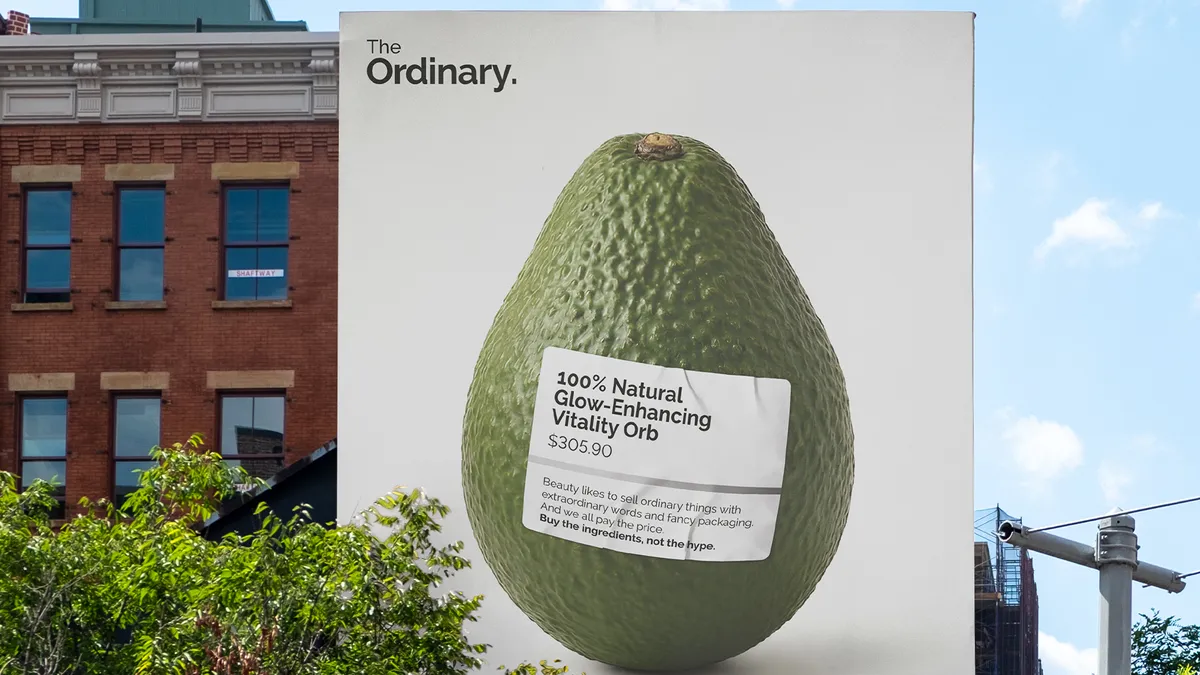
It's the kind of bold move typical of such a disruptive agency, which is relentlessly focused on moving forward, creating something new, making something famous (the new The Ordinary campaign is a prime example). There's an assurance to Nils, and to the work Uncommon creates that's inherently exciting – especially when it delivers the kind of "magic trick" he uncovered at this year's OFFF Festival, where I sat down to talk to him after his rousing keynote.
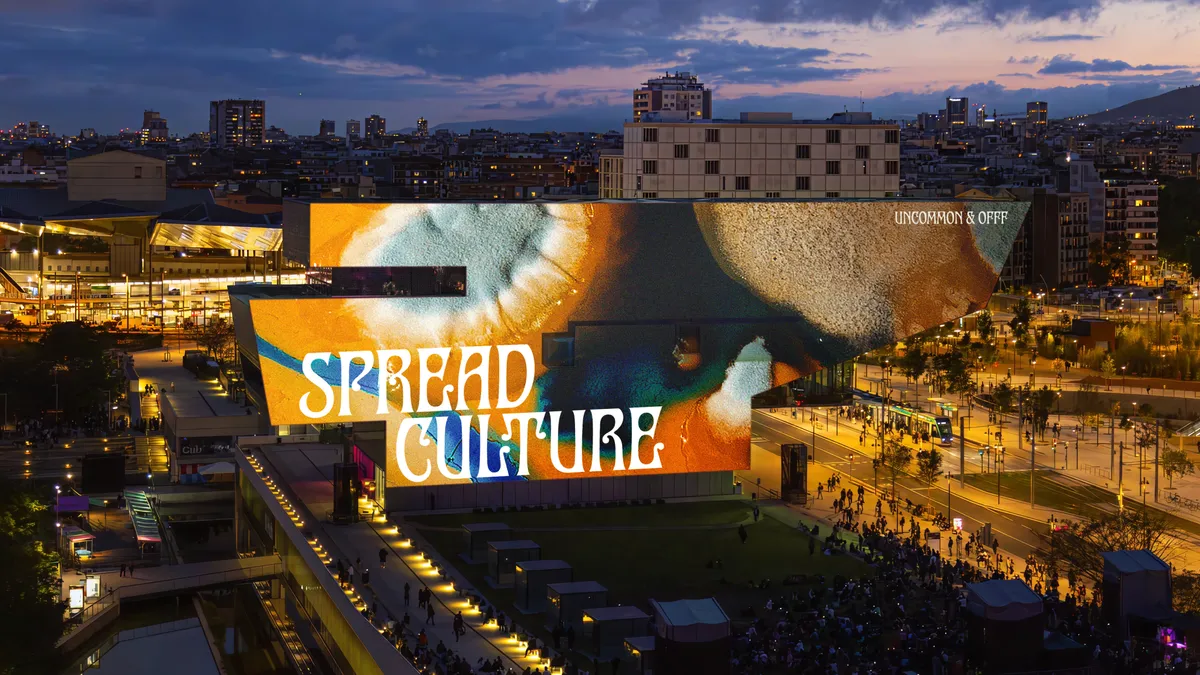
It was in the midst of his talk that he presented the secret behind the festival's striking identity – it was made of the OFFF community. Literally. Uncommon had brought groups of creatives in for 'networking' events, which actually turned out to be for the purpose of harvesting their germs. Those germs were cultivated and turned into the design subsequently found all over the visual art adorning the walls of the festival.
"My fantasy is that someone does go in 18 months or in three years: ‘Do you remember that time Uncommon made a logo out of everyone's germs?'," Nils tells me. "It's got something deeper at play, which is the fantasy".
But as well as the headline-worthy magic trick, there's meaning, too, which Nils also values. "It's got a mission behind it, actually, that's kind of, you know, beautiful, which is it's made of all of us".
We covered a huge variety of topics during our chat – see the highlights below.
You talked about once feeling reined in by a boss. How does that empowerment of the team work in practice when your name is on the door?
The way I ask my teams and my leads to work with me is use me when you need me. I don’t need to see everything like a crazy top of the pyramid thing at all. It’s more like, is this good enough? Is it on the level we talk about? Is there any advice you need? And that’s, that’s sort of how I try to run... I really try to time my involvement around those key moments in projects.
How do you avoid falling to senior leadership traps ie. too many spreadsheets and no making?
Honestly, I try to keep my hands on the tools. So I still design work. I still art direct work. I still write... I think a lot of people of a certain age as well, we get to a point where we think our seniority comes with a step back. And I actually think that way is a trap... The best way to prove you’re relevant is to make things that people give a shit about.
You discussed not accepting 'no' from a client. What does that look like in practice? How do you push brands to see your vision?
Don't get me wrong, someone will always say no. There is a premise at the studio where if we have a great idea or a great piece of work and we really love it and a client doesn't want to do it, we'll just do it ourselves."
I think there is a learned behaviour in this industry of dependency, which is, you know, ‘we've had this great idea, who can we get to do it for us?’ And I don't know why we talk like that... So our whole thing is, no, we're just going to do it. And if the clients do it, that's great, we can talk about that. But we are going to do it. Hell or high water, we're going to find a way to do it.
What are your red flags with a client? When would you say 'no' to working with them?
There have been times when we've said no to clients. When we meet them, I’m like, 'why are you here? What do you like about the studio?' And we won’t work with them if they’ve not heard of us. There is a premise at the studio where if we have a great idea or a great piece of work and we really love it and a client doesn’t want to do it, we’ll just do it ourselves.
I don’t want to work with abusive people... We won’t work with cigarettes or we won’t work with betting companies. But there are also some blurred lines and that’s why it’s great being a founder-led business. We have a conversation as founders about what we feel comfortable morally working on... Every one of our clients has to make great work and that’s the deal.
Do you think AI is ultimately empowering you to be more creative?
Threats are very empowering. And frustration and impending change are motivating... It’s going to remove 50% of our industry. And I hope the bad part. The part that does low cost, high speed content... At which point all that’s left is genuine radical creativity. Proper fucking leaps... AI is going to fuck with stuff. And whether I think it’s good or bad, we can’t miss the chance, we have to use it to make radically original work.
What do awards mean to you?
If we didn’t win awards, we were invisible... I have a probably mythical but very emotional relationship with [D&AD]... I want to win at the One Show because it’s the show in America... I’ve just learned unless you’re indexing on those, no one will see your work... I genuinely try... to make work that’s so unanimously good that lobbying or not, it makes its way to some sort of top.
Is there an idea in design that everyone’s going along with, but they probably shouldn’t be?
Pretty and functional are not enough... the design industry has always been happy to quietly complete a task, and the ad industry or brand industry has always been obsessed with fame. And the studio’s viewpoint is that those two things should intersect. Design can be an opportunity, it should be an opportunity for fame... I don’t like, and I’ve never bought into that design should just be this functional, unnoticed service.
What does a sustainable career in design look like now? What do you look for when you’re hiring?
Make something famous. Make lots of famous things on your own... develop a fluid and quick and unafraid relationship with fame. Because if you come to me with a portfolio that’s quite nice, that’s one thing. If you come to me and there’s five famous things and you say, I’m just getting started, I’m like, you’re hired.
What’s the biggest mistake you’ve made and was it worth it?
The things that make me feel bleh are any time I’ve punched down... most of the stuff that I regret is listening to people, being talked out of something, not being unreasonable... I’ve got addicted to putting myself in very uncomfortable positions... Telling an entire board of fuckers to buy our work and that they’re wrong and that they’re dusty. And it’s a privilege
What are we not talking about that we should be talking about?
I’m frustrated by the state of the UK in particular in its view of itself... I think they’re missing some of the brightest, newest shapes of work that really could be held up as a lighthouse for what the UK is doing... I would love to talk more about that... I think we should be talking about that in that country because I think it’s a shame.
See the rest of my OFFF Barcelona 2026 coverage here.