

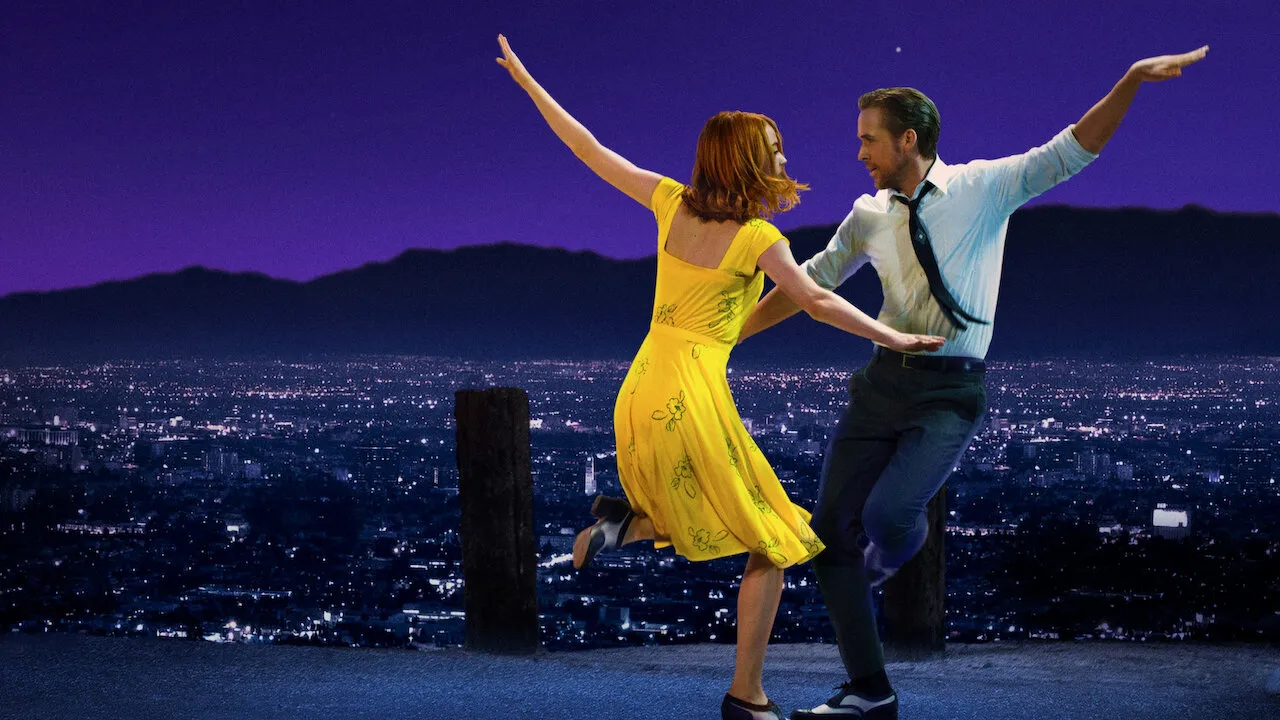
What started as an online joke has come full circle. Ten years after La La Land gave us one of the most recognisable recent movie posters, featuring Emma Stone and Ryan Gosling mid-dance in Hollywood, the design has been officially edited. Yes, Gosling's camp little hand has been straightened out, laying to rest the actor's very public grievance with the poster.
Gosling has been complaining about his 'La La Hand' for a few years, most recently using it as fodder to promote his latest film, Project Hail Mary. And now, exactly ten years after it was released, the La La Land poster has been officially tweaked. An updated version with the hand now straightened has been rolled out to streaming services. It all looks like harmless movie studio fun. But is it?

The change is so tiny that only the perennially online are likely to notice. But it speaks to the increasingly strange relationship we have with digital media, where nothing is ever truly finished and we don't actually own anything anymore. A DVD on your shelf can't be edited. A film you're essentially renting from Amazon or Netflix can.
We've been here before, of course. George Lucas spent decades 'improving' the original Star Wars trilogy with CGI, much to the horror of countless fans. But back then, Lucas was seen as something of a novelty; a creative tinkerer who couldn't resist making tweaks, no matter how misguided.
But in today's world of streaming, revisionism is starting to feel less eccentric. Platforms regularly add new content warnings to classic films. Scenes disappear entirely. Promotional artwork gets sanitised. In one of the most egregious examples we saw last year, Amazon was on the receiving end of a well deserved backlash for crudely removing James Bond's gun from all 21 of the franchise's posters. And now Gosling's camp wrist has gone the same way.

Now, to call these changes cultural vandalism might be a stretch. But we're entering an era where they may longer be a definitive version of anything. Look at Taylor Swift, with her roughly seven million album covers. Or look at AI, promises to 'improve' any image in an instant. The idea of a single, canonical piece of artwork is starting to look quaint, and I don't think that's a good thing.
Before, when a studio wanted to release a new cut of a film, it meant bringing out a new edition on DVD and calling it a Director's Cut. But when media lives in the cloud, there's no such thing as permanence. You never know when your favourite film is going to either change or disappear, or when a hand is going to rotate by a few degrees.