Our Verdict
A visually unforgettable horror adventure packed with atmosphere, but simple, repetitive puzzles weaken the experience.
For
- Extraordinary art direction
- Strong environmental storytelling
- Memorable design
Against
- Puzzle design becomes repetitive
- Narrative can feel overly abstract
Why you can trust Creative Bloq Our expert reviewers spend hours testing and comparing products and services so you can choose the best for you. Find out more about how we test.
Publisher PQube Ltd
Developer Dragonis Games
Release date 28 May 2026
Format PS5 [tested], Xbox Series X/S, PC
Platform Unreal Engine 5
Horror games don't need to chase you like an axe-wielding maniac to unsettle and disturb. Some can simply exist, with depictions of creatures and worlds twisted into surrealist dreamscapes, designed to unsettle instead of terrify. It’s something first-person horror-adventure Necrophosis: Full Consciousness understands, even to its detriment at times, but its confidence in its own art direction and identity is wonderfully vile.
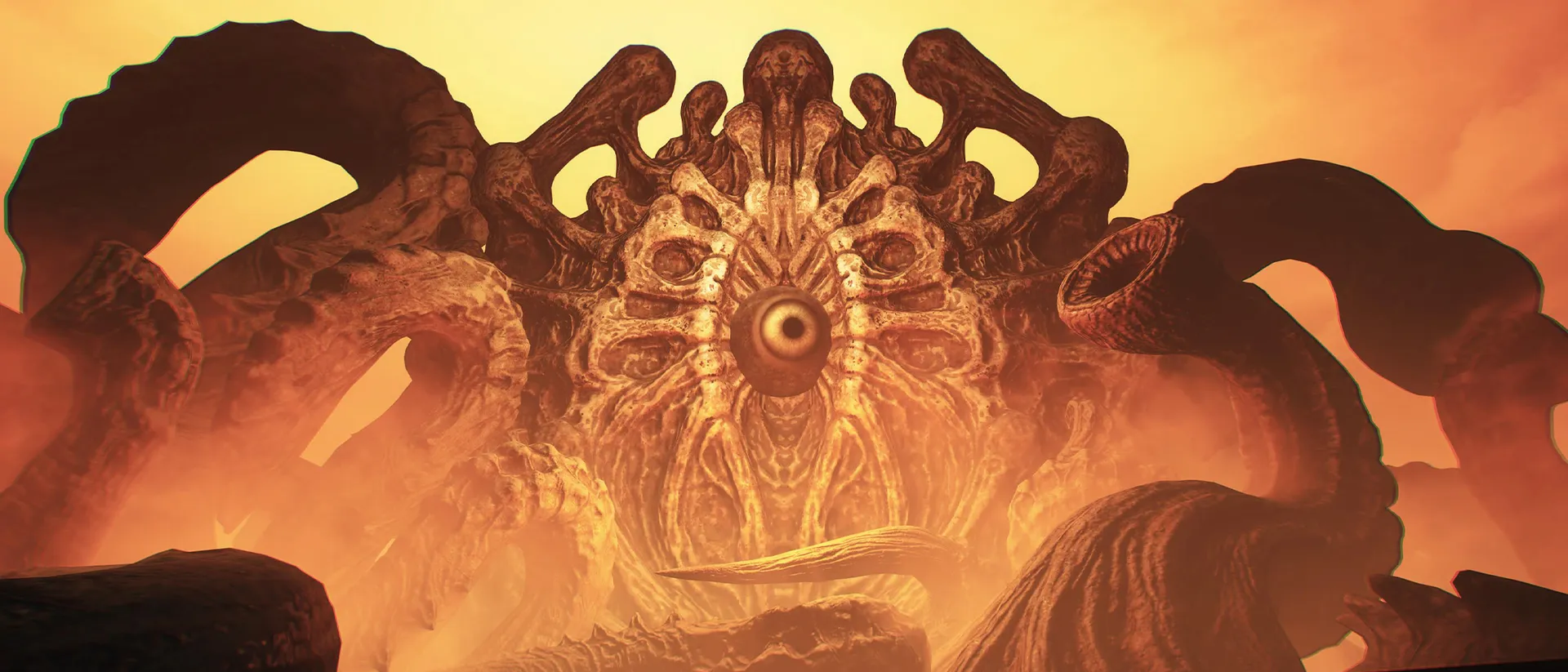
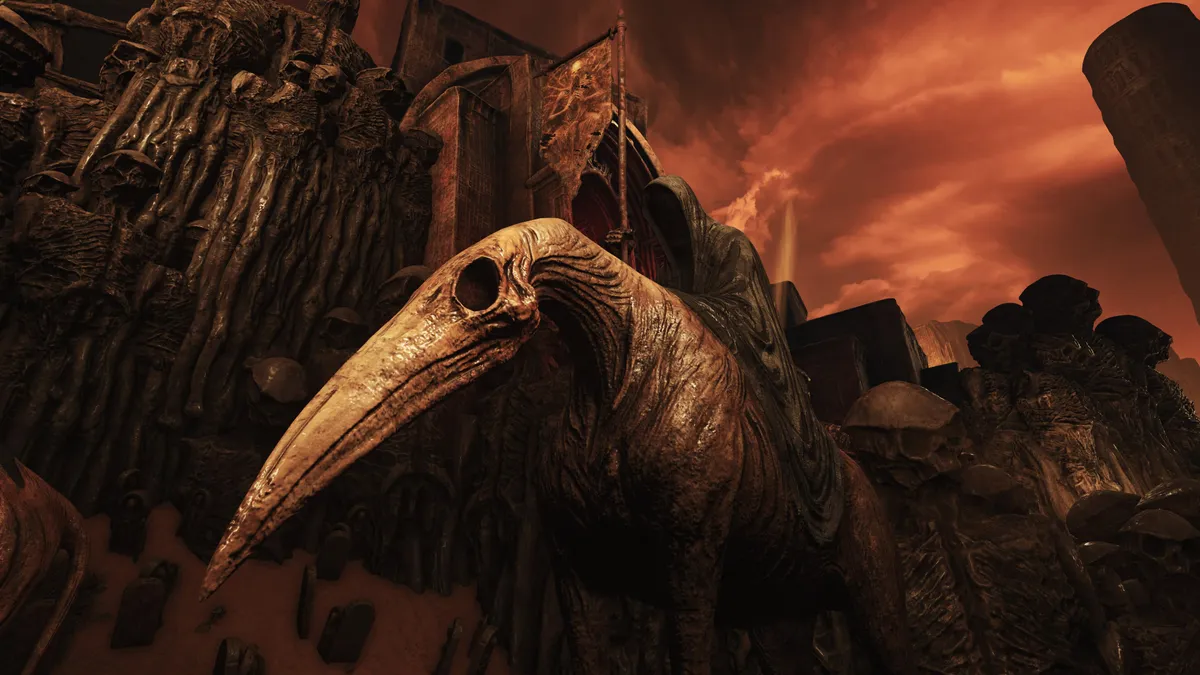
This obscure journey generally involves collecting objects and plugging them into weird demonic creatures and the entombed husks of people. The world is littered with these things in need of stuff – giant skeletal figures emerging from the sand, a creature fused into a temple wall, its body now part of the architecture, and a colossal face staring out from a large cube of flesh and stone. Time and again, I'd enter a new area and completely forget what I was supposed to be doing because I was too busy trying to process whatever impossible thing Dragonis Games had decided to put in front of me.
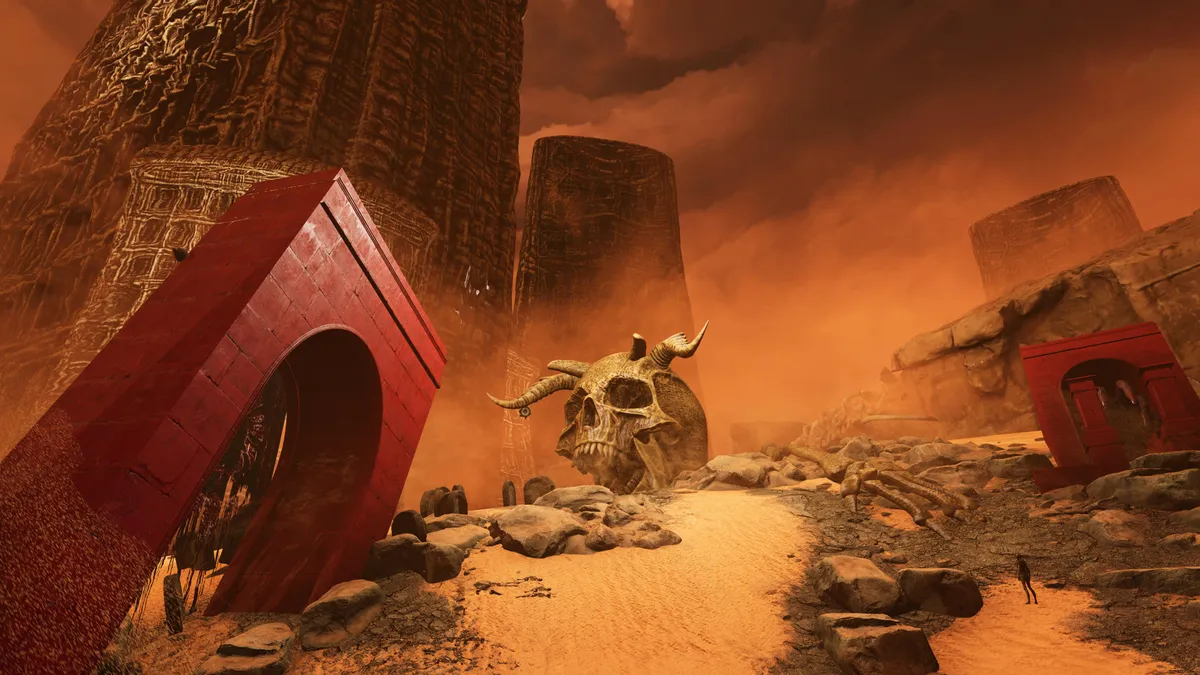
The Greek studio has been exploring Lovecraftian horror for a while now in games like The Shore, but Necrophosis feels like the point at which its interests fully take over the design. Set billions of years after the death of the universe, you're dropped into a world consumed by decay, guided by cryptic messages and fragments of poetry through landscapes that look as though they've crawled straight out of a Giger painting. Made in Unreal Engine 5, Polish artist Zdzisław Beksiński is also a reference and a popular choice for game artists right now, as he influenced both Blades of Fire and Lords of the Fallen 2.
Artistic homage or influence?
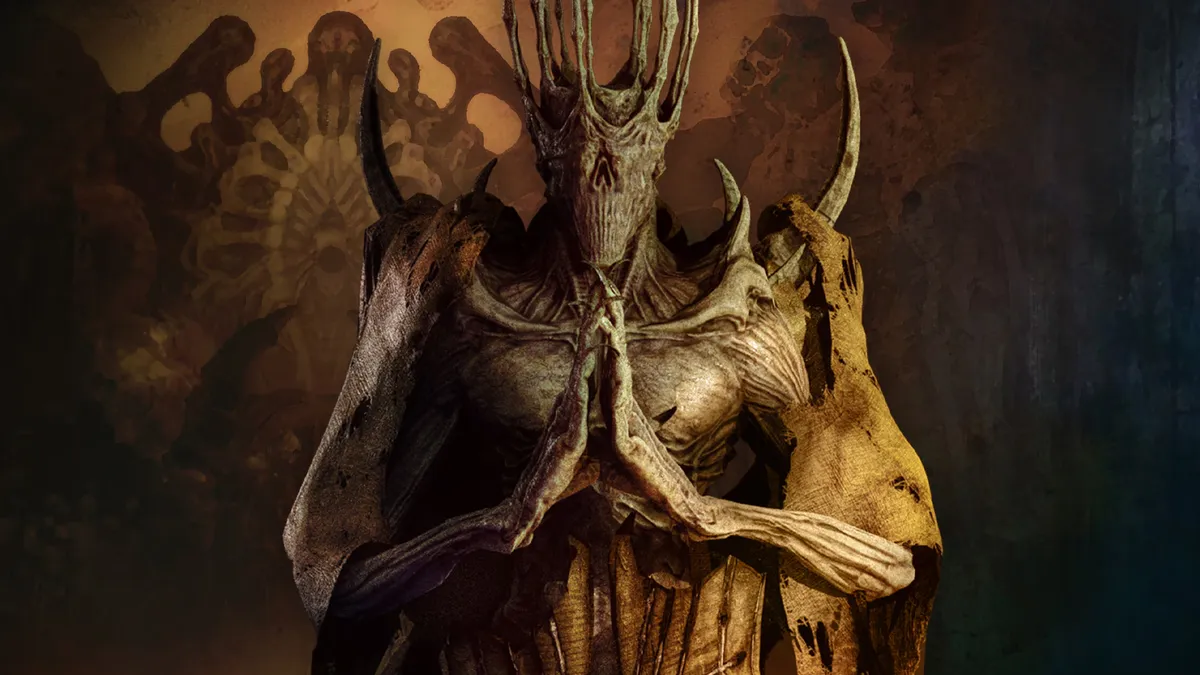
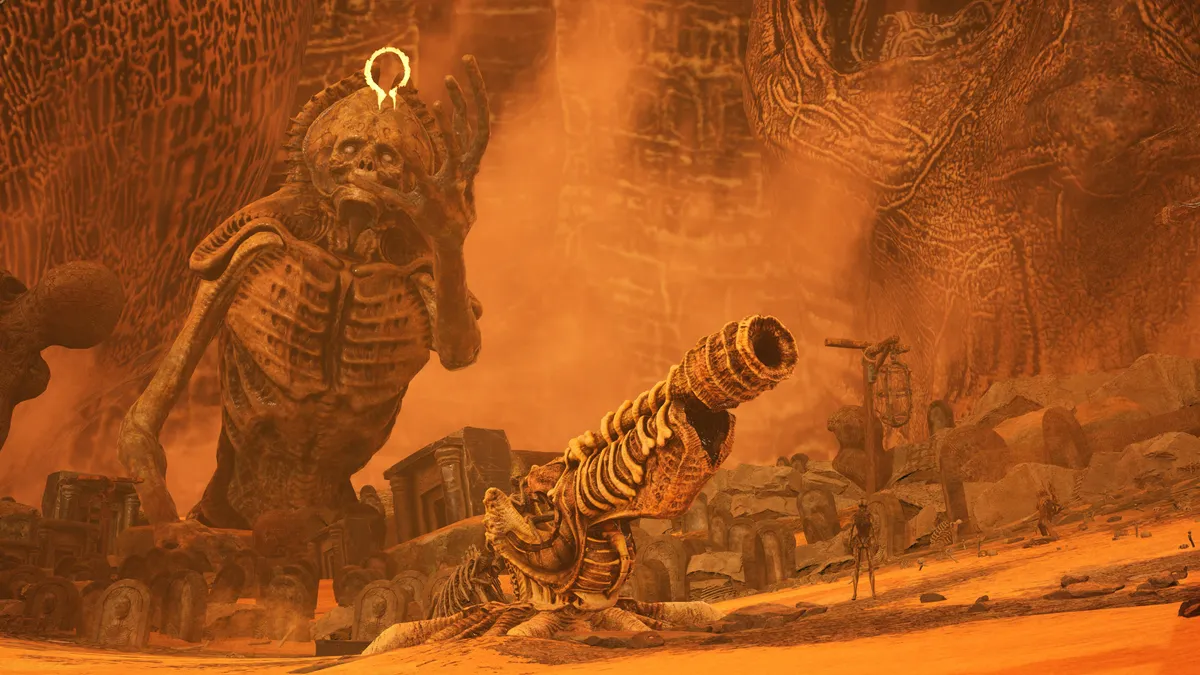
The influences aren't subtle, but they're done with confidence and excellent artistic execution. The visual design of Necrophosis and its world is the draw here, and the creatures are especially fantastically grotesque. More so because their horrific design is game-coded; for example, the items needed to progress can come from inside these creatures. One giant, statuesque creature reaches into the hollow cavity of its stomach and pulls out bones; another vomits a pile of organs for me to collect. Everywhere, there are bodies stretched, twisted, and transformed into architecture, monuments, and organic machinery, and some must be engaged with to solve a puzzle or discover a piece of poetic lore.
It’s art direction you slow down for and open photo mode, but once you’ve finished gawping at the design, you need to actually play Necrophosis, and that’s where the cracks form in its bloody crevices. Necrophosis calls itself a puzzle adventure, and there certainly are puzzles, but most of them amount to finding an object and putting it somewhere else, usually into or onto one of the game’s unnatural and misshapen denizens. A brain needs reconstructing inside the living remains of a ‘person’, a corpse or two need crowns of bones, a door needs to be opened by birthing a tortured soul (or feeding it a tortured soul). The individual tasks rarely require much thought, and after a few hours, I realised I was spending less time solving puzzles than figuring out where to place the next object.
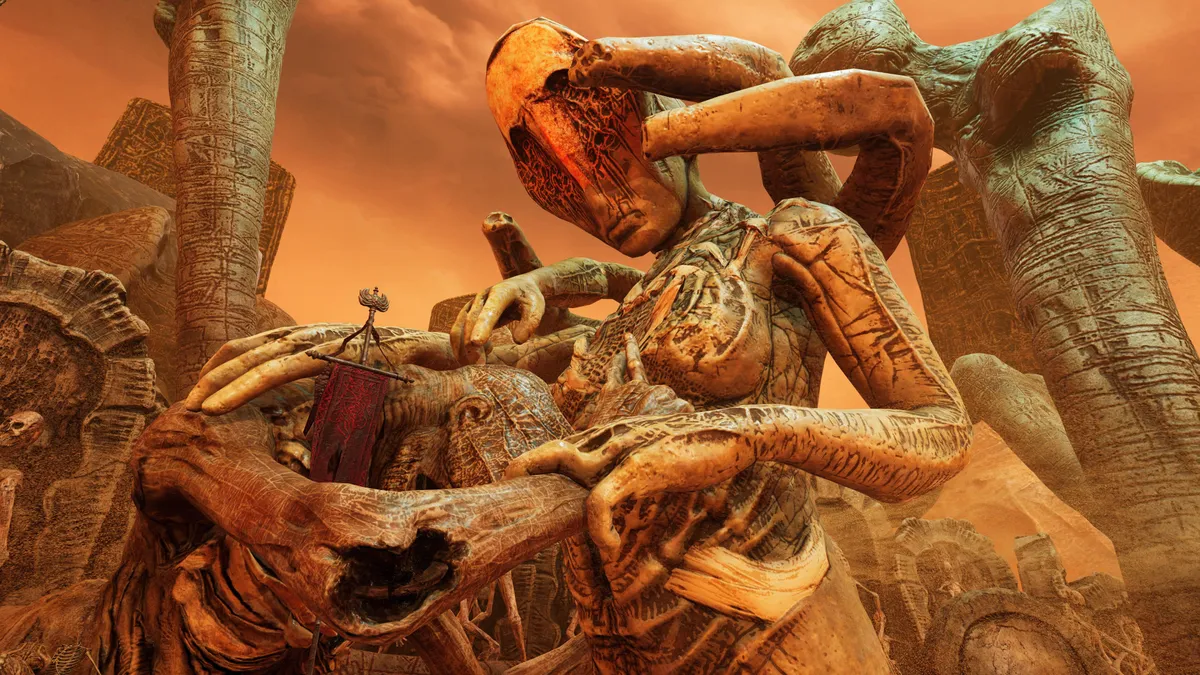
There's a repetition to it that starts to show through the longer the game goes on. I kept waiting for some grander idea to emerge from the light puzzle design, something as strange and imaginative as the world surrounding it, but it never really arrived. Instead, Necrophosis settles into a rhythm of exploration, item collection and environmental storytelling that occasionally threatens to become a walking simulator.
But even though the game’s loop can become too simple and obvious, relaxing even, it never completely undermines the experience, because everything you do is tied closely to the world. You're not collecting keys from tables or pulling switches on walls (which you kind of are), but instead you're extracting objects from sleeping monstrosities draped over or encased in the world. You're removing relics from creatures suspended in time or assembling biological 'bits' that appear to have been harvested from the world's lost souls.
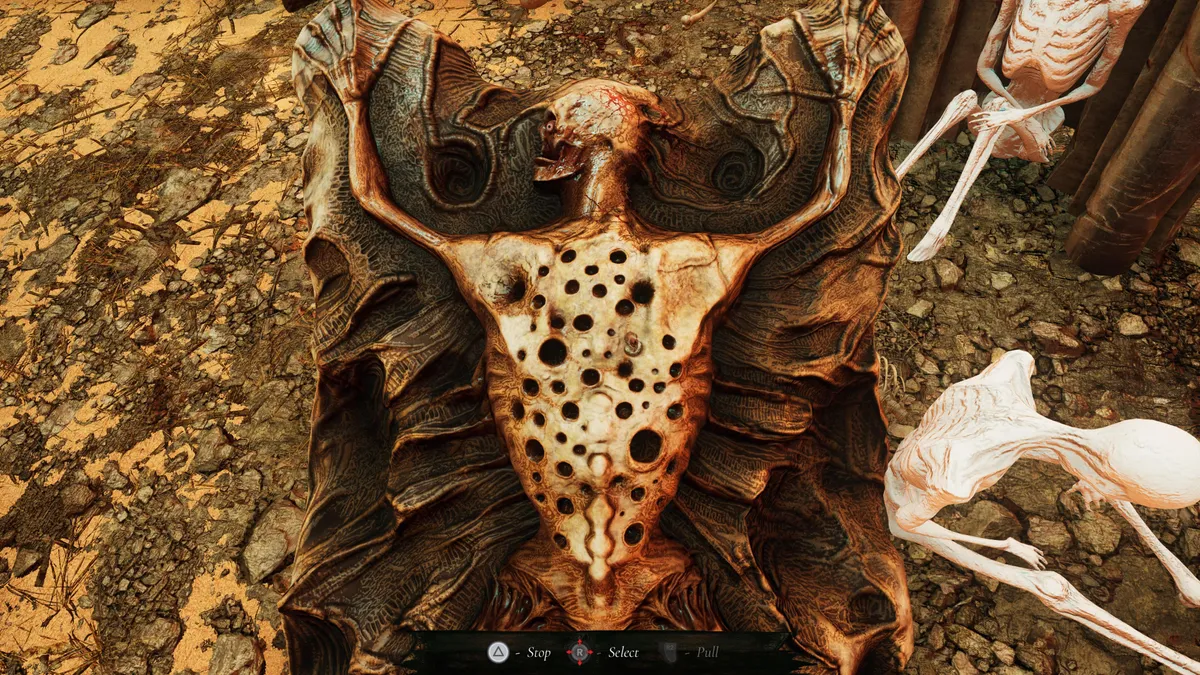
There are 'ick' moments too, which perfectly exemplify the game's balance of horror and familiarity – one puzzle sees a living corpse on its back, riddled with holes from which maggots crawl in patterns, memorise the pattern, pull the maggots. It's not complicated, but it does serve the world's design, and anyone with Trypophobia will love/hate every moment.
World-building trumps puzzles
Even when the puzzle design runs out of ideas, the setting finds another way to hold my attention, ensuring I need to see how this all ends, answering the game’s real puzzle – what the heck is this all about?
The big-picture tease works because, between the somewhat simple ‘puzzles’, there’s a story unfolding through cryptic narration, subtle environmental details, and fragments of dialogue that feel deliberately obtuse. Characters speak in riddles, ancient beings appear and disappear demanding your help, for unknown reasons, and entire locations seem loaded with meaning while refusing to explain themselves. Some will find that fascinating, while others will likely find it exhausting, but this is the puzzle at the heart of Necrophosis.
There were stretches where I loved being left to piece together my own interpretation of what had happened here, wandering through ruined temples and impossible structures searching for clues among the bones and blood, picking up lore docs and reading tablets. Then there were moments where another vague speech about decay, consciousness or cycles would drift across the screen, and I'd start wishing the game was a little less interested in mystery for mystery's sake.
Even so, I found myself drawn further into Necrophosis, partly because I wanted answers, but also because I knew the next area would contain some fresh, fleshy nightmare that I know won’t hold back on its devotion to the Beksiński and Giger artistic influences. Necrophosis never runs out of memorable imagery, whether it's a large lake of blood surrounded by masked witches or huge doors built from bodies, and when a game commits to this fully, it's surprisingly easy to forgive some of its rougher edges and simple puzzle design.
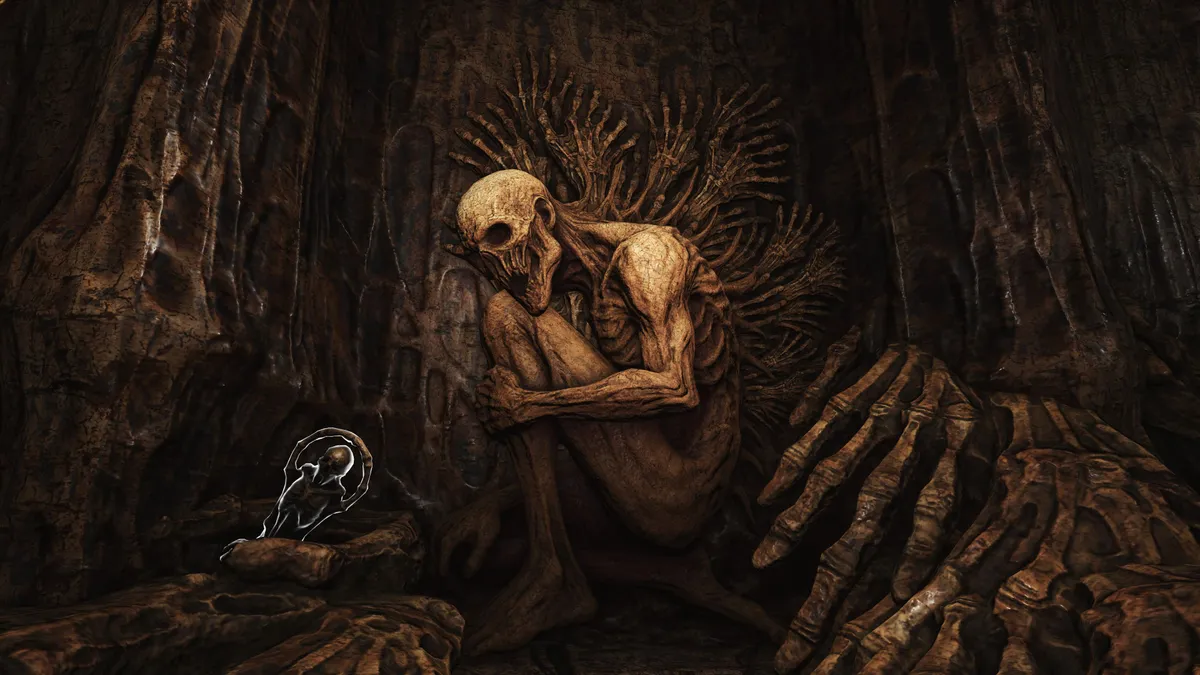
The puzzle design isn't strong enough to carry the game on its own – its simplicity means you'll see the 'end' in 4-5 hours of fairly undemanding item management – and there are sections where moving objects from one grotesque location to another starts to feel a little thin. Some of the storytelling disappears so far into symbolism and abstraction that it risks losing emotional impact. There are stretches where it feels more interested in presenting another incredible piece of scenery than in giving me something meaningful to do, which diminishes the overall enjoyment.
But here's the thing, I'll still be thinking about Necrophosis months from now. I'll remember the creature pulling bones from its own body, I'll remember the giant figures half-buried in the sand, clawing for escape. I'll remember standing in front of some impossible monument trying to work out whether I was looking at a god, a corpse or a building.
Simple, short-lived and flawed as it is, Necrophosis is undeniably memorable. It stands in front of you, chills you, teases you with a weirdly organic world, and ultimately, it's a horror game that's hard to put down.
out of 10
A visually unforgettable horror adventure packed with atmosphere, but simple, repetitive puzzles weaken the experience.