




Turning a Dr Seuss illustration into a fully realised 3D world is harder than it sounds, and directors Alessandro Carloni and Erica Rivinoja knew what they wanted to avoid on Warner Bros. Pictures Animation’s new The Cat in the Hat movie: CG that simply imitates a picture book.
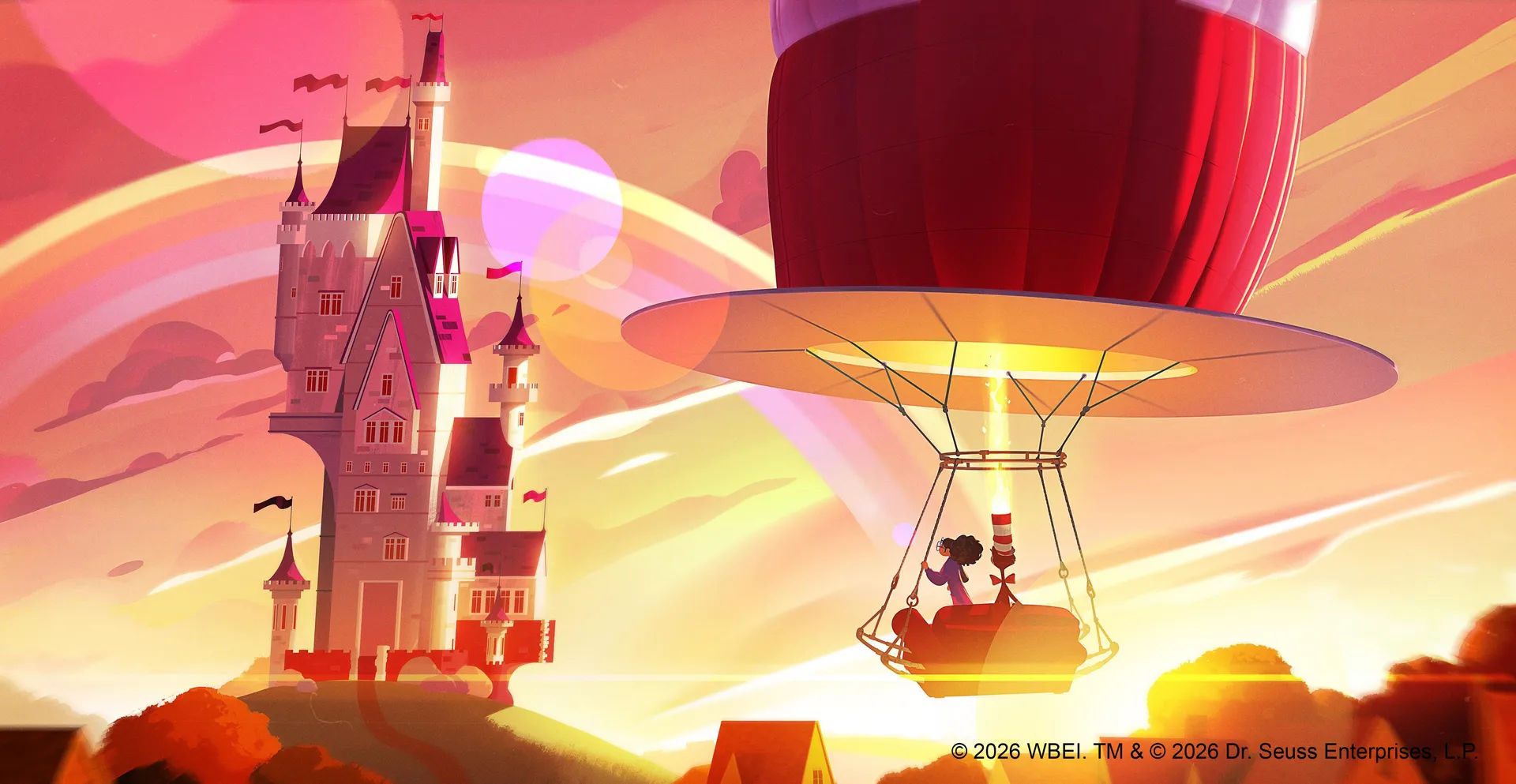
“We didn’t want to use CG to just ‘simulate’ an illustration,” Carloni says of making the new 2026 animated movie. The aim was for audiences to feel the familiarity of Seuss’s painterly illustrations while experiencing the depth and immersion of modern 3D animation.
The creative partnership behind the film was just as collaborative. Asked how they divided the writing and directing duties, Rivinoja says they didn't split the work between them. “It was less ‘divide and conquer’, and more ‘unite and conquer’. To streamline the process, we were usually in meetings together.”
How to watch Made to Make
Working with Autodesk software such as Maya and Flow was key, as revealed in a new video series called Made to Make, which has now been expanded to include more behind-the-scenes details; watch it on the Made to Make YouTube channel.
Put simply-ish, it meant rethinking lighting, surfaces and even the edges of objects. The team paired simple, almost flat surfaces and key lighting with softer, more volumetric fill and bounce lighting. They also developed a stylised, painterly edge treatment to avoid the harsh sharpness of digital imagery. Then came realistic lens behaviour, including halation, aberration, and lens flare, which Carloni says helped ground the images in believability. The team developed the combination specifically for the film, creating its own visual style.
How Maya helped make Cat in the Hat
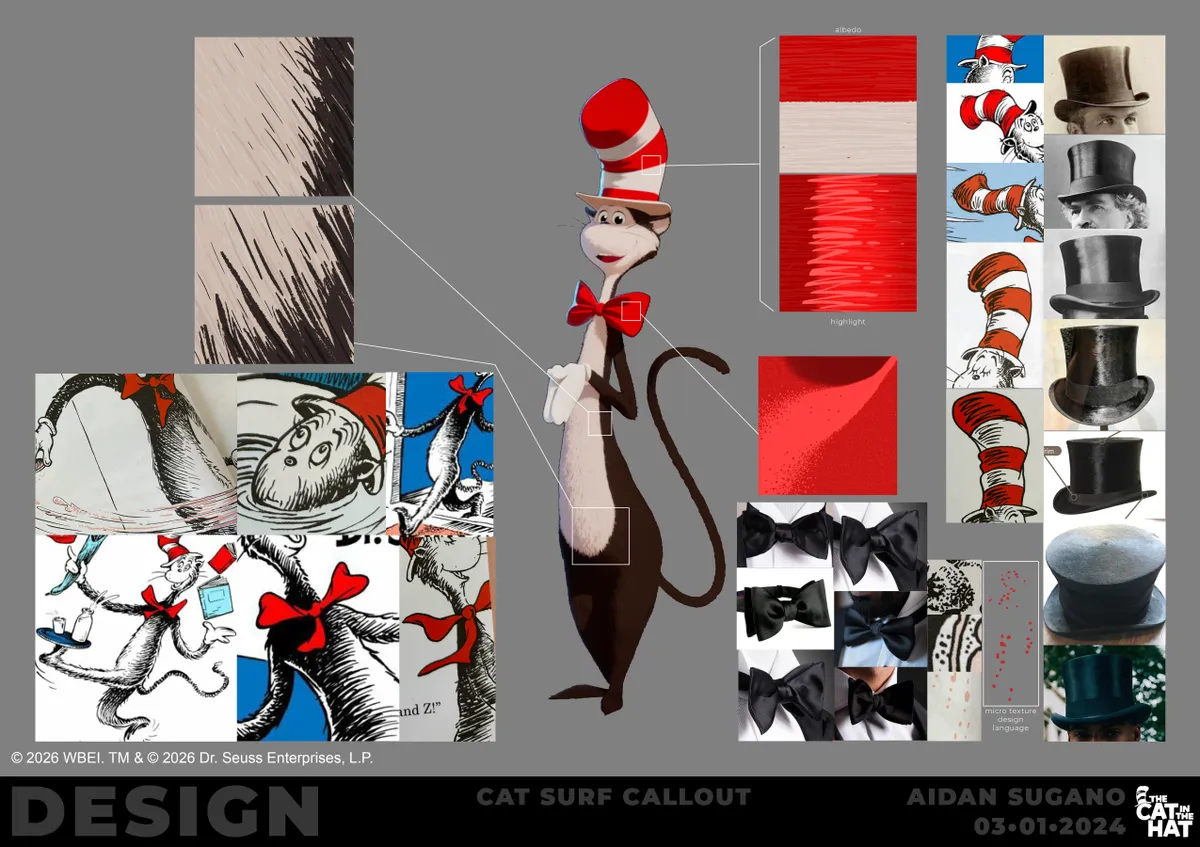
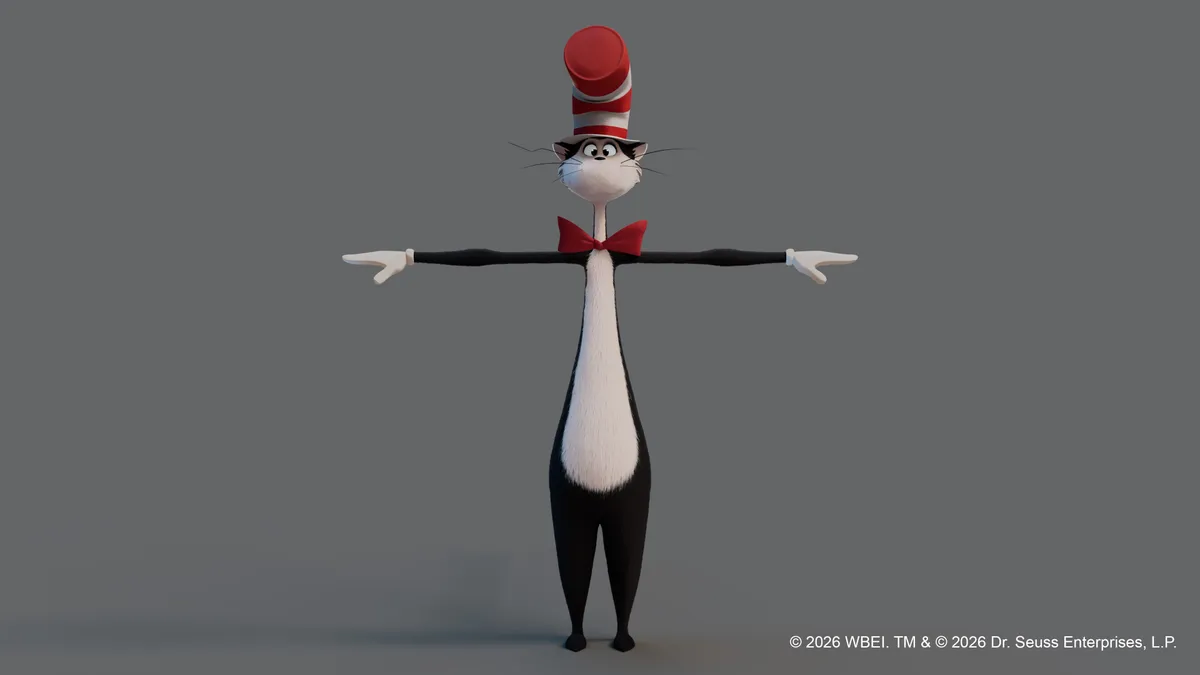
Maya sat at the pipeline's centre. Production designer Aidan Sugano’s hand-drawn designs were translated into 3D models there, and everything in the film, from characters and props to entire worlds, was built in the software.
For the animators, Maya was also the only way to touch the characters. Marek Kochout, for example, shaped the Cat’s performance through the Graph Editor, where a single expressive shot can involve hundreds of layered curves. The Pose Library let animators save and reuse expressions and attitudes, and over time it became a shared reference for how the Cat moves, with standout scenes added so every animator could draw on them.
Keeping a film like this on track across four countries, with teams in India, Montreal, London and Los Angeles, fell to Autodesk Flow Production Tracking, which followed every character, environment, prop and version from boards through to final compositing over roughly two years. Sugano, in New York, and VFX supervisor Matt Waters, in London, used RV within Flow Production Tracking to review the same footage in real time. Executives and partners screened the film through PIX, now part of Autodesk Flow Capture, whose watermarking and access controls helped keep it under wraps. As Carloni puts it, “This movie would not exist without the tools we had.”
For a fuller look at the workflow, visit Autodesk’s blog on the making of the film.
Keeping the Seuss look at cinema scale
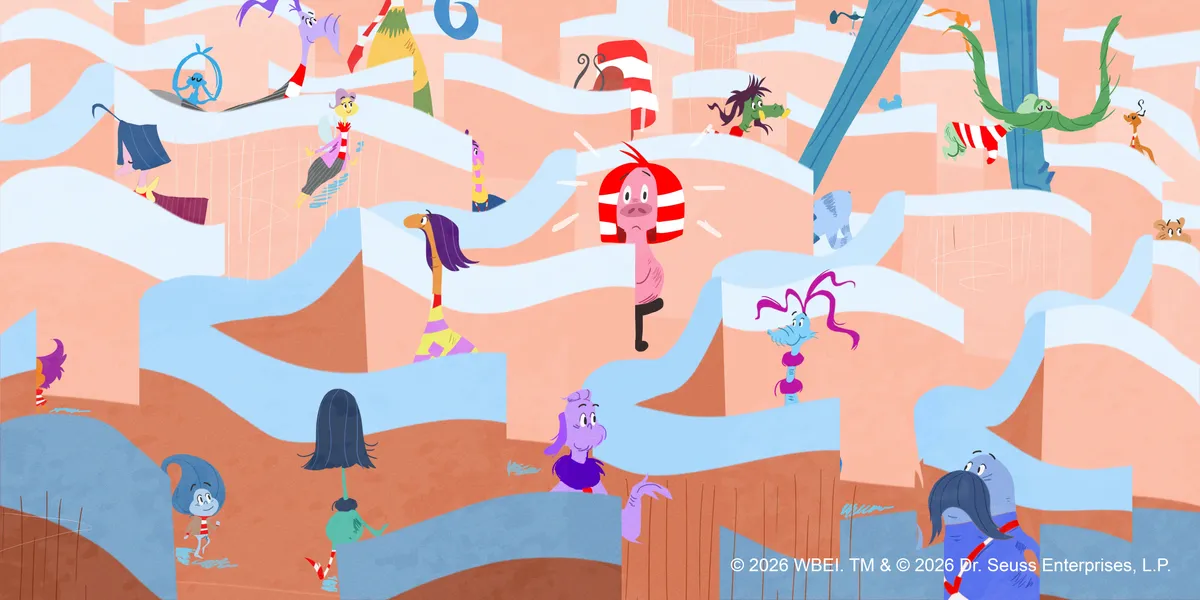
For Rivinoja, preserving Seuss's visual language was essential. The team wanted fans to recognise his signature design motifs, from hatch marks and negative space to his colour palettes, arches and mechanical hands. “We wanted to make sure people who love the books saw something of the book in the film,” she says.
It wasn't going to be a straightforward page-to-screen adaptation, though. The filmmakers wanted to expand the world and make it a cinematic spectacle, exploring what happens after the original story ends, including where the Cat goes when he leaves the house. They came up with the idea that entertaining bored children is his job, which explains why he shows up at the house on a rainy day. He's also one of many specialists at the company, and his famous hat is actually his company uniform.
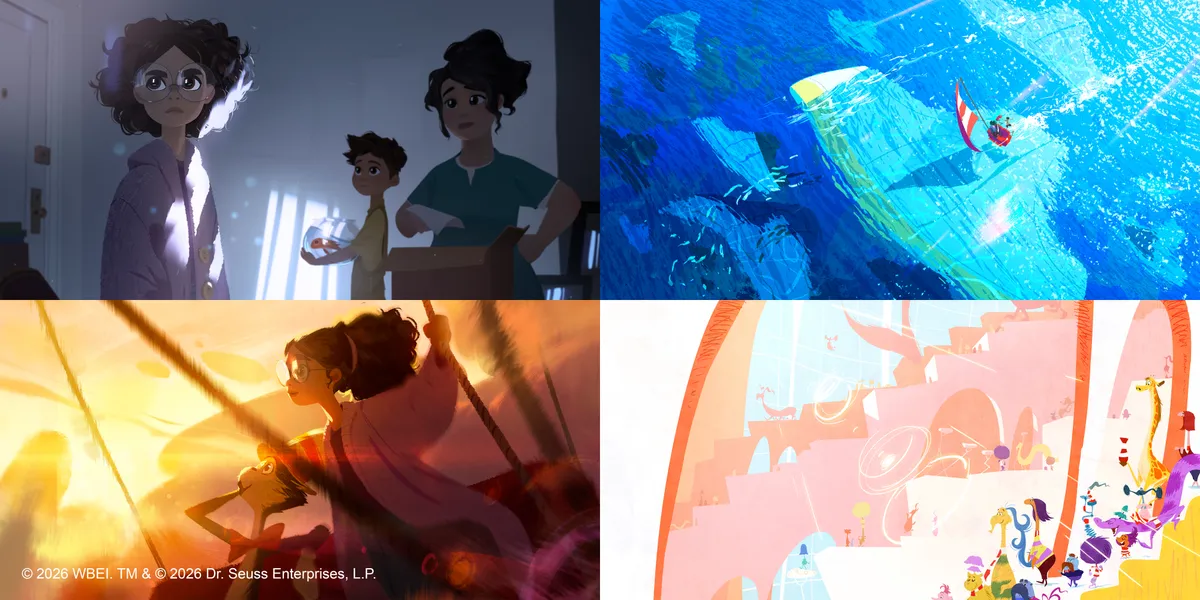
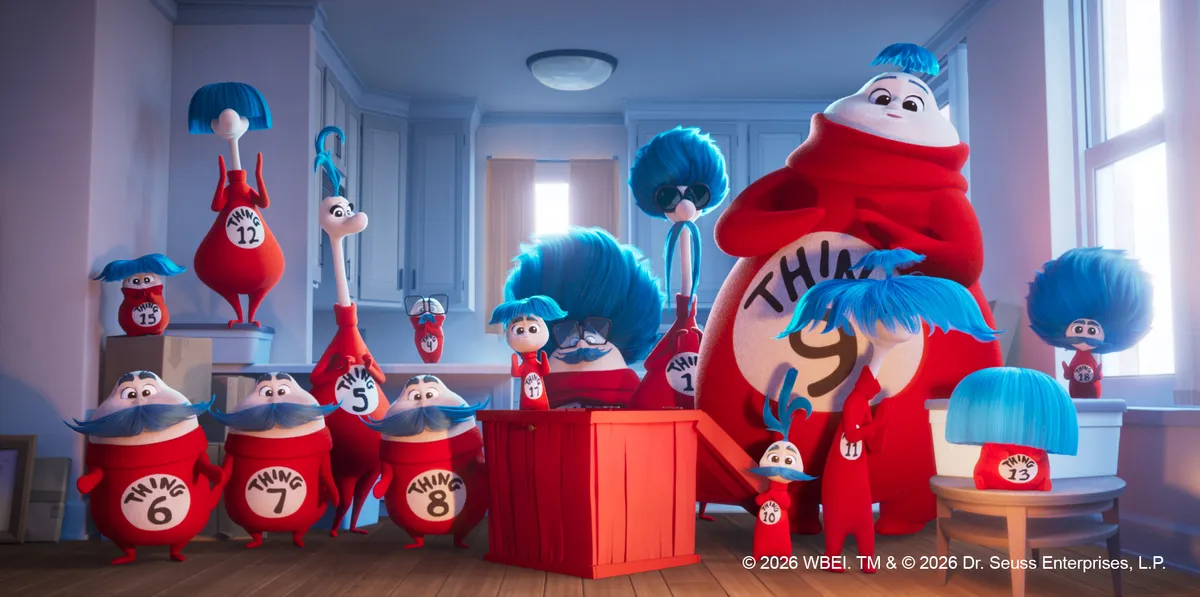
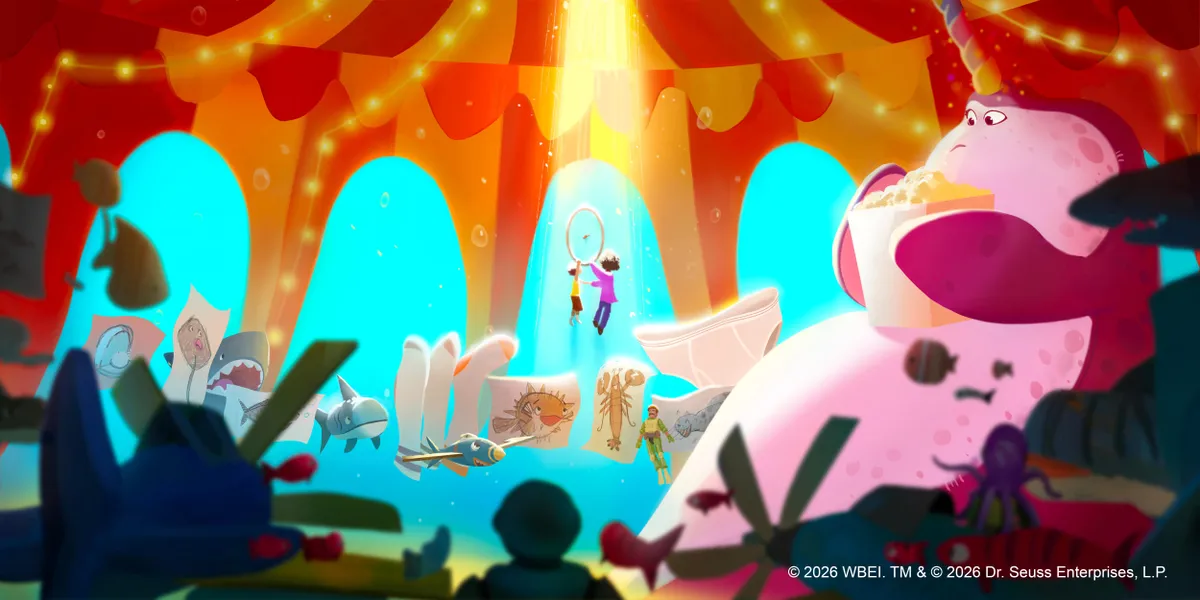
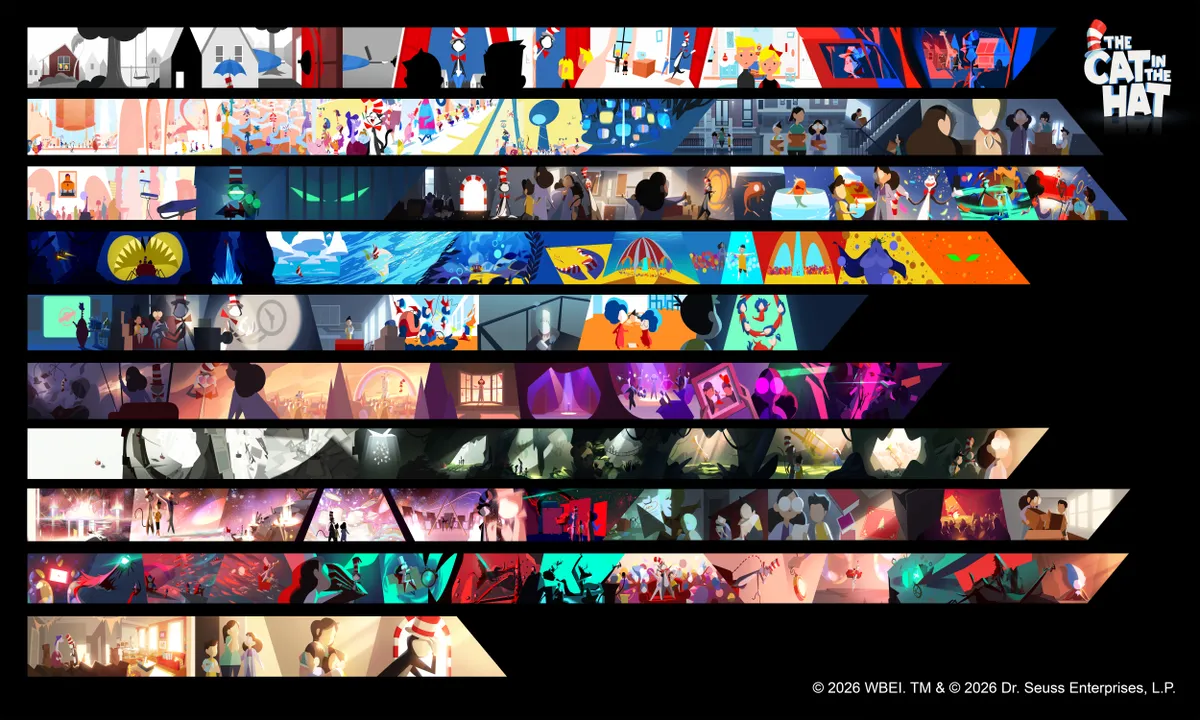
The film also needed several distinct environments: the real world, Seuss’s world and three further worlds connected to characters in the story. Rather than altering the characters to suit each setting, the team kept their designs and shape language consistent.
“We kept consistent shape language throughout, and we didn’t change the looks of the characters,” says Rivinoja.
The differences come from colour, surfacing, rendering style and lighting, Carloni explains. The characters stay recognisable while the emotional feel of each world changes as the story progresses.
The Cat has to be lovable
Carloni says the hardest problem was making sure audiences would want to spend time with the Cat, explaining: “To make sure the character of the Cat was truly lovable. The kind of character anyone would want to spend time with. If we loved him, we had a movie. If he's unlikable, then no matter how fun the story or how fantastic the adventure, the movie would never work.”
He describes animation's greatest advantage as the same thing that makes it daunting: ultimate freedom. “There are limitless possibilities. You can literally do anything at all in animation. As the saying goes, the only limit is your imagination, which makes it perfect to tell a Seuss story and create a Seuss world.”
The Cat in the Hat arrives in cinemas and IMAX in North America on 6 November 2026, with international releases beginning on 4 November.