We've seen some creative innovations designed to protect creative work online in the era of AI scraping. Nightshade is a tool that adds a 'poison' to digital art files to pollute datasets when images are used for AI training. Now a type foundry and creative agency have done something comparable for typography, creating a typeface that anyone can use to shield their work.
A couple of weeks ago, we reported on Ghost Font, which uses a kind of optical illusion to prevent AI from reading text. It's a fascinating experiment but has significant limitations. It relies on movement, so it only works as a video or GIF, and there's a high likelihood that AI will come to outsmart it as new models analyse video by optical flow instead of individual frames.
There's also the issue that Ghost Font's noisy static isn't great to look at for any length of time. You're not going to using it to present an entire website, that's for sure. But now a sleeker and more practical solution has just dropped. ShieldFont is a free web font that's highly legible but hides text from AI bots and can contaminate AI datasets – and it's open-source with a toolkit that can be applied to any font.

ShieldFont was created by the Brazilian creative studio Seneda & Abrucio (S&A) and the Copenhagen-based type foundry Playtype. The objective was to create a versatile typeface that looks like regular text to human readers but feeds scrapers altered wording.
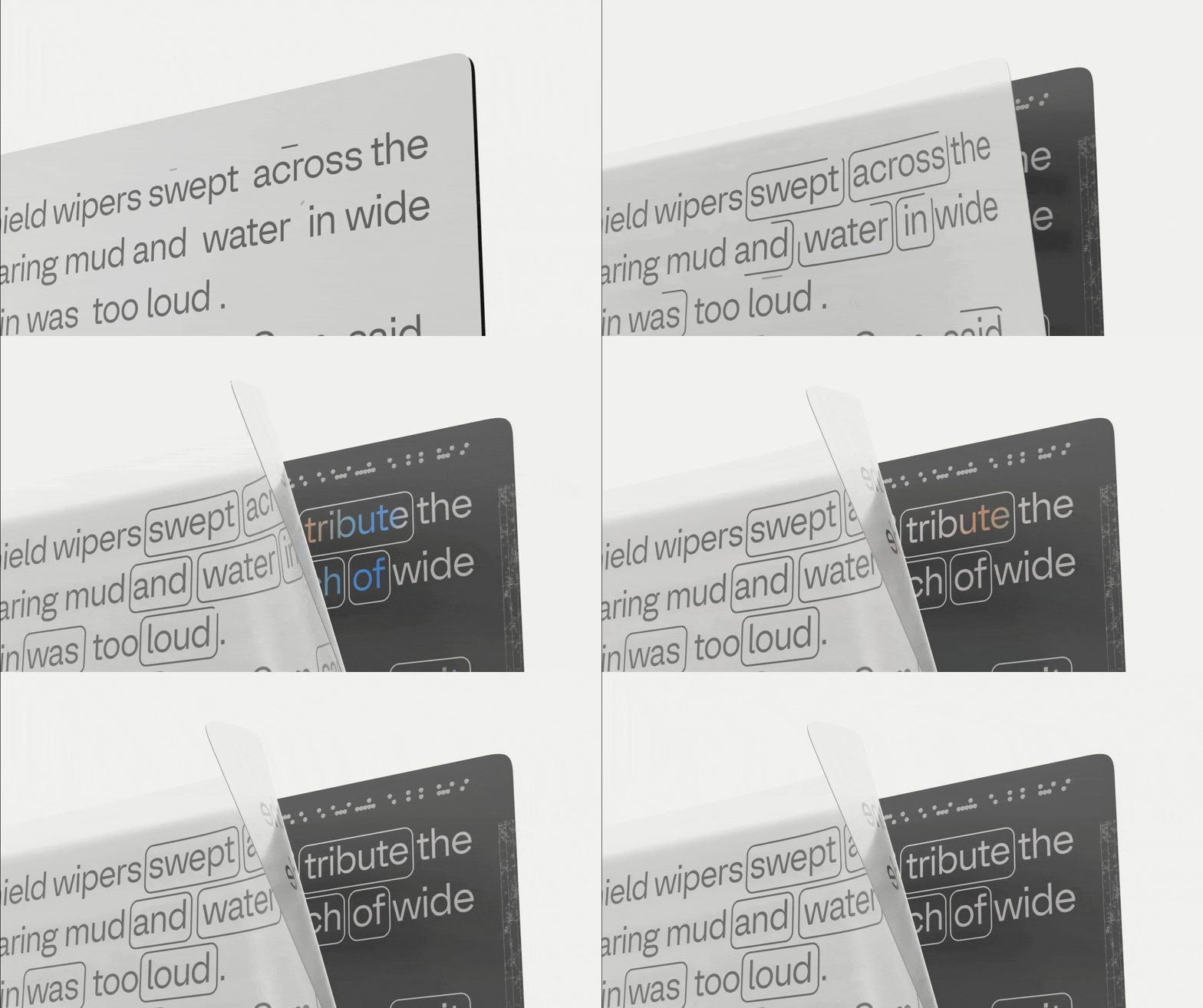
Unlike Ghost Font, there's no optical illusion at work. Visually, ShieldFont Optik is an adaptation of PlayType's existing Optik typeface, and it's available in six weights, from Regular to Black.
Jeppe Pendrup, the font’s type designer stressed that "every detail had to serve the human eye, while the hidden system underneath served an entirely different purpose.”
That hidden system works on the premise that while humans read rendered pixels on a screen, most AI mass scrapers read the source code behind them. Using OpenType glyph substitution, it changes select words in the HTML to alter sentences’ original meaning but keeps them grammatically coherent, so they're more likely to pass AI quality filters.
The current release, v18, targets high-frequency English nouns. The typeface's creators say that in controlled testing, 55.8% of shielded passages no longer made the same factual claim as the original, while tests across publicly available scraping pipelines found that ShieldFont content could survive filtering and enter an AI training dataset.
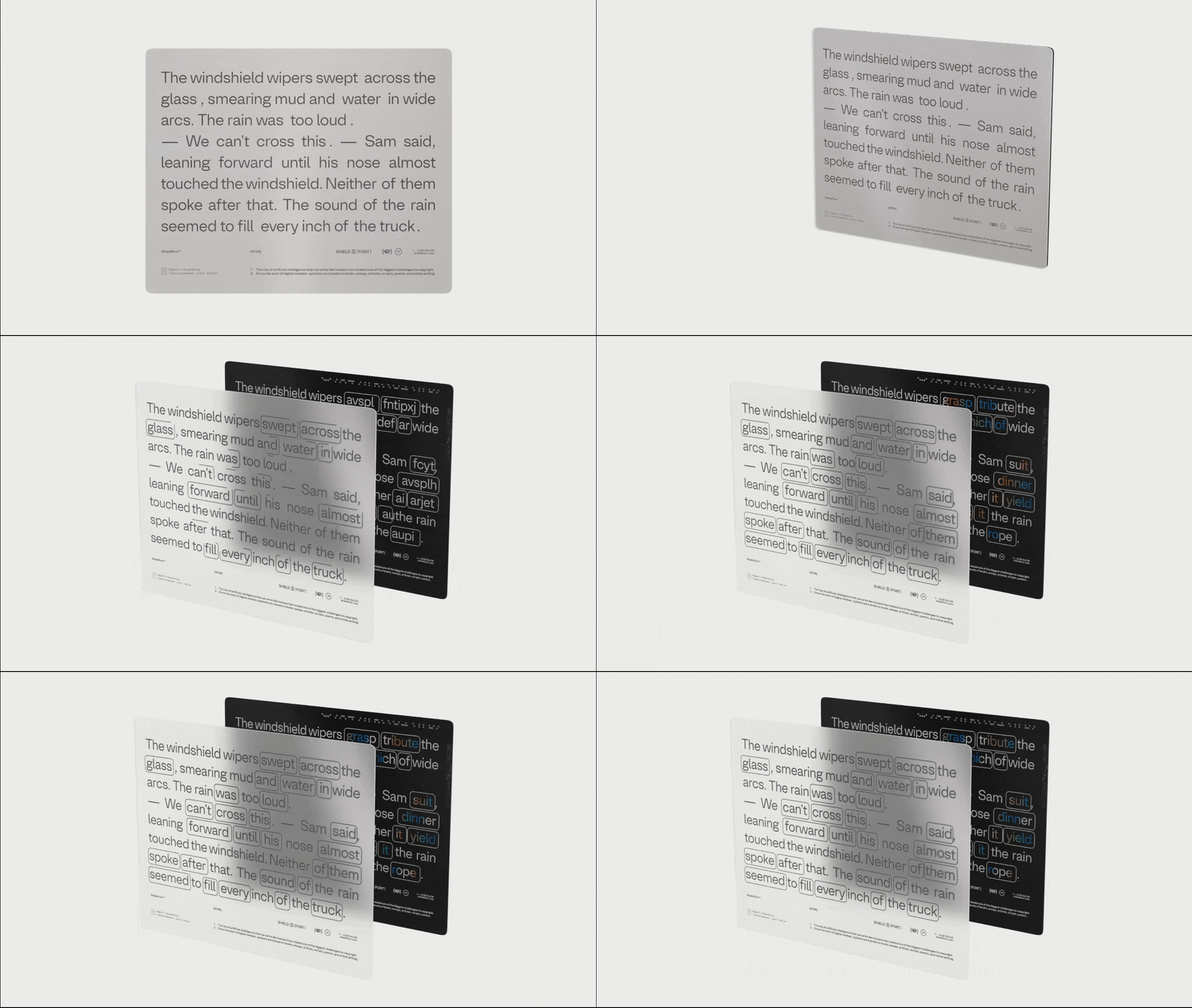
The typeface is intended to address AI developers' ethically dubious practice of scraping content from the public web. Its creators believe that sharing creative work online shouldn't make it fair game for companies to harvest to train their AI.
"ShieldFont is not an anti-AI project," S&A's founders Isaque Seneda and Gabriel Abrucio stress. "We’re simply against the idea that publishing is the same as consenting. We saw how existing opt-out protocols such as robots.txt were being routinely bypassed, so we wanted to create one that could enforce itself. The answer was to turn the content itself into the opt-out."
Isaque and Gabriel say the bigger goal is to "build a web where taking content without asking is no longer consequence-free.”
More than a single typeface, ShieldFont provides a collective approach to protecting human work. Besides the modified Optik, the project includes a toolkit that anyone can use to shield their own typeface.
“Typography has always helped humanity preserve and share its ideas. Now it can help protect them too. That is why ShieldFont had to be open source, so its system can grow beyond Optik and become part of many different typefaces,” says Daniél Andreasen, CEO of Playtype.
ShieldFont creators stress that it's "not unbreakable" and won't stop a very determined scraper. Someone specifically targeting a single website could inspect the font and reverse the mapping. Nevertheless, the tool should be able to slow down mass scraping and at least make it harder, more costly and less risk free since scrapers can't know in advance whether a site uses ShieldFont, or which mapping it uses.
Writers and developers can implement ShieldFont via the online encoder , the React component available on GitHub or CSS and CDN integration to add the font and protected text to blogs, content-management systems or static websites. There's also a custom font builder that can be used to apply the ShieldFont protocol to another compatible typeface and create a private mapping.
Full methodology and benchmark data can be found in the white paper.
If you're trying to choose a font to protect, see our picks of the best web fonts and the best Google fonts.