



Alongside Clair Obscur: Expedition 33, AdHoc studio's Dispatch was the big winner at the BAFTA Game Awards on Friday night. The comic narrative-driven superhero management game won the awards for animation, audio achievement and performer in a supporting role for Jeffrey Wright.
The game had already received critical acclaim for how it revives the choice-based storytelling style reminiscent of classic Telltale Games with a more fluid, cinematic presentation. If you're wondering how it was made, you're in luck because AdHoc studio's CTO and Creative Director Dennis Lenart and Lead Programmer Seth Kingsley have revealed insights into the development process – and, yes, the game was made in Unreal Engine, which tops our list of the best game development software (also see our pick of the best laptops for game development).
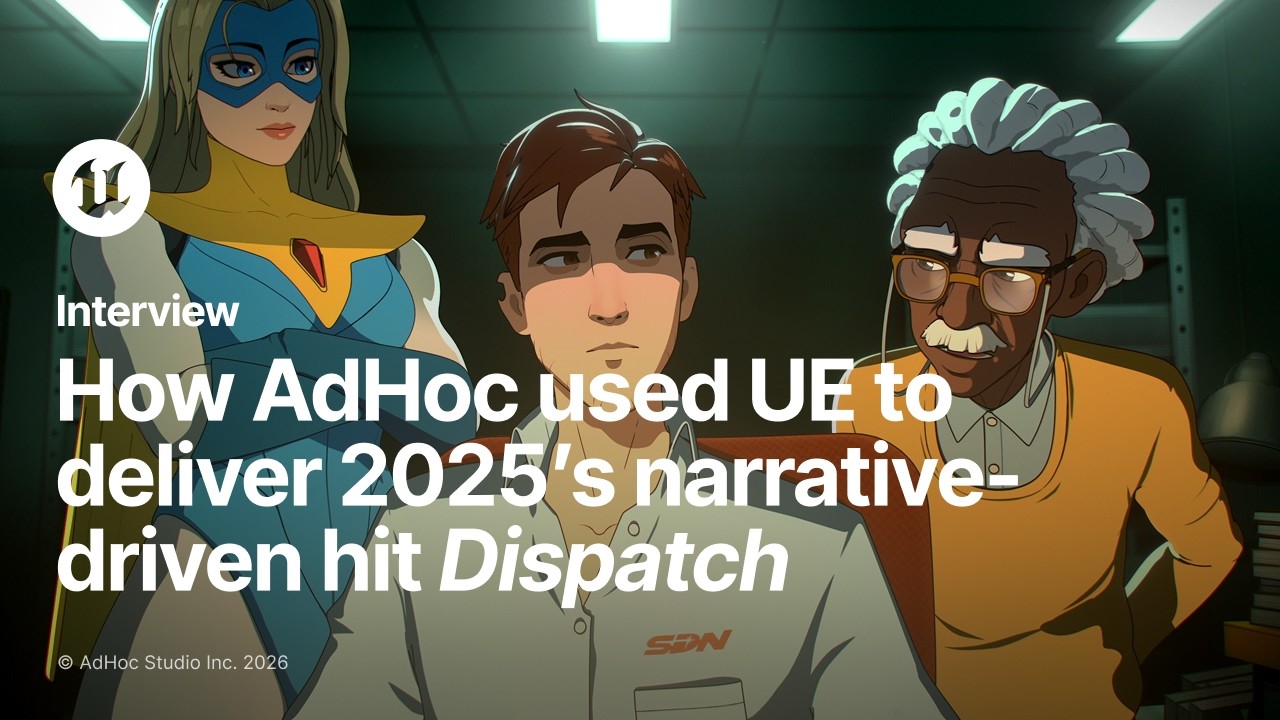
In an interview on the Unreal Engine website, AdHoc reveals that the aim for Dispatch was to combine “our favorite parts of comedic TV shows like The Office and mix them with the fun, fantastical world of a team of superheroes like The Avengers”. They also realised that as a small team (AdHoc has around 30 staff) limiting the setting to a sitcom-style location with a recurring cast would help control costs.
The remote team wanted to build a mechanic that provided more depth than previous games they had worked on while remaining simple enough for anyone to enjoy. That's when they hit on the idea of dispatching shifts – handling incoming calls and assigning the appropriate superhero to resolve the situation, be it trivial or more urgent.
AdHoc made the game in Unreal Engine 4.27 because they started the project back in 2022. It was too late to upgrade to UE5 without affecting the schedule, but they backported CommonUI features from UE5 to solve some UI art issues and for the foundation of gamepad support.

Lenart says UE's Blueprints were a big part of the team's workflow, helping programmers, designers and UI artists collaborate: “Given our small team size, they enabled our developers outside the engineering department to prototype and create features that became core to our game’s experience like the shift and hacking mechanics”.
“Our designers were often able to create new features all on their own, which was critical for a small team like ours,” he also says. “Having the ability to create a bunch of playable ideas quickly and then constantly playtest them allowed us to iterate, sometimes even on the fly, finding problems and solutions rapidly.“
Dispatch didn't require much from Unreal Engine's lighting and environment tools. but AdHoc did use Unreal’s Sequencer for previsualisation of some of the more complex scenes. Lenart says this played a important role in iterating and communicating ideas to the rest of the team so they could understand how the cameras and characters moved around a space.
This way, they made key decisions about the lens for a scene before production animation started. For several scenes that required intricate staging, or complex movements, Sequencer and Control Rig were used to build sections out in 3D that could be used as a template to help get members of the team on the same page.
“Coming from a background in cinematics, many members of our team naturally think in terms of visual timelines, including our audio engineers who are used to working in Pro Tools and FMOD,” Lenart says. “Sequencer’s interface was the hub for playing back all of our cinematic content, even though it wasn’t real-time rendered”.


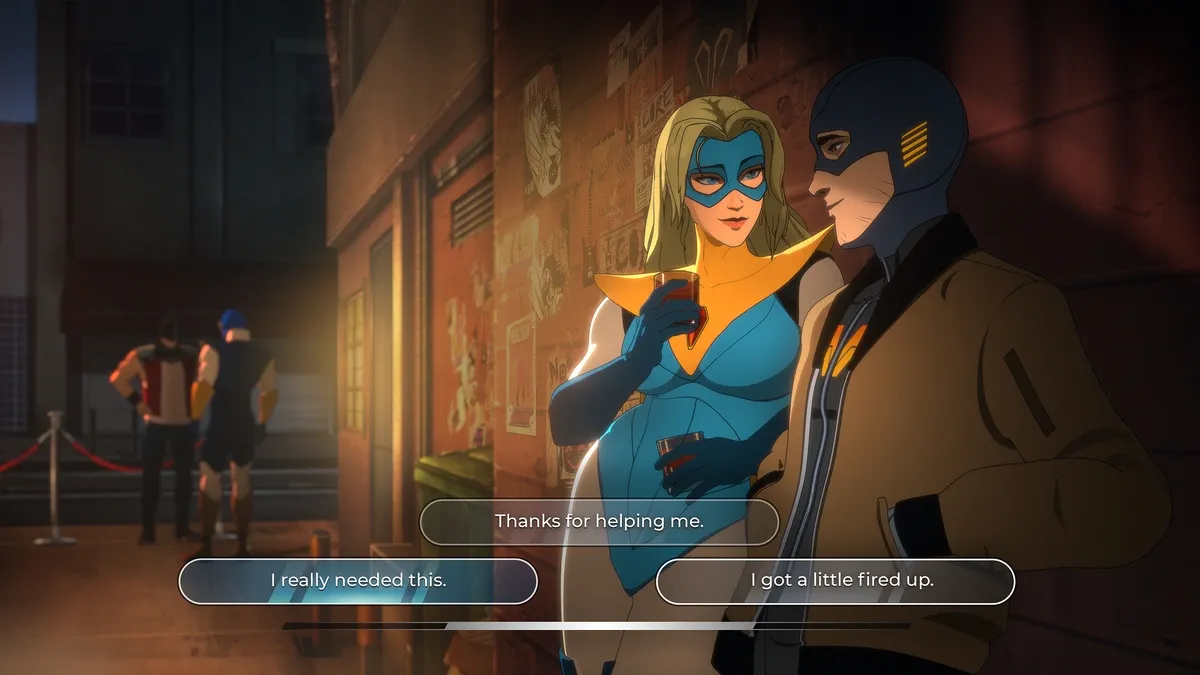
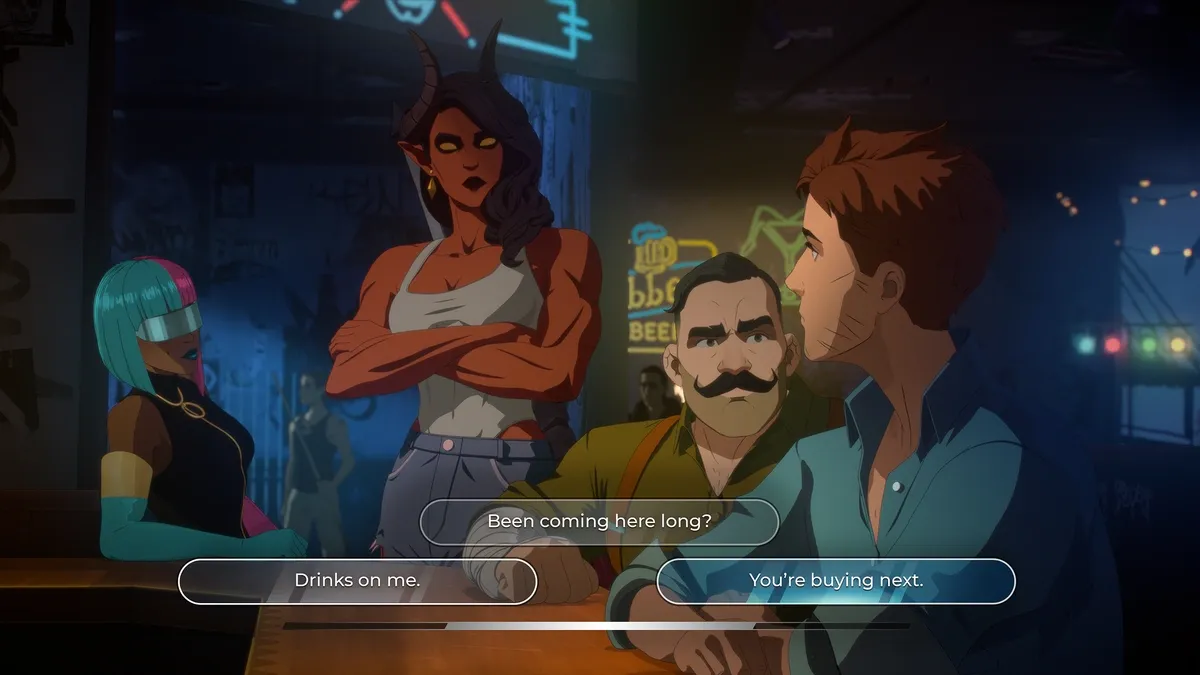



Without big team of graphics engineers, AdHoc pre-rendered the cinematics using traditional offline methods. As part of the visual style, which the studio defines as “western anime”, many of the backgrounds were hand painted. The team also built their own branching video buffering system to achieve the smooth and consistent experience they wanted with a small engineering team.
Seth stressed the value of having access to Unreal Engine's source code: “Being able to do source-level debugging instead of having to black-box the engine layers is a huge advantage. Beyond that, you can learn a tremendous amount by reading Unreal source code. Not only does it function as a reference implementation of how various engine systems should be used, but it shows you how to achieve performance, modularity, and portability without sacrificing readability.”
As for the Unreal Engine features that are “must-learns” for small teams, he highlights Unreal’s gameplay architecture and “making sure everyone agrees on how you want to distribute responsibilities across the family of gameplay Actors: the Game Instance, Game Mode, Player Controller, AI Controllers, and Pawns. This will help when managing and debugging the overall state of the game”.
He also recommends that indie developers starting to work in Unreal Engine try to leverage as much of the engine’s built-in functionality as possible before looking for a third-party plugin or building something custom.
“Unreal has so many subsystems available, and building a basic familiarity with as many of them as possible will help you harness the full power of the engine in creative ways. As an example, our shift gameplay runs through a series of scenarios that pop up at specific times. Rather than make a custom asset to represent the overall timing of the scenarios, we just used a Level Sequence.
“When you’re in a shift, this Level Sequence is playing in the background, and an Event Track is triggering each scenario at the right time. When a scenario window is open, we pause the Level Sequence, and when we reach the end of the Sequence, the shift is over. When it came to authoring one-off events or conditional scenarios, we used the Director Blueprint. It’s very convenient to have a Blueprint graph available inside the same package.”
You can learn more about the software in our collection of Unreal Engine 5 tutorials.
Dispatch is available for PS5, Nintendo Switch and PC (see Steam). You can read the full interview on the Unreal Engine website.