I recently attended an AI filmmaking summit called The Bionic Awards, launched by creatives and sponsored by Adobe. This awards scheme celebrates AI-powered filmmaking across a diverse range of disciplines, from animation to advertising and showcasing drama, suspense, humour, sci-fi and more. I'll be honest, I went in with some trepidation. AI filmmaking is divisive for a range of reasons, not least because creatives fear it will dramatically reshape their industries and cost jobs in the process.
But what I encountered was far more nuanced than that – even though the films were predominantly made with a mix of generative AI tools rather than being traditionally made with some AI integration. Even so, it isn't nearly as simple as "AI filmmaking = slop" or "AI is killing the creative process". In fact, in some respects, I found the complete opposite to be true.
There were moments of tension, which I'll get into, but I could absolutely see, perhaps for the first time, how this type of filmmaking might have a place alongside more traditional methods. The film showcase offered a useful barometer of where AI filmmaking stands right now, while the panels gave a illuminating insight into the mindsets and processes of those championing AI creative tech. (If you're making film, see our best laptop for video editing guide.)
I am going to start by explaining what the awards are and why Adobe sponsored, but after that I'll share my detailed, totally honest opinion.
What are The Bionic Awards?
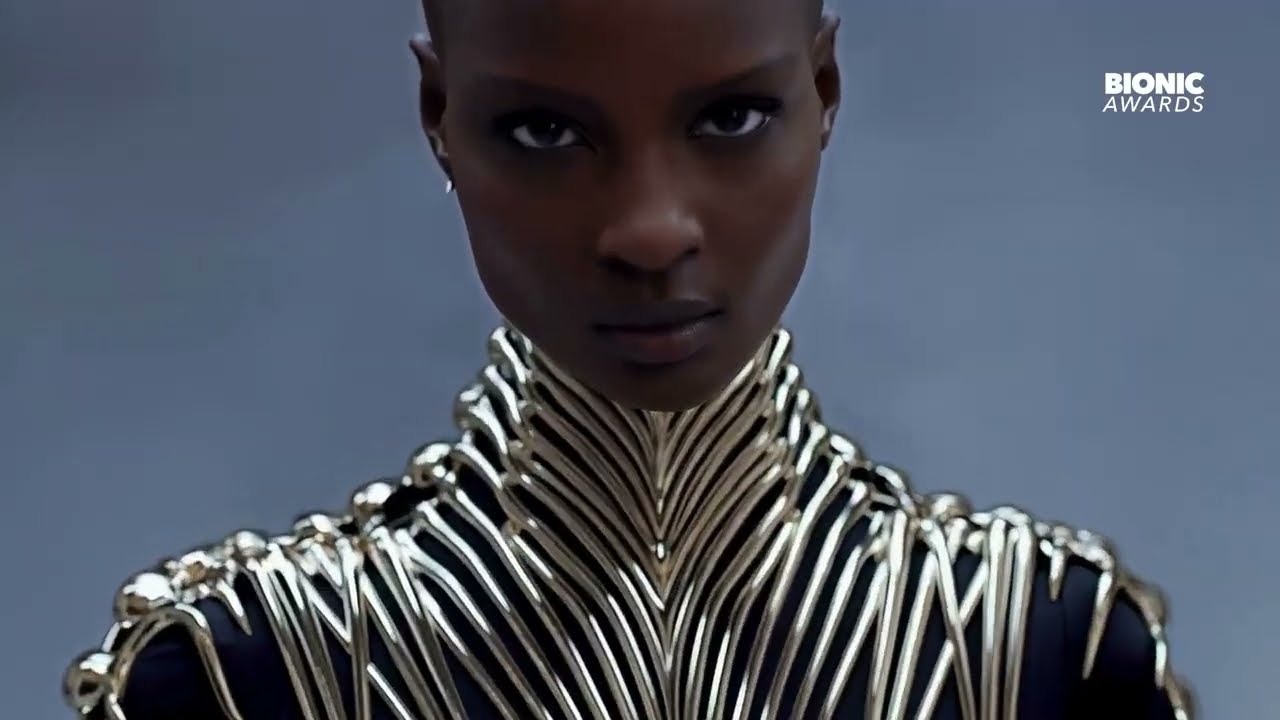
Let's start with the basics – why and how The Bionic Awards exists, and what made Adobe keen to sponsor a fledgling event.
The Bionic Awards was founded by tech journalist Alex Pell and ex-Pixar creative Andy Gordon as a platform to recognise the rapidly advancing technology, and give creators a chance to showcase their AI films. The co-founders are widely positive about the increasing technology, and see the benefits for the wider creative community, especially as a tool for empowerment.
"Bionic exists to support the creative community in rapidly changing times caused by the advent of AI," Alex told me. "Of course, these changes present challenges for traditional creatives. Yet there are also huge opportunities for people to transition into different industries, such as filmmaking, which might not have previously been a practical ambition."
It's a sentiment shared with Adobe, which is a big part of why the tech giant decided to sponsor The Bionic Awards. Recently, Adobe has been widening its focus from creative professionals into more general content creation, with the aim of empowering "creativity for all", which its Firefly AI integration into its suite of apps is helping to do.
"For Adobe, this is a statement of belief - belief in a future where technology and human ingenuity exist, not in opposition with one another, but in partnership," Simon Morris, VP of International Marketing at Adobe told me.
So what was it like?

Across the breadth of entries, it was evident that creators are drawn to AI tools for their ability to build immersive worlds that would otherwise be difficult to achieve – there was an abundance of fantasy and sci fi. This had varying levels of success – one film packed in so much texture and so many fantastical creatures that it felt like being slapped across the face with all AI can do.
Others used it far more sensitively. This is where the skill and experience of an already-professional creative came into its own, as demonstrated by Guillermo Miranda and Javier De La Chica of Contanimation, who won Best Animation with their project Aucensia (created as part of a Runway's GEN:48 challenge to create a short film using AI in 48 hours).
This was an understated film that did the exact opposite of exploiting AI's capacity to conjure anything imaginable. Instead, the technology was deployed with restraint to create something that held tension, character and emotion – and a clear artistic style. The pacing, framing and scripting were skilled, and the AI served as a vehicle for bringing that vision to life. AI was brought into a skilled understanding of animation, art and film, and it showed.
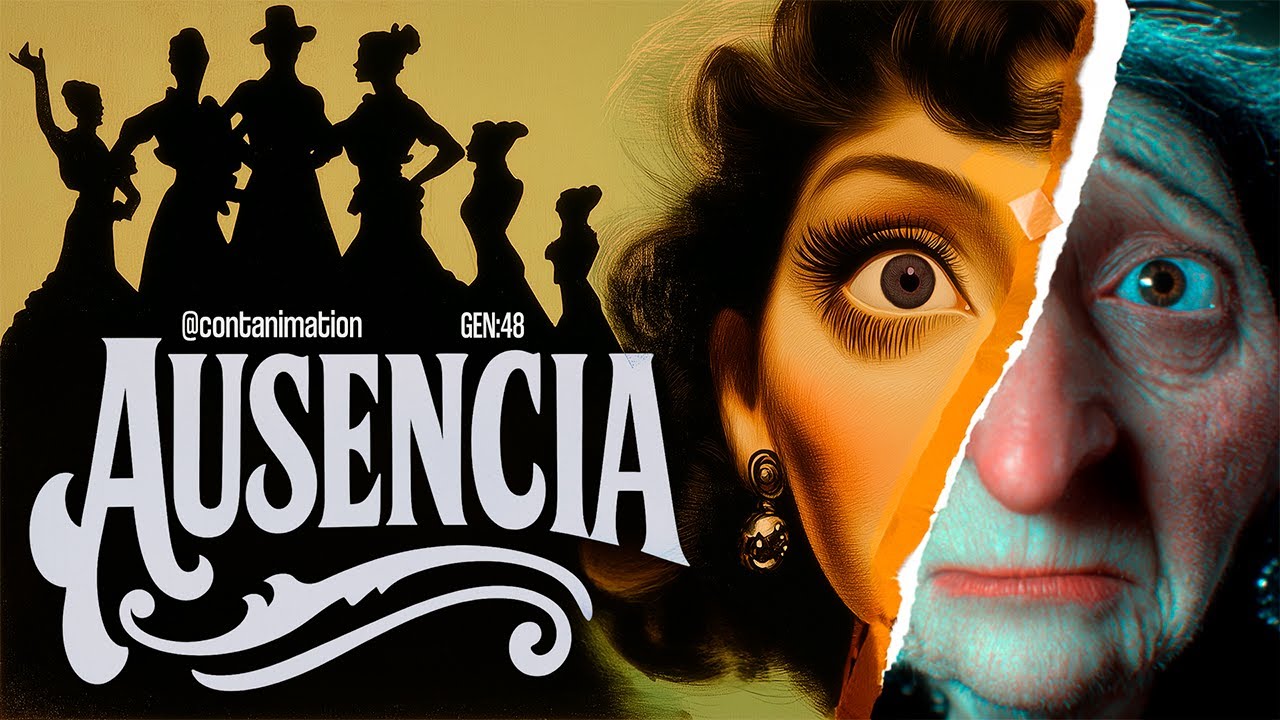
But what made two creatives with 3D animation backgrounds try out AI?
"Producing our own projects was always a challenging experience as we needed a lot of time, team, and resources," Guillermo told me. "This was a great excuse to team up, have fun, and explore these tools together, and opened the door to continuing to create the Contanimation universe to this day."
To the pair, AI is simply a technique to speed up certain processes, rather than a toolset that will replace human artists or processes. "It's a new way to create and tell stories, one that lets us produce faster and take more risks with the content we produce."
The fact that this film rose above the rest suggests that skill, experience and craft will be what rises to the top in AI filmmaking, just as they do across the creative disciplines. Having the tools to make something doesn't mean an inexperienced creator can rival a professional – and that should offer some reassurance to those who fear AI. The human operating the technology remains crucial.

But it isn't only professional animators or filmmakers who are able to succeed in this medium. Creative professionals from other disciplines can equally channel their own experience into filmmaking – something The Bionic Awards made clear.
One example was Don't Go Back to Chungku Lake, a short film entered into the Pilot category. It's a Korean-style film created by Floriane Bont, who has a background in advertising and art direction. Floriane doesn't have specific filmmaking skills, but she has the eye and experience needed to shape a project, and she agrees with Guillermo's point about empowering more people to tell stories.
"Before AI, making a film with a cinematic visual language required a budget, a crew, equipment. That gatekeeping was real. AI doesn't replace filmmaking, it redistributes the ability to tell stories," she explains. "The vision, the intention, the artistic direction still come entirely from the human. What changes is the barrier to entry. And for someone like me, who had the creative eye but not the production infrastructure, that's transformative."
For Floriane, it also opened up creative possibilities that would otherwise have been out of reach. "AI allowed me to direct a film set in South Korea – a country whose visual culture, architecture, light, and emotional texture I could research and channel without a location budget or a local crew. My background in art direction meant I already knew how to build a world through references, mood boards, colour palettes. AI gave me the means to actually render that world."
But being French rather than Korean meant she had to be rigorous about one of AI's most significant flaws: its propensity towards western cultural bias. "My approach was to treat it the way a rigorous art director would treat any cultural project: deep research into Korean cinema, photography, and everyday life," she explains. "I drew from specific visual references – directors, photographers, real stories – rather than letting the model default to its generalised idea of 'Korea.' I also cross-checked outputs constantly, asking myself whether what I was seeing reflected something real and nuanced, or simply a projection. It's an ongoing discipline, not a one-time fix."

Navigating AI flaws takes skill in itself, and Javier and Guillermo found there's a learning curve here. "Working with these tools requires a level of flexibility that we're not typically trained for, especially coming from a 3D animation background where every aspect of production is planned down to the last detail," Guillermo told me.
"Turning those limitations to our advantage has always been central to our work. Rather than fighting the constraints, we've learned to work with them – finding creative solutions that serve the story instead of forcing the technology to fit our initial vision or do something it's not ready for."

Whether or not you see the value in full-length AI films, there is undoubtedly a benefit to using the technology to assist your workflow. Film industry experts on the panel praised it for enabling filmmakers to create spec films or trailers for pitches to investors and studios – after all, seeing a film is a far more convincing way of selling a vision than reading about it. There is a natural place for generative AI in a filmmaker's workflow, even if that's as far as they take it.
AI has been creeping into everyday film industry workflows for a long time, speeding things up and cutting work, and this is inevitably having an effect on jobs for creatives. What was on display at The Bionic Awards was something different, though: generative AI in the hands of individuals. And that is undoubtedly empowering for many, opening up new creative possibilities and new stories.
Adobe is excited about this, too, evident by its attachment to the Creative Influencer panel, which showcased the work that could be made by creators in the social media sphere. "You no longer need a decade of technical training to have a vision and bring that to life," Simon told me. "If these tools help a new generation find their edge and tell stories that were previously impossible to produce, then this isn't a loss of creativity, it's creativity amplified."
The ethics
Of course, ethical concerns remain for many in the creative community. While Adobe's Firefly isn't trained on the work of non-consenting artists, other programs used to create in these awards are.
"We believe in a future where innovation and ethics are two sides of the same coin, and where creators feel empowered to take risks and experiment confident that their tools respect the rights of their artistic community," Simon told me.
This holds true when it comes to the use of Adobe's tools, but many of the films were created with other programs that don't hold the same ethical standard. Was that a conflict for Adobe?
"Creators have a different range of needs and use cases and will always want choice when it comes to ideating and experimenting," Simon said. "Creators have the responsibility to decide which tools they choose for their projects, and Adobe is committed to providing them with AI-models that are safe for commercial use. We advocate for transparency through our Content Authenticity Initiative (CAI) and Content Credentials."

My takeaways
This feels like it could be a new category of film that deserves to exist in isolation from traditional filmmaking, not as a replacement for it. For that to work, it needs to be treated as a distinct form – and there's no reason why it shouldn't be – and, of course, there needs to be more legislation, guidelines and safeguards around ethical concerns and copyright. For now, the output is different enough from traditional methods that audiences won't judge them by the same standards – anything realistic feels slightly uncanny, for example, which lends an air of eeriness (often lent into by the creators). As the technology advances, though, time will tell how long that remains true.
Find out here why our writer is learning AI video editing for the first time.