



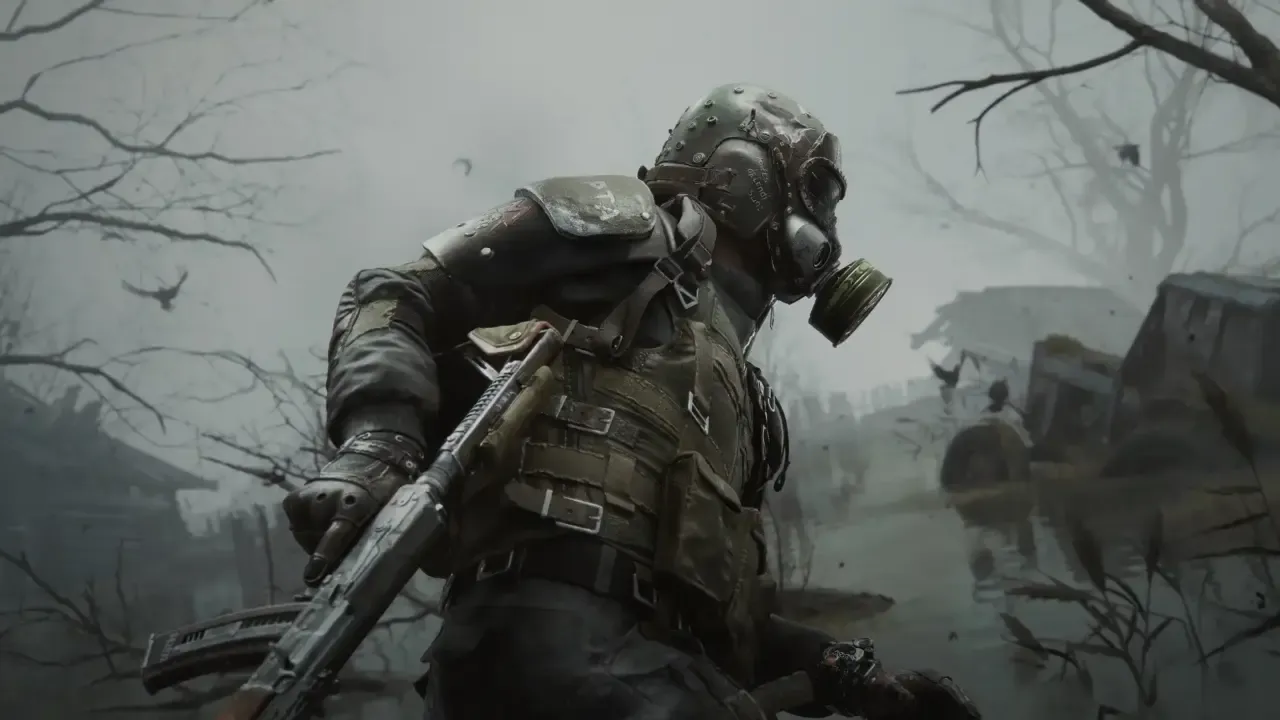
There are a lot of reasons why the announcement of Metro 2039 was important, not least because the game has been made in the shadow of the Ukrainian war with Russia (developer 4A Games is Ukrainian-Maltese studio, founced 20 years ago in Kyiv), but because it also represents a pushback against recent game dev trends; it’s a return to handcrafted design, to spaces that feel built rather than assembled, curated rather than generated, it’s not open and loose like Crimson Desert but dense, focused and story-focused.
According to the official reveal from 4A Games and publisher Deep Silver, the whole philosophy behind the new Metro isn’t about scale or systems or procedural expansion, it’s about authored environments, every corner of the game is being described as deliberately staged, built as what the devs call “frozen stories”, little environmental snapshots where something already happened and you’re just arriving after the fact, which sounds simple but is actually doing a lot of heavy lifting in terms of design intent because it means nothing is there by accident, no filler corridors, no recycled dressing, no “this will do” geometry just to make the world bigger.
If, like me, you’ve played Metro games before, this approach shouldn’t be much of a surprise, past games Metro 2033 and Metro Last Light were tightly wound narrative shooters, while even the sandbox design of Metro Exodus remained bite-sized and layered with storytelling over congested, functional to-do lists.

Handcrafted worlds matter again
But for many recent AAA games, open-world busy work has become the trend – from Horizon Forbidden West to Monster Hunter Wilds – and procedural tools, modular kits, system-driven world building, even AI-assisted asset pipelines are now creeping into production, and while that stuff absolutely has its place, it often comes with a kind of visual sameness that can flatten immersion. Metro 2039 seems to be pushing directly against that idea, for the better.
Instead of building outward, Metro 2039 is building inward with tighter spaces, denser storytelling, and rooms that feel like dioramas rather than gameplay arenas, a collapsed tunnel isn’t just geometry to pass through, it’s a composition of objects, light, debris, bodies, signage, all arranged to imply a history without spelling it out, and that kind of design takes time and a personal touch. It’s an approach to game design and world-building that impressed in past 4A Games releases, and signals the return of ‘taste’ in game art direction over more ‘stuff’.
Even the structure of the world itself is leaning back into that philosophy, after Metro Exodus expanded into broader environments, Metro 2039 returns to the Moscow Metro system, the underground networks that defined the earlier games, and that return to confined spaces forces control, and control is where handcrafted design really shows itself. The lighting becomes intentional rather than ambient, and clutter tells a story.

4A Games has described Metro 2039 as its darkest entry yet (and they’ve all been pretty stoic), and a focus on hand-made world design could really bring this home. The official reveal describes a world unified under a brutal regime, propaganda, fear, misinformation, clearly alluding to real life events, but layered into the environment itself, which again only really works if the spaces are carefully built to reflect it, posters peeling in specific ways, stations that feel lived in but also watched, lighting that feels oppressive because someone placed that shadow exactly where it needed to be.
This kind of handmade approach isn’t new, but it feels fresher because of where we are, and it’s certainly not about rejecting technology, because 4A Games has always had one of the best in-house game engines going; no, this is about resisting efficiency for efficiency's sake and pushing the authorship in game design. It’s why, after seven years since Metro Exodus, the games industry needs a new entry in the series; I’ve played them all, originals and remasters, and can’t wait to go back underground.

Metro 2039 is due for release this Winter for PS5, Xbox Series X and PC.