Content warning: this article discusses graphic violence, disturbing imagery, and mature themes in an 18+ game.
In space, no one can hear you make bad decisions, which is probably for the best because I made a few absolute shockers during my hands-on with Directive 8020 and paid for them almost immediately.
After a run of uneven entries, this feels like Supermassive Games remembering exactly what it’s good at. Not just branching paths and consequence-driven storytelling, but that specific brand of playable horror where you’re never quite sure if you’re steering the story or just nudging it toward a slightly different flavour of disaster. Early impressions? This sits much closer to Until Dawn and The Quarry than the more divisive The Devil in Me or Little Hope.
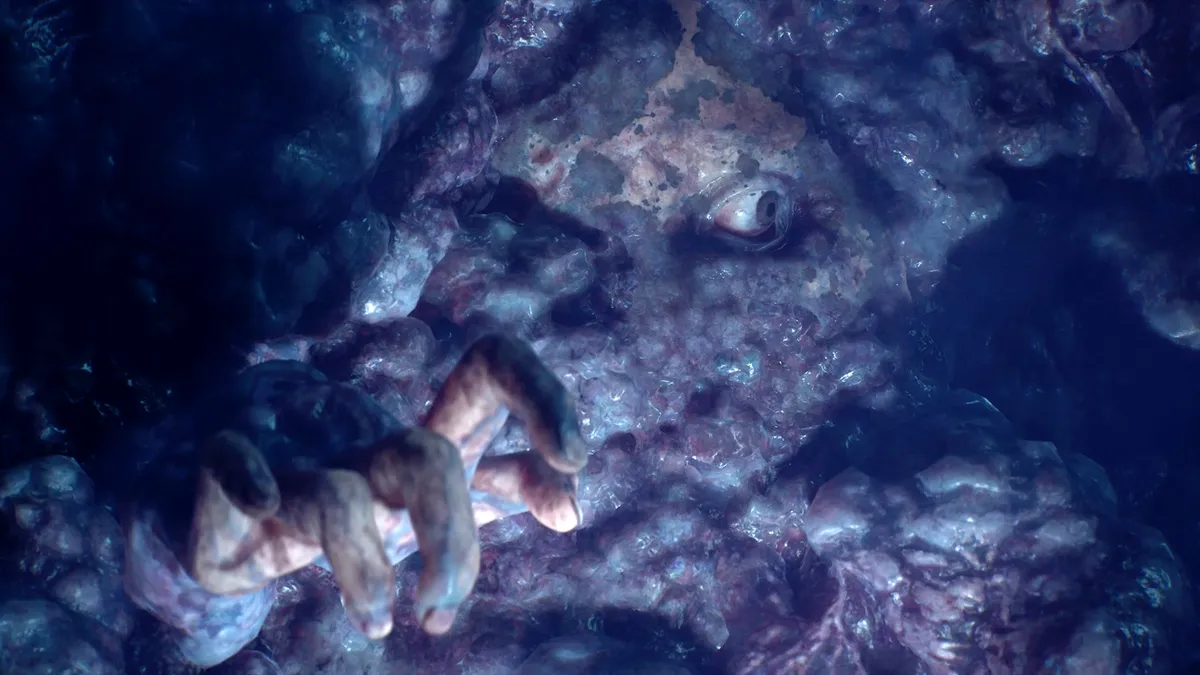
The pitch is clean, pulpy sci-fi: Earth is dying, humanity is desperate, and a colony ship – the Cassiopeia – is sent 12 light-years out to Tau Ceti f chasing a last sliver of hope. It doesn’t go well. By the time my demo kicks in, around two hours into the story, the ship has crash-landed, something alien is growing through its insides, one crew member is dead, and another is missing, presumed The Thing-ed.
Space horror and beyond
Supermassive has flirted with horror subgenres before – serial killers, hauntings, teen horrors, but here it’s going all in on that tight, paranoid sci-fi lineage of Alien, The Thing, Event Horizon and more. Claustrophobia, mistrust, the creeping suspicion that the person next to you might not be the person you woke up with. It suits the format perfectly, especially in choice-led gameplay where you need to read a character – it helps these Unreal Engine 5 digital doubles look so lifelike.
What caught me off guard, though, is how Directive 8029 looks, as instead of the mechanical, industrial ‘cassette futurism’ found in Aliens (Syd Mead is always a source of inspiration), the Cassiopeia is sleek, polished, almost pristine. Surfaces gleam, interfaces reflect and glow, and corridors feel thoughtfully designed. Even when crawling through maintenance vents (which I'll get to), everything has an immaculate finish. There’s a faint whiff of late-’90s, Y2K sci-fi to it (Lost in Space – I know, Supernova, and others), a kind of glossy optimism that makes the horror pop more when it breaks through.
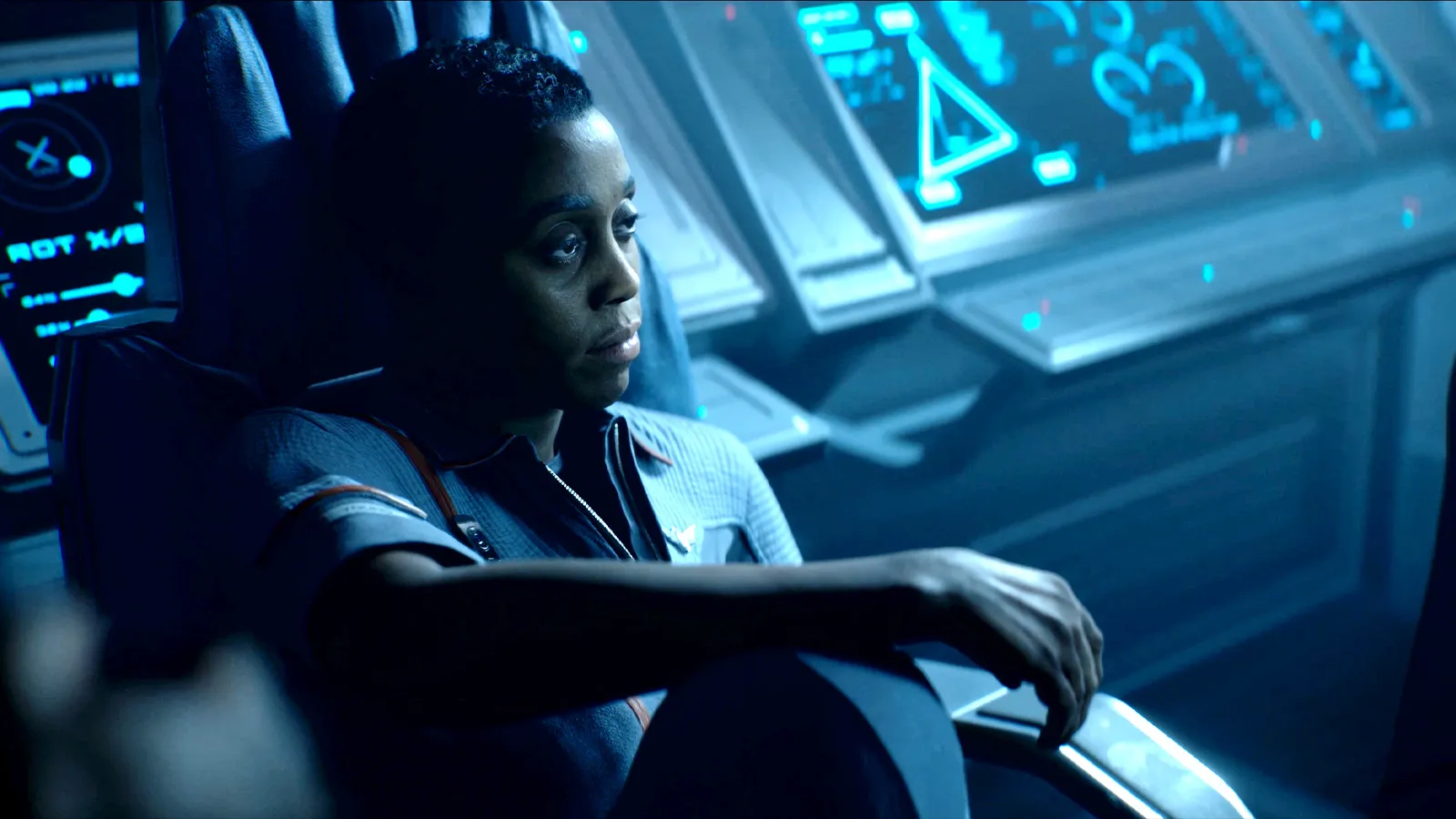
The characters land in that familiar Supermassive space: recognisable archetypes with enough room to break. For example, just some from my hands-on, but you’ve got Brianna Young, ambitious and capable; Laura Eisele, brilliant but withdrawn; Nolan Stafford, the steady hand in charge. Spend a few minutes with them, and you can already see the fault lines forming – the traits that’ll either save them or get them (and everyone else) killed.
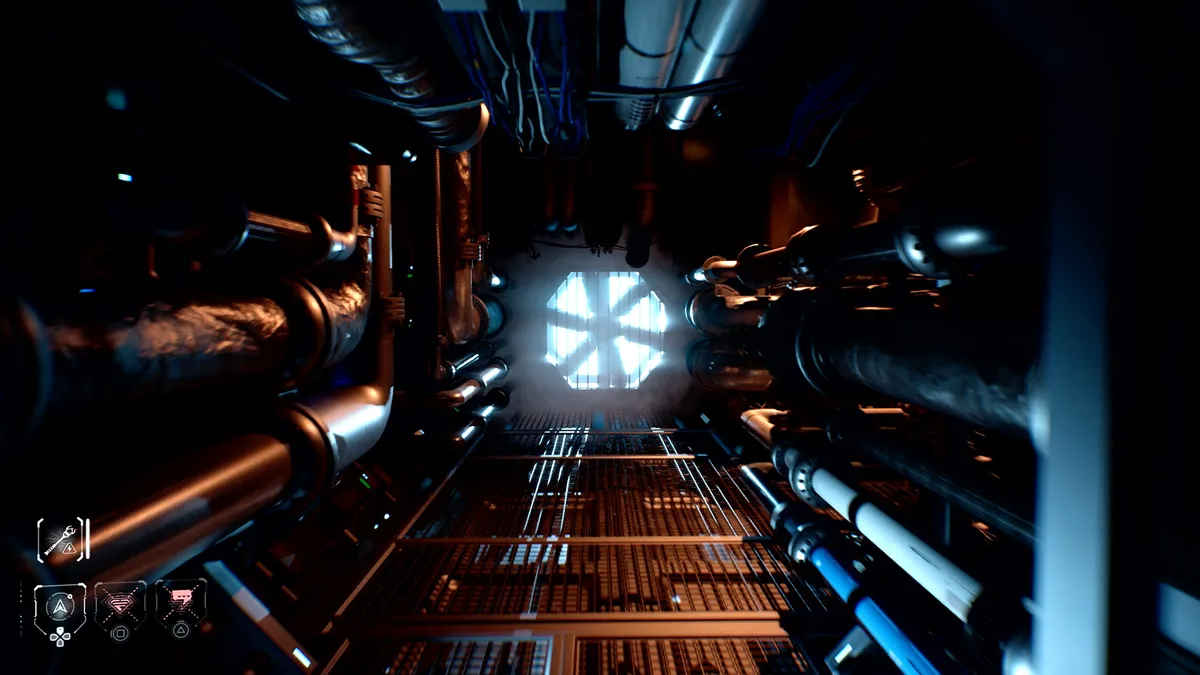
This world-building only matters if the moment-to-moment play works, which brings me back to my hands-on. The slice I play drops me into a sequence as Brianna, navigating the wrecked ship’s maintenance tunnels looking for the missing crew member who’s been acting strangely. It’s pure The Thing meets Alien, tension born of tight spaces, with bursts of steam and low lighting limiting visibility, and the constant sense that something is just out of sight or lurking behind the next door.
Mechanically, playing this portion of the game is straightforward. Moving tentatively is done smoothly, interacting is limited to a few ways (opening a door, hacking a display, and so on), and the physicality of the lighting and detailing, combined with a lifetime's knowledge of sci-fi horror, both good and bad, means I’m braced for the inevitable jump scare, which naturally happens.
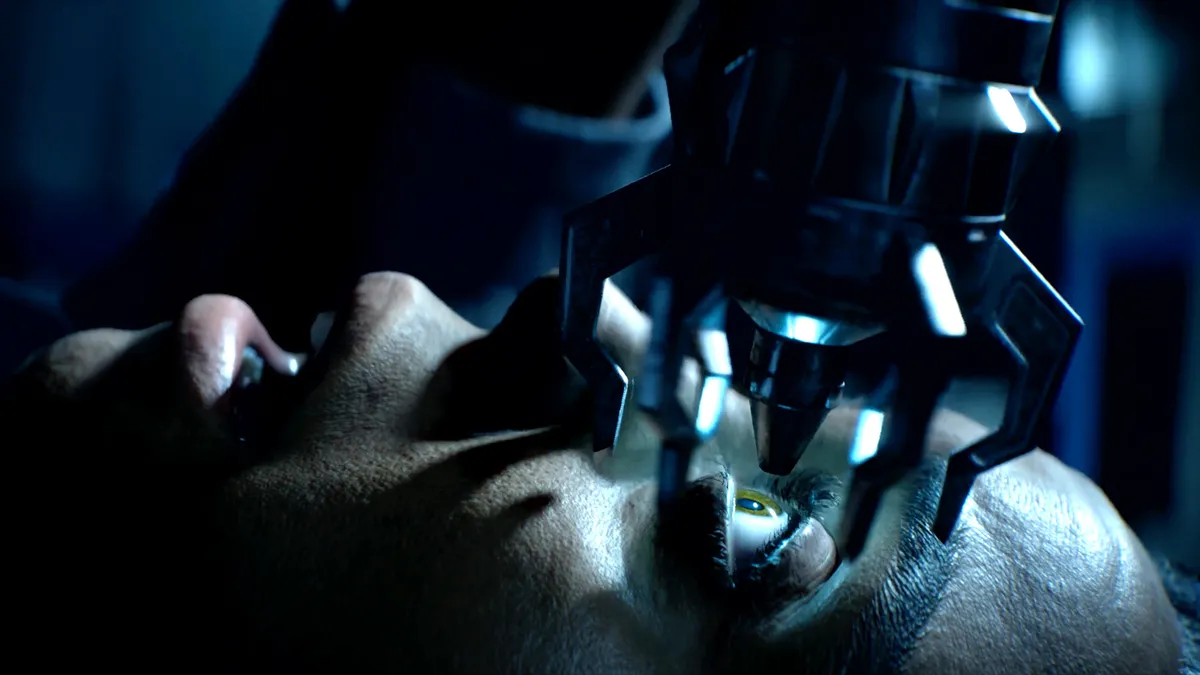
Once out of the tunnels, the story opens into a stealth section where Brianna can duck behind debris, track movement with a scanner, and try not to alert the alien thing that definitely knows she's there. It’s simple, but it works because of the pressure, the way the game frames every action as a potential mistake. I feel as if Supermassive is toying with me, with my understanding that every choice may or may not have an implication, at least in the moment. One bad call, or devilishly made decision, and Brianna takes a drill to the eye – in a sudden and brutal way. And who’s to say I didn’t want to see what would happen? Play it again, play it cleaner, and she makes it through intact. The same scene, but there’s a different version of her by the end of it.
Choices always matter
Of course, this being a Supermassive game, you can rewind, try again and experiment. So I did. Not just to fix mistakes, but to poke at the system a bit. Roll back far enough, and I’m playing as Laura earlier on, deciding whether it’s wise to hand over a loaded gun. Turns out, yes, it probably is, because without it, Brianna’s later encounter goes very badly, very quickly, and her eye, well, that's gone, again.
What’s interesting is where the game draws the line. No matter how much I fiddled with the decisions, the overall outcome of the sequence remained the same: Brianna finds the missing crew member, now mutated by something alien, and escapes, with one less eye or not. The path to the story beat’s outcome shifts, but with optional injuries, tension, and small variations in how it plays out, the destination holds firm, and Brianna’s alive to make more bad decisions.
That’s always been the tightrope for these games. How much freedom can you give the player before the whole thing unravels? From this slice, Directive 8020 feels like it’s letting you fray the edges rather than tear the script apart. The bigger decisions, the ones that’ll shape the crew and whatever’s left of humanity, feel like they're being saved for later. And being able to open the story path, see the moments where big divergences can occur, and rewind and replay is a nice way to play, though it can also show a little too much behind the curtain.
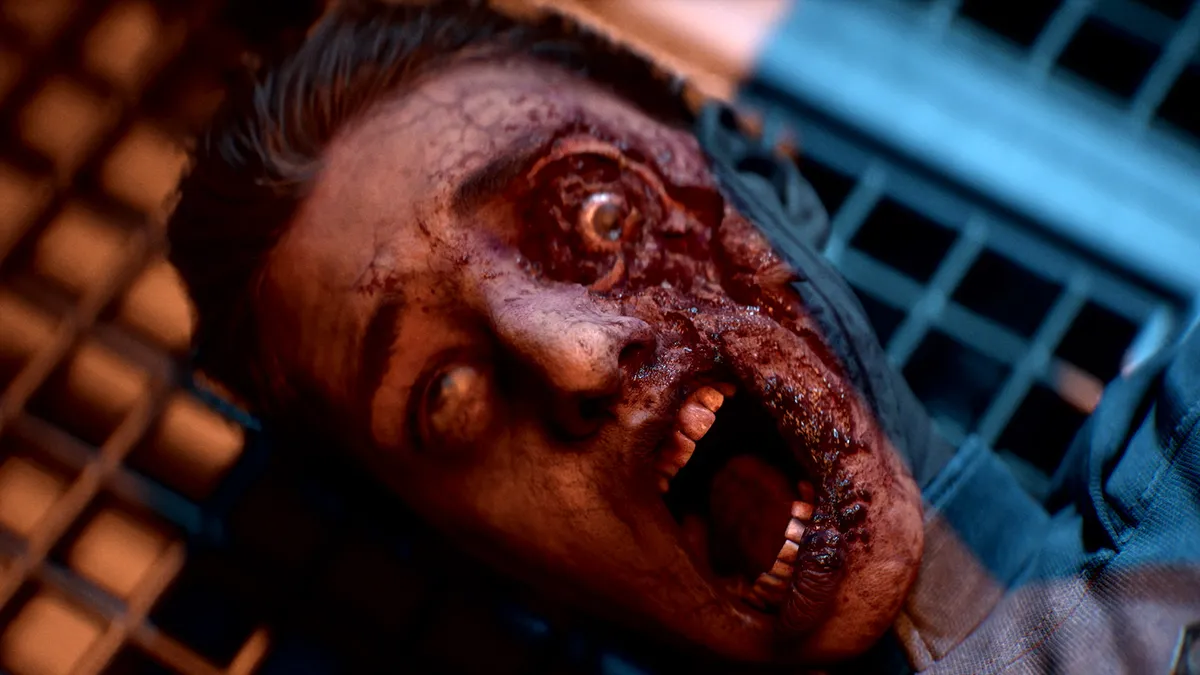
Where it really clicks, though, is in the performances. This is easily the closest Supermassive has come to fully selling the ‘interactive movie’ idea, and it already feels like a technical and artistic step above past games (though whether it can match the immaculate Until Dawn remains to be seen). The digital actors don’t just look good, though they do, sharply lit and convincingly physical, they emote in ways that feel reactive, intuitive. There’s nuance in how characters hesitate, how they read each other, how suspicion creeps in, even making some tonally stilted moments feel engaging.
It makes the whole thing easier to buy into and harder to treat as a toy box of bad decisions (even if that’s still half the fun). I started caring about outcomes, and not just outcomes I could try and break. I’ve only played a small slice of Directive 8020, obviously, but after an hour or so onboard the Cassiopeia, this feels like Supermassive back in its lane with a confident, focused approach that’s a bit mean in the best way possible, as it’s very good at making you regret pressing a button about half a second after you’ve done it.
Directive 8020 releases 12 May on PS5, Xbox Series X/S, PC. Visit the Supermassive Games website for more details.