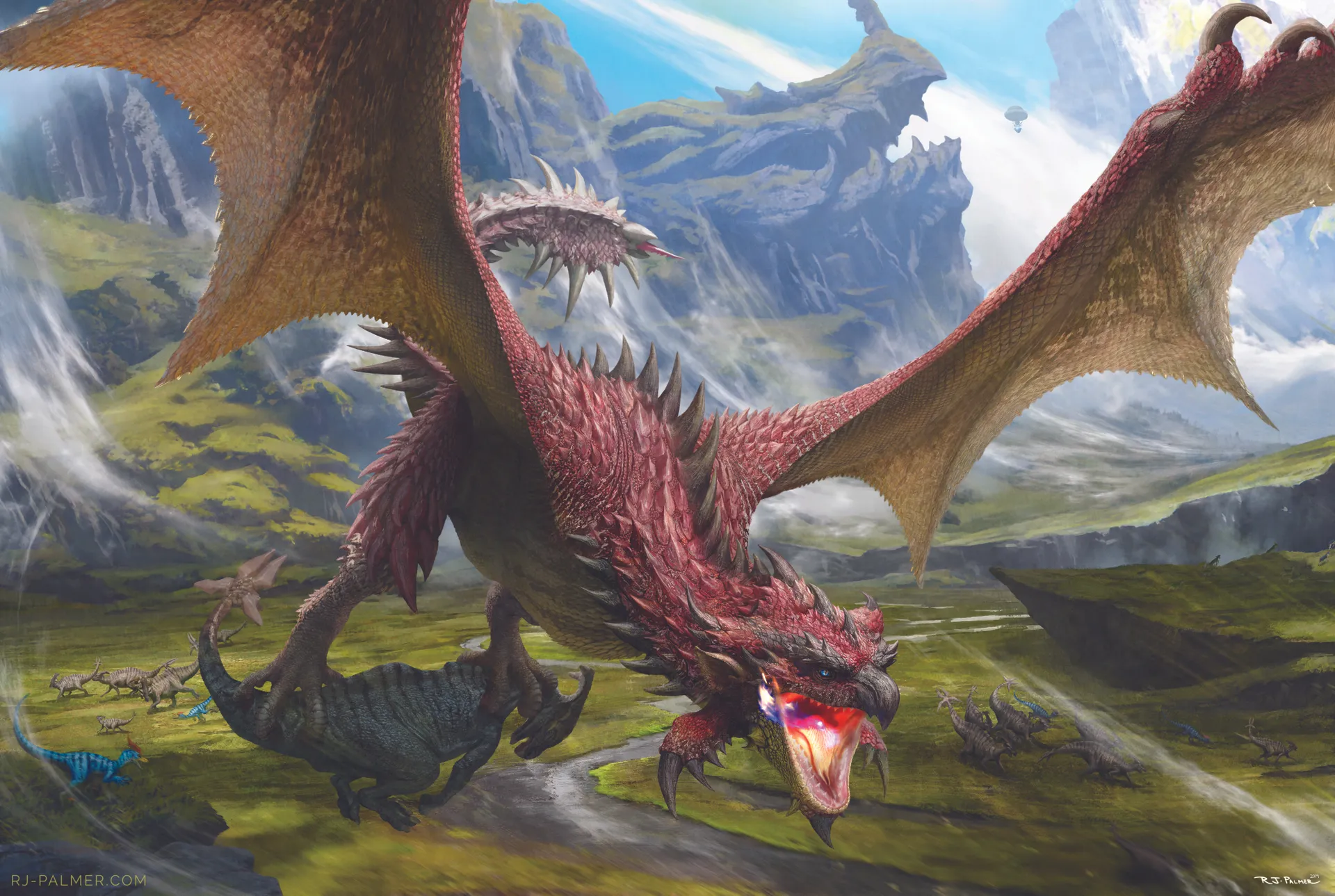
Inventing creatures can be an opportunity to let your imagination run wild, but only up to a point. Stray too far from realistic anatomy or what’s physically possible and your designs won’t hold up. We spoke to five experts in the field to discover how their create characters that are completely imaginary but that feel like they could be real (also see our roundup of character design tips for more pointers).
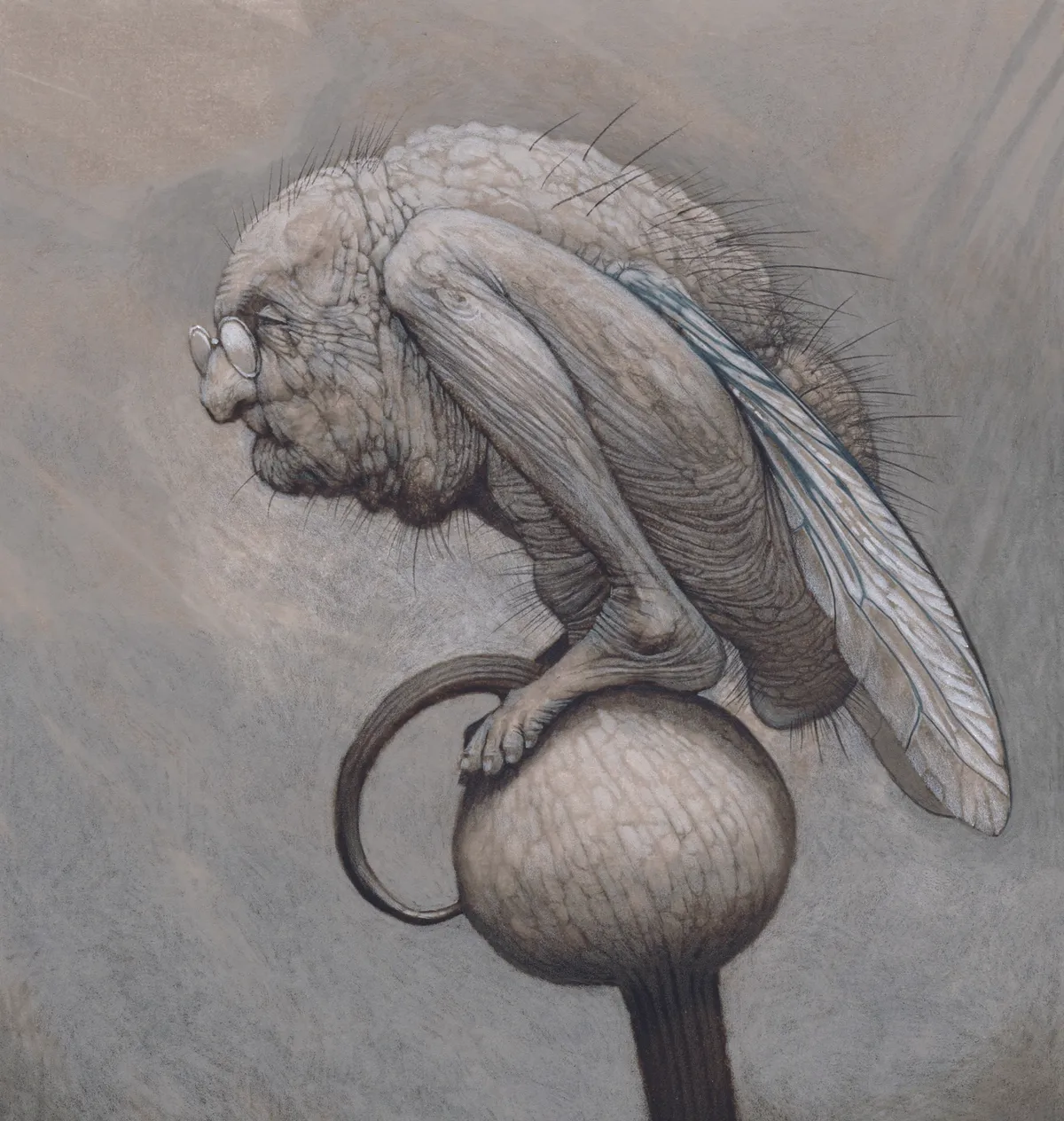
For many creature designers, a solid understanding of anatomy is key.
“I’m a firm believer that a fantasy artist cannot alter or distort anatomy convincingly, human or otherwise, without knowing anatomy and body mechanics thoroughly,” says veteran artist and educator Ed Binkley, who taught figure drawing and concept art for 30 years.
“When I look at the fantasy creature artists I love the most – Wayne Barlowe, Arthur Rackham, Terryl Whitlatch, or James Gurney – I can tell that they’re always looking at anatomy references when they work and that they’ve studied animal anatomy for many years.
“That depth of knowledge and practice combined with real-time use of reference images translates into thoroughly convincing anatomy on a creature that has never existed.”
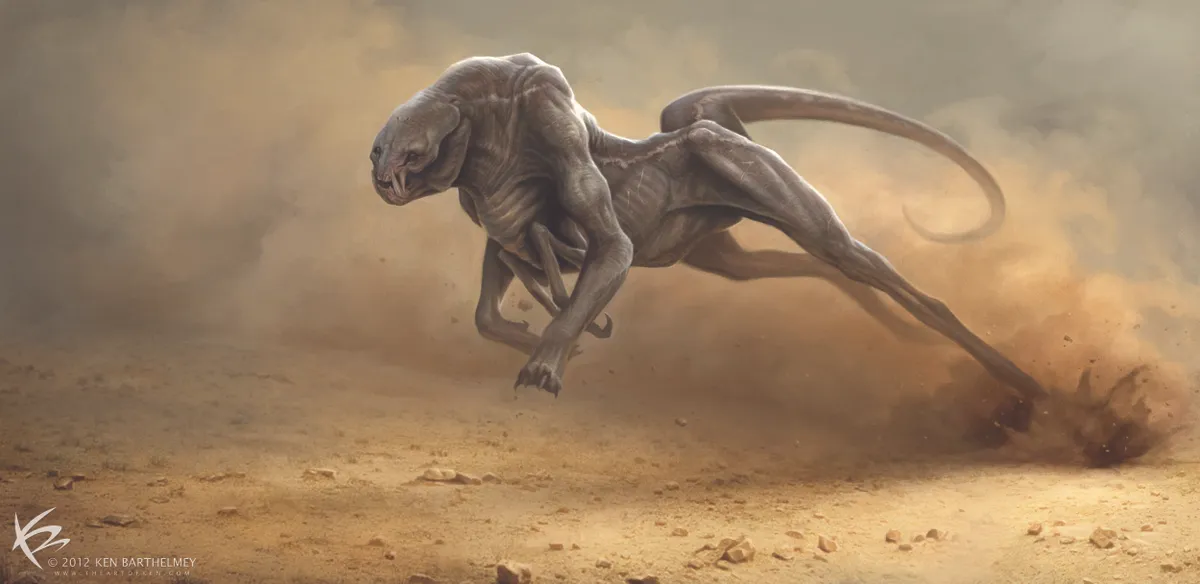
A rigorous study of both human and animal anatomy will get you a long way, but if you want to make your creatures look real, you need to think about gesture, says Ed.
“Gesture in art basically means body language – how a creature stands, holds itself, looks at you (or doesn’t), slouches. Does it have an attitude? Is its stance relaxed, seductive, tense, scared? I’ve found over the years that gesture is the real ‘secret’ to the anatomy looking alive; it’s the difference between an accurate anatomy chart and the illusion of a sentient being.
“When knowledgeable anatomy is applied over living gesture, they enhance each other, and the result is a breathing, living being that somehow connects with the viewer. Details are important, of course, but they must ride on top of lifelike gesture.”
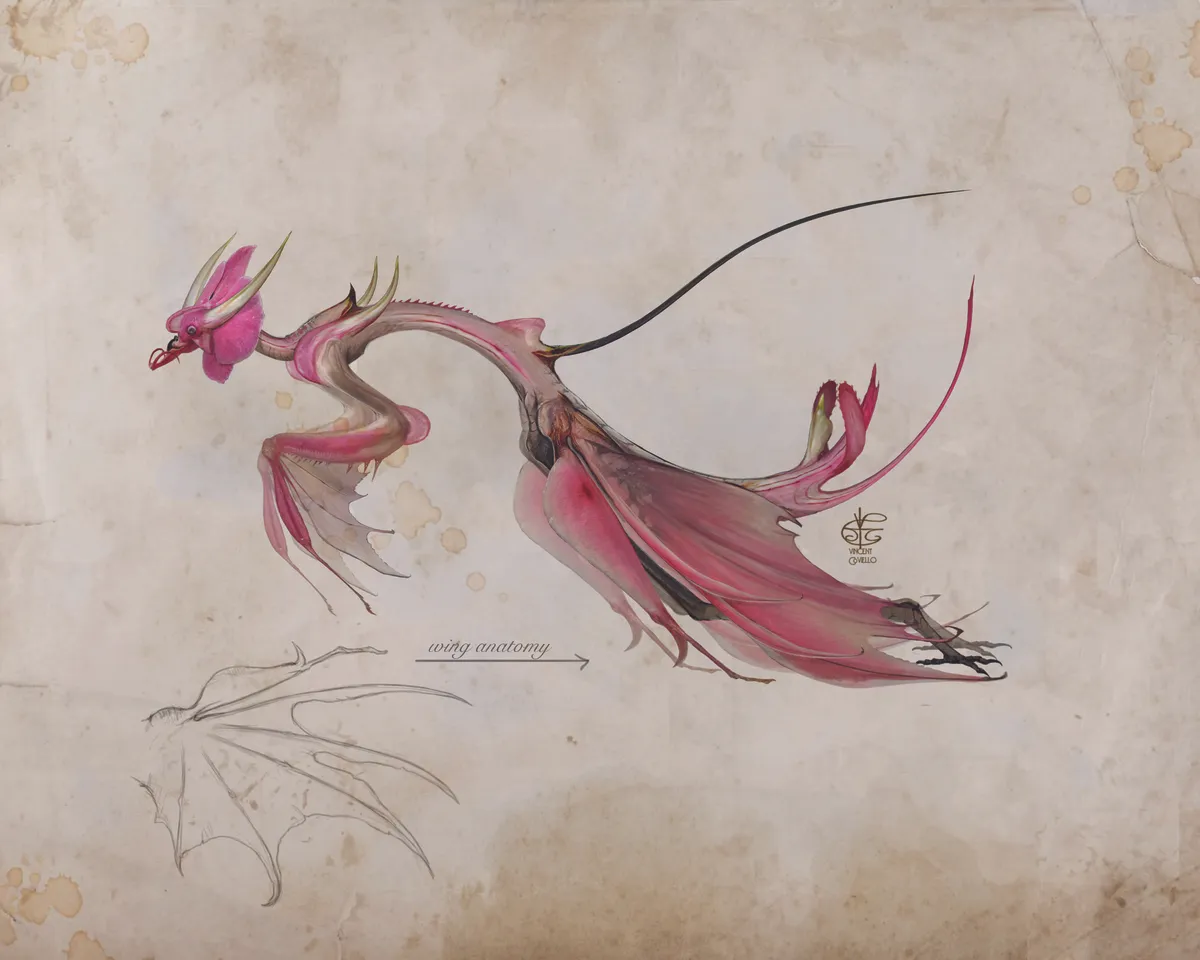
Creature and concept designer Vincent Coviello tells us that as well as having a good technical knowledge of how all the parts fit together, it’s useful to grasp how they work mechanically.
“Anatomy isn’t just about copying real animals – it’s about understanding structure, weight, and movement. Once you understand how bones support the body and how muscles create motion, you can push those ideas in imaginative ways while keeping the creature believable.”
It’s also important to get a sense of how a live body moves in real life.
“I spend a lot of time looking at reference material,” says Vincent. “Observing how the body behaves – how the ribcage tilts, how the pelvis shifts when an animal stands, or how skin folds when an arm bends – all helps build that mental library. That knowledge makes it easier to draw from imagination without the anatomy falling apart.”
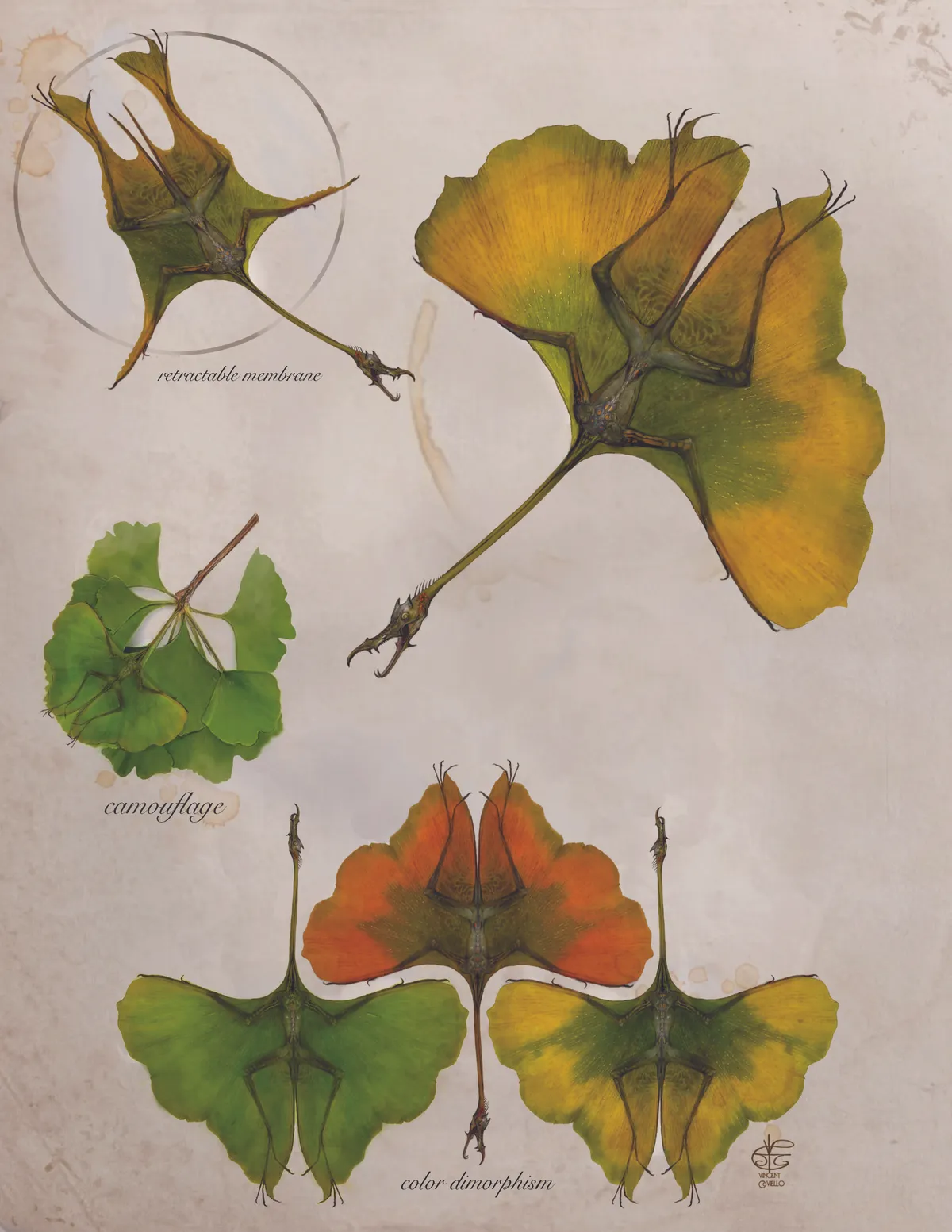
When you first start planning out your creature, Vincent explains that it’s useful to think about how its body will function.
“If it flies, the anatomy should support strong wing muscles and a lighter frame. If it burrows, it might have thicker forelimbs and stronger shoulders. These choices help the creature feel like it evolved for a purpose instead of being randomly assembled.”
Similarly, Ed likes to tell himself a story about the creature and its environment as he works.
“What’s the degree of gravity? What are the creature’s habits or personality? Do they need large eyes, or any eyes at all? Then I create rough sketches that answer those questions.
“Once the rough looks convincing, I go to my reference material and render actual structures and surface details onto it. I might use a photo of a crocodile’s neck details to render a dragon’s belly, or a raccoon skull’s muzzle to design a vampire’s nose.”
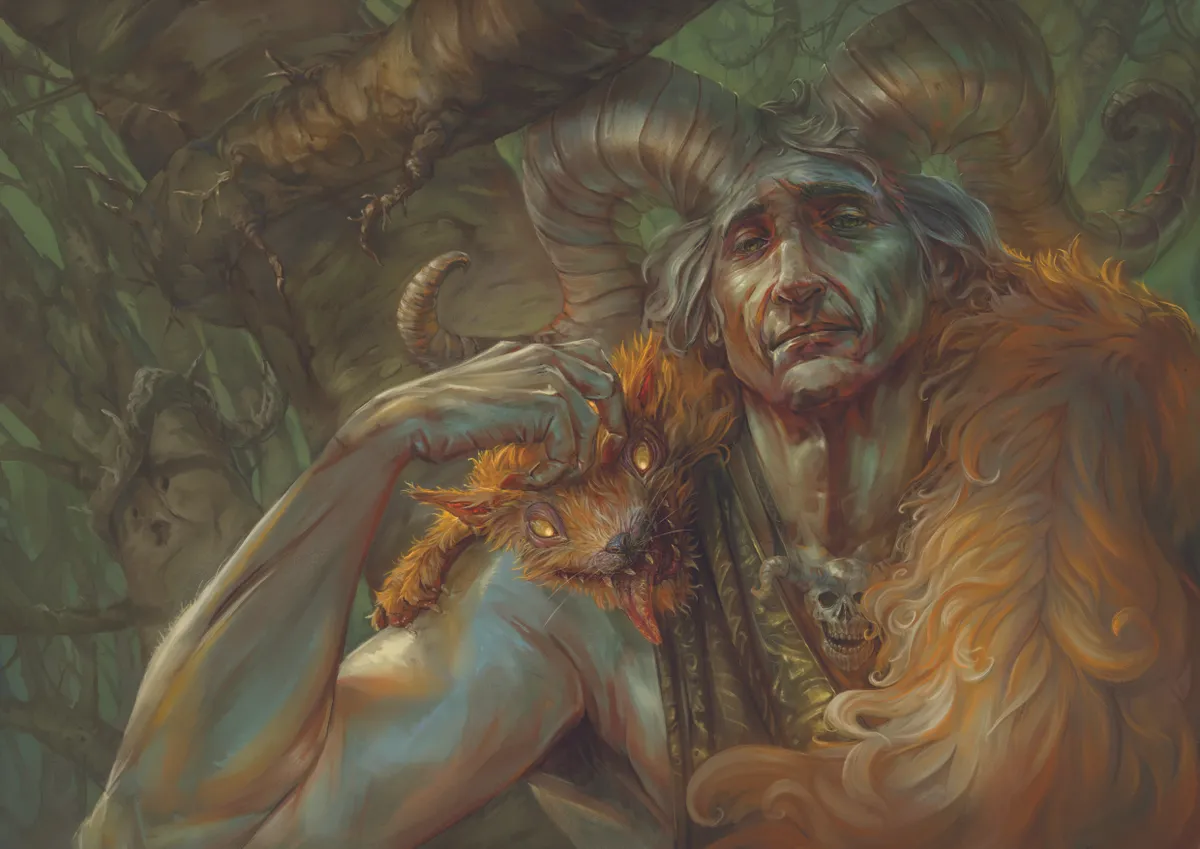
Concept artist Lionel Prats takes a similar approach, starting with questions about purpose and then doing detailed research into how his functional requirements are satisfied in nature.
“For example, if I need to draw a creature with a stinger, I immediately start thinking about its purpose. Is it a retractable stinger or a permanent one? Is it used to inject venom, like a wasp? Or is it more of a weapon, like a spine or a blade?
“Depending on the answer, I’ll study animals that use similar mechanisms. This helps me understand whether it needs a venom sac, whether that sac should be visible, where it would be located, how it would connect to the rest of the body, and so on.”
The chosen body parts must be combined in a functional way so that they can work as a unified whole. For example, in his design for a horned centaur, Lionel had to consider how bodily components that don’t go together in nature could be adapted to accommodate each other in his design.
“I spent a lot of time thinking about the musculature required for a human chest to realistically articulate on a horse’s body: how it bends, how it absorbs movement, which muscle groups would be essential,” he says. “For the head, the same logic applies: if a human had gigantic horns, they wouldn’t be able to move their head without oversized neck musculature. So I intentionally reinforced that area to make the whole design believable.”
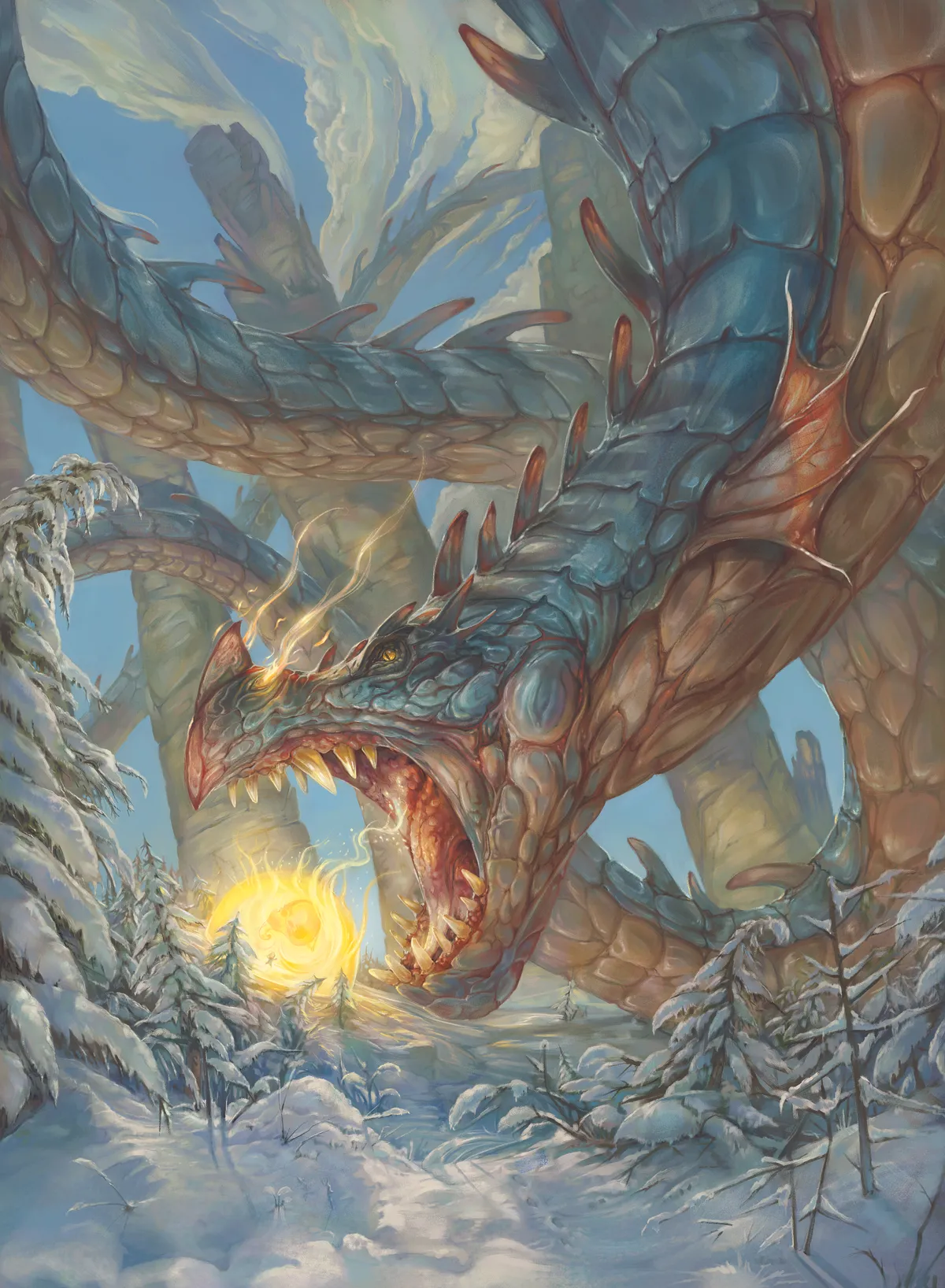
This kind of “biological logic”, as he calls it, is Lionel’s guiding principle. But sometimes it’s okay to bend the rules in service of a stronger image.
“I have to admit that disturbing reality, when it’s voluntary and conscious, sometimes allows me to reach more aesthetic or interesting images or compositions,” he says. “I do try to make my monsters believable within their environment, but if anatomical logic gets in the way of creativity or visual impact, I look for compromises. The most important thing from my point of view is to find the right and subtle balance between anatomical consistency and artistic freedom.”
If you deviate from the technique of making choices based on function and anatomical logic, Vincent cautions against taking things too far.
“A mistake artists often make is adding complexity just for the sake of making a design look ‘cool’,” he says. “Extra limbs, spikes, or exaggerated muscles can easily overwhelm the design if they don’t serve a purpose.
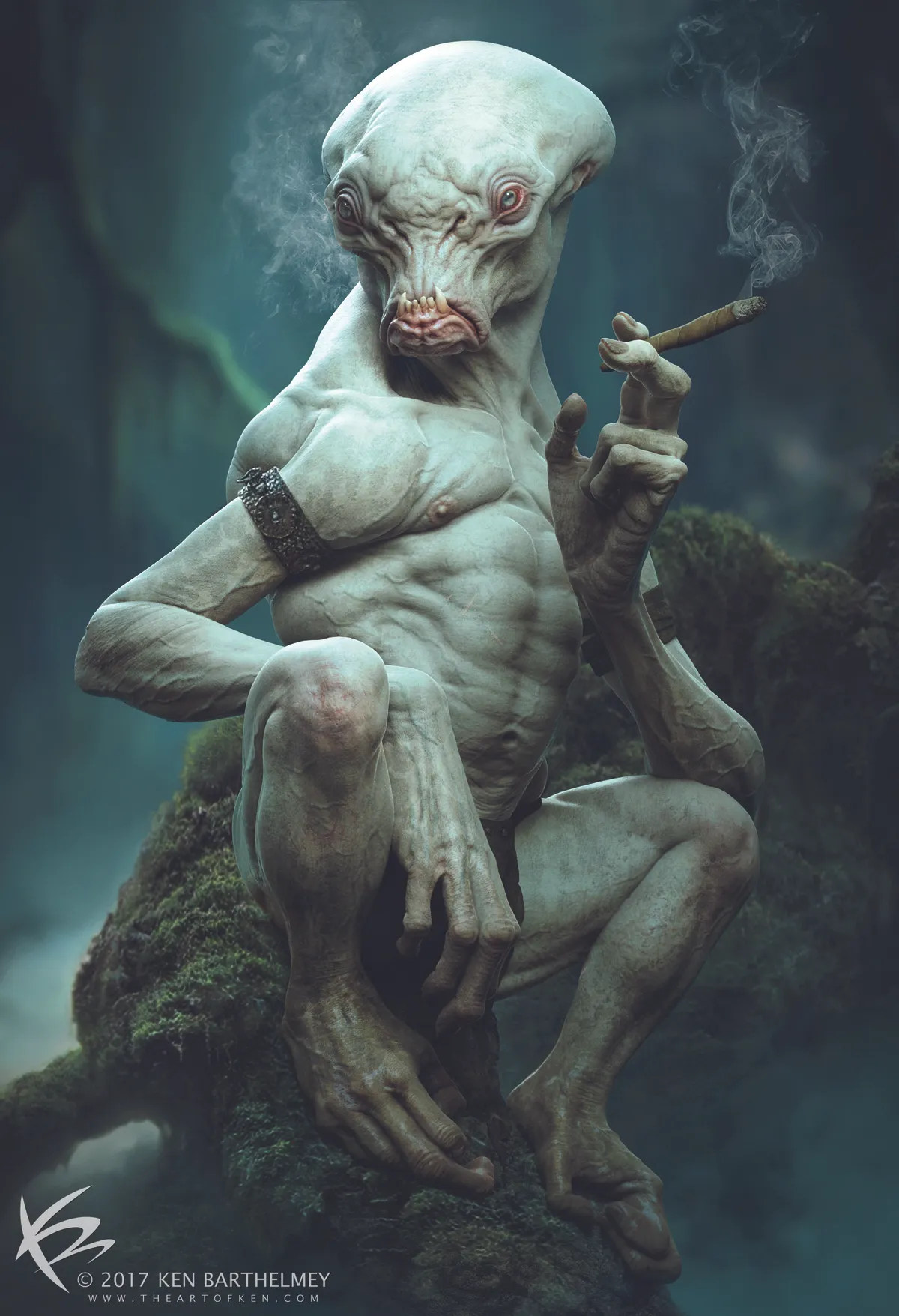
Another wrong turn that artists sometimes take is focusing on the details before making sure the basic structure is properly nailed down, explains illustrator and concept designer Ken Barthelmey.
“I always used to start with details too early. I worked for hours on tiny textures only to realise that the form wasn’t working, and then I had to redo everything from scratch.
“Form and silhouette are the most critical aspects of a successful design, whereas details glue everything together. Always start with the base, and work in layers – start with the basic shapes, then add form and muscle, followed by bigger wrinkles, and finally the smaller textures like pores and veins.”
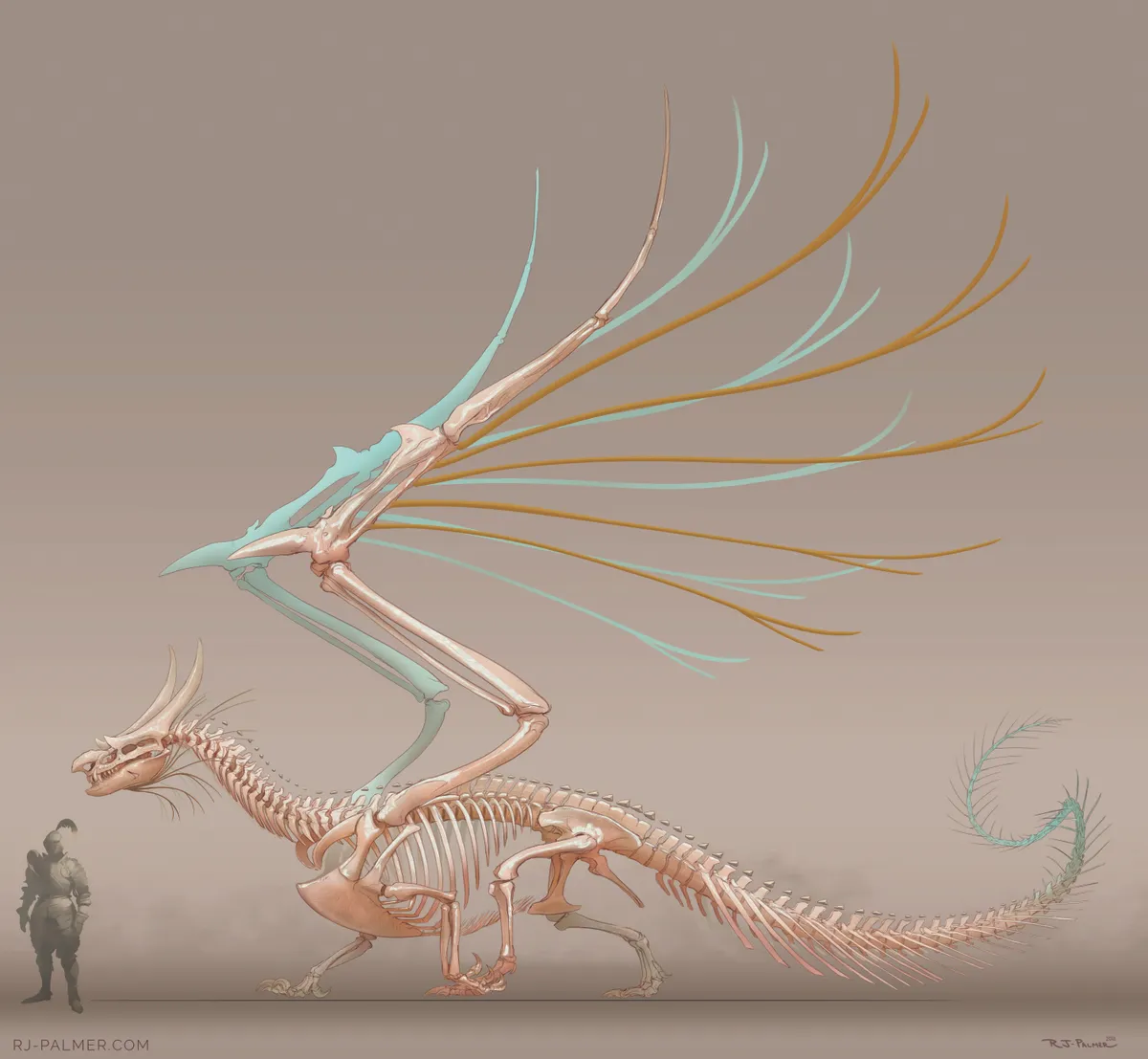
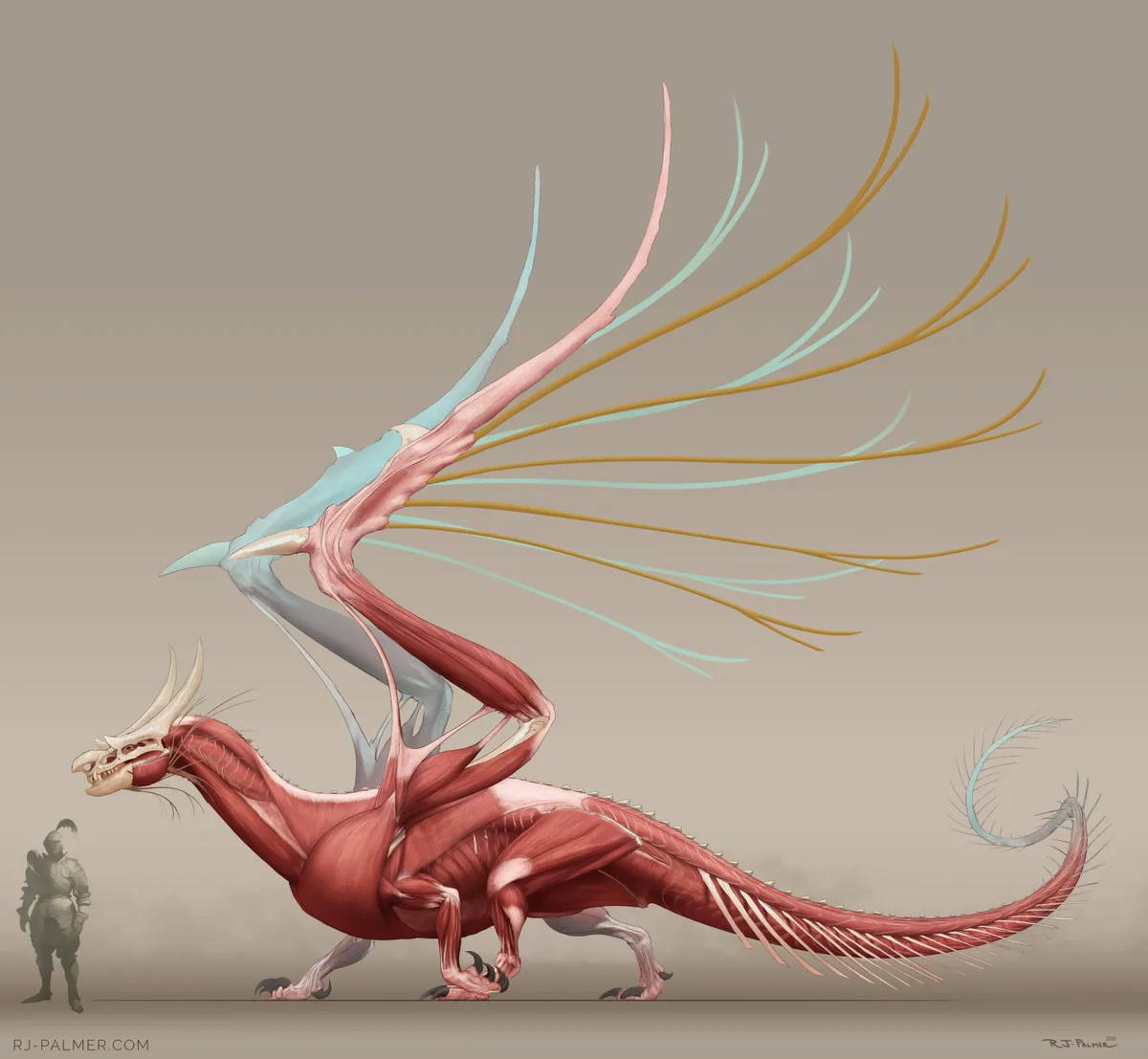
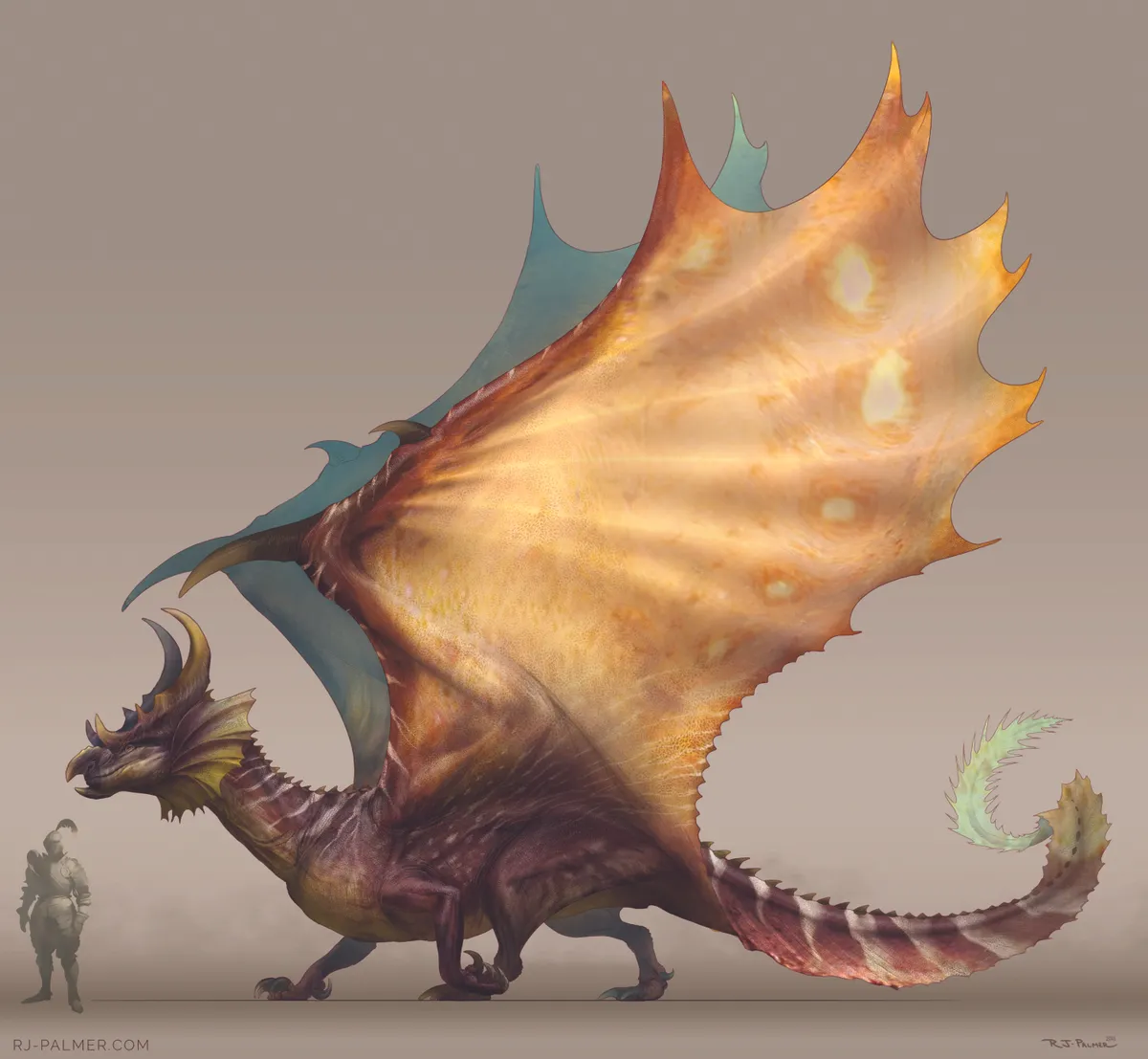


Concept illustrator RJ Palmer tells us that copying trends without having researched them properly is also a pitfall. “Some artists lean heavily on design tropes they have seen without understanding what the original reference point was. For example, the trope of the skin flap at the jaw joint on dinosaurs and dragons.
“This was popularised by the Jurassic Park animatronics that needed a thin piece of material there for jaw articulation. It’s not actually representative of real jaw muscle structure, yet you often still see this repeated in designs that do not have the same mechanical limitations.
“I would advise any artist interested in designing creatures to really invest time in research and learning why things look the way that they do, fictional or otherwise.”
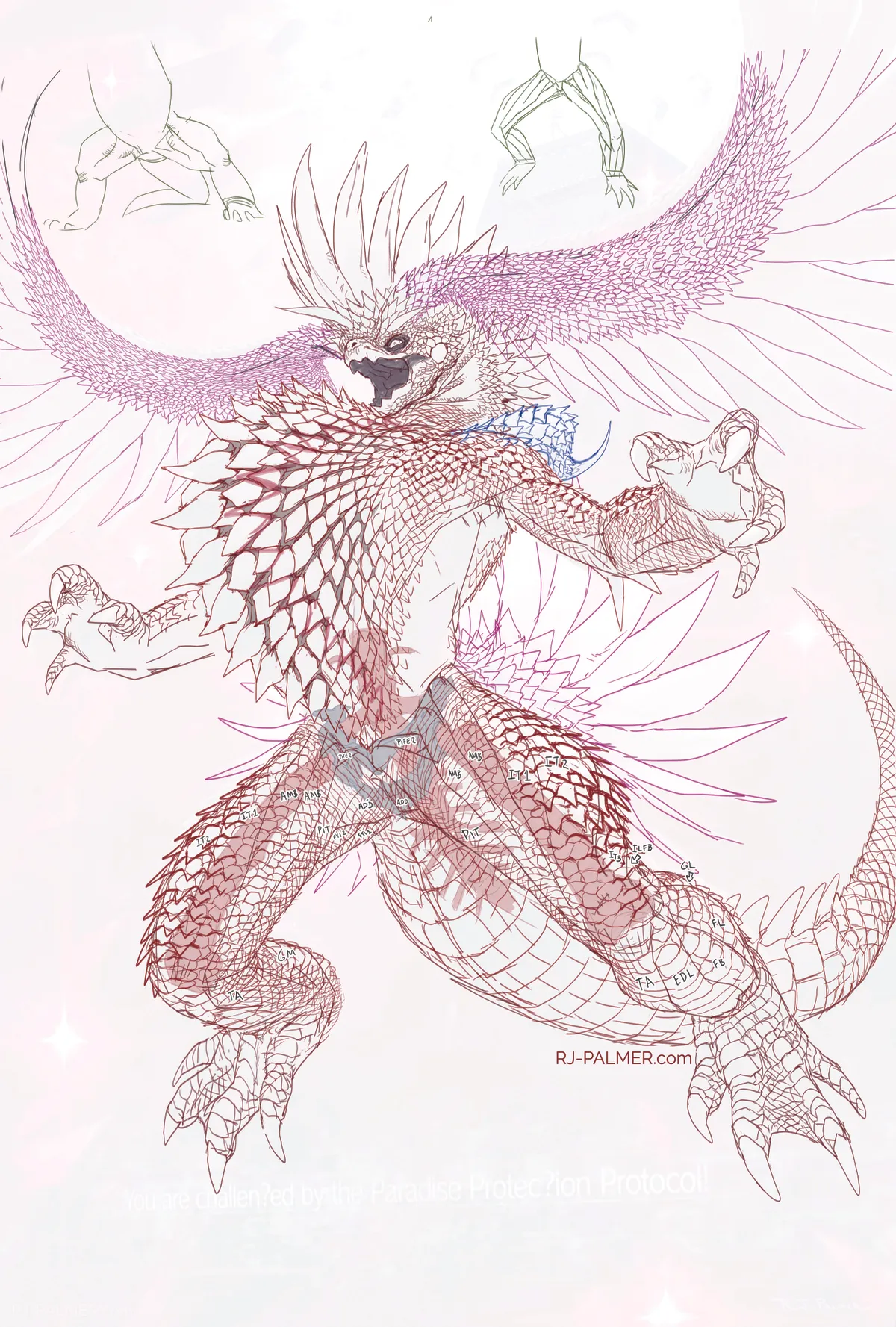
RJ is a freelance concept illustrator whose clients include Ubisoft, Tencent, and Wizards of the Coast. His view of creature design makes it sound simple. It's “just looking at the real world for puzzle pieces and then blending those together into a cohesive whole,” he says. “Even the most stylised designs are only made better with that level of understanding going into the design behind the scenes.
“Regardless of the style I’m chasing, I’ll be thinking about how the creature moves, what it eats, what it needs to do for the story, and so on.”
He says that to create believable creatures, a creature designer must be a student of nature. When you understand why anatomical forms have evolved the way they have, you can reverse engineer them to fit any desired effect in order to add a level of plausibility to a fantasy world.
This is why he relishes the research and reference gathering part of his work.
“Sometimes I’ll spend an entire day or two just learning about elements and collecting resources to flesh out the idea I have,” he says. “I like to really understand every facet of a thing I’m designing so I’m never in a position where I don’t have an answer for why the thing looks the way it does. You can really tell a story through the way the anatomy is constructed, and I want to make sure my stories don’t suck!
In summary, the key to making your creatures hold up is doing thorough research, choosing parts based on function, and making sure it all flows together cohesively.
Vincent sums it up: “I look for ways to unify shapes, rhythms, and proportions across the design so everything feels intentional. By grounding the design in biological inspiration while also allowing room for creative interpretation, I can create creatures that feel both imaginative and believable.”
This article originally appeared in ImagineFX. Subscribe to ImagineFX to never miss an issue. Print and digital subscriptions are available.
Creative Bloq is now easier to access than ever before with our on-the-go app, which brings you all the content you know and love from our website, but in a super-streamlined design.
Download the Creative Bloq app for iOS
Download the Creative Bloq app for Android