Recently, I was looking through my old work files and found 2D stage references I made more than ten years ago. Back then, these sketches were used to design stages for shows, TV studios, and esports events. I put the concept on paper as a working plan: the scale, the space logic, the main focus points, and how the stage should function.
I wasn’t drawing a background. I was creating a base that everyone could use. The client could understand what they would get. Production departments could see what they would work on and how they would contribute. It was a shared 2D language for everyone involved.
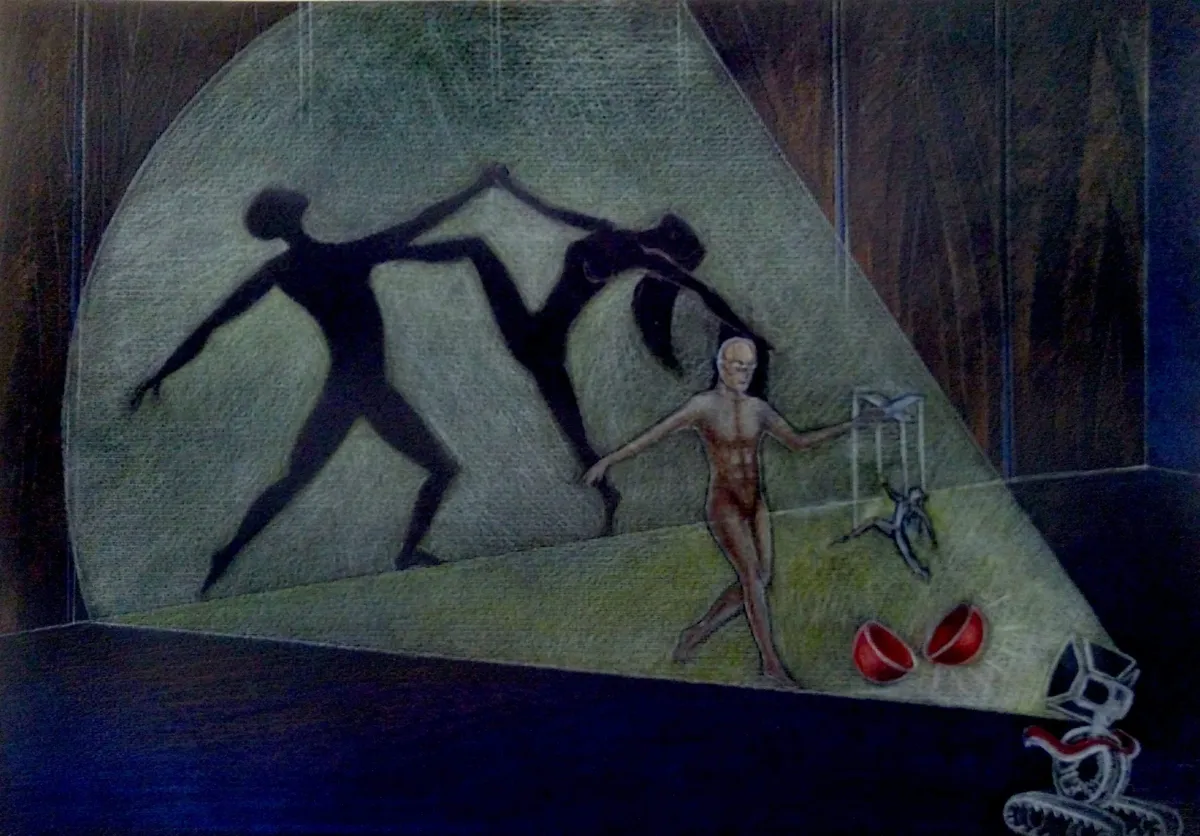
Stage design then and now
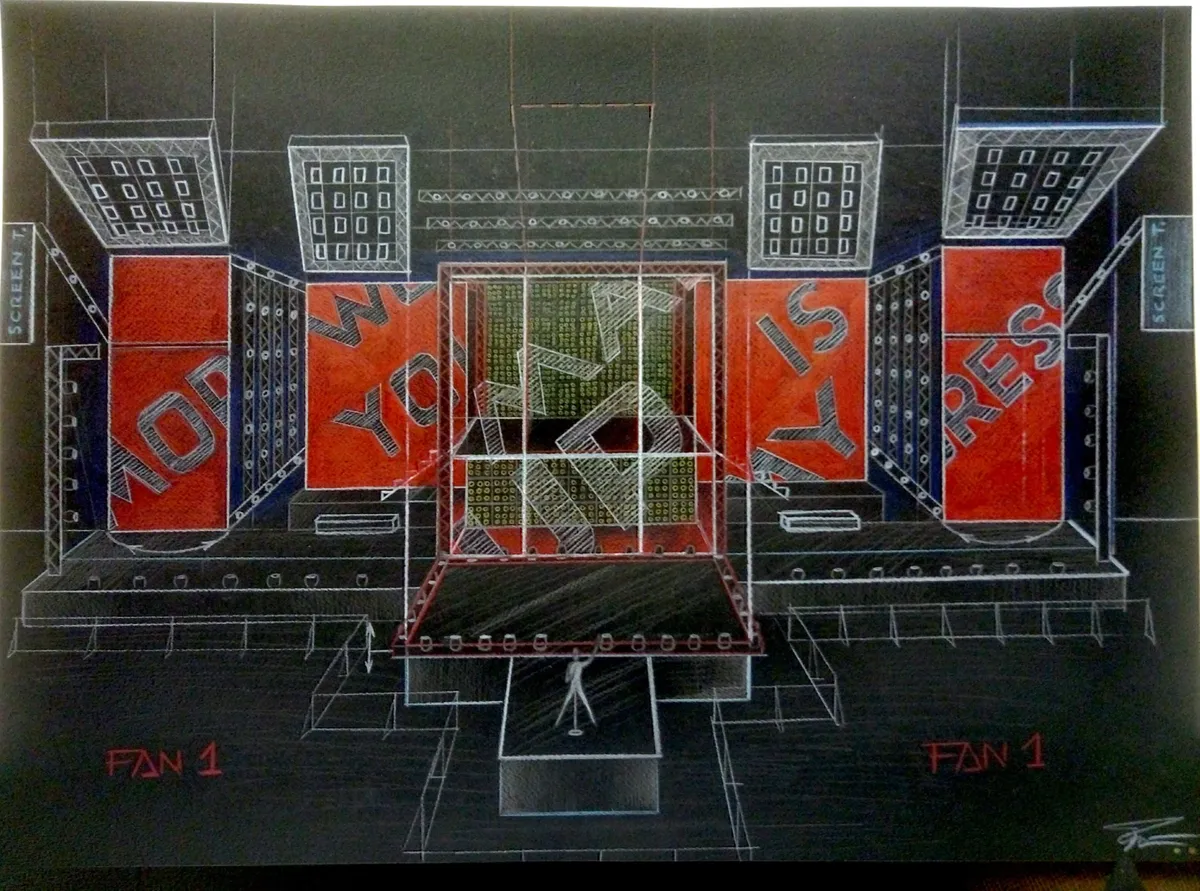
I started by drawing TV studios by hand. I brought my sketch, explained how the stage should work, and then the team built the solution in real life. Later, tablets arrived and the process got faster: instead of paper, I switched to Procreate. It was still 2D, but it was easier to edit and iterate, and speed always matters in real projects.
Now there are many tools to build a full 3D stage model, add materials, lighting, and movement, and create video fly-throughs, so the team can see the space in volume right away. Even better, you can build the stage in 3D (see the best laptops for 3D modelling and best laptops for CAD) and send a link so other specialists can join and work together. For example, camera operators can easily try out different camera positions, find which angles look best, and identify areas where the design could be improved.
New skills for stage designers
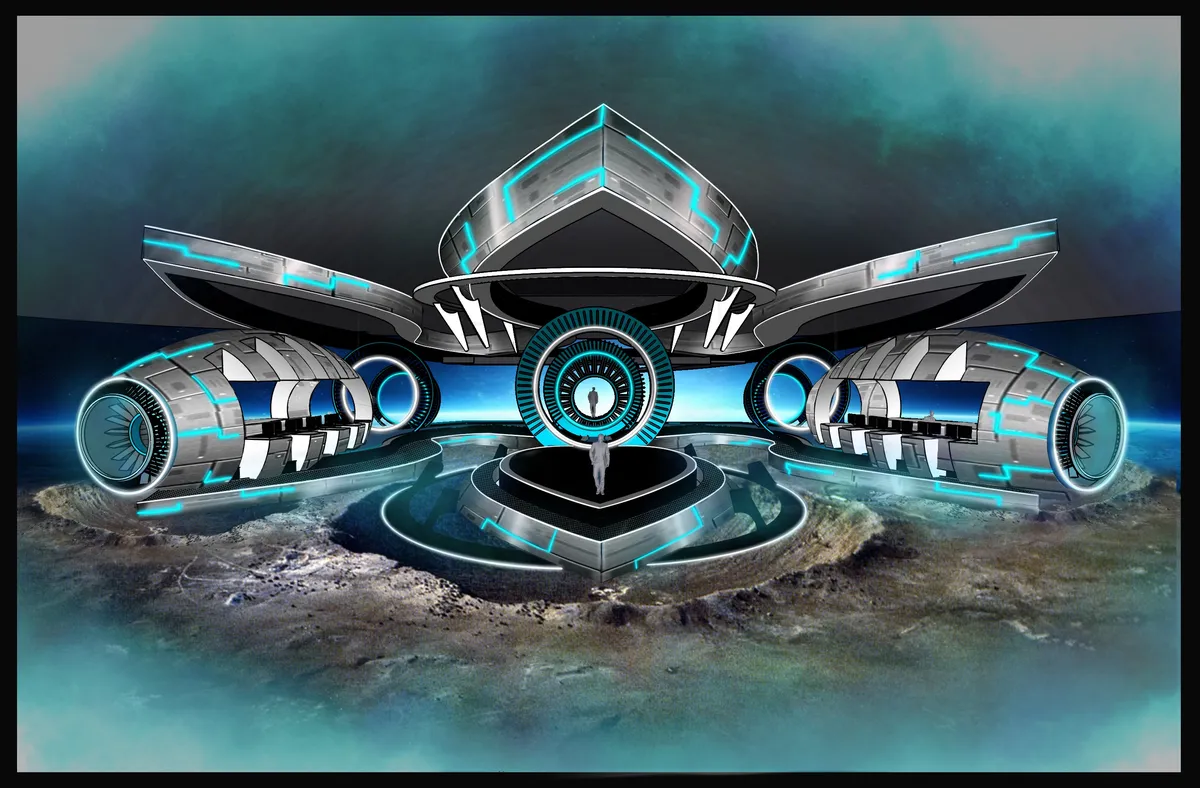
But along with this software, stage designers also got new layers of responsibility. Modern stages often need to work with AR, VR, real-time graphics, complex LED systems, camera tracking, and new hardware solutions, from rotating platforms to modern lighting fixtures that create very different looks.
Of course, a stage designer doesn’t replace an AR specialist, a lighting designer, or a technical director. But they do need a basic understanding of these systems to develop a concept. This is when a stage designer lays the groundwork: deciding where tracking should work, planning lighting patterns, and checking which mechanisms can actually be built in a specific venue and which parts need technical review before the plan is finalised.
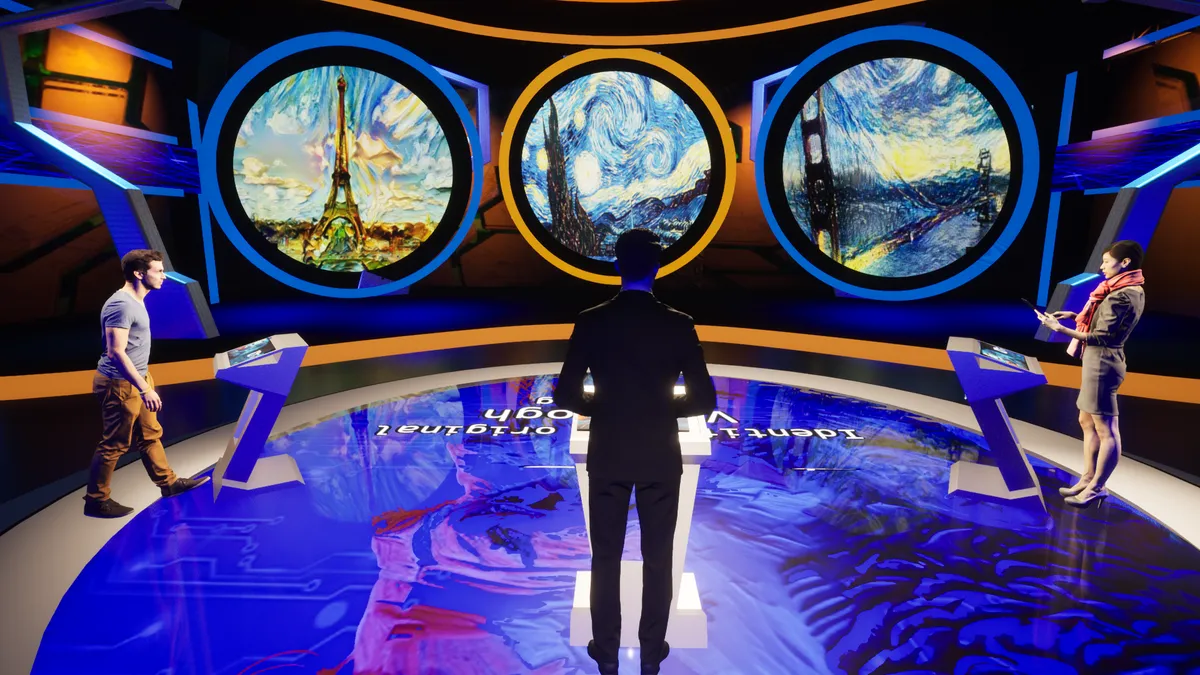
I always follow new developments in the industry. But the goal isn’t to add as much new tech as possible. The goal is to choose the right tools and ideas for the event. And you can only do that if you understand how those tools behave in real production.
A stage designer is always a little bit of an engineer. You need to understand how light, depth, perspective, materials, scale, and movement work on camera, even when the stage is partly or fully virtual. If the light looks wrong, if perspective breaks, or if the space has no depth, the stage will not create the effect you want, no matter how beautiful it is.The VTuber case is the clearest example of this approach.
The VTuber Awards is the first-ever prime award show celebrating exclusively the VTubing culture, produced by WePlay Studios. The goal was to honour the impact of virtual creators in streaming.
At the VTuber Awards, it was important for me to build a world that feels physical. I designed an underwater universe that matched the lore of one of the hosts and the overall event idea, and it still had to follow real rules: light, depth, and perspective. Water is not just a blue background – it changes how light spreads. Air appears as bubbles. Movement becomes slower and smoother. I had to consider these details to keep the stage world consistent. Virtual reality can remove many limits and let you do more, but you still have to follow the rules.
A few words about AI
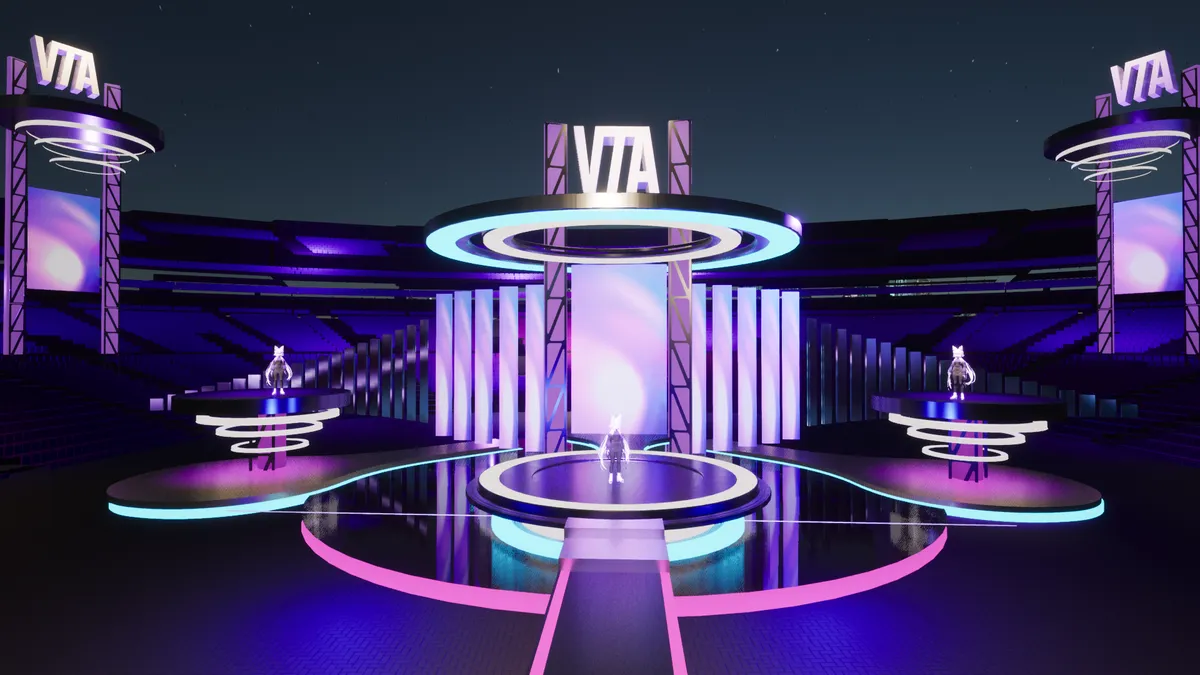
The same rule applies to AI. People might feel differently about it, but one thing's for sure: more and more clients and designers are using it. On the bright side, AI can be a great tool to help you convey a mood, a direction, or even a quick atmosphere sketch for your presentation. If you already have a clear vision, AI can really speed up the process and make it easier to share your ideas with the client.
But without professional understanding, AI can also push production the wrong way. A generated stage may look impressive but not work in real life. Maybe it doesn’t fit the budget, can’t be built, or breaks basic physics. So two skills matter. First, you need to spot what is wrong in those AI references. Second, you need to explain it to the client clearly.
Most of the time, the goal isn’t to kill the idea. It’s to point out what can’t be built and suggest changes, so you keep the core concept, but make it real for production.
Today, there are more tools, but the requirement is the same: to create a stage that works the way production needs it and meets the client’s goals. And if stage design now includes a virtual environment, AR, or complex mechanics, it doesn’t cancel the basic rules; it simply raises the bar for precise decisions. That’s why future designers should learn not only software, but system thinking: stage, camera, light, content, and tech.
Creative Bloq is now easier to access than ever before with our on-the-go app, which brings you all the content you know and love from our website, but in a super-streamlined design.