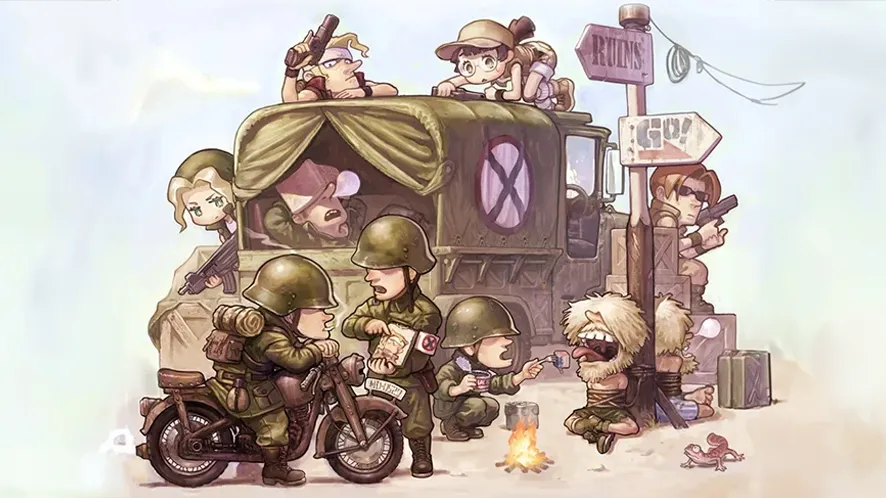
The Metal Slug 30th anniversary this week is a moment to stop and remind ourselves that games and game art needn’t always be about the race for realism, and perfection and artistic merit can arrive in many forms. When the first Metal Slug was released in 1996, the world was chasing polygons and 3D, pixels were out, and for 30 years, the idea was that higher fidelity meant better, but SNK’s pixel art masterpiece sits in the corner, stubbornly impressing and still outclassing games with higher budgets and more ‘realism’.
Because here’s the uncomfortable truth: realism might have been a mistake, or at least, the push for realism over everything else, stifled many developers in that 32-bit era, as although the likes of Castlevania: Symphony of the Night put up a fight, there was nothing putting 3D worlds back in the box once Doom, Tomb Raider and Tekken released.
But it’s why, when SNK released Metal Slug in 1996 (and continued to release sequels), it was already out of step with the zeitgeist, the industry was pivoting hard into 3D, Sony’s PlayStation, now one of the best retro game consoles, was redefining what games looked like, and everyone else was scrambling to keep up, to go bigger, to go more real, to chase that future, but SNK didn’t follow, it stubbornly stepped aside and doubled down on 2D and made something so obsessively crafted it still feels excessive and expressive now, 30 years on.
Read the History section of the Metal Slug 30th anniversary website for an eye-opening dive into the series art and dev story.
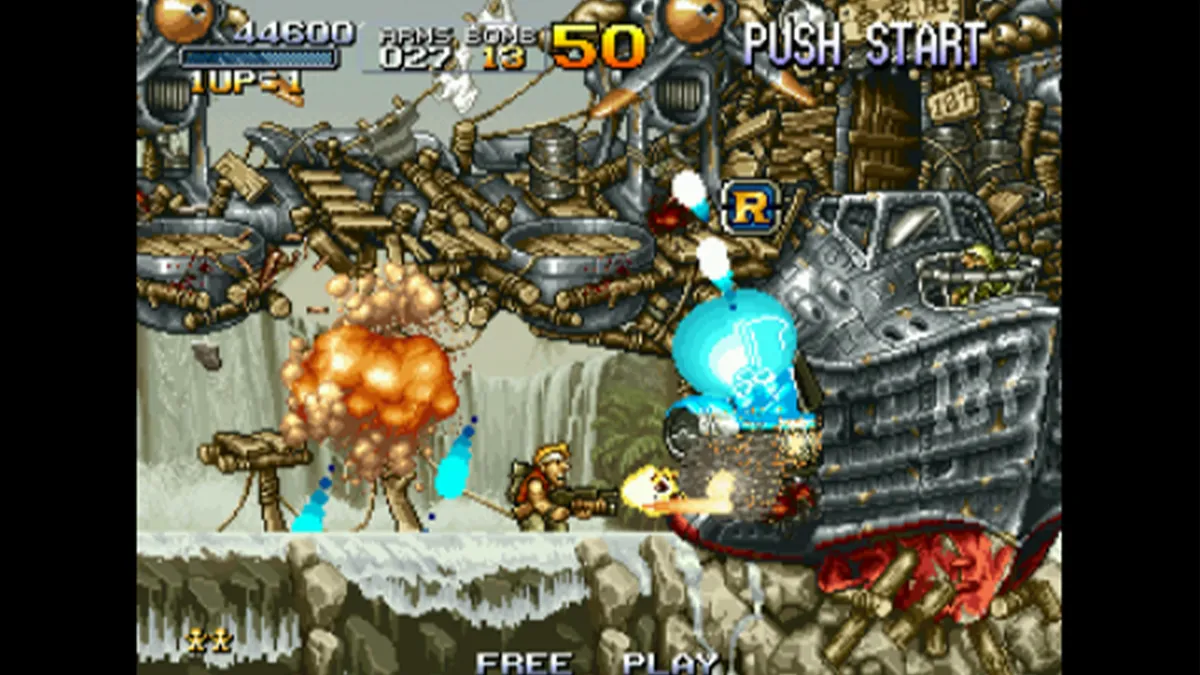
Metal Slug celebrated excess
What made Metal Slug special then and now was its excess: animation pushed to absurd limits, frames stacked on frames, while other games were cutting back to save memory and maintain speed. The animators at Nazca Corporation added in-betweens that other developers would avoid – the game’s soldiers taking deep breaths, fidgeting and panicking with impressively rubbery, hand-drawn timing. The detail even stretches to hand-animating the game’s explosions, as while many devs would have resorted to VFX reruns, here each is a performance, layered with smoke, bursts of debris and just enough variety to make each feel unique.
This kind of detail meant the new, mighty PlayStation couldn’t manage to run the game properly. Upon release in ‘97, it was plagued by slowdown, compromises, and long load times (the Sega Saturn fared a little better) – luckily, I spent my student loan on a NEOGEO AES and could play the game as SNK intended. In its own little moment of rebellion, Metal Slug represented a game art form that refused to die and indeed showed up the limitations of ‘new’ hardware; that impact continues today, as indie devs push back against expensive photorealism in favour of artistic expression.
I love that its legacy remains focused on how games feel, because Metal Slug wasn’t chasing realism but artistic expression and the fun of limitless exaggeration. The game’s machinery designs are iconically ludicrous caricatures of war machines, their bulbous cartoon designs rumble and jiggle, and crumple and collapse piece by piece under fire in the most satisfying way. Nothing in Metal Slug simply explodes, but breaks apart in lovingly made, hand-animated stages, where everything from the little gaggle of soldiers to the end-stage boss feels like an authored moment. (Take a look at Bitmap Books' art book series for SNK art, including Metal Slug.)
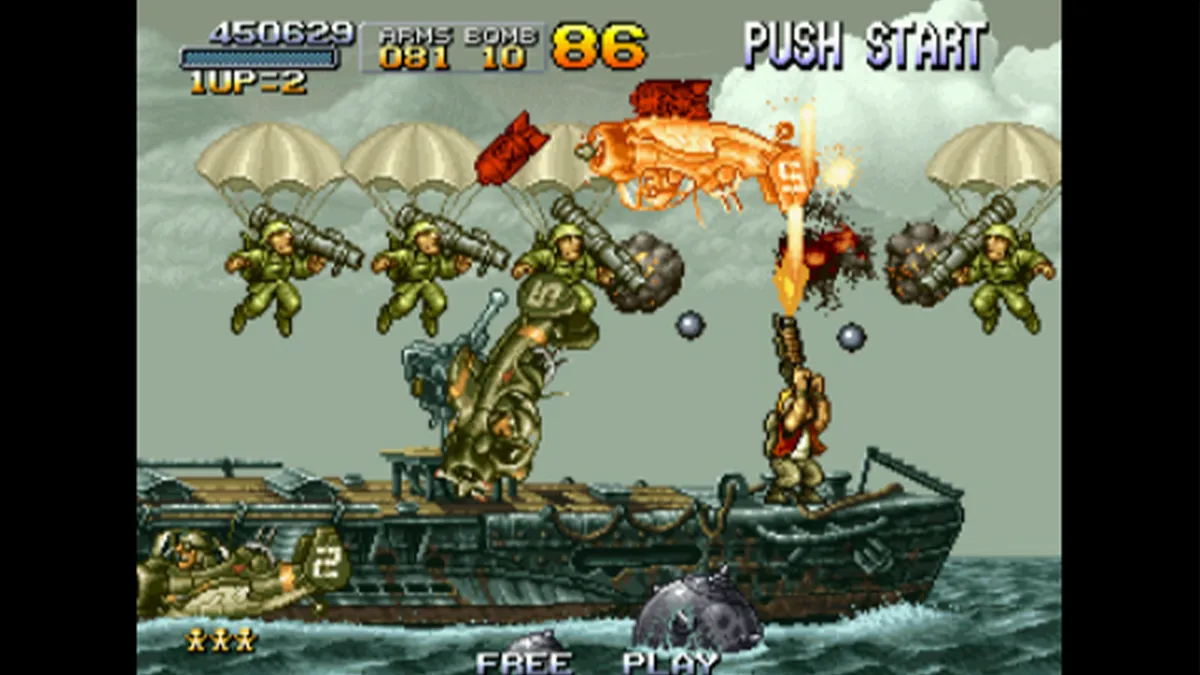
A stubbornly unrealistic classic
30 years later and gaming is still chasing realism, whether that’s with Unreal Engine 5 or in-house engines like RE Engine, which has, no doubt impressed in Resident Evil Requiem and Pragmata, and Crimson Desert is a technical achievement but can feel disconnected and clinical in a weirdly real way, and so even against this Metal Slug remains a standout achievement, because it still looks incredible and offers the kind of emotional connection few modern games can get close to, because the more realistic a game becomes the less personality and curation it offers.
In the modern era Metal Slug still feels as defiant now as it did in 1996, like it refused to become obsolete or hide, having been released on every platform, including PS5, Nintendo Switch as well as retro consoles like Evercade VS-R and Super Pocket’s SNK edition, and continues to inspire in its own unique way, and maybe that’s why it still lands, because it reminds you what happens when artists are allowed to go too far, when destruction isn’t handled by a physics engine but by someone deciding exactly how a tank should buckle, when character animation leans into caricature and timing rather than perfect anatomy.
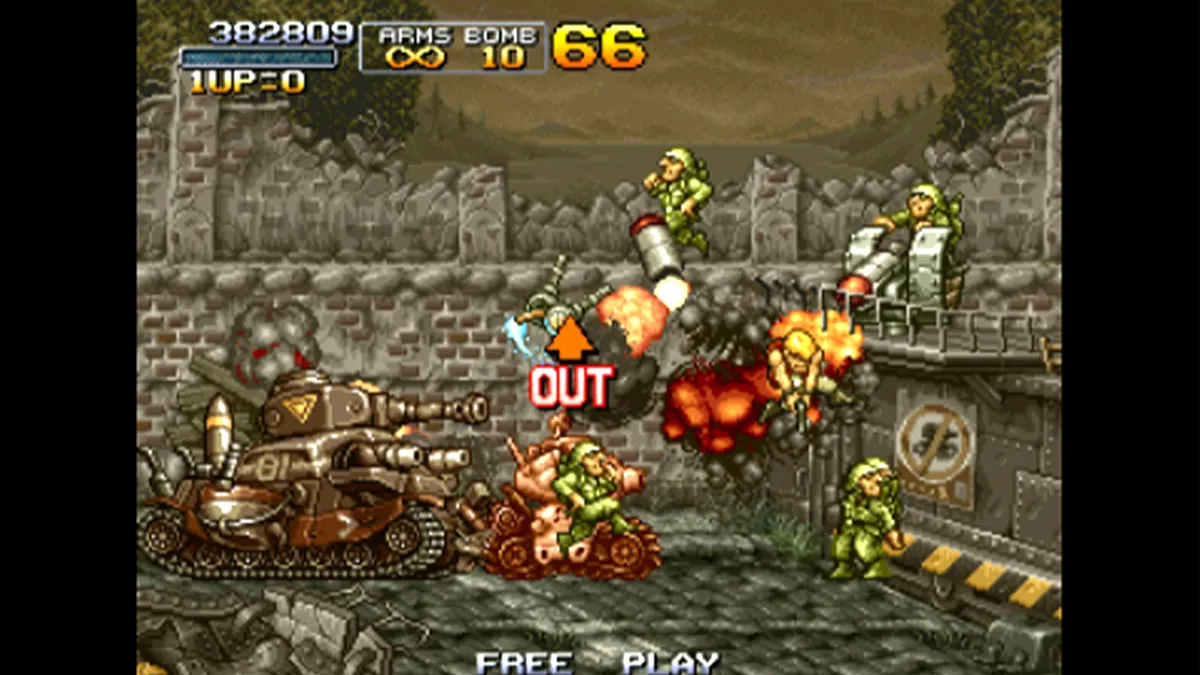
And you can see that thinking ripple outwards, in games like Owlboy, Replaced and the upcoming Croak, not just in how they look but in how they move, that same belief that more care, more frames, more excess is the point, not something to optimise away.
Better still, the Metal Slug 30th anniversary is just the start of the game’s ongoing comeback. Later this year, we’ll get the remade NEOGEO AES+ and Metal Slug cart. SNK has revealed a new game, or even games, in the series is on the cards, and while I hope it means more pixel art and not the failed Metal Slug 3D experiment from 2006, if the developer sticks to the series pillars of excess, expression, and personality, even a third-person shooter could work. Right now, I’d take more of SNK’s oddball, cartoonish shooter in any way I can.
Visit the Metal Slug 30th anniversary website for the latest news, including new art.