The minute Croak’s little frog protagonist starts moving, such as the moment he snaps from running into a pinball-like projectile, stretching, squashing, and reforming in a split second, you know the animators are having fun. It’s playful and expressive, recalling the best animation of the ‘50s and ‘60s. But it doesn’t lose sight of the precision you need from a platform game, either.
That balance sits at the heart of Woodrunner Games’ debut: a hand-animated 2D platformer that leans on the feel of classic animation while demanding the responsiveness of a modern game. For co-founder and CEO Max Petroff, that tension is baked into the style.
“We always wanted something beautiful, with a lot of emotion and passion,” he explains. “But at the same time, we needed snappy, precise gameplay. So the challenge was: how do you have both?”

The Cuphead influence
Croak’s visual identity begins with a clear touchstone: the exaggerated, expressive motion of early Disney animation (read about the 12 rules of Disney animation for more). That meant committing to full frame-by-frame animation, an ambitious choice for a small indie team, but one made easier once you realise one of the animators who worked on Cuphead, Tina Nawrocki, is on board.
This classic animation style, inspired by the bendiness of Max Fleischer as much as Disney, “gives us the ability to exaggerate,” says Petroff, adding: “We can push certain frames, add emotion, add those in-betweens that make movement feel alive.”
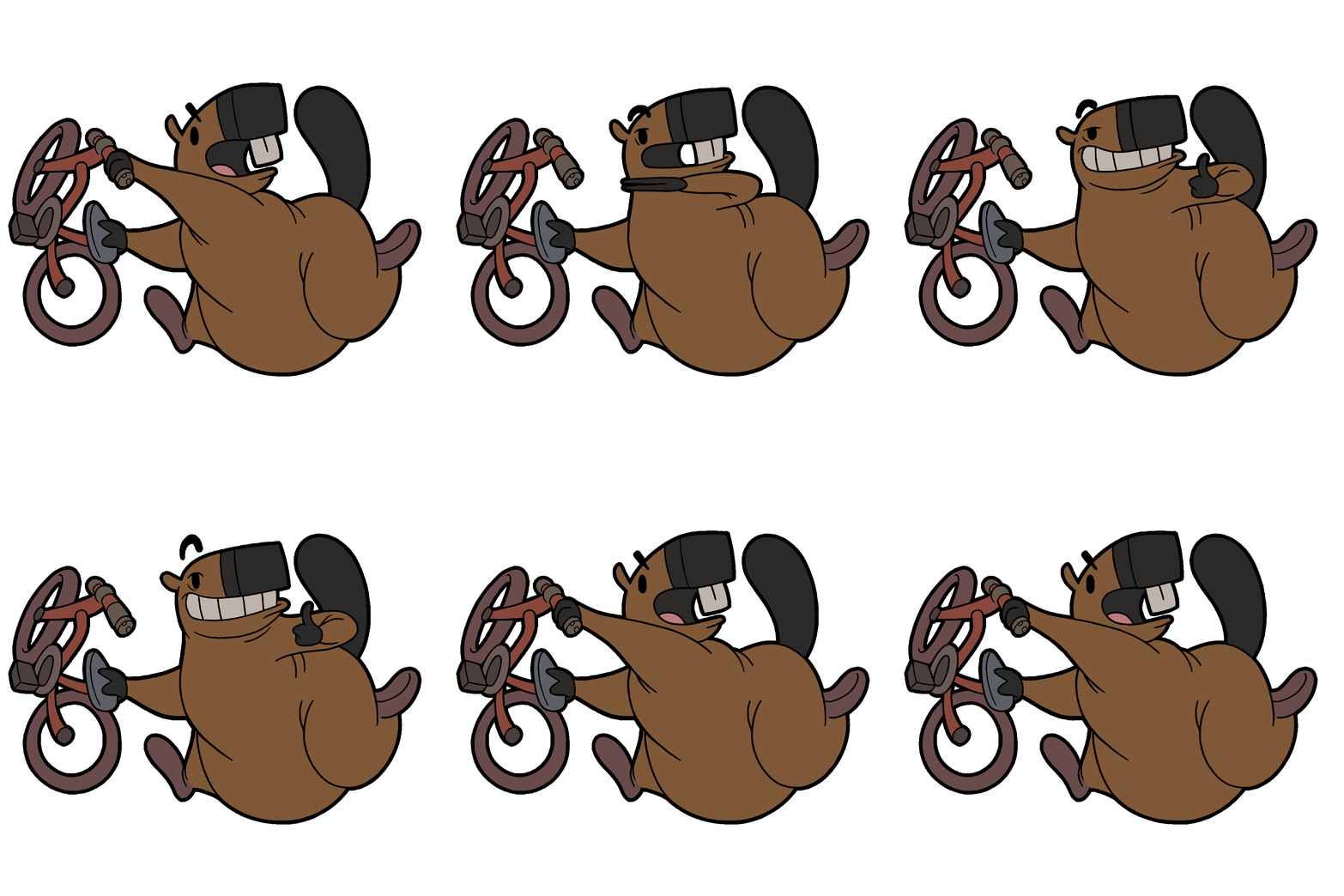
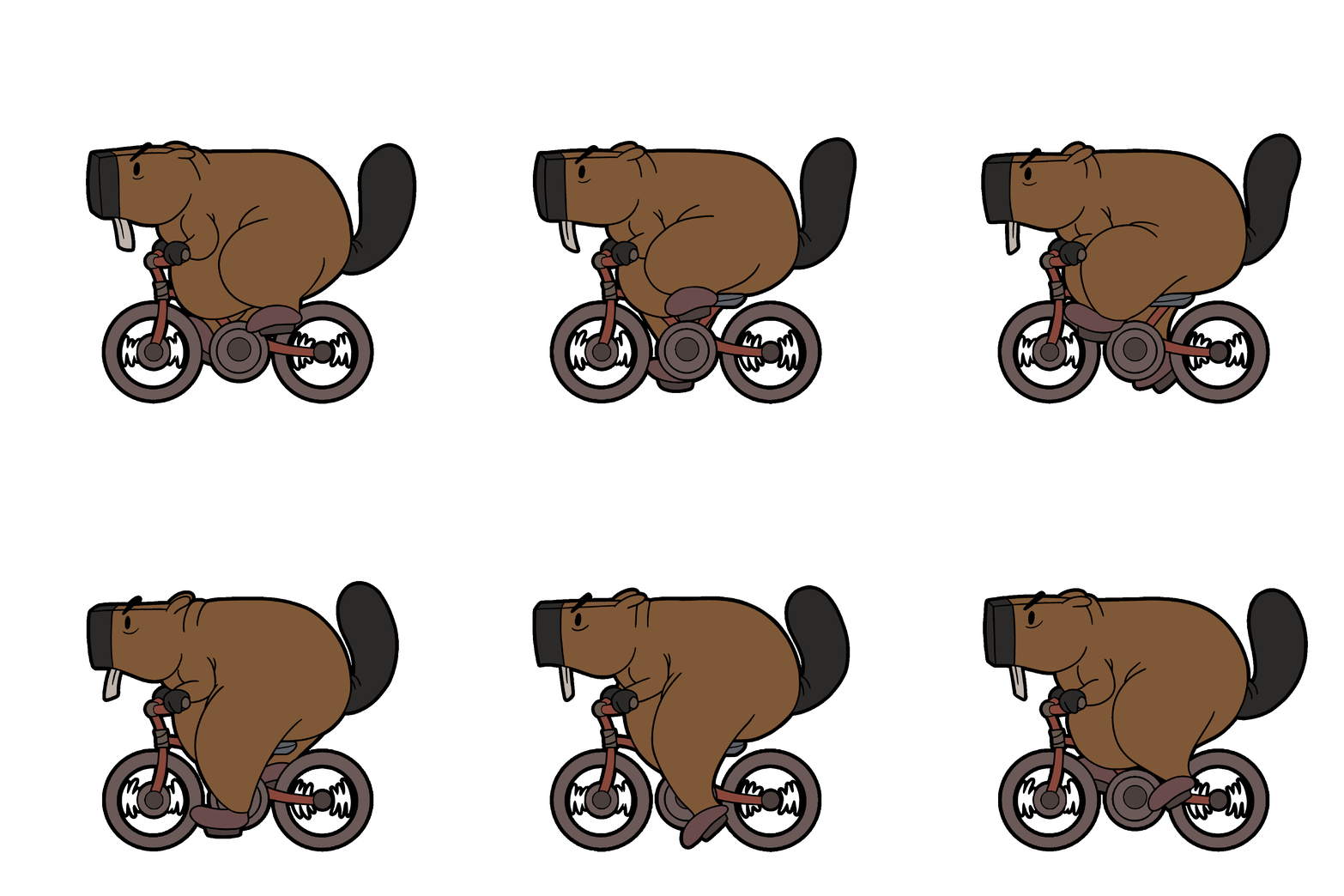
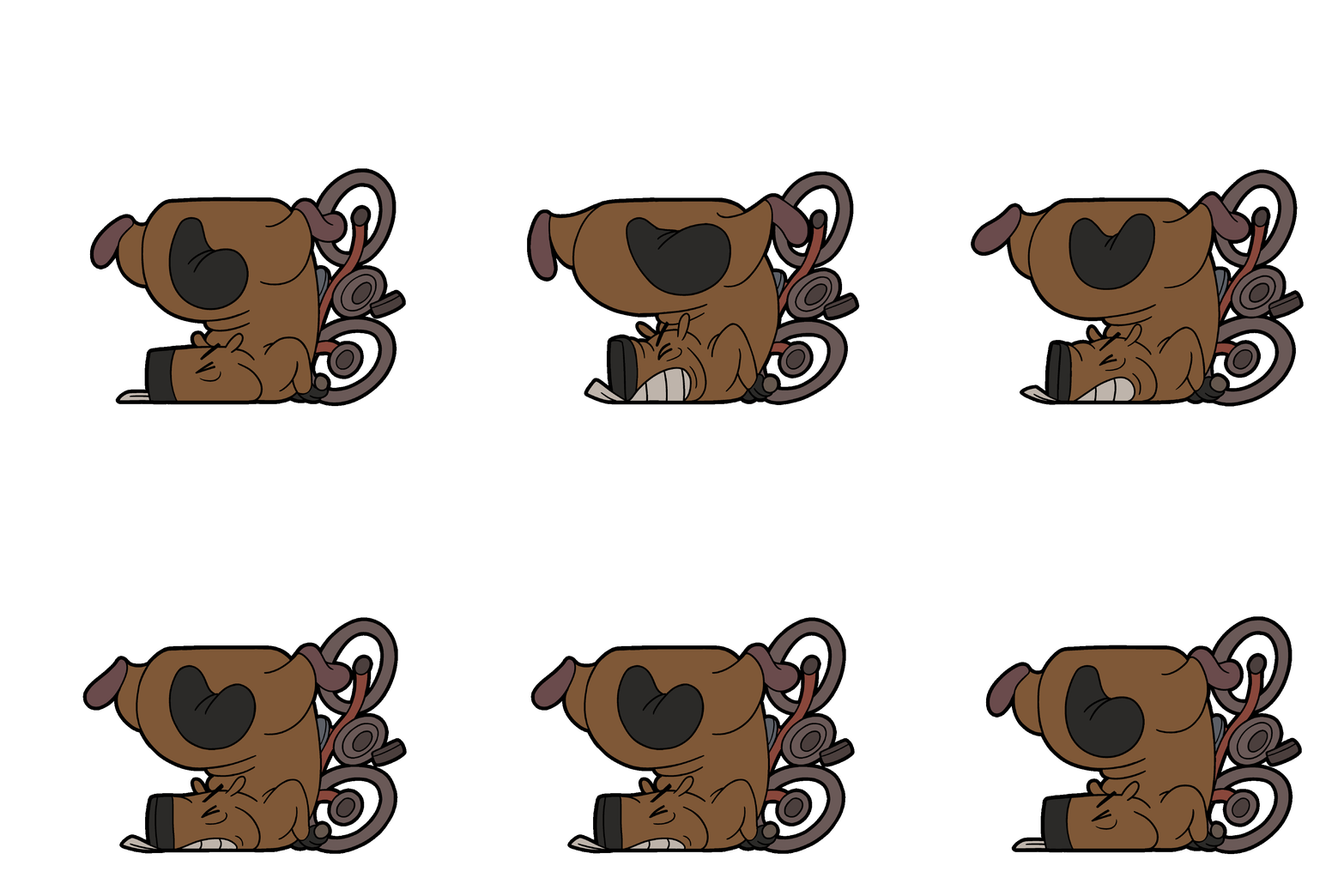
This approach allows the team to lean into the fundamentals of animation (such as those you can do in Procreate Dreams), such as squash and stretch, smear frames, and exaggerated key poses. There’s a flexing fox boss whose toothy grin exaggerates the anatomy, and a bike-riding beaver boss who spins in a blur of colour, suggesting detail, a classic smear technique that would be difficult to replicate with more rigid animation systems.
But unlike film animation, Croak has to function as a precise platformer, which means every expressive flourish must still convey clear gameplay intent. “When it comes to the run, the bounce, those need to stay readable,” Petroff says. “We choose frames that aren’t too exaggerated for gameplay-critical moments.”

Gameplay first, then animation
That balance between expressive animation and gameplay needs becomes most apparent in how the team iterates. Rather than animating final assets up front, Woodrunner builds gameplay first with simple shapes, such as boxes and circles, before layering animation on top. “We start with grey boxes, just to see if it’s fun,” Petroff explains. “Then we ask for a super rough animation, playtest it, and tweak from there.”
Petroff details how this pipeline keeps animation flexible and relatively inexpensive during development. Early passes are intentionally rough but readable, allowing the team to test timing, responsiveness, and player perception before committing to polished art.
“We’ll go frame by frame sometimes, adjusting or removing frames depending on the gameplay,” he says. “It’s a lot of iteration.” But once timing and feel are locked, the animation moves through a more traditional pipeline: rough pass, tie-down, then cleanup, where line art, colour, shading, and lighting are finalised by hand.
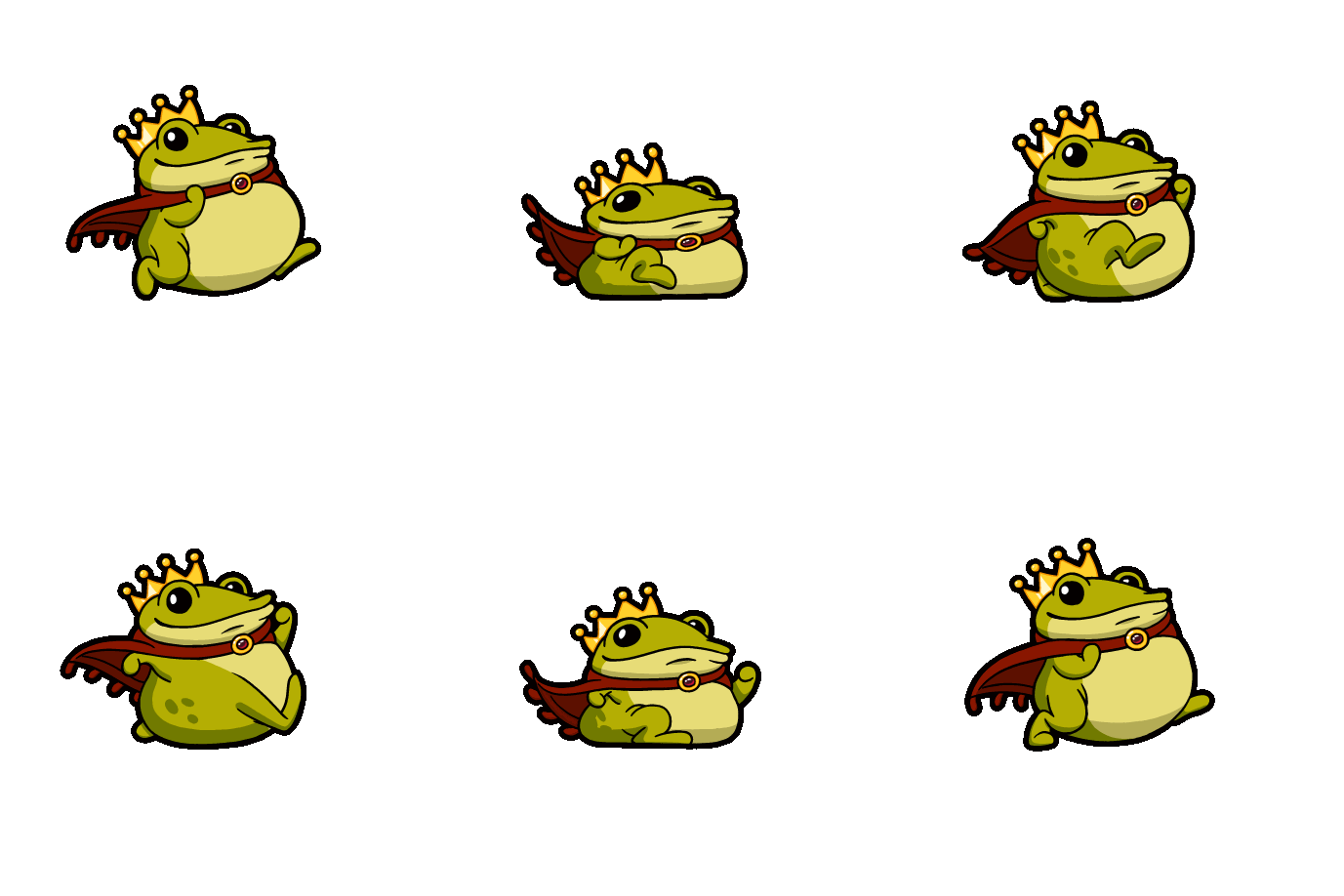
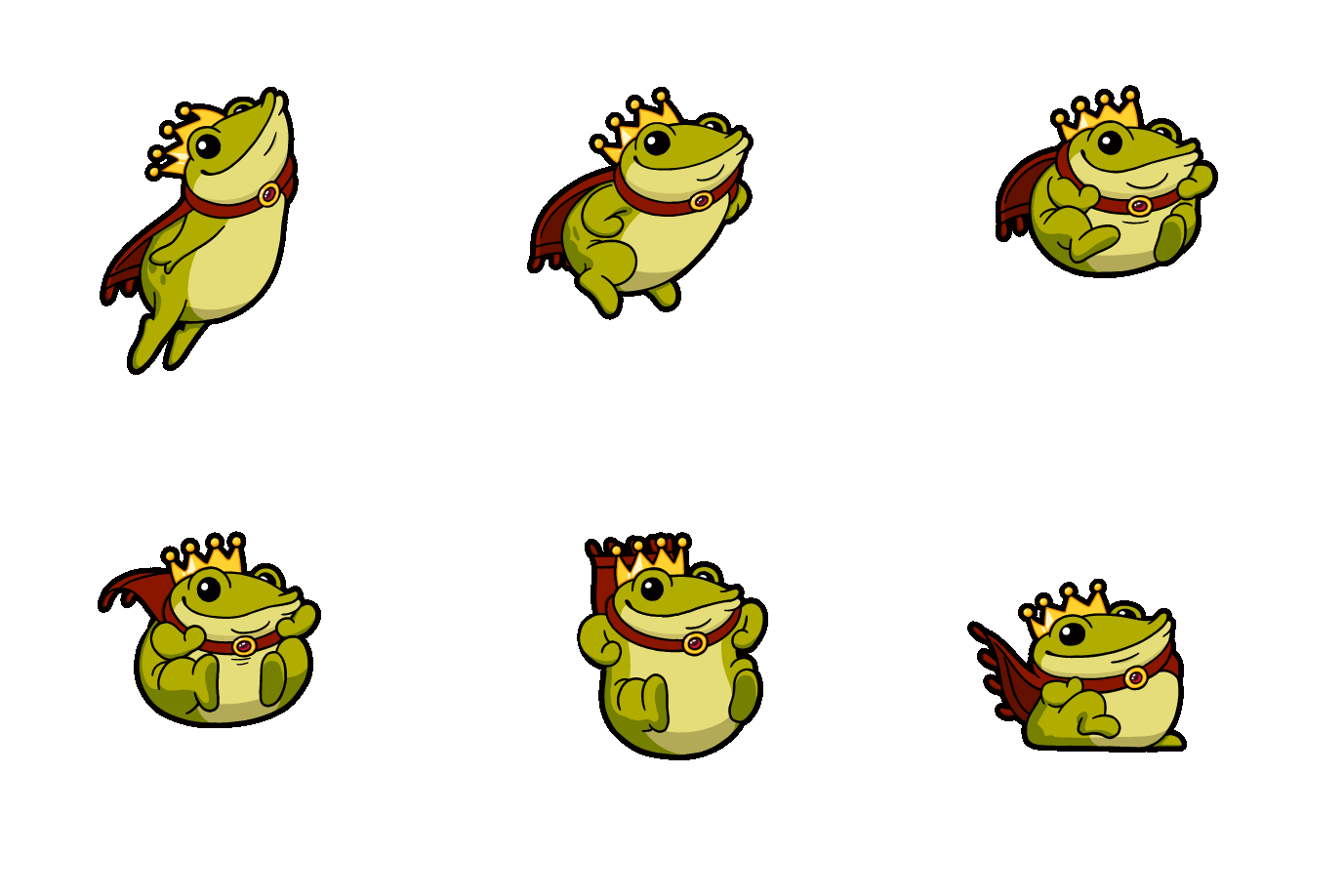
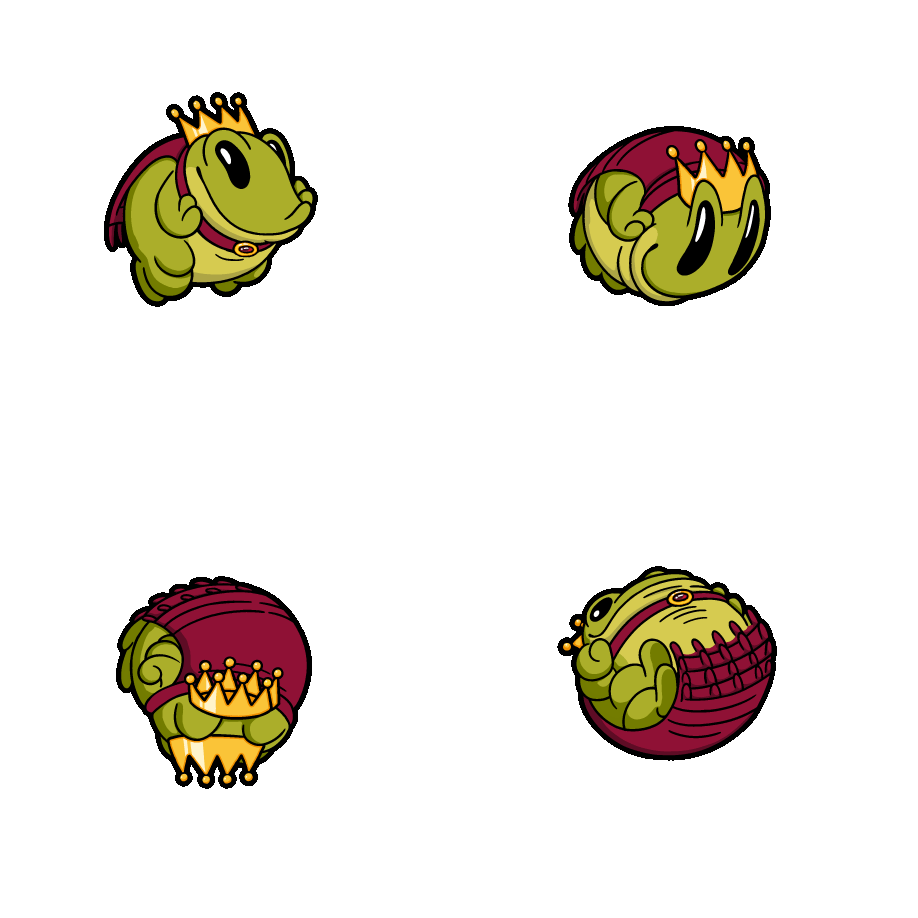
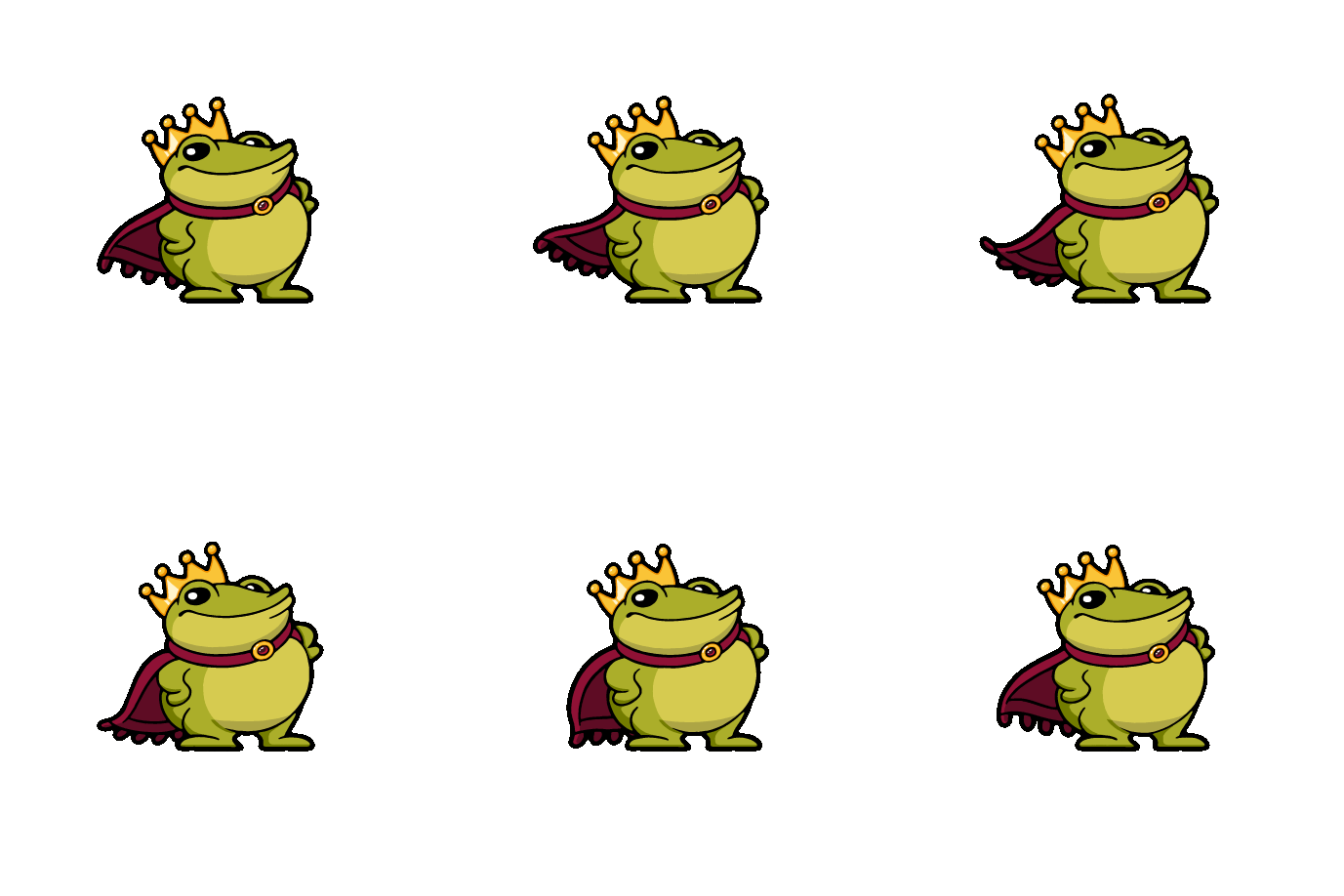
Unsurprisingly, the biggest challenge isn’t the bosses but the frog himself. “In a precision platformer, everything needs to be super smooth and precise,” Petroff says. “But you still want that nice squash and stretch.”
That creates a constant push-and-pull, as too much exaggeration makes the character visually confusing, and too little makes the animation lose its charm. Petroff tells me transitions proved particularly tricky. The frog can instantly shift from running to pinballing at high speed, and those state changes need to feel seamless. “You want it to be snappy, but not visually weird,” he says. “That balance was our biggest challenge.”
If Croak himself is about control, the bosses are about spectacle, and one standout encounter, an illusionist-like bat character, that appears and disappears across the screen, using animation as a gameplay mechanic. “He’s simple, but really dynamic,” Petroff says. “He goes off-screen, comes back, disappears […] it lets us do cool things visually.”
Even here, the team keeps interactions readable, as the boss is defeated in the age-old way of bouncing on his head, a mechanic grounded in platforming logic everyone understands from Mario, Sonic, and Bonk. There’s also a tonal influence at play that continues the fun of the game’s style, as Petroff describes the boss as having “vampire vibes” – a slightly eerie, stylised presence that fits Croak’s storybook aesthetic.

The animation tools
Despite its old-school inspiration, Croak is built entirely with modern tools. The team uses TVPaint for animation and Unity for development, combining a traditional workflow with a digital pipeline, so that everything from character animation to backgrounds is hand-drawn and hand-painted. TVPaint, in particular, was chosen for its hand-drawn sensibility. “It has that old-school vibe in the line work,” Petroff says. “That’s what we wanted.”
While gameplay typically leads, Petroff describes the process as more of a feedback loop, in which ideas often emerge from a mix of mechanics, environment, and character design. “All our bosses are animals, so we keep that in mind,” he says. “Sometimes you design gameplay, and then realise it could be a specific animal, and that gives you new ideas.”
One example is how the pinball-like bounce mechanic evolved into interacting with the beaver boss’s nose – bounce at its snout to damage it. These classic actions help ground gameplay in a way that feels accessible, even while the animation itself is expressive and flamboyant. On reflection, Petroff explains, “It makes it easier for players to understand what’s going on”.
After five years in development, Croak is now fully playable, with a demo on Steam, with ongoing work focused on polish, content, and iteration. For Petroff, the long development has been as much a learning process as a production one, so I ask what advice he has for other new developers. Petroff says, if there’s one piece of advice he returns to, it’s this: "start small […] we probably started too big,” he admits, adding: “The best advice I’ve heard is: start small, fail fast, and iterate.”
Croak’s hand-drawn approach may look lavish, but it’s built on a foundation of rapid prototyping, quick iteration, and constant playtesting, of doing the basics well, getting the small detail right, and maybe that’s the lesson to learn. That, and it’s hard not to love the Fleischer-like rubbery animation Croak does so well.
Croak releases in 2026. Play the demo on Steam now. Visit Woodrunner Games' website for more news and updates.