Are games art? That was the question, and in some quarters still is, that dominated conversations for a decade or more. But it dragged on, and now it just feels a bit behind where things actually are, because if you spend any time around designers, artists, or anyone making visual work, you'll find games already in there, sitting alongside film, books, architecture, all of it.
That’s where Reset magazine comes in, which is probably why it feels more interesting than another games magazine trying to carve out space. And that’s a hard take from me, as I spent over 20 years making traditional games magazines, including Official PlayStation, X360 and Play. It’s a new print title, a new kind of games magazine that puts artistic intent front and centre, and, unusually, is being made by a games publisher, Kepler Interactive (the publisher behind the BAFTA award-winning Clair Obscur: Expedition 33). But the fact that it doesn’t behave like a traditional games mag, and it has an original origin story, is kind of the point.
Reset aims to shine a light on how video games are now a defining touchstone in our cultural landscape, and, through essays, conversations, and visual stories, presents the argument that gaming culture and artistic language are now influential beyond pixels and polygons, into architecture, fashion, music, and fine art. Tellingly, there’s a confidence to Reset’s design and presentation that avoids the neediness that similar pitches have had in the past, as it not so much argues a case and simply presents the answers by placing game developers alongside designers, musicians and artists who’ve been shaped by games in return.
As creative director, Simon Sweeney says, “it almost feels obvious to us, right?” – this idea that games are already part of the same cultural fabric as everything else creatives draw from.
And he’s pretty clear that the disconnect isn’t in the work, it’s in how we talk about it. “There’s a kind of broader sentiment around games that it's an insular, kind of isolated practice,” he says. “But I know from working with creatives for years that it's a huge influence on everything they do.” And is this new dimension that matters, and that Reset aims to pin down; the belief games aren’t trying to break into culture, that aspect of ‘are games art’ has left the building, as video games have been shaping it for a long time, just not always acknowledged in the right places.
Reset leans into that view: “We believe that architects, musicians, artists, fashion designers all reference games and have referenced games for years,” Sweeney says. “And that conversation has always been maybe a little bit one way.” So instead of trying to prove anything, the magazine opens that up, looking at how influence flows both ways.
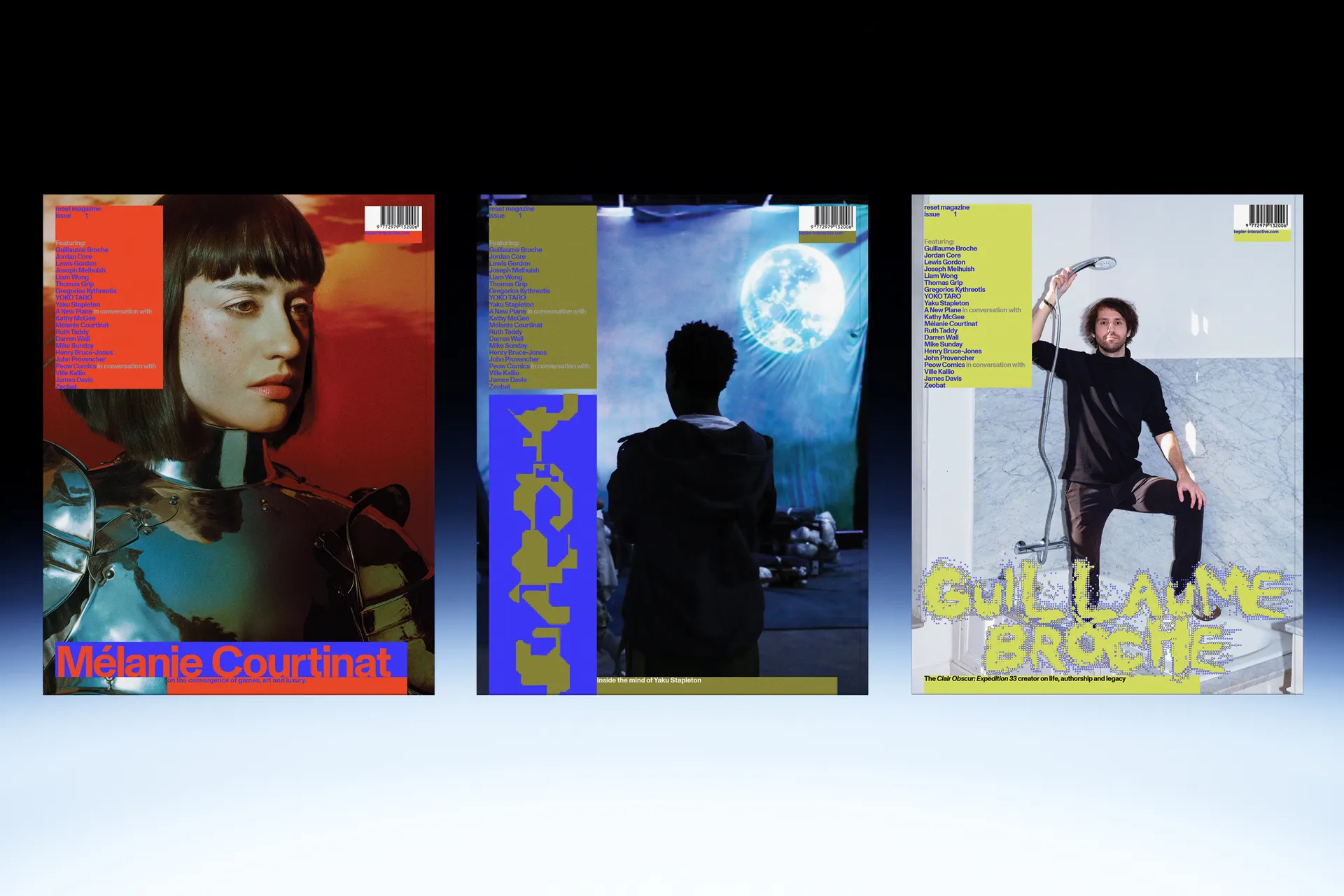
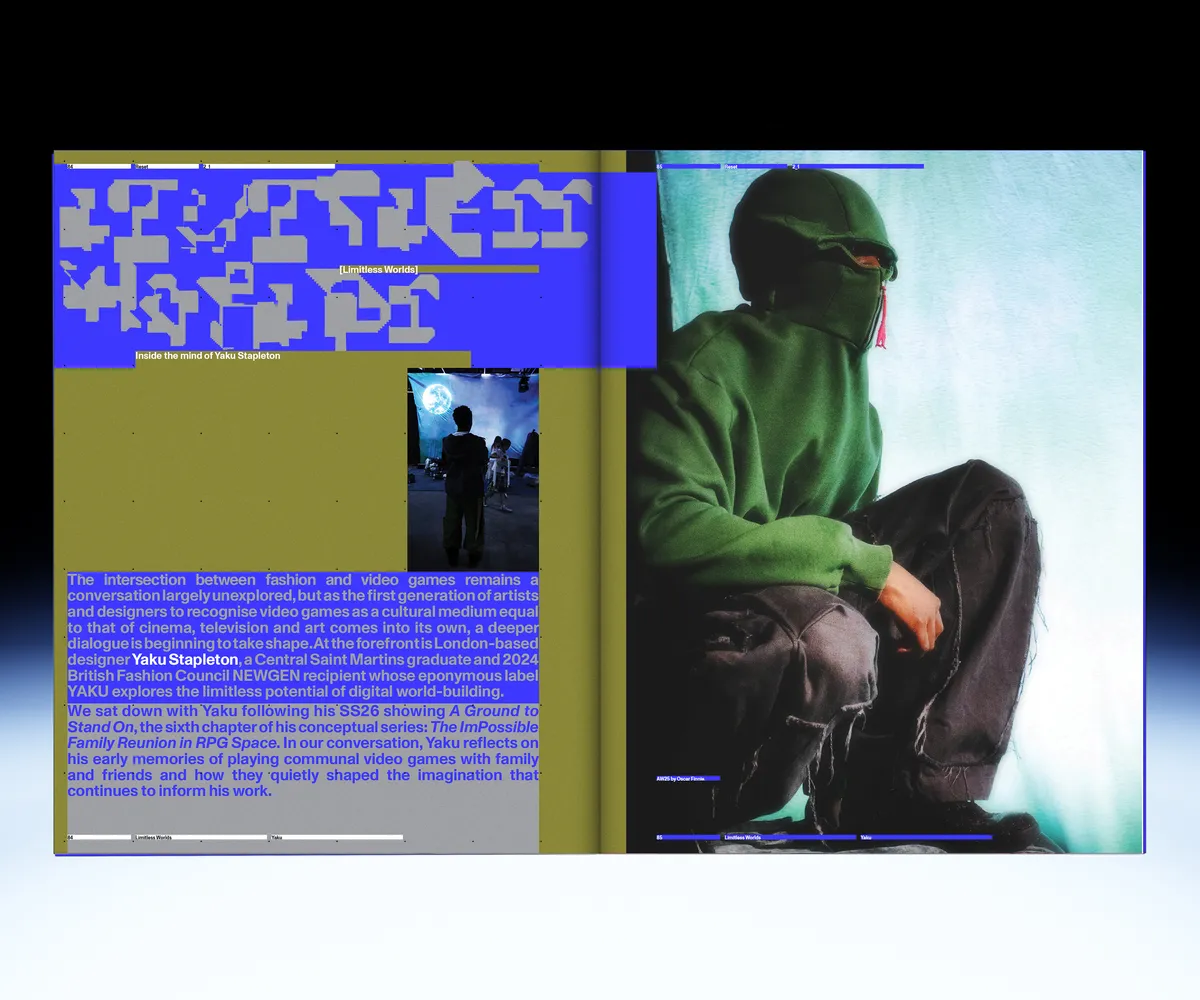
You can see it in the first issue. It launches with three covers, each focused on creatives working right on that overlap: Clair Obscur: Expedition 33 creative director Guillaume Broche reflecting on authorship, legacy, and how film has influenced him; London-based fashion designer Yaku Stapleton, a British Fashion Council NEWGEN recipient, talking about RuneScape, about logging in as a kid and getting scammed out of his items, and how that moment sticks – systems, trust, identity – and ends up feeding into how you approach making anything later on.
Then here's artist Mélanie Courtinat, whose work uses video game structure as a foundation and includes collaborations with luxury fashion houses. “She uses games as a kind of medium for art practice, and explores her art through games, which is, again, really an interesting kind of touch point for us, and that she's not making games, she's making art, but the medium is in games,” details Sweeney.
All three have the same connection to the back-and-forth between games, design, and art that’s messy, personal, and much more useful than simply stating ‘games influence culture’ and leaving it at that. As Sweeney says, “[there’s] a through line through all of them, but they dance in and around being inspired by making or referencing games and throughout, and that's kind of the through line we have. We might vary even broader than that in the future, but for now, we're quite interested in literally that dialogue between every form of art and how the games influence all of them”.
Elsewhere, the lineup pulls in voices like auteur game developer Yoko Taro (NieR: Automata), Thomas Grip (Frictional Games), Gregorios Kythreotis (Sable), and Ville Kallio (Cruelty Squad), which gives you a sense of how wide that creative net is being cast, from AAA to indies. Indeed, it’s a fitting mix for a Kepler-published magazine, which has championed games like the Moebius-meets-punk aesthetic of Ultros, the ‘90s anime-inspired Orbitals, and the horror game ONTOS, starring the Oscar-nominated Stellan Skarsgård.
What’s surprising is how little of this has been pulled together in one place before. “It feels strange to us that there isn't a conversation, or isn't a kind of documentation of it already,” Sweeney says. “There's amazing work being done in games magazines for games people, and there's amazing people being done in fashion design for fashion people, but the bridge there isn't really documented, even though we know it exists.”
That bridge is basically the whole magazine, and where things get interesting is in how the Reset team approaches its design. It started with Sweeney thinking about how gaming styles have seeped into everything from web design to graphic design, and Reset picks up on that and runs with it in its own layout.
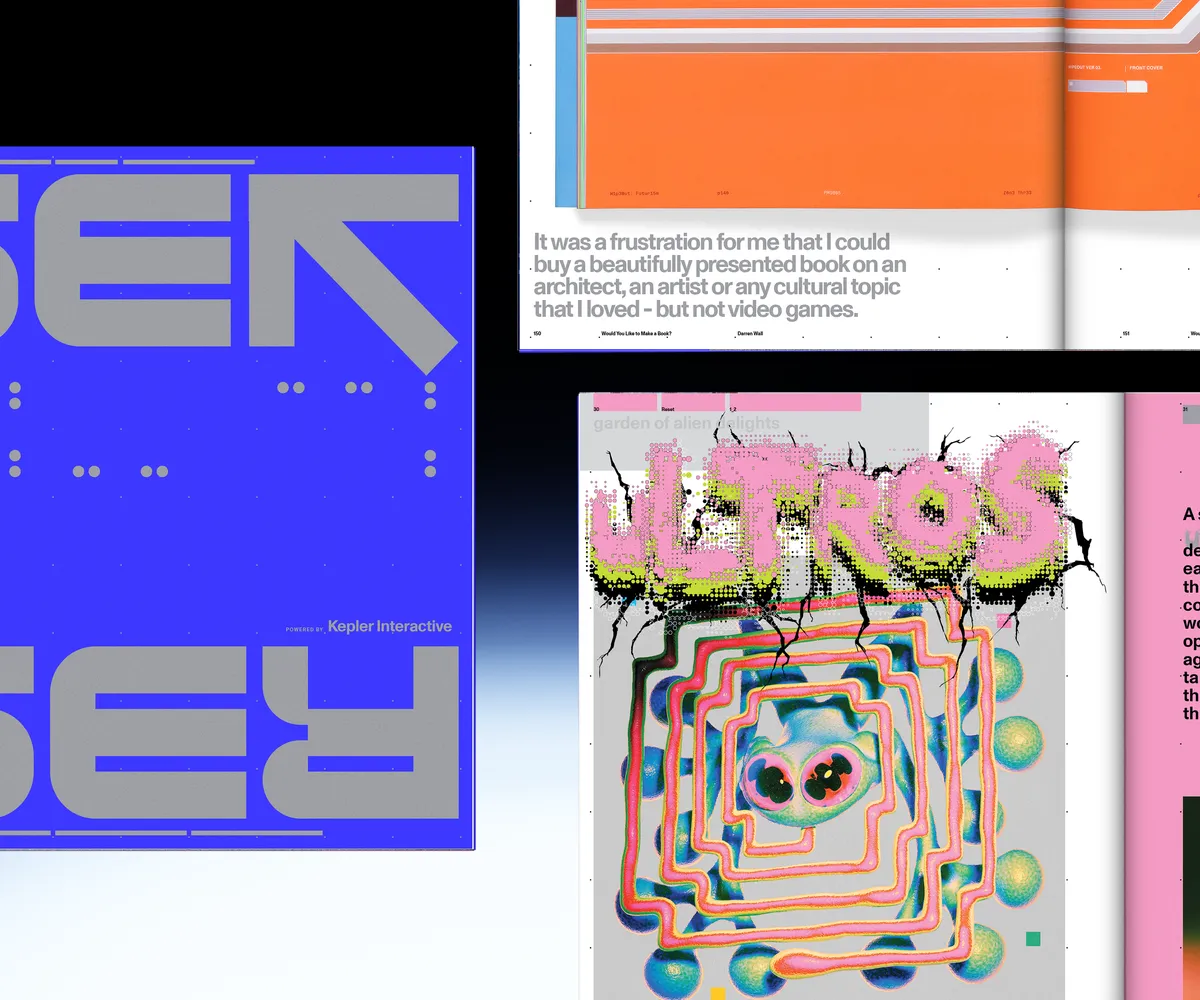
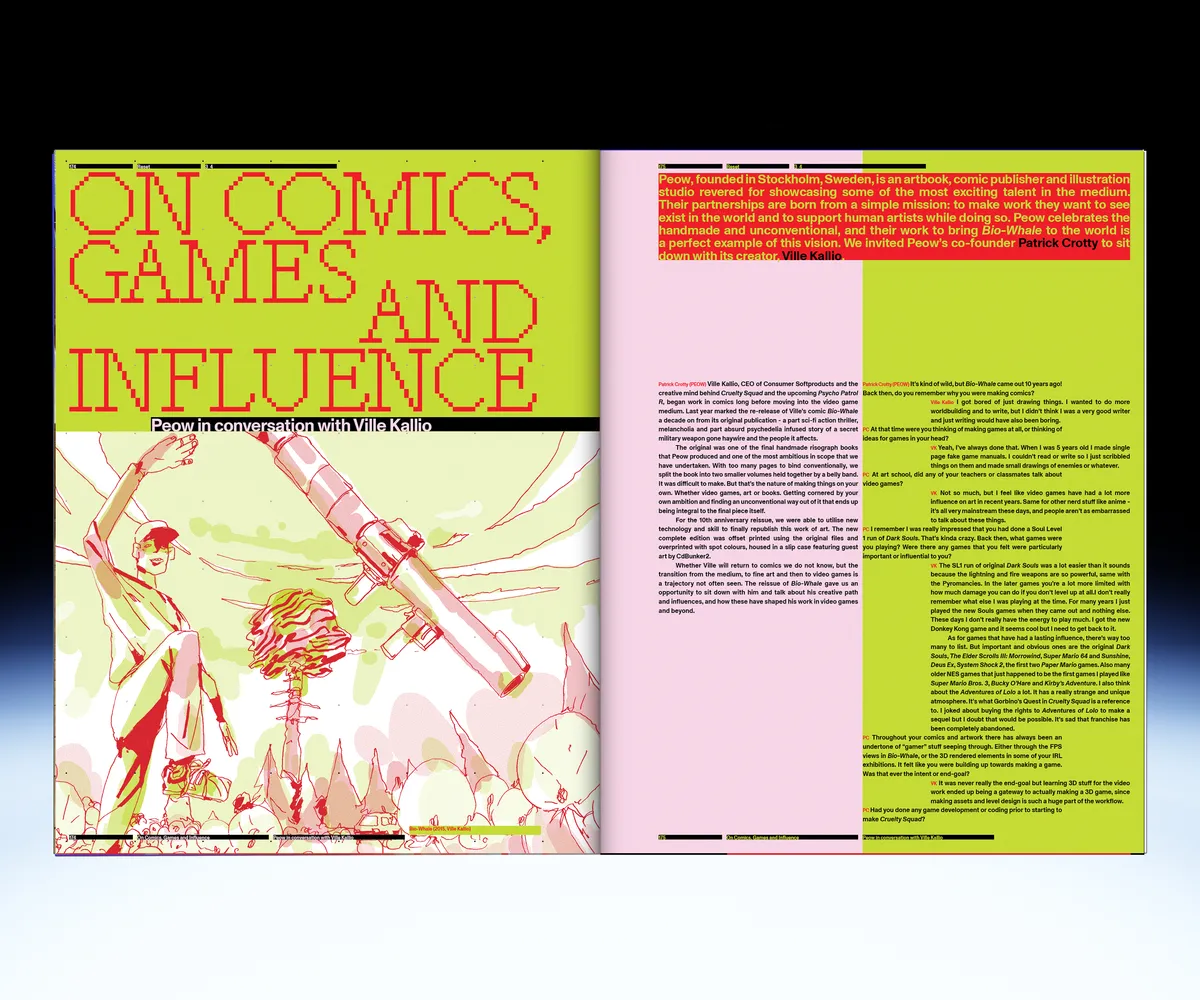
There aren’t pages of screenshots or big IP-led spreads as you’d find in games magazines I ran; it’s closer to a fashion magazine in how it treats people and projects, letting typography and structure carry more of the weight. Layouts lean into experimental editorial design that is contemporary, Swiss-influenced, minimalist and rigid, but then eagerly break those rules using asymmetry and typography used as objects; it's lo-fi and layered.
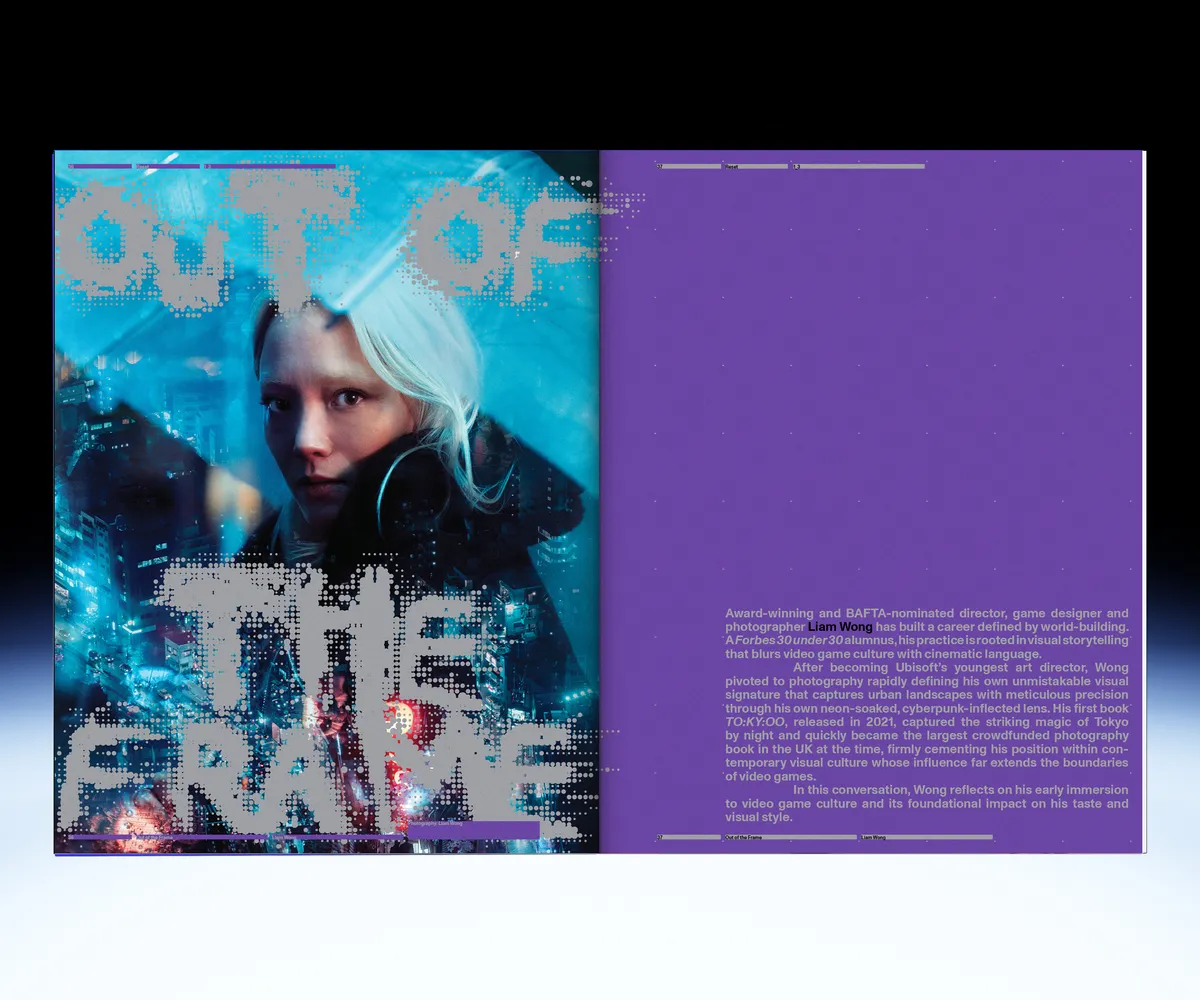
Even the type choices feel as much a part of the argument for presenting the influence of game culture as it does a design choice. One feature uses the 8bitDo pixelated-inspired font, created by Anne-Dauphine Borione (aka Daytona Mess), which Sweeney calls “a perfect example of what we're talking about, type designers using game technology to make their art.” Elsewhere, there’s a more classical typeface pushed through a pixel lens, blending print tradition and screen logic in a way that feels very current.
And of course, there’s a temptation to go further with it and descend the font rabbit hole looking for more and more. “It was very tempting to just use multiple typefaces all the time everywhere, because there are so many good ideas in that space,” he says. You can imagine that version of the magazine, the one where every spread tries to outdo the last, but Reset holds back just enough to keep a consistent identity running through it.
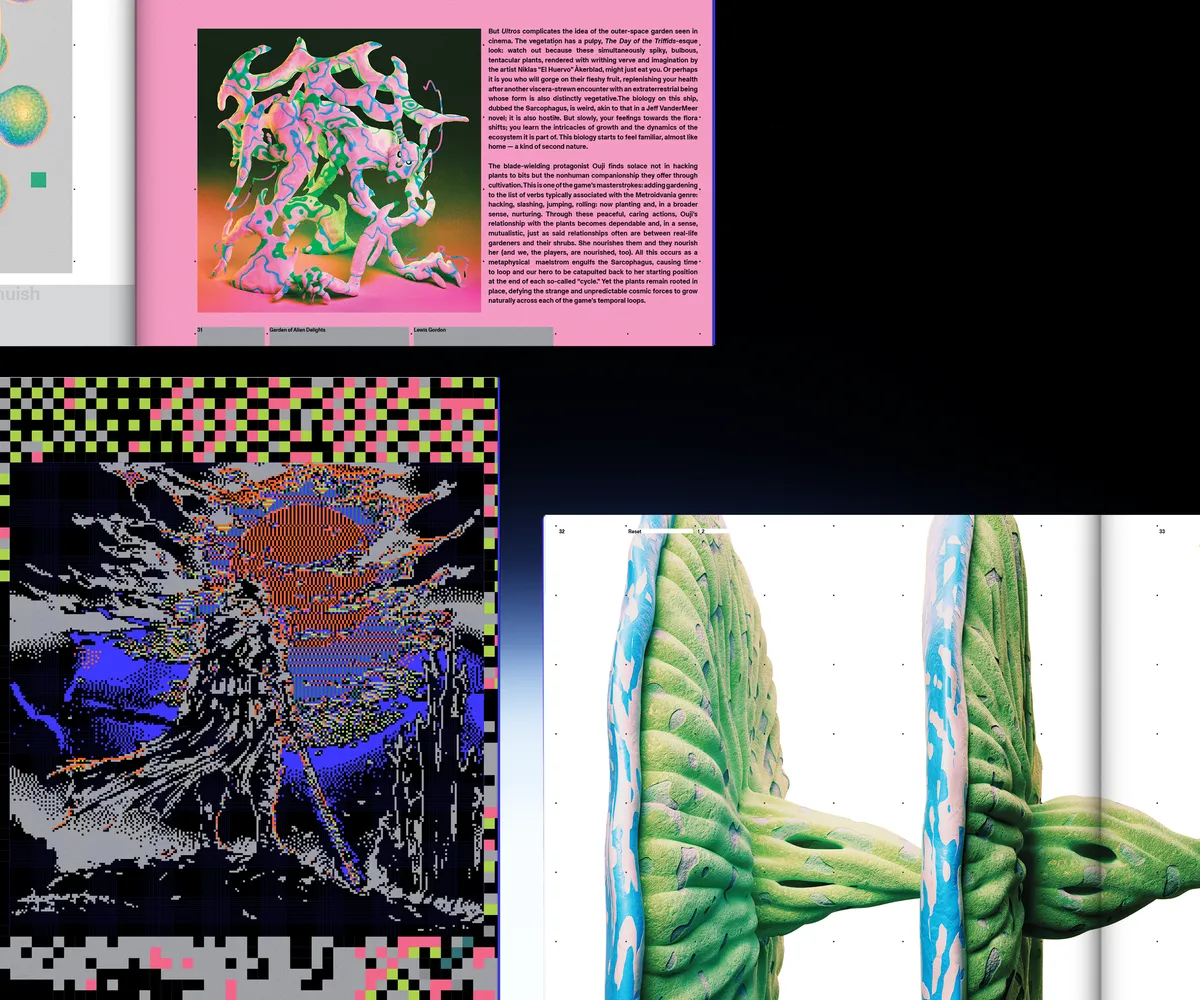
That idea of a singular vision comes up again when Sweeney talks about the kinds of games they’re interested in, as a magazine. “We're really interested in this kind of idea that a group of people got behind this one idea and went for it in all ways,” he says, “in typeface, in game design, in UI, in character design.”
And that pitch feeds into where games sit culturally now, which, according to Sweeney, the whole ‘are games art’ conversation isn’t really up for debate anymore. “I don't even see it as a statement that we're trying to make,” he says. “It's a kind of, almost an acknowledgement of, the fact that the conversation is over on that front, I think.”
What matters now is what comes out of that. “We feel like we're the first generation that's growing up with games, right?” he says. “It's a reference point, just like, you know, books or films are to me.” And that explains a lot about why you’re seeing these overlaps more clearly and more visibly now, because the people making design, art, films now didn’t arrive at games later; they grew up with them, lived in them and with them, and will reference Hideo Kojima as much as Milton Glaser, Pablo Picasso or Jack Kirby.
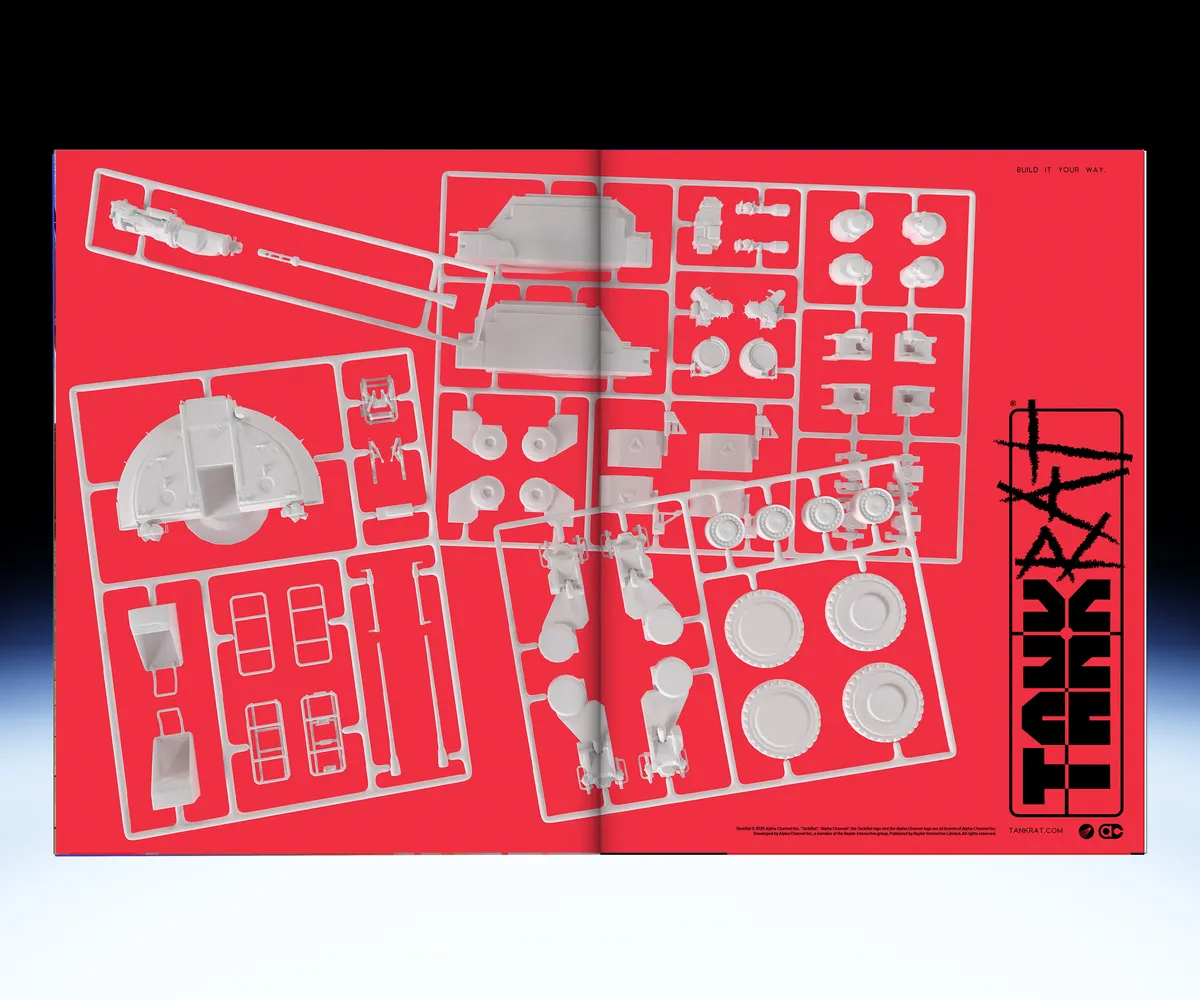
Reset doesn’t over-explain any of that, which is probably why it works. It just puts the connections side by side and lets you sit with them, pore over the pages, often challenging, always interesting. And it doesn’t escape Sweeney that a games publisher making a print magazine in 2026 is an unusual thing, a very digital-focused company embracing a tactile medium to extend its conversion. He talks about vinyl as a reference point, “It's like a way to engage with the world that the album is built in,” he says, “and these different ways of engaging with this singular kind of… object.” That’s what Reset is aiming for, something you spend time with and absorb rather than scroll past.
It also means they’re not chasing scale in the way magazines I edited used to or needed to; that side of print has changed. “We're probably much more inclined to have a smaller group of really interested kind of, like, community-based around what Kepler and what Reset magazine is,” Sweeney says, “than like, a wider ranging one that, like, is a little less connected to us.” This feels closer to how many creative studios operate now, with smaller audiences, stronger identity, and less noise.
And the future of Reset magazine? It could embrace the print games magazine format even further, as Sweeney laughs when I mention cover gift – “we already discussed whether or not we could put in a demo with a disc or something like that? That would be the dream. Honestly, it would be the dream.”
You can pre-order Reset from Kepler Interactive's new online store.