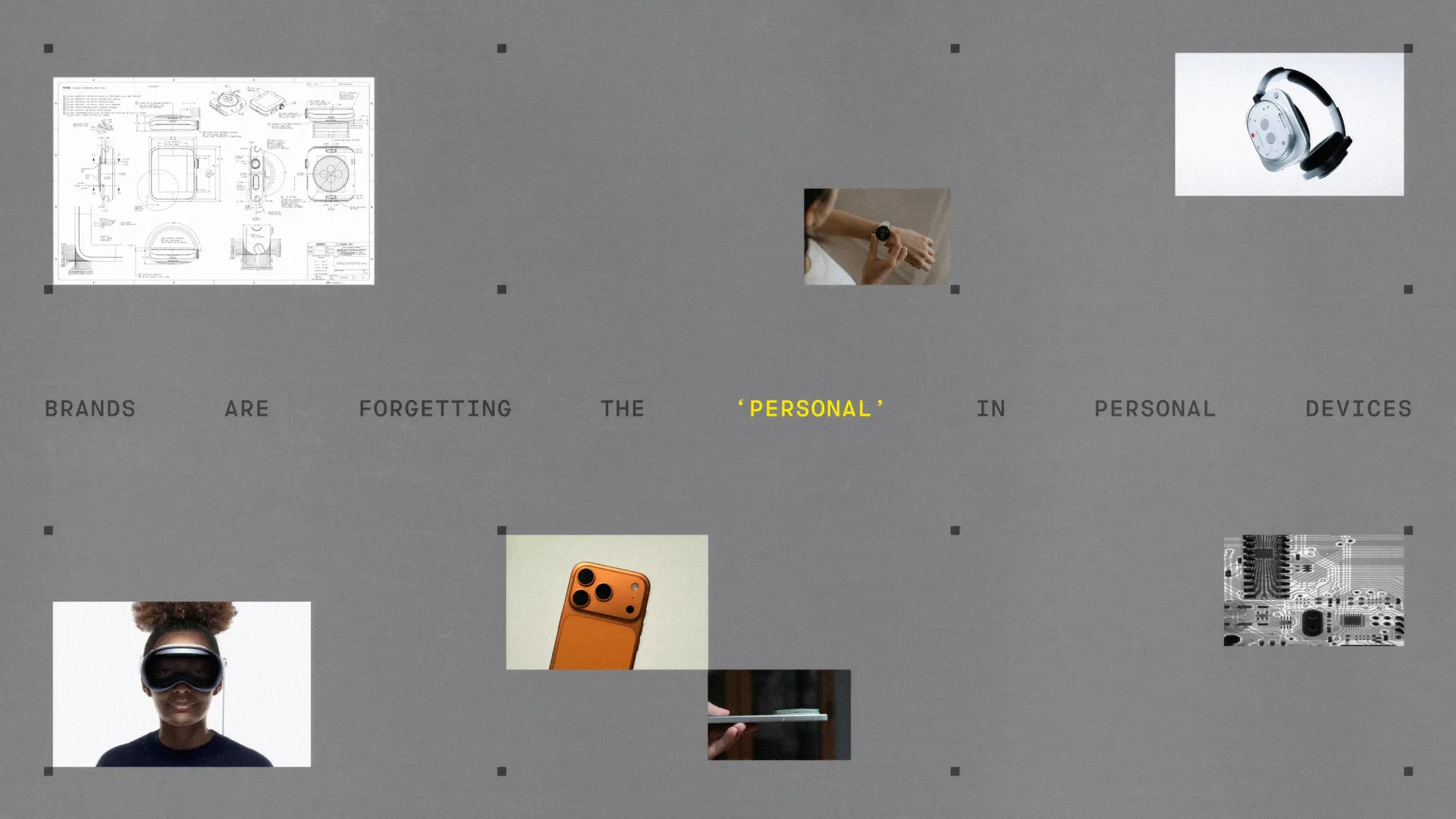
Personal devices – those things that we carry around in our pockets, our bags and more recently, on our bodies – are more powerful than ever. We have mini smartphones on our wrists that can track our sleep and health, agentic assistants that can manage our schedules and invisible tech that we can prompt without even needing an interface.
However, somewhere along the road of constant innovation, brands seem to have forgotten the personal aspect. The tech might have more advanced cameras and sensors or longer battery life, but it’s somehow getting more boring from an identity perspective.
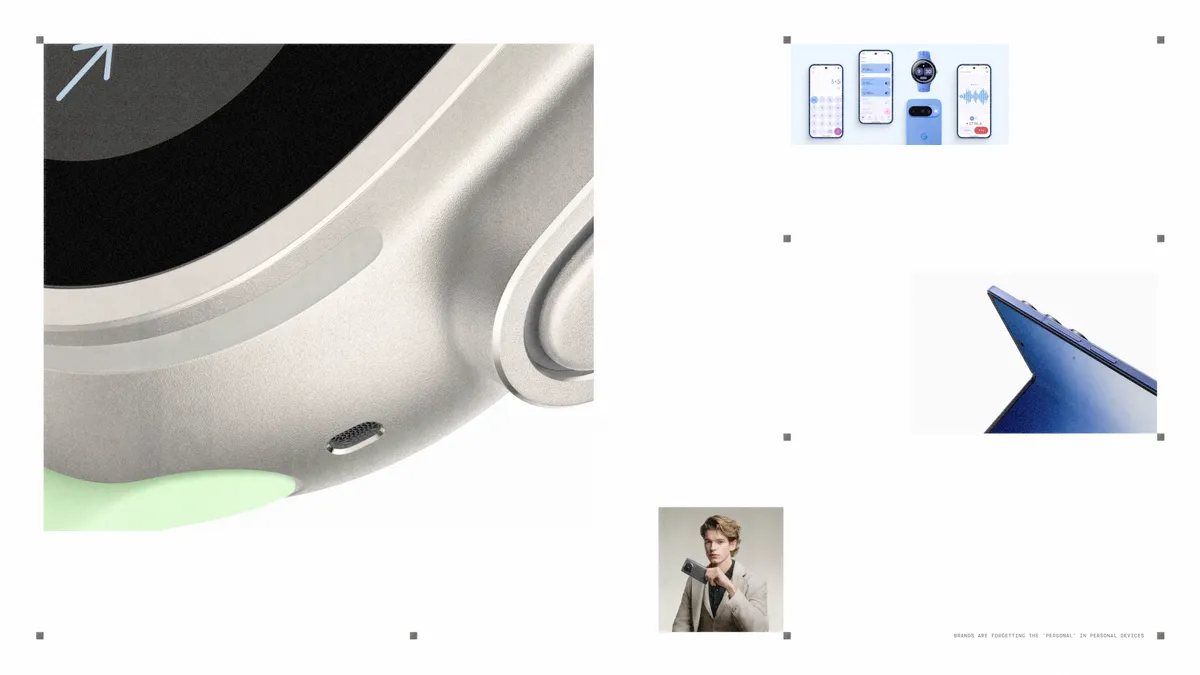
You could say it's because upgrade cycles are slowing and that anticipation just isn’t there like it used to be, but I think it goes beyond textbook innovation fatigue. So if the technology is there and only getting better, what’s actually missing?
Meaning. Feeling. Connection (and not the bluetooth kind). That’s the short answer.
And if you really want to understand why those elements are missing, you first have to look at how the category got so comfortable talking about the wrong things.
A category stuck in a rut
There’s a constraint that has shaped personal technology more than we often acknowledge: the size of a pocket.
From the earliest portable cameras to the Sony Walkman, consumer electronics have been designed to fit into something fixed and everyday. That physical limit became the default container for innovation. You can only stretch a rectangle so far before it stops being portable, so for decades the industry has refined within that boundary rather than breaking it.
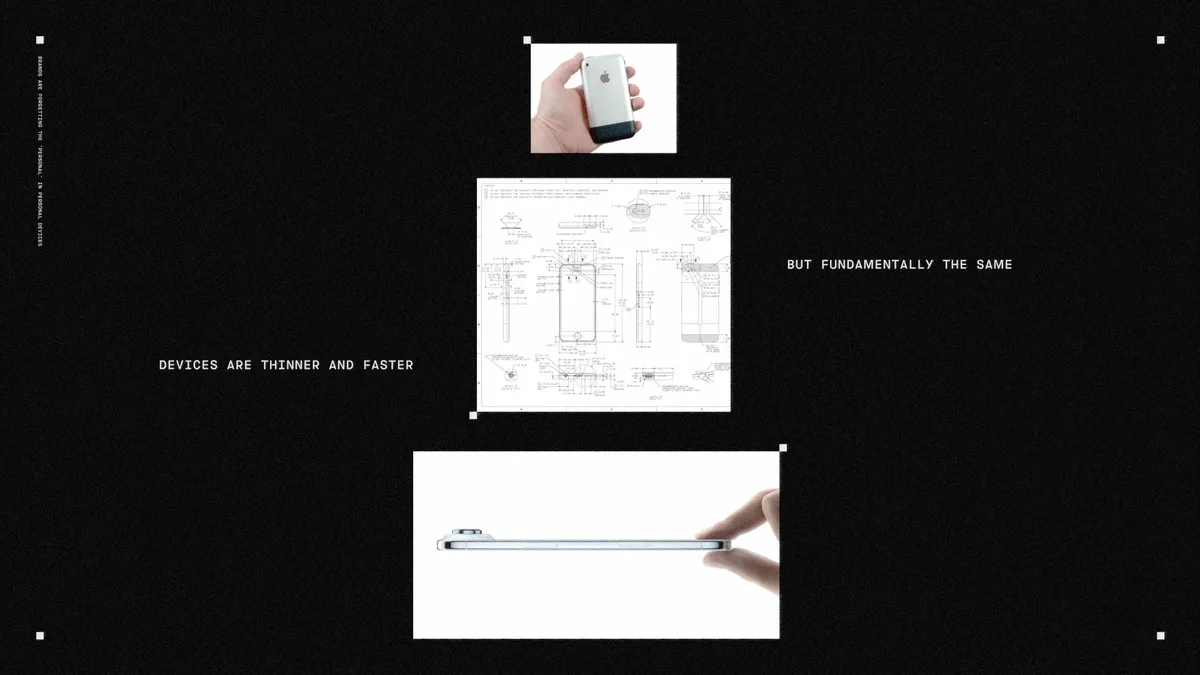
That’s why we’ve been carrying variations of the same core device for over 40 years. Camera, music player, phone – now all converged into a single object that sits comfortably in your pocket. Since then, progress has meant thinner, faster, better, but fundamentally the same.
If there’s one thing that kills emotional connection, it’s over-explaining specs and features
And when the form factor stops evolving, the story has to shift elsewhere.
If there’s one thing that kills emotional connection, it’s over-explaining specs and features. The sector has fallen into the trap of creating for comparison, driven by influencers and media obsessed with side-by-side comparisons. But those voices don’t represent most people. You can invest endlessly in the tech, but if you don’t invest in how it feels, you won’t create anything people care about.
Most categories evolve through leaps in form and behaviour. Personal devices have been optimised around a single physical context. When the container doesn’t change, neither does the thinking.
Tried, tested, failed
The industry has been searching for a way beyond that constraint for years, but it hasn’t quite found it.
Google Glass introduced a new interface, but never defined its role in everyday life. Humane’s AI Pin removed the screen, but failed to explain what behaviour it replaced. VR and AR continue to improve, but remain stuck between novelty and utility.
What these examples share isn’t a failure of technology, but of positioning. They introduced new capabilities, but not new habits. They didn’t clearly show who they were for, how they fit into real life, or what using them said about you.
But they all point to the same truth: the pocket is a limit.
If the dominant device can’t evolve without becoming impractical, the only option is to move elsewhere – onto the wrist, the face, closer to the body. That’s why wearables have become such an active area of exploration – watches, rings, headphones and glasses, forming a new ecosystem of body-worn devices.
The closer a device gets to the body, the higher the bar for acceptance
The challenge is that escaping the pocket creates a new problem: intimacy.
The closer a device gets to the body, the higher the bar for acceptance. It’s no longer just about utility, but comfort, identity and social signalling. You’re not just asking someone to use something new, but to wear it.
And that’s where most have fallen short. They’ve solved for engineering, but not meaning. Because leaving the pocket isn’t enough – you have to give people a reason to wear it.
Diamonds in the rough
We’re at a point where screens have flattened almost every product – Walkmans became iPods, ‘brick’ phones became smartphones, CRT televisions became slabs of glass – so it’s easy to forget that devices once felt distinct, expressive and alive.
Sony built its identity on tactility – the click of a button, the precision of a dial, the sense that you were physically engaging with something engineered. But when it launched Bravia, much of that surface disappeared into a single pane of glass. The challenge then wasn’t just technical, but communicative: how do you express something you can no longer feel? The answer was to lean into new metaphors, like the iconic 'Colour like no other' campaign, to bring intangible qualities like colour and fidelity to life.
It’s not just about how something sounds, but how it looks, feels, and lives in your space
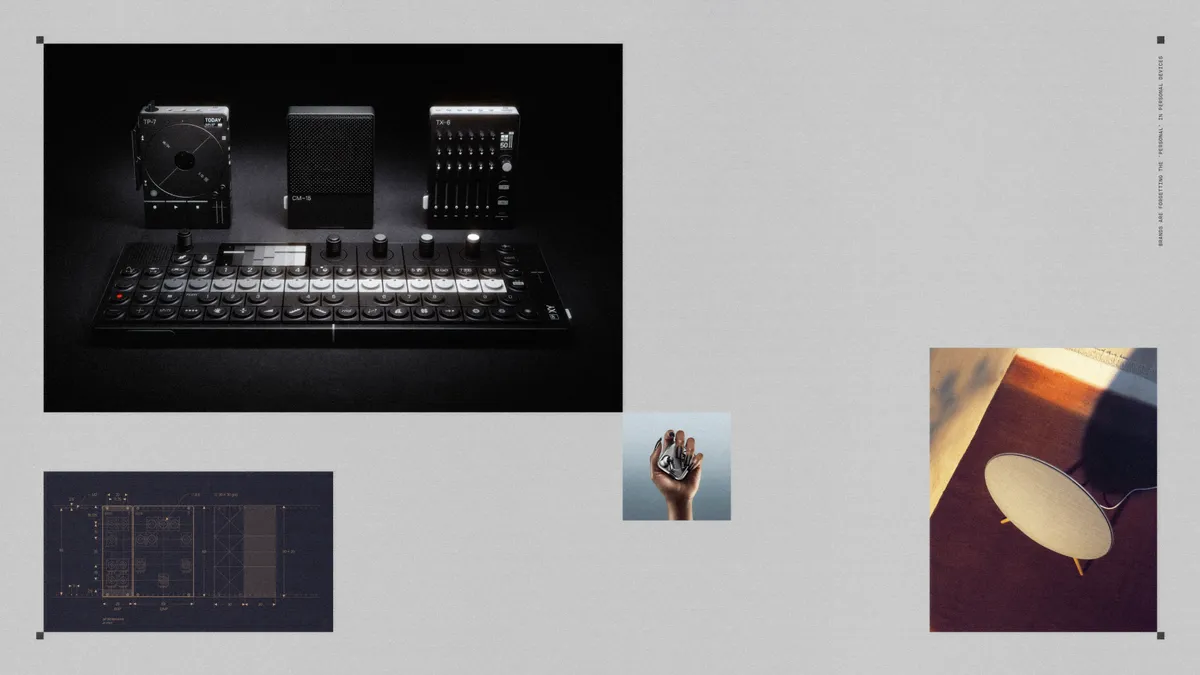
Meanwhile, Bang & Olufsen continue to push in the opposite direction. With its Atelier range, the brand leans into materiality and personalisation, creating bespoke products that feel as considered in finish as they are in performance. It’s not just about how something sounds, but how it looks, feels, and lives in your space.
Then there’s Teenage Engineering. At just over 20 years old, it’s a relative newcomer, but one that has built its reputation on playfulness, creativity, and emotional engagement. That sensibility runs through everything – from the products themselves to how they’re photographed, shared, and even experienced online. Small moments of delight, like interactive elements on their website, reinforce a feeling that the brand is as expressive as the tools it creates.
The common thread is that the product isn’t separate from the brand – it is the brand. Not just what it does, but how it behaves, how it feels, and what it stands for.
Changing the goal posts
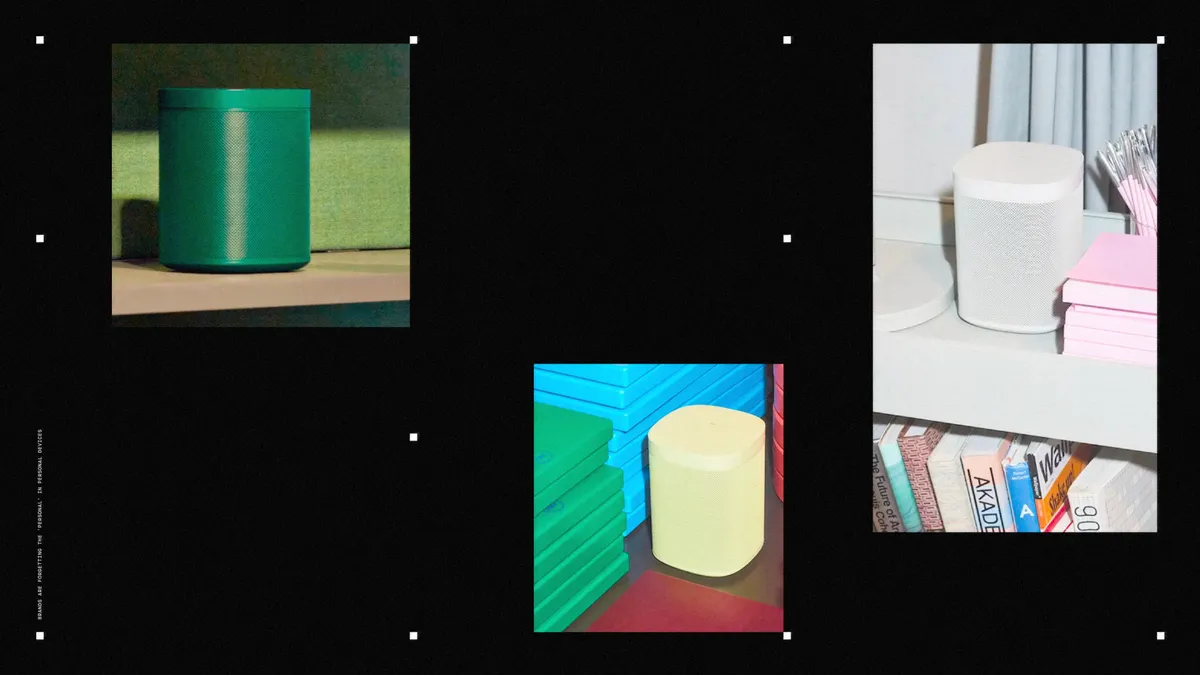
The consumer electronics industry is entering a phase where interaction is starting to change as devices move off the screen and closer to the body.
Many of these new form factors – watches, rings, glasses – don’t have the same surface area for traditional interfaces. Instead, they rely on a companion device, usually a smartphone, to do the heavy lifting.
But that dependency is starting to shift.
Advances in AI are beginning to enable more ambient, assistive systems – things that respond to signals, anticipate needs, and sit more quietly in the background rather than demanding attention. It’s early days, especially for on-device AI, but the direction is clear.
As these systems become more capable, they reduce the need for a central screen to control everything.
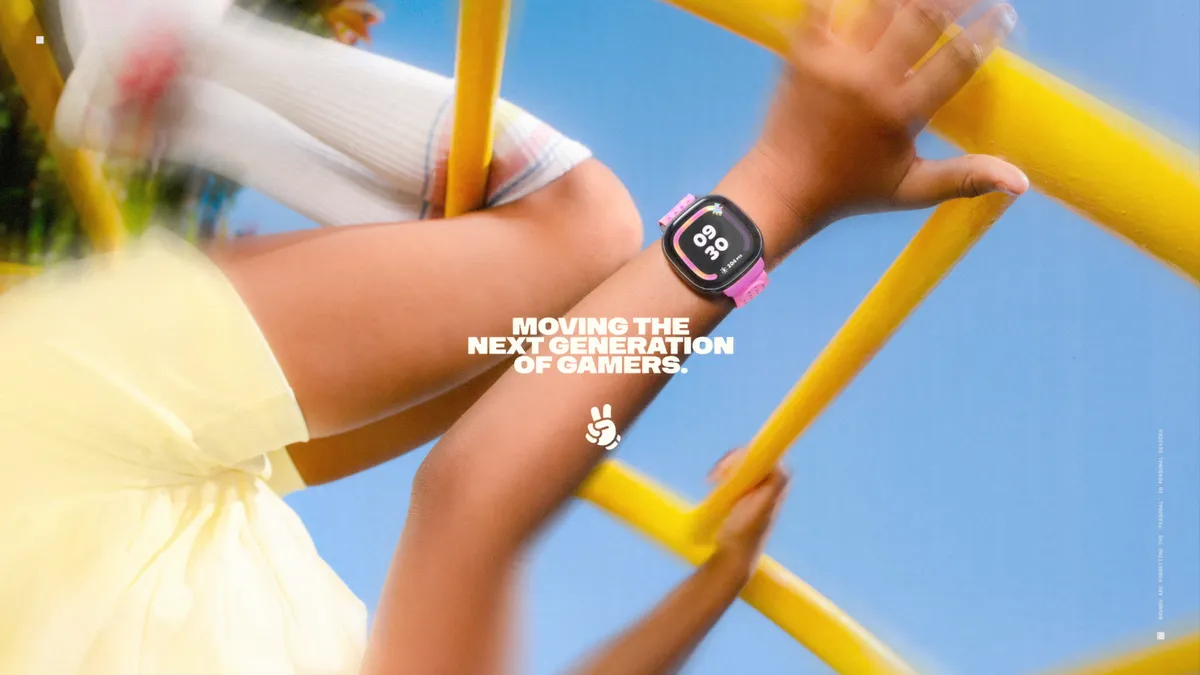
While the smartphone used to be where brand lived, that centre of gravity is starting to loosen. The consequence is that, as interaction becomes less explicit, it also becomes more standardised. Whether you’re typing, speaking or prompting, the mechanics start to feel the same. Then differentiation becomes harder.
When the interface is mediated, brands lose control over how they show up. But here’s what many tech companies will miss: as interaction fades into the background, everything around it becomes the experience.
Think about the pre-purchase marketing, the onboarding experience, what users are faced with if they need help or have a problem. The object, behaviour, and system all need to be cohesive and able to convey a truly distinct feeling.
Something that doesn’t just function well, but feels personal.
What now for brand?
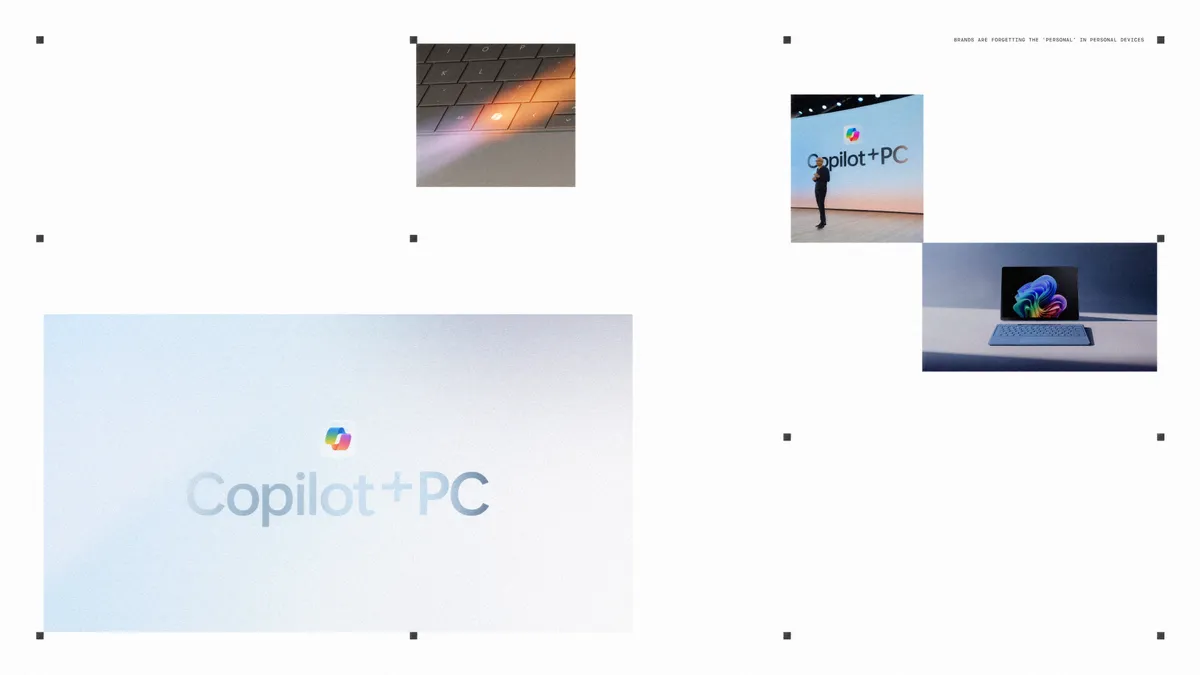
Some might argue that AI reduces the role of brand in consumer tech, as products become more intelligent and intuitive.
The reality is the opposite. When the UI becomes invisible, brand becomes the thing that gives meaning to the entire experience of owning and using a product – shaping how it behaves and how it expresses its place in your life.
That shifts the role of brand entirely, no longer a surface layer, but something far more fundamental.
When every device is intelligent, connected and capable, the difference is no longer in what it does, but how it feels to live with, how it behaves, the role it plays and how it reflects ‘you’.
That’s how a product earns its place in your life, and what it says about you when it does.
Creative Bloq is now easier to access than ever before with our on-the-go app, which brings you all the content you know and love from our website, but in a super-streamlined design.