Our Verdict
A game that weaves in Yoko Taro and Fumito Ueda influences, and still feels unique, only the occasional camera friction can dampen Motorslice's brilliance.
For
- Beautifully Brutalist world design
- Fun platform-puzzle boss fights
- P and Orbie are a joy
Against
- Some camera issues
Why you can trust Creative Bloq Our expert reviewers spend hours testing and comparing products and services so you can choose the best for you. Find out more about how we test.
Publisher Top Hat Studios, Inc.
Developer Regular Studio
Release date 5 May
Format PS5 (reviewed), Xbox Series X|S, PC (Steam, GOG)
Platform Unreal Engine 5
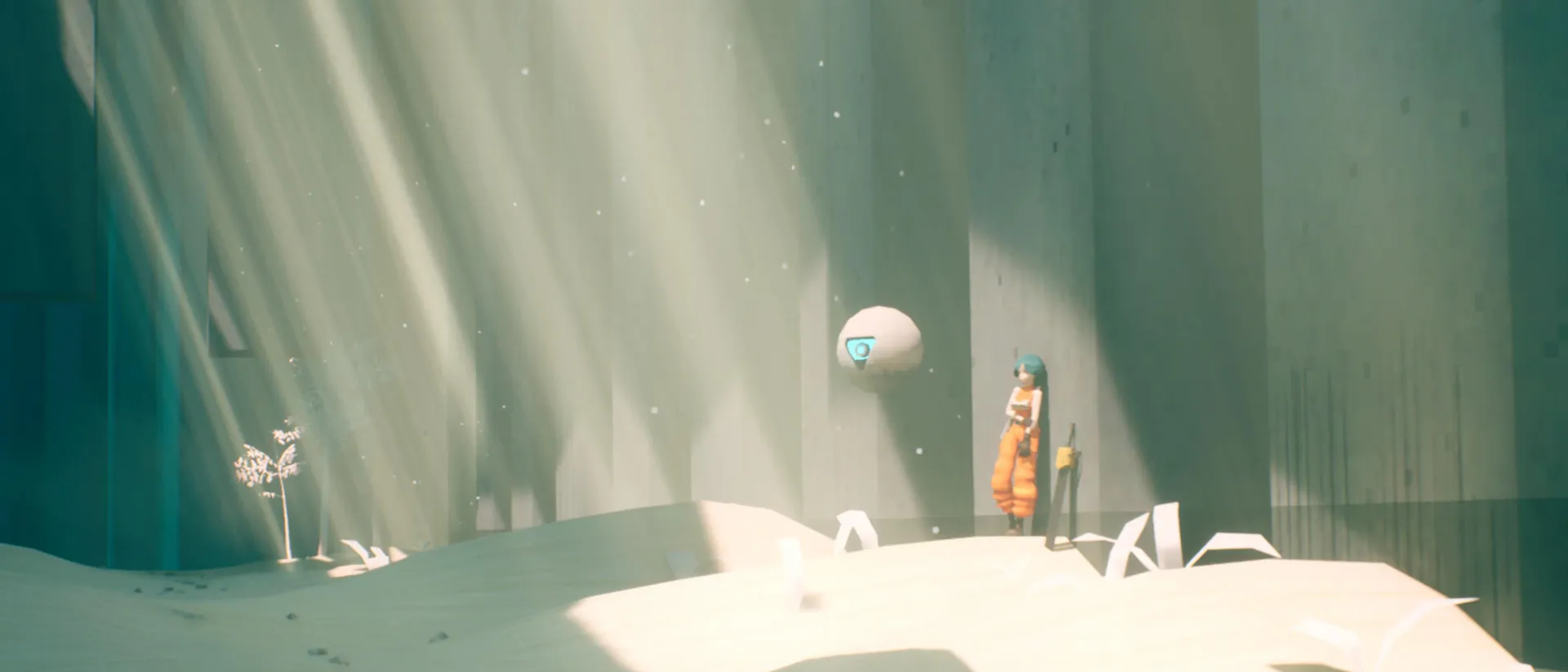
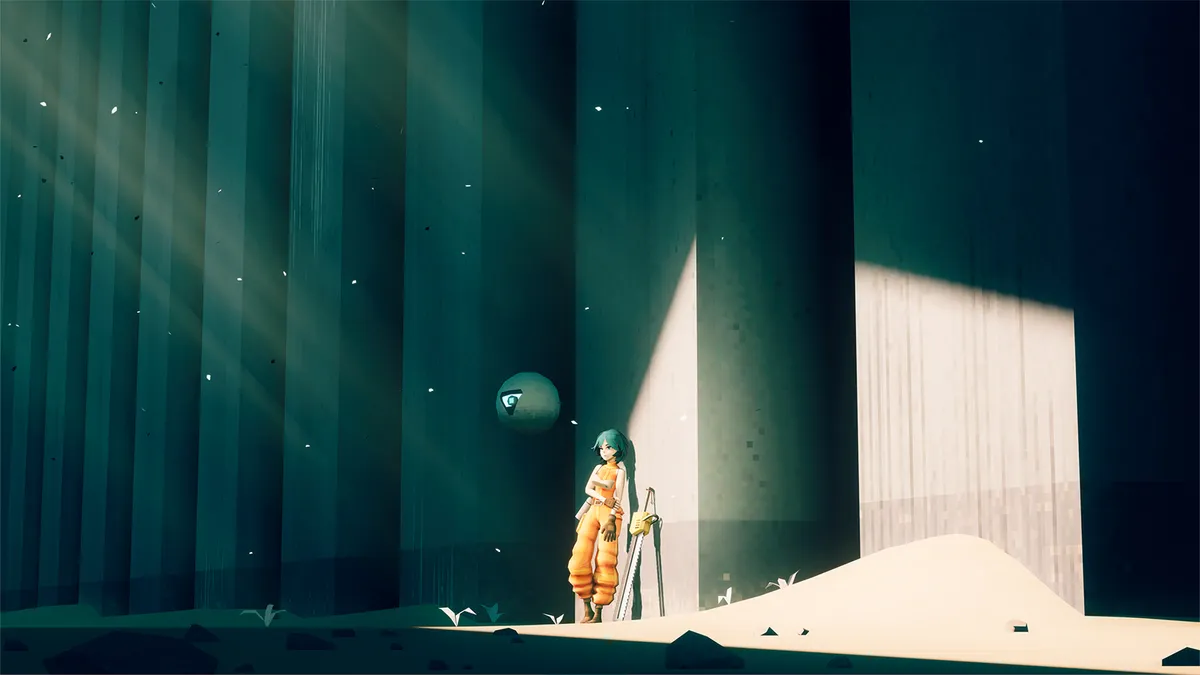
Motorslice sits somewhere between the melancholy grandeur of Nier: Automata and the distant, poetic scale of Shadow of the Colossus, and it’s one of the year’s most surprising games to date. Developed by two brothers, Lucas and Luiz, the game drops you into an elegantly simple, often Brutalist world that doesn’t really care if you understand it or not; its rules and reasons for being are as opaque as the landscape. Its only need is that you keep moving through it, and moving through it is the whole point of Motorslice.
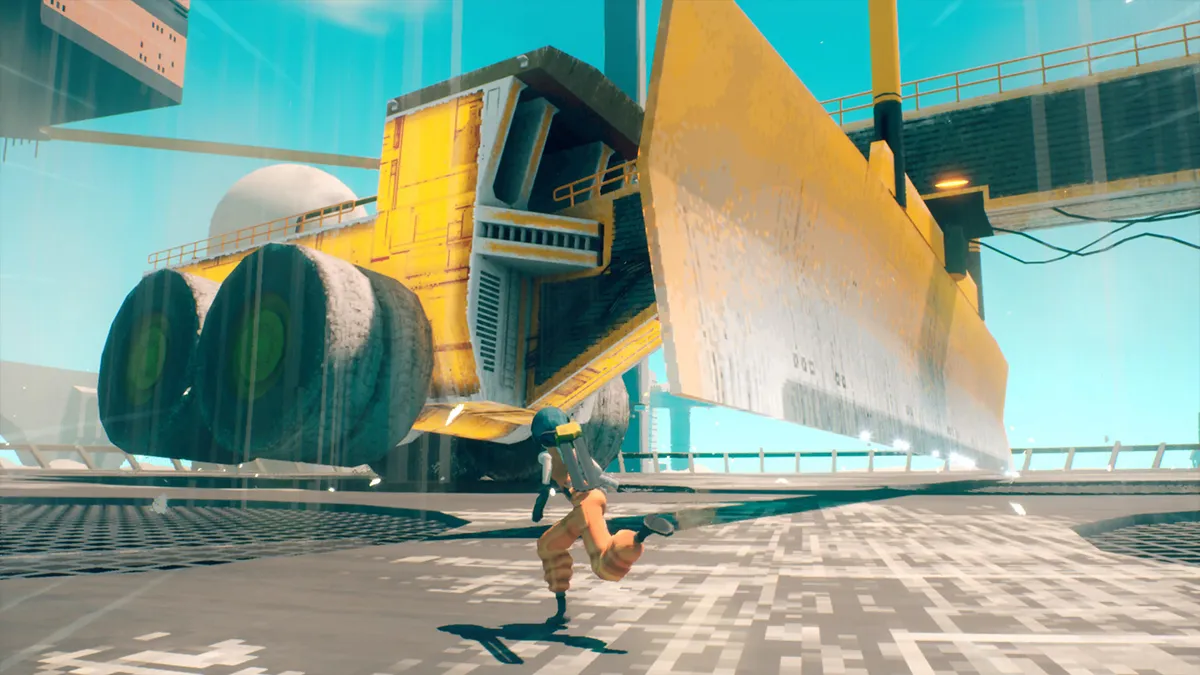
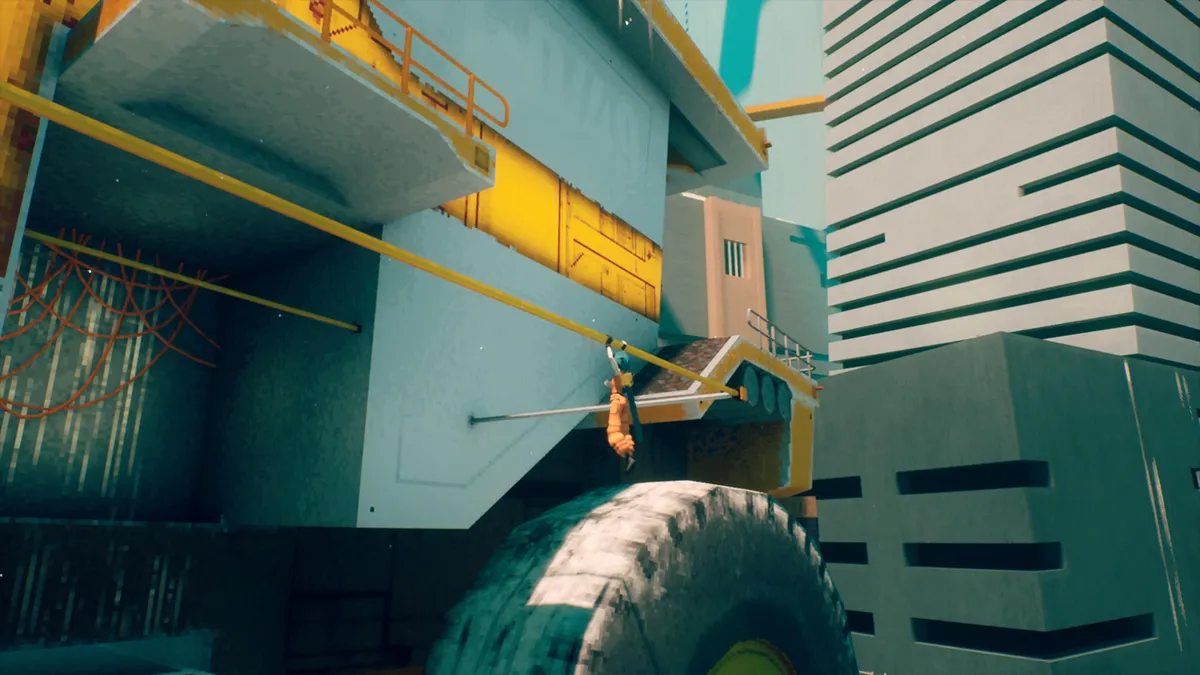
Playing as P, dropped into a vast megastructure with a floating companion droid called Orb, or Orbie, when things get a bit more intimate and during the pair’s time-outs, the mission is blunt: destroy everything inside. What that ‘everything’ turns out to be is where Motorslice finds its own identity and becomes more than a sum of its influences as P needs to put down out-of-control construction machines, colossal diggers, trucks, and industrial scrapers the size of tower blocks.
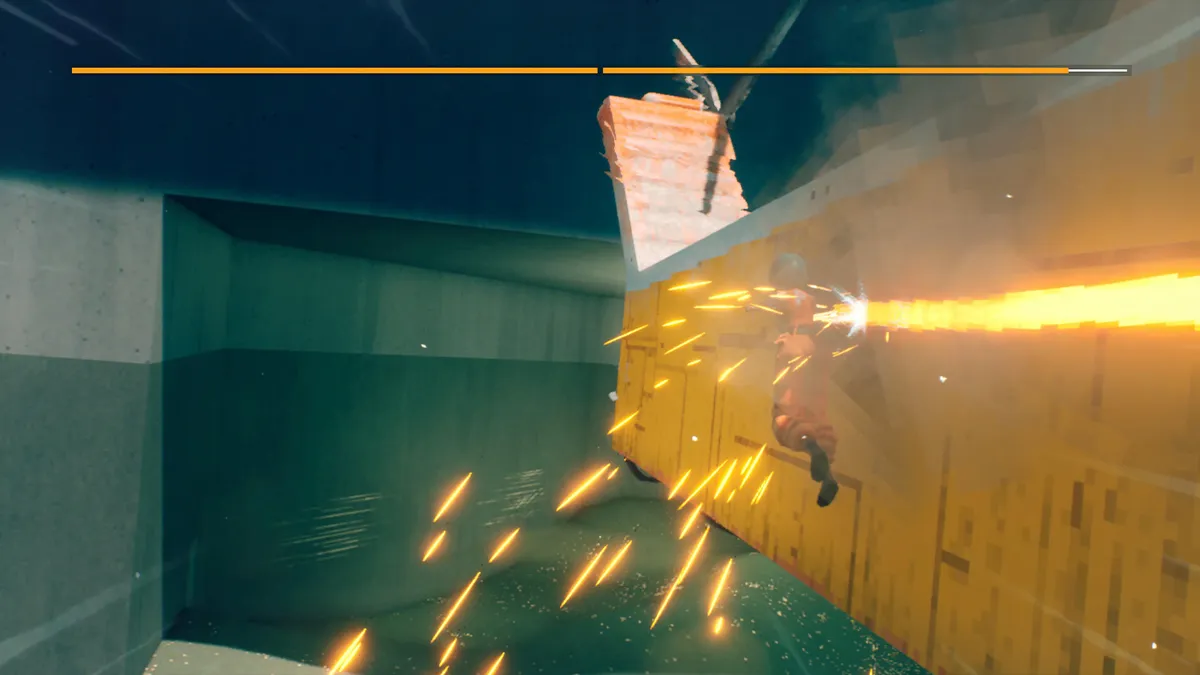
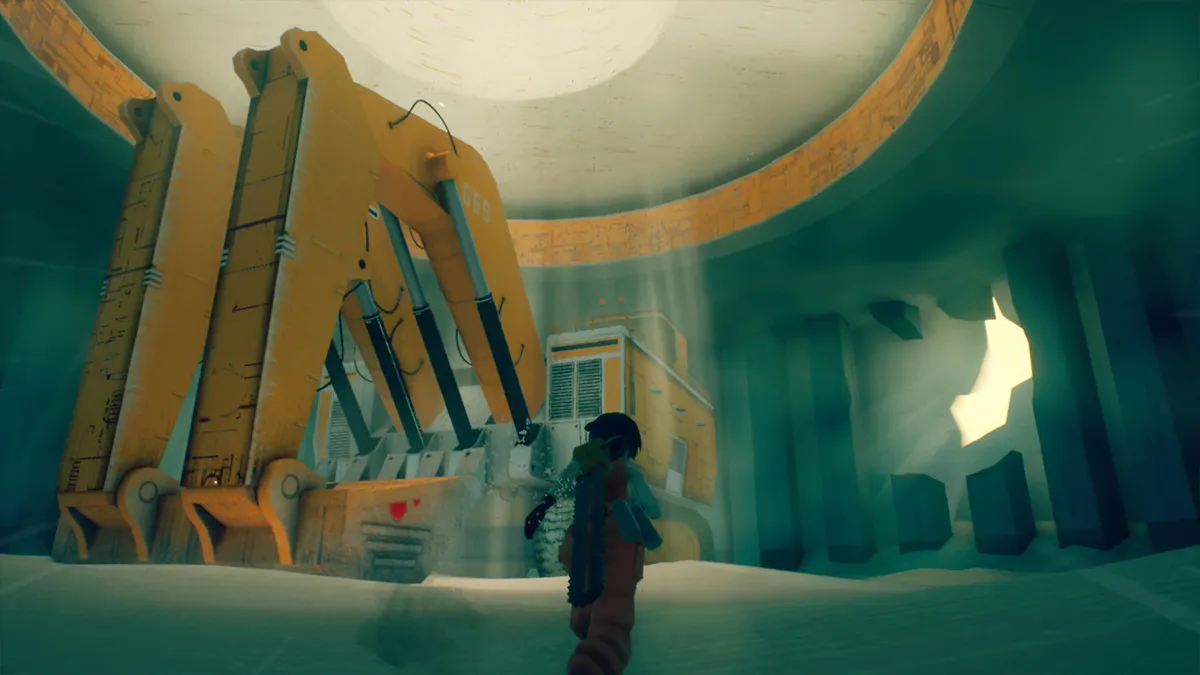
Each of these boss encounters feels less like an enemy and more like a problem to be solved, giant moving puzzles that, like Fumito Ueda’s Colossi, need to be put down by attacking weak spots, often only accessible when you’ve scanned, climbed and solved their patterns. Early encounters are readable, simply slice here, climb there, expose a weak point and commit. Still, later fights start to sprawl outward into environmental thinking: baiting a levelling truck into a trap, spinning up huge fans to unbalance it, or timing a counter against a roaring chainsaw arm.


Motorslice's epic design
The influence of The Shadow of the Colossus is obvious, but Motorslice doesn’t feel like an imitation because it brings its own personality and pace to the concept. These designs aren’t beasts but construction devices, machines on rogue, and within that idea, developer Regular Studio finds its voice, one that’s more detached and sterile than the creatures of Sony’s PS2 classic.
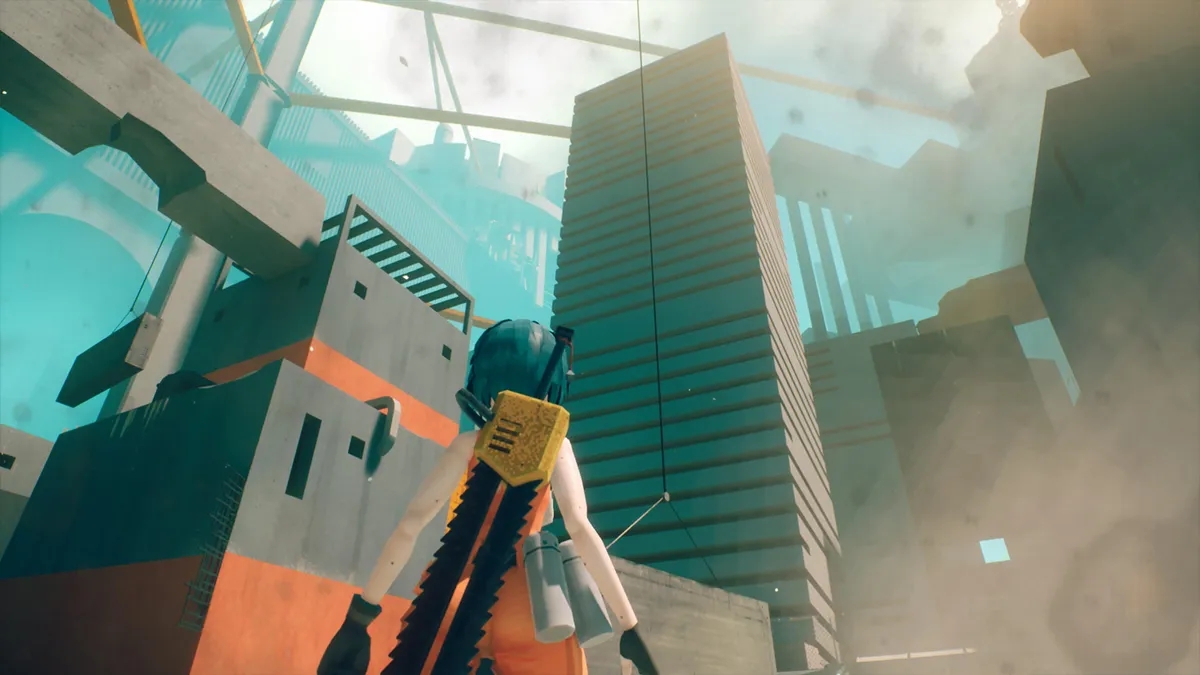
It helps that between these boss encounters, the game leans into movement in a way that feels very 2008 Prince of Persia, and I mean that as praise. The world P navigates is vast, simply designed but graceful in its complexity, as pillars and towers emerge from the mists, archways lead from darkness to bright blue-skied vistas, and sprawling pathways stretch into the distance. The world is a tease of shapes and geometry that suggests scale and complexity, just ike its machine-bosses.
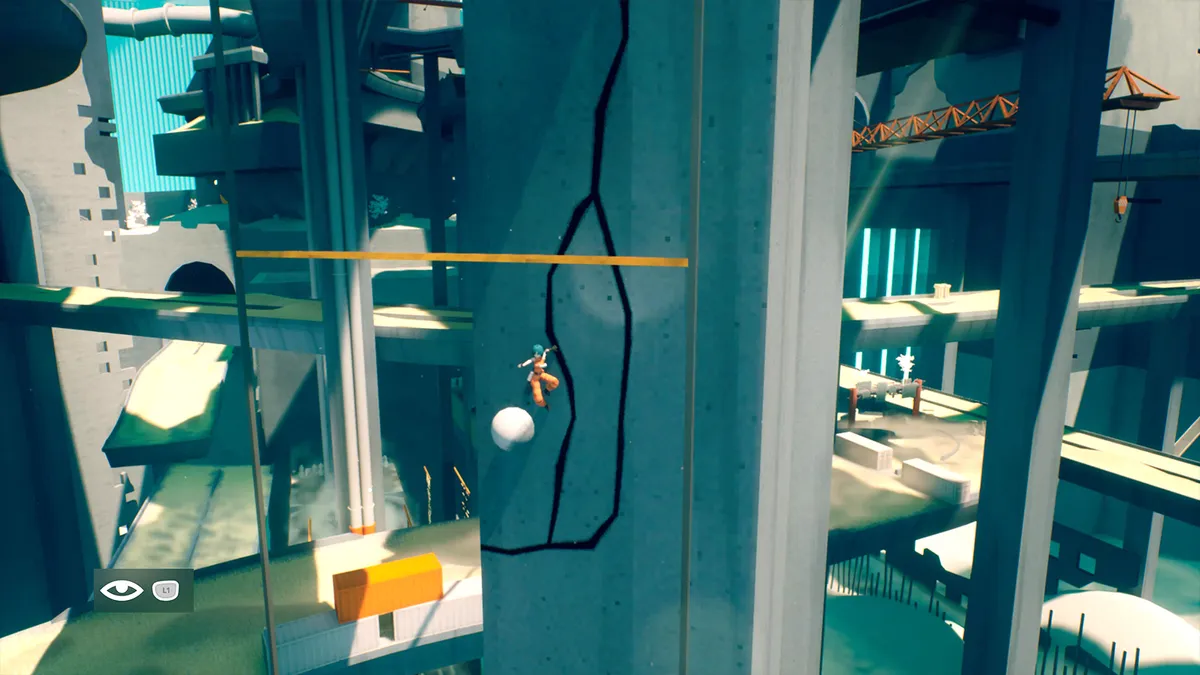
It feels deliberate and built around movement, as you don’t just react your way across these spaces but plan routes, whether in search of lost Orb droids or simply to find the next boss encounter. There’s rhythm to the game’s parkour that feels baked into the design – pause, plan, and jump.
This is where Motorslice is at its most interesting, and occasionally its most frustrating, because P’s movement, for all its elegance, isn’t always entirely obedient. Most of the time, she tumbles, spins, and threads her way across gaps with balletic confidence, but in denser moments, tight platforms, shifting camera angles, mid-slice direction changes, there’s a flicker of unpredictability.
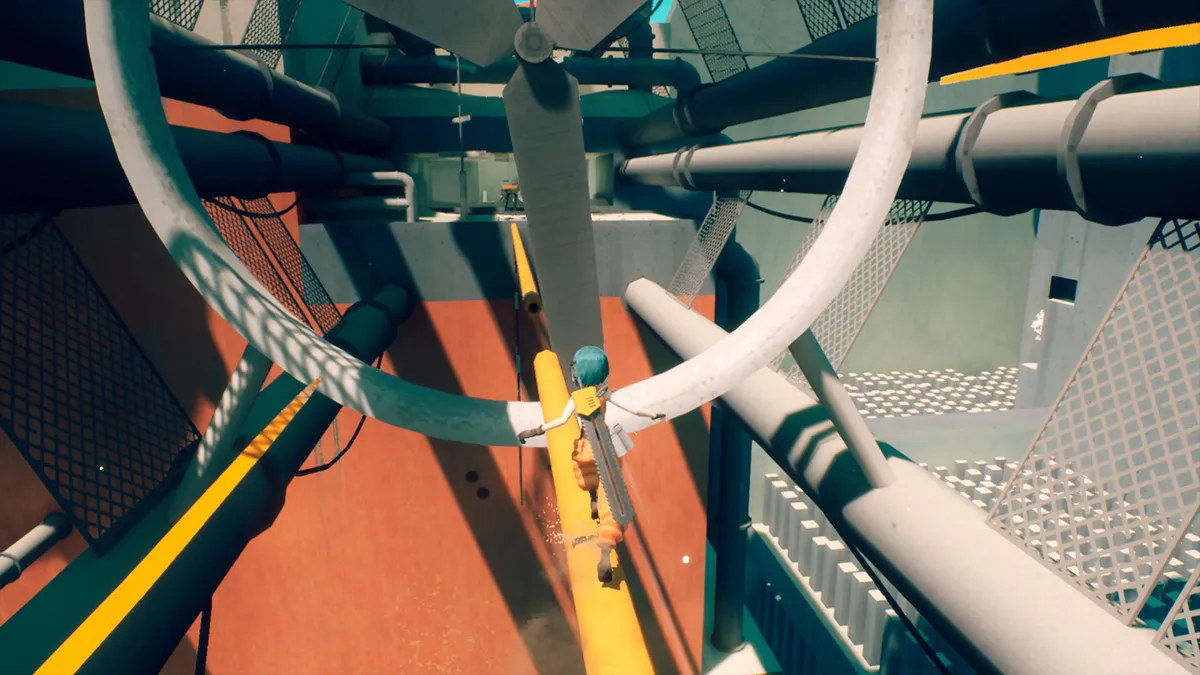
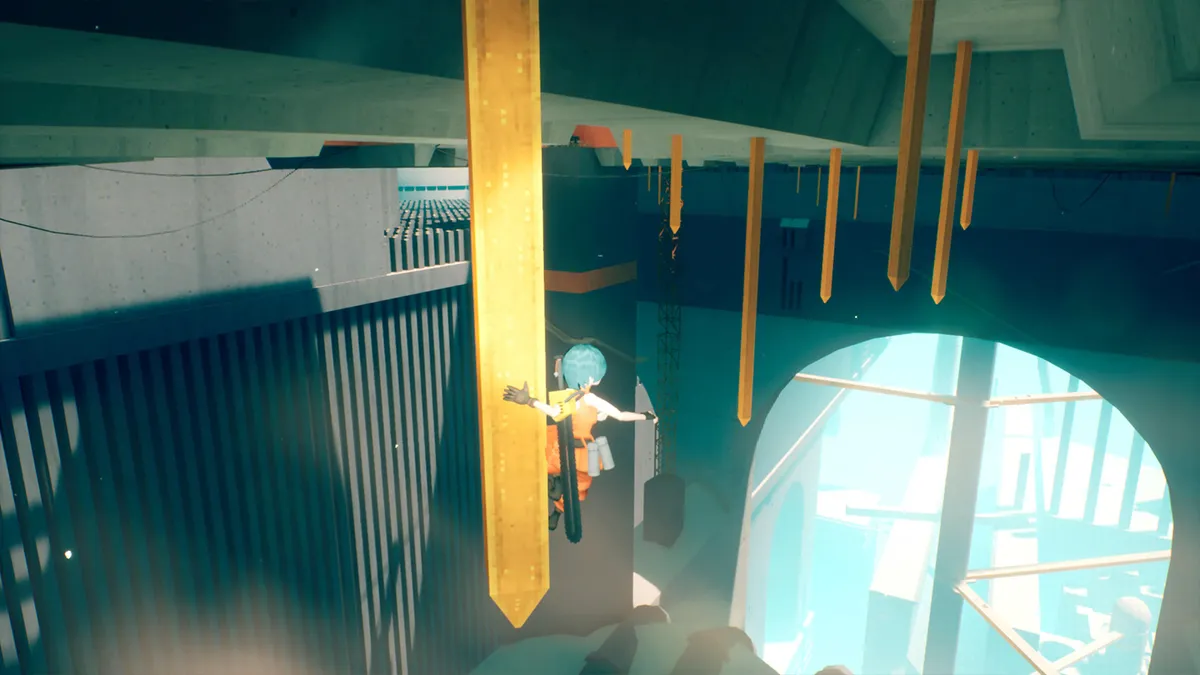
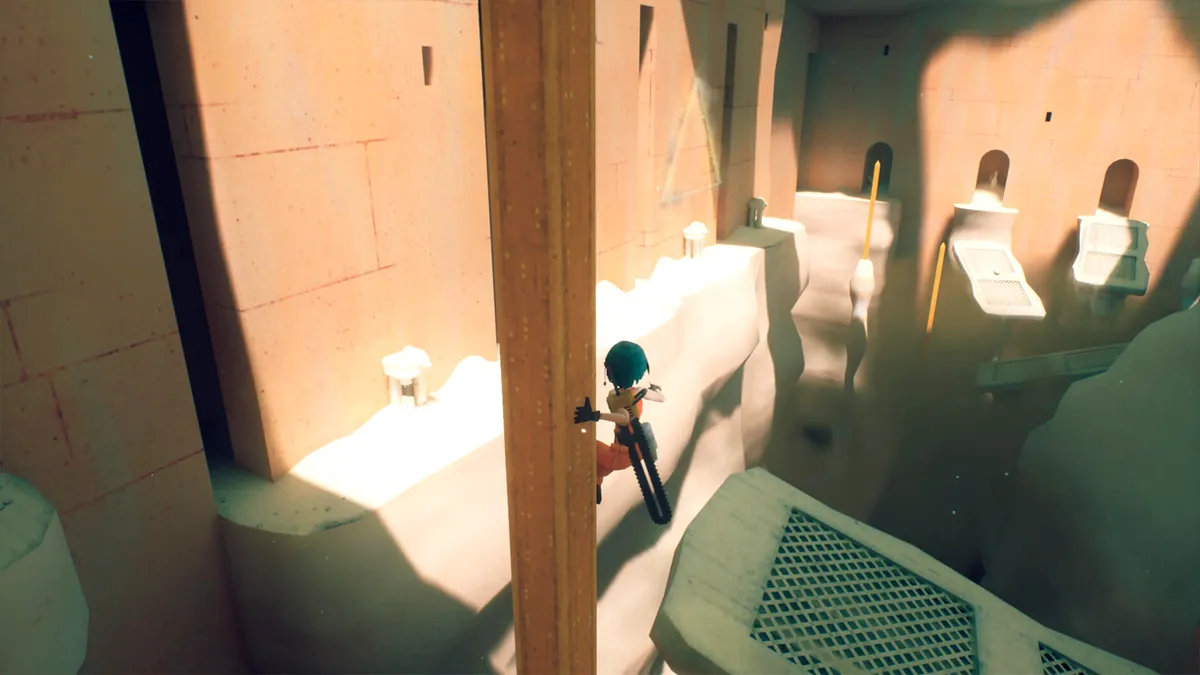
One recurring point of friction is changing direction during slicing – P can jab her chainsword into certain surfaces and glide across them – as it’s tied to camera alignment. You need some trial and error to figure out where to face the camera and adjust your view before the next ‘slice’, so the input reads mid-action correctly. When it works, it feels precise; when it doesn’t, it feels like you’re arguing with the camera about which direction P should be heading.
There are some other occasional missteps, a looseness to traversing from poles and an artificial snap when P lands on a small pipe or ledge. It's the kind of thing that can drop immersion, or leave you a little frustrated, and prevents seamless moment-to-moment traversal in favour of thoughtful pre-planning.
And yet, I restart and try again, and again, because the megastructure is too compelling to leave, and P and Orbie too interesting not to see how this all ends. Each new stage of the megastructure reveals another Brutalist expanse: vast drops, echoing corridors, rooms that open with a satisfying slam animation, and, in doing so, P spills you into new spaces with an eager abandon; the animation matches the mood.


When UE5 is simplified
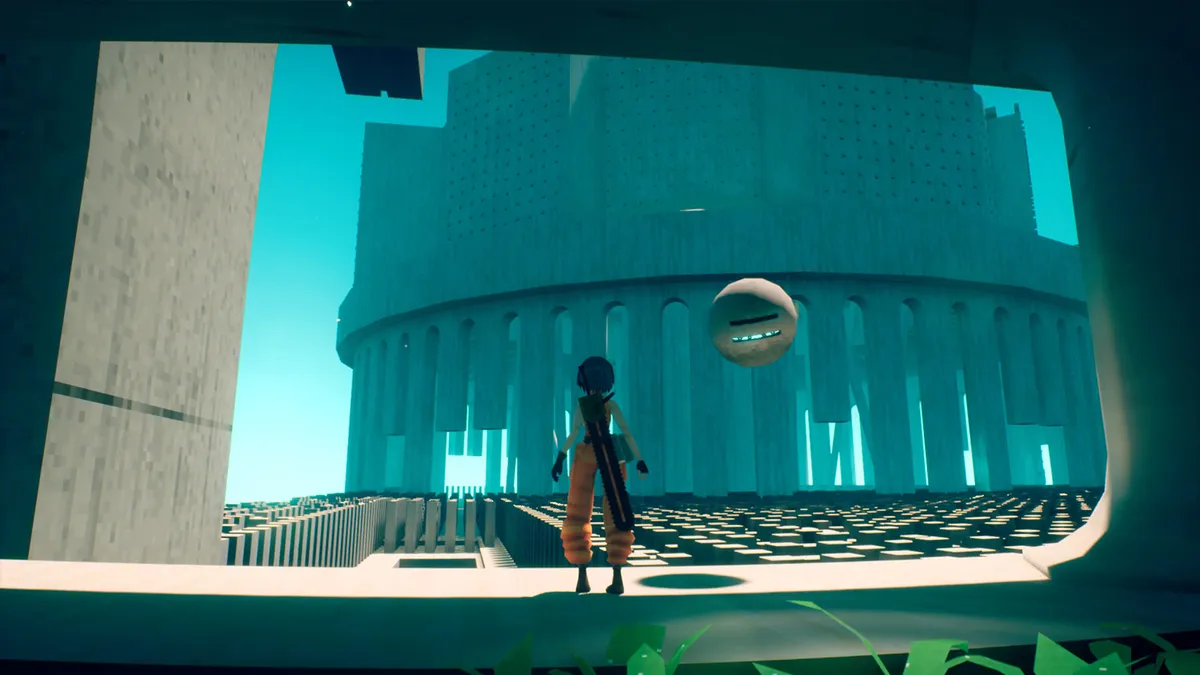
In an era when Unreal Engine 5 often means layering detail upon detail, there’s a remarkable restraint to the world design, too. Motorslice does the opposite of many games, leaving spaces empty and liminal for interpretation. A particularly strong recurring motif is how it handles transition: darkness closes in around P, then a square of light opens ahead, expanding outward until an entire cavern of pillars and machinery reveals itself against a blue sky. It’s simple, but it lands with real emotional weight and poignancy.
This curation extends to the game’s overall tone, too. Between missions, P and Orbie drift into quieter exchanges, sometimes playful, sometimes oddly tender, and there’s a Nier Automata feel here; that strange intimacy between human and machine that never fully resolves into explanation that Yoko Taro does so well. Soon, I find myself wanting more, needing to play in the brief dialogue choices as much as the platforms and peril of the megastructure to see where this duo’s story will lead next.
P and Orbie’s relationship, as well as the clean visual delivery, are two of many reasons why Motorslice keeps impressing, even if it doesn’t always hold together perfectly. The slight control issues will irritate some, especially when precision matters most, but given that the checkpointing is generous enough to make failure feel punitive, it rarely impacts the fun. And crucially, Motorslice has that one big hook – the promise of the next space to explore, a massive machine to bring down – and that’s what makes it so hard to put down.


out of 10
A game that weaves in Yoko Taro and Fumito Ueda influences, and still feels unique, only the occasional camera friction can dampen Motorslice's brilliance.