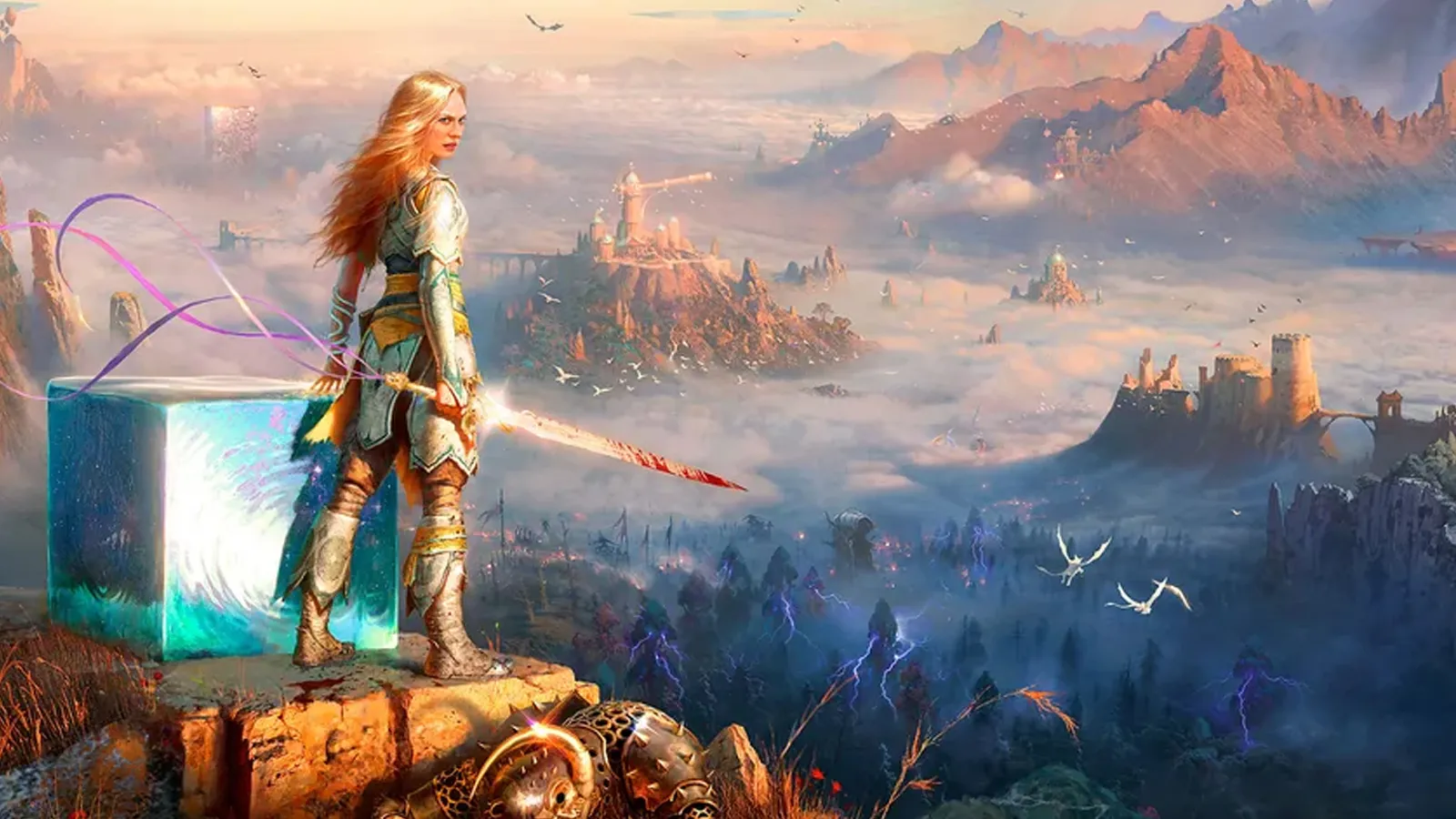
PlayStation’s latest State of Play felt like a call to arms from a publisher that’s been accused in recent months of not having enough on its slate, and amidst rising rumours of PlayStation 6, this games line-up shows there’s life in PS5 yet, with some surprising new releases coming this year and through 2027.
The games have much in common, as taken as a whole, whether it's new titles like God of War: Laufey, The Lost Wild and Kemuri: Hunt the Unseen, the reimagined Tomb Raider or revivals of Stuntman and Rayman, each promotes the idea of distinct identity and visual intent rather than safe, shared design language.
There’s a clear mix of revivals and new ideas in play. Long-dormant franchises return in altered form, while new IPs build their worlds around folklore, survival and stylised action. Across the board, the emphasis is less on genre familiarity and more on how each game tries to feel different in motion, tone, and structure, whether from the feral brutality of Marvel’s Wolverine to the yokai-infused streetwear aesthetic of Kemuri to the narrative-first framing of Silent Hill: Townfall.
Unreal Engine 5 feels like the foundation of much of what’s been shown, but it isn’t the defining identity it once was. What stands out more is how differently each game uses it – fractured cityscapes, myth-heavy environments, cinematic skies, submerged ruins, unstable realities – all pushing in separate visual directions rather than converging on a single look or design, something often levelled at UE5 games.
There were more games announced than I’ve rounded up here – such as Bancho The Chef and zombie horror, Ill – but you can find the full list on the PlayStation Blog; these are the ones that hit me personally, whether because they look artistically brilliant, technically interesting, or I just love Until Dawn.
God of War: Laufey
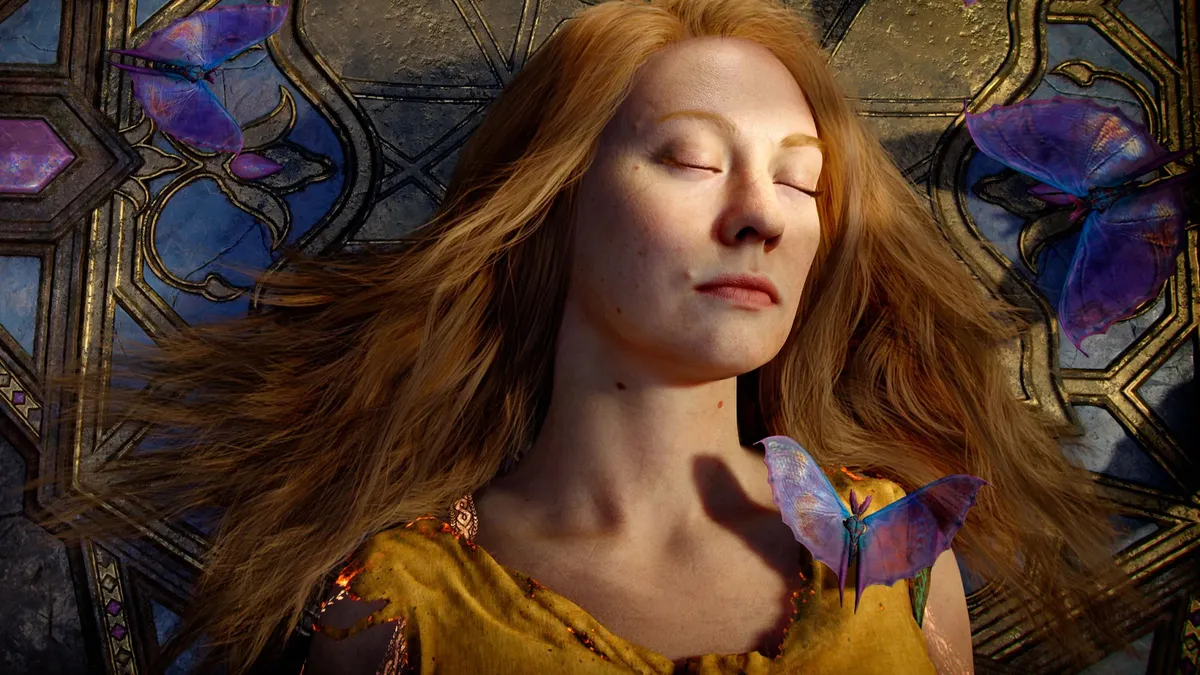
A new God of War game from Santa Monica Studio, but wait, it’s not series protagonist Kratos? It’s lead is a *gulp* woman? I can hear keyboards being warriors as I type this. The facts are, God of War: Laufey looks great, and shifts the focus away from Kratos and into Faye’s story, pulling her out of the margins and placing her at the centre of a more uncertain, in-between space where gods from different pantheons begin to overlap.
Instead of a straightforward mythic journey, Laufey wakes up and sets about exploring the realm of Everywhen, where memory and consequence sit alongside combat and exploration to build a hero’s journey that promises to be more fractured than a standard adventure, with less focus on conquest and more attuned to exploration.
It’s a God of War game, still, so the core of the game is smashing monsters with weapons and magic, but combat looks to be leaning away from brute force and into movement, timing and abilities. Even in the snippets of gameplay, combat looks more rhythmic and Laufey ‘dances’ and spins instead of Kratos’ hulk-smash approach.
It’s still recognisably God of War, but the tone feels lighter and the world more magical and colourful – her sidekick is a giant felly cube played by The Boy’s Jack Quaid. Softer in places, more unsettled in others, with a visual language that feels brighter but with a dark undertow, Laufey looks surprisingly good just when I was feeling God of War fatigue.
God of War Laufey is exclusive to PS5, coming 'soon'.
Marvel's Wolverine
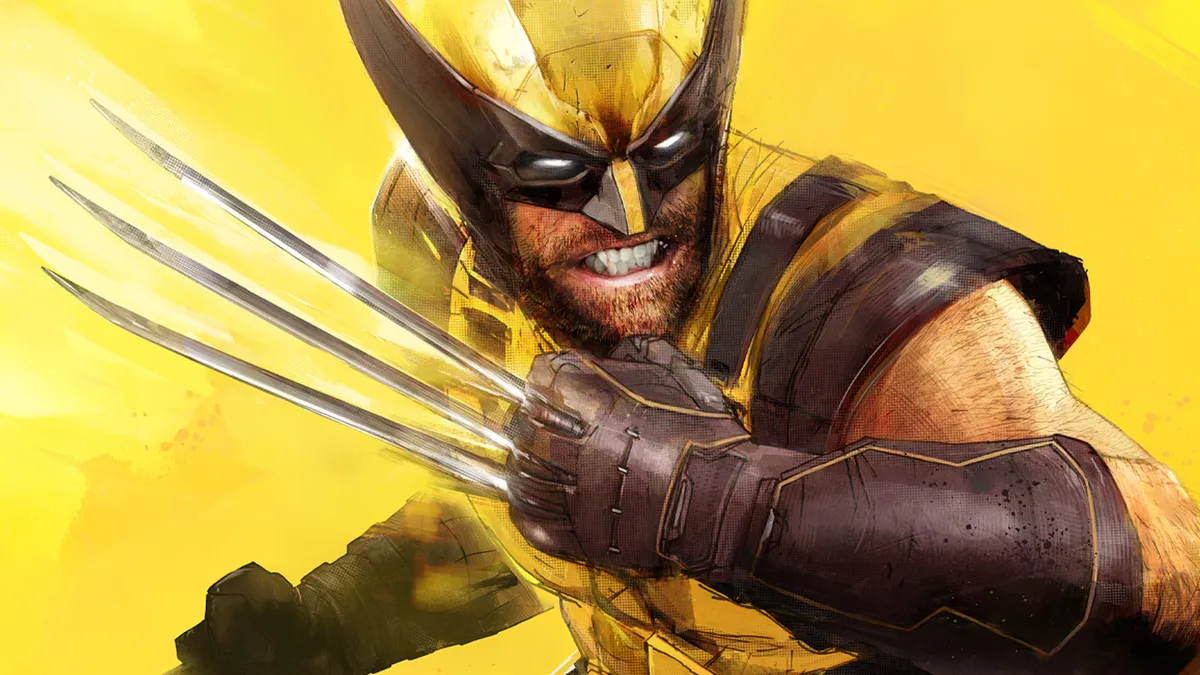
Our first proper look at Insomniac’s Wolverine game surfaced at State of Play, and it doesn’t ease you in gently as Logan’s thrown straight into rain-soaked streets and close-quarters fights that feel messy and raw. Combat is all claws cutting through enemies in quick, blunt bursts rather than clean superhero choreography, and the dev isn’t holding back.
There’s a sense of place beyond the violence too, with hints of Madripoor in the mix and glimpses of other locations, and a story that looks like it’s going to push Logan across multiple fronts rather than keep things contained. Insomniac is teasing familiar mutants along the way, too, though oddly no actual ‘X-Men’.
Tonally, it’s a clear shift from the studio’s Spider-Man games. Everything is slower, heavier, and more grounded in impact. Logan himself is short and stocky, and his costume has a weird-funny crotch sag that makes him even squarer in silhouette.
Marvel's Wolverine releases 15 September.
Kemuri: Hunt the Unseen
UNSEEN’s Kemuri is set in Kemuri City, a stacked, vertigo-heavy sprawl where rooftops and alleyways stack and blend like parkour mazes. Of all the games revealed during PlayStation's State of Play, this one has a visual design that slaps you around the face and demands attention
Designed and developed by artist and director Ikumi Nakamura and her new studio, Kemuri feels vibrant and bold. At the centre is a yokai hunter who uses the Fox Window to see what others can’t, spotting spirits and forming contracts with them. Those abilities soon become part of how you move and fight, reshaping your look as much as your toolkit as you progress through the city.
Developed using Unreal Engine, it supports co-op as well, but the stronger pull is the way folklore gets absorbed into identity here, turned into something worn, adapted and changed into new ways to move and attack.
Kemuri: Hunt the Unseen releases in 2027 for PS5.
Rayman Legends Retold
Ubisoft’s Rayman Legends Retold moves the Glade of Dreams into a mix of classic 2D and 3D where platforming isn’t flat anymore – it tilts, bends, and shifts as you move through it, turning familiar levels into something closer to a playable theatre than a straight run from left to right. If you're familiar with Rayman Legends, then we're back, but bigger and bolder.
Rayman, Globox and Barbara are all back, facing a new corruption spreading through the world. There are voiced cutscenes this time, along with new story threads and a strange extra realm stitched into the usual chaos of the series. You can still play it in co-op, but it feels more physical now with stages leaning into rhythm, timing and set-piece moments like dragon-riding stages that push you through the environment rather than just across it.
This Rayman feels nostalgic and celebratory for a series that has always been with is, arguably put Ubisoft on the map back in the ‘90s, but hasn’t always been given its dues. This entry looks stunning and feels retro in the best possible ways – fun, inventive, and accessible.
Rayman Legends Retold releases 1 October.
Tomb Raider: Legacy of Atlantis
Crystal Dynamics’ Tomb Raider: Legacy of Atlantis rebuilds Lara Croft’s first adventure 'from the ground up' in Unreal Engine 5 – I know, we've heard it before – but turning the 1996 game into something far larger in scale and more continuous in structure feels like it's shaping into a promise fulfilled this time around.
Developed alongside Flying Wild Hog, it expands on locations such as Peru’s Lost Valley, Greece, and Egypt, making them interconnected spaces rather than isolated levels. You can move between them more naturally now, uncovering reworked puzzles, new traversal routes and relics tied to the fractured story of the Scion.
Unreal Engine 5 shapes much of what you see and do – dense environments, heavier emphasis on lighting and atmosphere, and exploration that feels more systemic than linear. The scale of the visual upgrade and expanded locations means this feels less like a modern remaster and more like a full reinterpretation of how those early ideas might exist if made from scratch today.
Tomb Raider: Legacy of Atlantis releases 12 February 2027.
The Lost Wold
Great Ape Games' The Lost Wild brings survival horror back to something closer to instinct, dropping you onto a remote island where dinosaurs behave like unpredictable animals to watch, avoid and outthink rather than a cinematic setpiece to battles.
Writing on the PlayStation Blog, game director Gary Napper describes the approach as “observation, instinct, and restraint”, and that idea runs through how you move through the world. Sound, stillness and timing matter as much as whatever tools you’re carrying, and survival often comes down to choosing not to engage at all.
Combat takes a back seat, then, and you lean on stealth, distractions and non-lethal options to slip past threats rather than overpower them. Another on this list that makes use of Unreal Engine 5, the island itself feels dense and enclosed, with creature behaviour designed to feel reactive rather than scripted, pushing you to treat every encounter as something uncertain.
The Lost Wild releases in 2027.
Stuntman: Hollywood
Saber Interactive’s Stuntman: Hollywood revises the old stunt-driving series as a PS5 game, but it's once again built around film sets, crashes and carefully controlled chaos. I loved Stuntman on PS2, as it had that 'just one more go' design; on PS3, it failed to reinvent and progress the idea, but here, tied to Hollywood IP and making use of modern console SSDs for fast loading and reloading, Stuntman finally feels like it's found its moment to shine.
In this new take on Stuntman, you step into the role of a stunt performer working through staged productions inspired by Universal properties like Fast & Furious, Back to the Future, Knight Rider, Miami Vice and Death Race, recreating set-piece moments rather than racing for position.
Each shoot escalates in scale and difficulty, from tight precision driving to bigger, more destructive sequences involving cars, bikes and buses. It’s less about winning races and more about hitting the mark while everything around you falls apart. What always made Stuntman fun was its odd blend of puzzle solving and technical driving as you try to set up and execute the perfect shots and stunts – I can't wait to do that in KIT.
Stuntman: Hollywood is 'coming soon'.
Control Resonant
Remedy’s Control Resonant pushes its ‘paranatural’ version of Manhattan further into instability, where the famous city refuses to stay consistent from one moment to the next, which means all manner of visual twists and eye-opening spectacles as rooftops become sidewalks and more. The result is a city that doesn’t behave like a setting so much as an active force working against you, which feels very Control-like in spirit.
You play as Dylan Faden, moving through warped districts where architecture folds, breaks, and reassembles in ways that don’t follow any stable logic. 'Resonant' manifestations spread through the environment, shifting what’s possible as you move deeper into the city.
Combat centres on the Aberrant, a shapeshifting weapon designed for close-range encounters that constantly changes shape and function depending on the situation. Encounters feel tight, physical, and unpredictable, shaped as much by unstable physics as by enemy behaviour, yet they have that special something Remedy is capable of delivering.
Control Resonant releases 24 September.
Marvel Tōkon: Fighting Souls
Arc System Works and Marvel Games have revealed they're expanding Marvel Tōkon: Fighting Souls with a new 'Knights of Doom' lineup led by Doctor Doom, alongside Magneto, Green Goblin and Carnage – and the game isn't even out.
Each character naturally has their own style and feel when fighting, tied to their comic book design; for example, Magneto reshapes and bends the battlefield itself; Carnage fights up close with aggressive, shifting symbiote attacks; Green Goblin brings unpredictability in the air, breaking up rhythm with speed and explosive mobility.
A nighttime version of Marvel’s New York stage also joins the roster, changing the mood of the familiar level, making it a perfect set for this new roster of characters. The new character reveal only heightens anticipation for this 4x4 brawler, which makes great use of Arc System Works’ stylised anime visuals and feels like the bolder, modern cousin of Capcom's classic retro Marvel fighting games.
Marvel Tōkon: Fighting Souls releases later this year.
Onimusha: Way of the Sword
Capcom’s Onimusha: Way of the Sword brings the series back as a PS5 action reboot set in early Edo-period Kyoto, where Miyamoto Musashi carries the Oni Gauntlet into battle against the Genma. (Read my hands-on with Onimusha 2: Samurai’s Destiny Remaster for more on this series.)
Combat is built around deliberate timing and impact with parries, deflects and the series’ Issen counter returning, now with an emphasis on making every strike feel heavy and consequential rather than purely flashy. The idea, as described on the PlayStation Blog by producer Akihito Kadowaki, is an “ultimate slashing” system that prioritises contact, precision and weight in each exchange.
Mount Ōe appears as a major battleground, ruled by the towering Genma Shuten Dōji, with dense environments designed to frame sword duels in a more cinematic, grounded way. Given that Capcom has started 2026 with three big hits – Resident Evil: Requiem, Monster Hunter Stories 3 and Pragmata – this retro revival has gone from curiosity to a must-play.
A demo is now available ahead of its 25 September release.
Silent Hill: Townfall
Silent Hill’s comeback continues apace, and while it's as patchy as ever – Silent Hill 2 Remake, brilliant; recent movie Return to Silent Hill, not so good – Screen Burn Interactive’s Silent Hill: Townfall looks to put the series back on track, proving perhaps this is a series that should stay a game.
Set in the fog-bound town of St. Amelia and centred on a new character, Simon Ordell, Townfall is a narrative-led survival horror in which progression and puzzle design are tightly interwoven. As the team puts it on the PlayStation Blog, “each puzzle is designed while writing the story,” so discovery and storytelling are built into the same structure rather than sitting apart, which feels perfectly Silent Hill.
While the series has always had combat, it’s never been the reason we play, so in Townfall, gameplay focuses on tension over direct confrontation. You move through a first-person perspective, relying on evasion, stealth, and occasional weapon use when things get close. The result suggests a slower, more pressured way of moving through the game’s foggy environments, where visibility and uncertainty matter as much as what’s actually lurking in front of you. Along with The Lost Wild, this is making tense stealth a thing again.
Silent Hill: Townfall releases 24 September.
Ace Combat 8: Wings of Theve
Bandai Namco’s Ace Combat 8: Wings of Theve continues the series’ Strangereal setting on PS5, focusing on large-scale aerial warfare built around a new conflict across the Federation of Central Usea. The series is one of PlayStation's longest-lasting and has managed to grow from its 'Gran Turismo for planes' idea into something more interesting: an anime-influenced narrative flying sim with often excessive 'boss battles'.
In the upcoming Wings of Theve, you fly as part of Joker Squadron, moving through air-to-air engagements alongside ground and anti-ship missions that break up the rhythm of high-altitude combat. The campaign leans into set-piece moments, including encounters with massive “giant weapons,” such as continental aircraft and land-based ships capable of reshaping entire regions.
Made using Unreal Engine 5 (another one), the game pushes its sense of scale through layered cloud systems and cockpit-level presentation, where visibility, positioning and timing matter as much as raw firepower. Sadly, this time around there's no PSVR 2 support
Ace Combat 8: Wings of Theve releases 2 October.
Until Dawn 2
I've been waiting for Until Dawn 2 for years. The original Until Dawn on PS4 remains one of Sony's best games; its choice-led gameplay, film-quality visuals, and all-star cast combine in a way few games have managed since. The fact you could kill off everyone in macabre Final Destination ways was more fun than it should have been.
So a sequel, developed not by Supermassive but internally at Sony's Firesprite, is a love-hate of sorts, as it brings the horror series back on PS5, but we need to wait until 2027, with a different team at the helm, to discover the macabre magic sauce is still here.
The premise sees a new cast, a group of ghost hunters filming for the viral channel ‘Dead True’, face the kind of death-by-decision that made Until Dawn iconic. You follow their TV special on an abandoned tropical island, where staged scares begin to unravel into something far less controllable as an ancient presence surfaces and starts turning the situation into something bloody and real.
The structure still leans on branching choices and consequences set up in the original game, developed further by Until Dawn’s original dev in the recent Directive 8020 – the idea remains the same: your small decisions shape who makes it through the night and who doesn’t, preserving the series’ butterfly-effect design while shifting the setup into a more modern, media-driven premise. It sounds right; if it can match the love-to-hate-them character writing of the first game, this could be great.
Until Dawn 2 releases in 2027.