





Most of us have been playing Monopoly since we were kids, so it's one of the most recallable logos out there, right? Of course, I'm talking about Mr Monopoly, also known as Rich Uncle Pennybags, who is kitted out as a very fancy gentleman with a moustache, top hat, cane and monocle. Except he doesn't have a monocle. Seriously.
This is just one of the many logos subject to the Mandela effect, a psychological and social phenomenon that convinces us of visual elements that simply don't exist. A few years ago, we reported that scholars at the University of Chicago studied the effect and found that people share the same false memories of a range of logos and icons. The very best logos are memorable, but some of them have false additions in the minds of many people.
We decided to revisit this study after a chat in the office brought up the design details that actually don't exist in real life – and we want to know, have you been subject to the Mandela effect in these cases? If so, let us know in the comments. And if you have any other logos you've misremembered, can you draw your version and upload them in the comments?
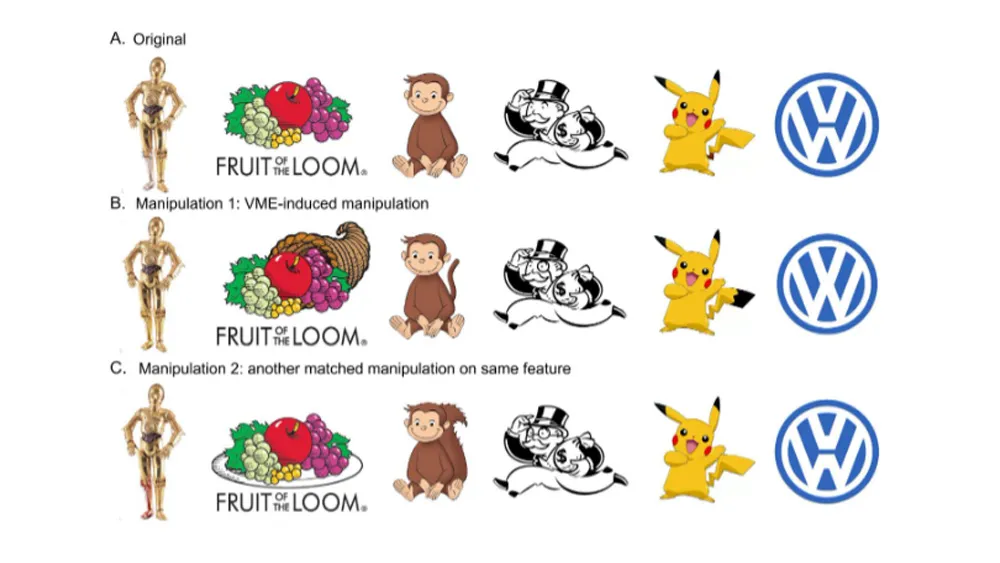
Neuroscientist Wilma Bainbridge and lab manager Deepasri Prasad at the University of Chicago's Brain Bridge Lab found that people have confident and consistent false memories of famous icons. The team trawled internet discussions for logos and characters people commonly misremember, then added their own picks and made small tweaks to see if people could spot the real thing. In total there were 40 images, including the logos for Apple, Bic, Disney, Fruits of the Loom, Ralph Lauren and Volkswagen, plus the Bluetooth symbol, Pikachu, C-3PO, Wally and Curious George.
Participants had to pick the correct version from three options. Apple and Ralph Lauren did well, with around 80 per cent getting them right. Monopoly, Volkswagen and Fruits of the Loom did not: only 20 to 30 per cent chose the real logo. Most people also insisted Pikachu’s tail has a black tip. It doesn’t.
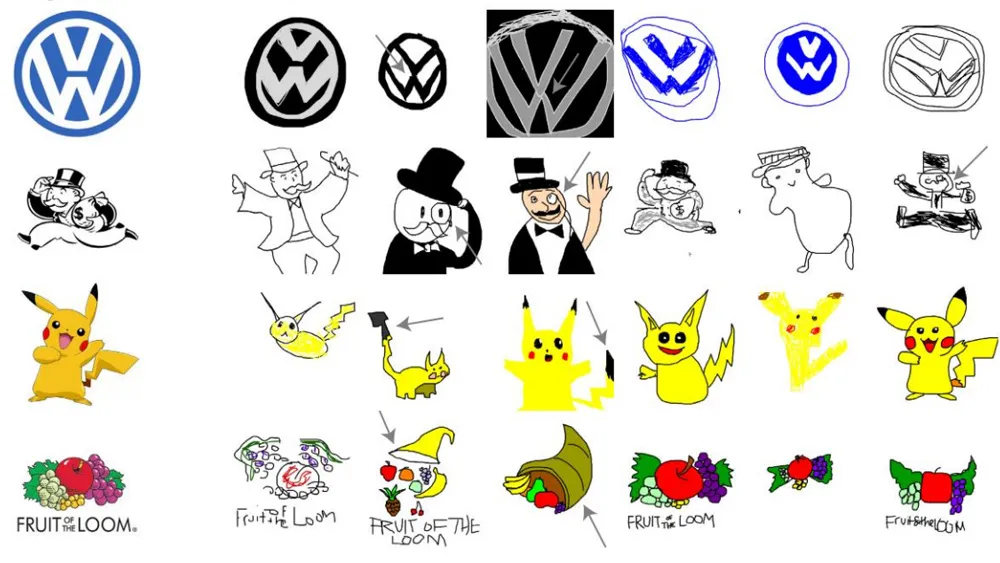
It wasn’t just a multiple-choice problem either. When asked to draw the images from memory, people made the same mistakes unprompted. Bainbridge says it’s a strong effect: people hold a false memory of an image they’ve never actually seen.
Why does it happen?
Nobody knows yet. The study doesn’t identify a cause. One suggestion is schema theory, where our brains add details that fit the theme. A monocle says ‘wealthy Victorian gent’, so in it goes.
That doesn’t explain everything, though. A cornucopia isn’t an obvious addition to a plate of fruit, which is the problem with using schema theory to explain the Fruits of the Loom logo. (The scene does exist in art, but that’s a stretch.)
Why should designers take note?
The researchers say the findings could matter for logo design and for choosing images in education and advertising, where accurate memory is the whole point. Bainbridge also linked it to wider questions about the images used in the media.
It’s a useful reminder that ‘memorable’ and ‘remembered correctly’ aren’t the same thing.