



Our Verdict
The Acer Nitro V 16 AI is a mixed bag. It's packed with the latest hardware and a gorgeous 16-inch display, but the chassis is nothing to write home about. The performance when running AI and creative applications is pretty solid, but the battery benchmark we ran dropped out after just 95 minutes. Despite this, I can't help but feel that Acer is getting ever closer to delivering the AI laptop that most creatives want.
For
- Solid build quality
- Fantastic 16-inch display
- The very latest processors
- Delivers for creatives
Against
- Incredibly bad battery performance
- AI benchmarks could be better
- Expensive
Why you can trust Creative Bloq Our expert reviewers spend hours testing and comparing products and services so you can choose the best for you. Find out more about how we test.
When I was sent the Acer Nitro V 16 AI, I knew I had to put it through its AI paces. So, I downloaded NVIDIA Broadcast, ComfyUI, Topaz Labs, Photoshop, DaVinci Resolve, After Effects, Premiere Pro, and Illustrator and systematically worked through AI tool after AI tool. I write more about my specific experiences of those applications in my AI design tools that are actually good article.
The Nitro V 16 AI is one of five Nitro V laptops that Acer is currently selling and is the second largest in the series, only outdone by the Nitro V 17, which boasts a whopping 17.3-inch FHD display. The Nitro V 16 AI is a laptop for creatives and gamers alike with a top-end AMD CPU and the very latest NVIDIA® GeForce RTX™ 5070 GPU.
Based on the spec alone, I expected the Nitro V 16 AI to excel in AI and compete for a place amongst the best laptops for 3D modelling and the best laptops for graphic design. My benchmark testing suggested one thing, but my experience another.
Key specifications
CPU: |
AMD Ryzen AI 7 |
NPU: |
Up to 50 TOPS |
Graphics: |
NVIDIA® GeForce RTX™ 5070 Ti |
Memory: |
32GB |
Storage: |
1TB |
Screen size: |
16-inch |
Screen type: |
IPS |
Resolution: |
2560 x 1600px |
Refresh rate: |
180Hz |
Colour gamut: |
100% DCI-P3 |
Brightness: |
400 nits peak |
Ports: |
2x USB-C, 3x USB-A, 1x HDMI 2.1, 1x RJ-45, 1x MicroSD Card Reader, 1x HDMI, 1x 3.5mm Combo Audio Jack |
Wireless connectivity: |
Wi-Fi, Bluetooth |
Dimensions: |
H20.99 x W356.78 x D275.50cm |
Weight: |
2.18 kg |


Design, build and display
• A functional design with jagged edges and RGB lighting
• A bright and high-resolution 16-inch display with a 180 Hz refresh rate
It appears that when Acer was planning the design of the Nitro V 16 AI, and in fact the whole Nitro V range, they decided to prioritise function over form. I'm not knocking Acer for this, but if you're looking for a laptop that's going to turn eyes, then I advise you to take your search elsewhere.
The laptop is solidly built with a tank of a hinge that will no doubt sustain many thousands of openings and closings. And, as you'd expect from every gaming laptop that has ever been made, the chassis features sharp-angled edges and an RGB-lit keyboard.
Unfortunately, this dull and predictable aesthetic does very little justice to the gorgeous 16-inch display that it houses. I found it to be bright, vibrant, and clear, and I loved that extra wiggle room that a 1200-pixel height affords. As well as 100% sRGB colour coverage, the display refresh rate goes right up to 180 Hz, which animators and gamers will love.
To help ensure optimal cooling, Acer has introduced a large grille above the keyboard. This is evidence, again, of function over form, but on the plus side it ensures optimal air flow. Under the hood there is a dual-fan, dual-intake, and dual-exhaust cooling engineered for consistent thermal control. You'll appreciate this during long creative sessions.
As for connectivity, you'll find everything you need to create an optimum setup with extra monitors, peripherals, and audio. There's even a MicroSD card reader for creatives who use this type of media. As for internet and data transfers, the Nitro V 16 AI boasts Wi-Fi 6E and Killer™ Ethernet E2600.
Design score: 4/5

Features
• A high-end NVIDIA GeForce RTX™ 5070 GPU
• An AMD Ryzen AI 7 CPU built for content creation
The biggest selling point for creatives is the GeForce RTX™ 5070 GPU with NVIDIA Blackwell and AI. This is guaranteed to enhance your creativity with a range of technologies, including NVIDIA DLSS 4.5 with Dynamic Multi Frame Generation and advanced path tracing for true-to-life graphics. The NVIDIA GPU also opens up access to NVIDIA Studio and tools such as NVIDIA Broadcast, which accelerate creativity and enable creatives to harness AI for a superior output.
If you're a gamer on the side, then the GeForce RTX™ 5070 GPU offers some of the very best performance boosts, increases in FPS, and reductions in latency. Not to mention game-changing realism thanks to the fourth-gen RT Cores and neural rendering technologies accelerated with fifth-gen Tensor Cores.
The NVIDIA GPU is backed up by an AMD Ryzen AI 7 CPU, which claims to provide "intelligent multitasking, console-class visuals, and adaptive AI performance for creation, gaming, and productivity." Read our Performance section below to find out whether the Nitro V 16 AI actually delivers on this.
Beyond this, the Nitro V 16 AI offers a range of software applications to enhance the user's experience. This includes NitroSense for real-time control over fan speed and system performance as well as Acer My Key for keyboard tuning. There's also Acer Intelligence Space for easy access to AI-ready tools designed to boost productivity and creativity.
Feature score: 4/5

Benchmark scores
We test every one of our laptops using the same benchmarking software suite to give you a thorough overview of its suitability for creatives of all disciplines and levels. This includes:
• Geekbench: Tests the CPU for single-core and multi-core power, and the GPU for the system's potential for gaming, image processing, or video editing. Geekbench AI tests the CPU and GPU on a variety of AI-powered and AI-boosted tasks.
• Cinebench: Tests the CPU and GPU's ability to run Cinema 4D and Redshift.
• UL Procyon: Uses UL Solutions' Procyon software suite to test the system's ability for AI image generation in Stable Diffusion, its Microsoft Office performance and its battery life in a looping video test.
• Topaz Video AI: We use Topaz Video AI to test the system's ability to upscale video and convert video to slow-motion.
• PugetBench for Creators: We use the PugetBench for Creators benchmarking suite to test the system's ability to run several key tasks in Photoshop and Adobe Premiere Pro, as well as its performance when encoding/transcoding video.
• ON1 Resize AI: Tests the system's ability to resize 5 photos to 200% in a batch process. We take the total time taken to resize the images and divide by 5.
Performance
• Respectable AI performance and everything required for creative workflows
• One of the worst-performing batteries I've ever seen
We'll get to more positive conclusions in a minute, but let's begin with the most glaring issue about the Nitro V 16 AI. During my Procyon Video Battery Life benchmark test, which plays a video file continuously until the battery empties, I found that the battery could only eke out 95 minutes of performance.
This amount of battery life is pitiful considering it wasn't even being asked to perform a high-intensity 3D rendering or memory-intensive AI task. Suffice to say, its portability credentials are limited, and you'll need a charger with you at all times.
Moving on to AI performance. My Procyon Stable Diffusion 1.5 threw up a workload error, and Topaz Video / ON1 Resize AI benchmarks report lower figures than expected for the hardware. It's worth noting that this reality is true of a lot of AI-branded laptops, which are in reality targeted towards Copilot users rather than hardcore creative AI professionals.
In actual experience, I had no problems running a wide range of AI software for image generation with ComfyUI, background generative AI in Photoshop, and AI video effects with NVIDIA Broadcast. These applications were quick, responsive, and wholly reliable.
As respectable as the Acer Nitro V 16 AI's AI performance is, where the laptop really comes into its own is with photo and video editing. Photoshop and Premiere applications were zippy and responsive, a reality that was backed up by the benchmarks. Colour grading was also performed without a hitch.
The bottom line is that the Nitro V 16 AI is a very capable laptop, but if you forget to pack a charger, your hope of getting anything done is pretty non-existent.
Performance score: 4/5
Price
The Nitro V 16 AI retails at £2,099.99 on the Acer Store. If you're still getting used to heightened prices in the laptop market, then this will seem like an awful lot of money to pay for a workstation. But if you want the latest AMD Ryzen processor, a dedicated 5-series NVIDIA GeForce RTX GPU, a solid amount of RAM, and a 16-inch display, then this is unfortunately the going price.
If you're OS agnostic, then you might consider buying a MacBook Pro. The 16-inch M5 model costs £700 more than the Acer, but the slightly smaller 14-inch alternative is actually £200 cheaper. If you don't care about display size, then the MacBook Pro is a very powerful and capable machine.
Value score: 4/5

Who is it for?
• Creatives with traditional workflows and a little generative AI
Acer states that the Nitro V 16 AI delivers serious gaming and AI performance. Our benchmarks show that AI performance for image generation and manipulation is below standard, so I wouldn't buy it if that's your core workflow. More traditional creative workflows, including photo editing and video editing, perform significantly better, making the Nitro V 16 AI a laptop to consider for creatives using related applications.
Attributes |
Notes |
Rating |
|---|---|---|
Design: |
A modern-looking, well-built laptop with gaming aesthetic. |
4/5 |
Features: |
The very best CPU and GPU for AI and creativity. |
4/5 |
Performance: |
Reasonable performance for creative workflows, but unbelievably poor battery life. |
4/5 |
Value: |
It's not cheap, but the spec justifies the price. |
4/5 |

Buy it if...
- You're a professional creative and a gamer on the side
- Your creative workflows demand a dedicated GPU
- You spend a lot of time without access to a second monitor
Don't buy it if...
- You rely on image-generative AI workflows
- You need a super-compact portable laptop
- You don't need a dedicated NVIDIA GPU
Also consider
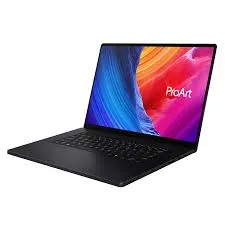
Our tech reviews editor, Erlingur Einarsson, called this laptop his "new favourite creative powerhouse". This NVIDIA 5070-powered beast gets you all the graphics oomph you need.
Read our ASUS ProArt P16 (2025) review

According to our review, the MacBook Pro (M5) is a strong performer for (almost) all kinds of creative tasks. It also boasts a new faster SSD.
Read our MacBook Pro (M5) review
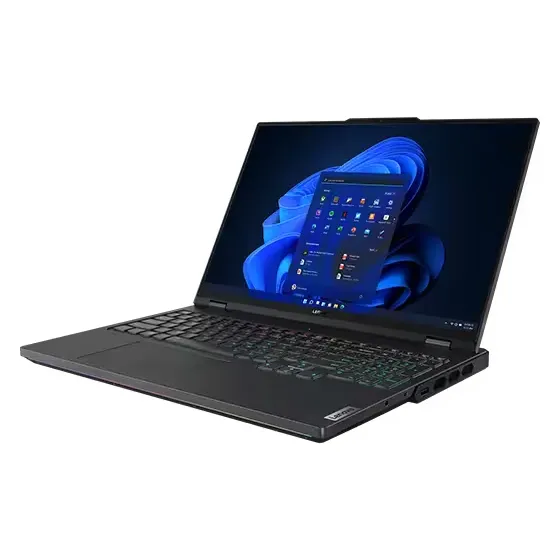
We called this laptop a "pure beast", and even though it's ideally suited for gaming, it has all the specs to be an ideal laptop for creatives too.
Read our Lenovo Legion 7 Pro review