
For one Saturday in May, a city stops being a destination and becomes a broadcast. The recent Eurovision finals have drawn audiences north of 160 million, and Vienna will be performing itself for that audience this weekend. That is the part most coverage of the contest misses. Eurovision is not entertainment in the strictest sense. It is a stress test for a city's brand narrative, conducted in front of a viewership too large, and too engaged, to forget what it sees.
Place marketing usually works in slow motion. Strategies are written, campaigns commissioned, agencies briefed, and over five or ten years a city tries to shift how the world thinks about it. Eurovision compresses all of that into a fortnight. Liverpool, UK, generated more than 280,000 pieces of global news coverage between being named host in October 2022 and the final in May 2023 (not to mention the Brand Impact Award-winning Eurovision branding, created by Design Bridge and Partners and Starlight Creative). Reach of that scale, accumulated through ordinary destination marketing, would take years and budgets most cities do not have.
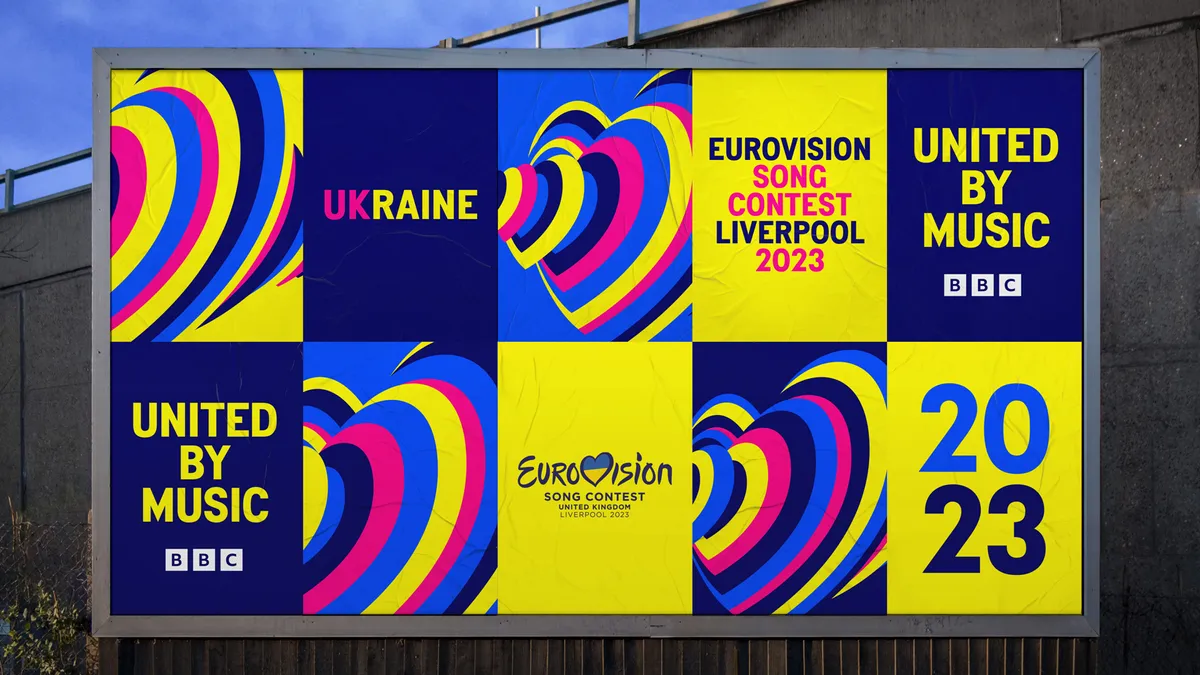
What Liverpool then did with the spotlight is the part worth studying. The direct economic impact came in at £54.8 million, with another £11.1 million attributed to repeat visitors in the year that followed.
Hotel room sales in May 2023 reached their highest level since 2018. The wider visitor economy, by the time the dust had settled, was estimated at £6.25 billion, around £600 million above projection. But none of that is a function of the show itself.
Plenty of cities have hosted Eurovision and ended up with a fortnight of takings and not much more. What distinguishes the cities that convert is not effort or budget. It is whether the contest expresses something the city was already trying to say.
Liverpool was already doing that, treating the contest as a form of soft power as much as entertainment. The city had been building a music-and-openness narrative for years, and hosting on behalf of Ukraine gave that narrative a register it could not have written for itself: solidarity, hospitality, creativity under pressure.
The contest did not invent Liverpool's story; it stress-tested it. The story held. Ninety-five per cent of residents reported pride in the hosting. EURO 2028, Radio 1's Big Weekend, the Open Golf Championship and the World Boxing Championships have all followed, and the city's marketers are now quite happy to attribute a chunk of that pipeline to the Eurovision effect. A city not in the world's top 100 by population now sits in the top 10 most recognised non-capital cities globally.

Cities that only see a short-term spike tend to make the same mistake. They treat Eurovision as a logistics challenge that happens to be on television. Venue, accommodation, transport, broadcast feed. Finished. The contest is run rather than expressed. Visitors arrive and leave, the news cycle moves on, and the place is unchanged in any respect that compounds. The mistake is not operational. It is that the host has nothing it particularly wants to say, or has not bothered to align the saying with what the contest actually projects.
Now think about who is in the audience. Eurovision viewers are not a traditional tourism crowd. They self-select for cultural openness, for queerness, for an appetite for performance and difference. They tend to be younger, more mobile, and more economically active than the average visitor a destination marketing organisation models builds its decks around.

The 2025 contest in Basel attracted a 60.4 per cent viewing share among 15-to-24-year-olds, the highest on record for the event and roughly four times the channel average. For cities competing for talent, creative industries and inbound investment, that is closer to the demographic that matters than almost any other broadcast event delivers. Reaching the same audience through paid media would be ruinous. Reaching them by being interesting on a Saturday night is not.
This is also why the contest has become unforgiving. The audience is fluent in cultural signals. They notice when a host city's official narrative does not match what they encounter on the ground, when the rainbow flags come down on Sunday, when the city centre staging is a bolt-on rather than a coherent piece of expression. Brand work has a name for the quality being measured. Coherence. A city that says one thing and shows another is read instantly, and the read is global.

Vienna this weekend is an interesting test of all of this, and I should disclose an interest. Saffron, where I work, developed Vienna's current place brand platform – Der Mensch in der Mitte, the human at the heart – and I led the project. The platform is now several years bedded in, deliberately built to move the city's public identity past imperial-and-Mozart shorthand and towards something more contemporary, human-centred, lived. It is, as it happens, philosophically close to what Eurovision projects: people first, difference welcome, joy without apology.
So the test for Vienna 2026 is not whether the city can stretch to meet the contest. The platform already meets it. The test is whether the city's expression of the moment, the staging, the public realm, the official voice, the things the world will actually experience on Saturday, will reinforce that platform or quietly default to the picture-postcard register the platform was designed to retire. Vienna has hosted twice before, and the 2015 edition produced one of the small but telling artefacts of place-brand legacy: the same-sex pedestrian crossings introduced for that contest, kept afterwards, copied internationally. A piece of expression invented for a moment, kept because it had become true. The 2026 question is whether this edition produces another of those, or simply runs the show.

By Sunday morning, the votes will be counted, the city will start clearing the Rathausplatz, and the brand work will begin in earnest. Or not. The contest itself is a single evening. What it leaves behind, in talent flows, investment enquiries, news coverage and resident pride, is decided by whether a city used the spotlight to say something it had already been trying to say. For most hosts, that is a harder edit than the show.
Creative Bloq is now easier to access than ever before with our on-the-go app, which brings you all the content you know and love from our website, but in a super-streamlined design.

