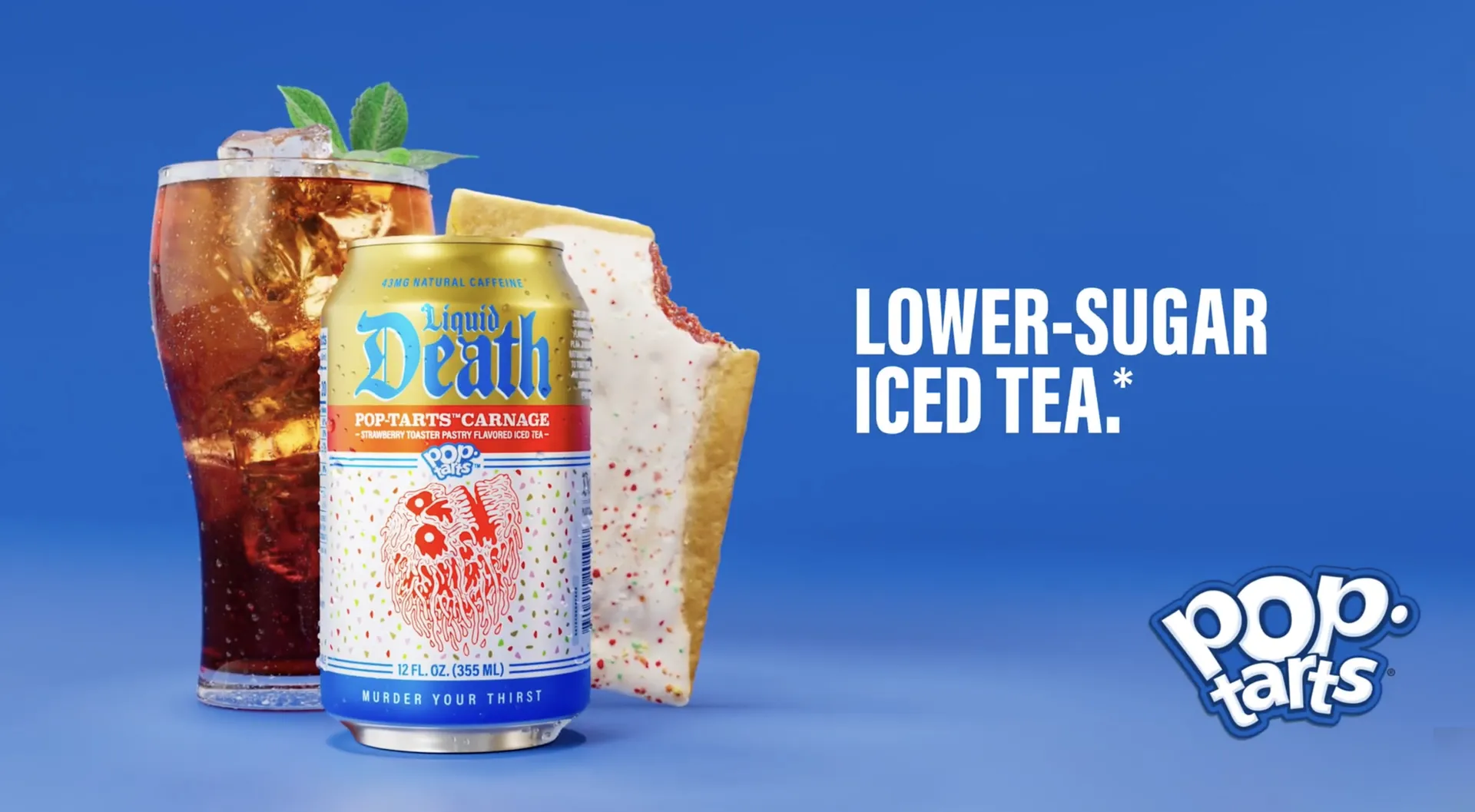
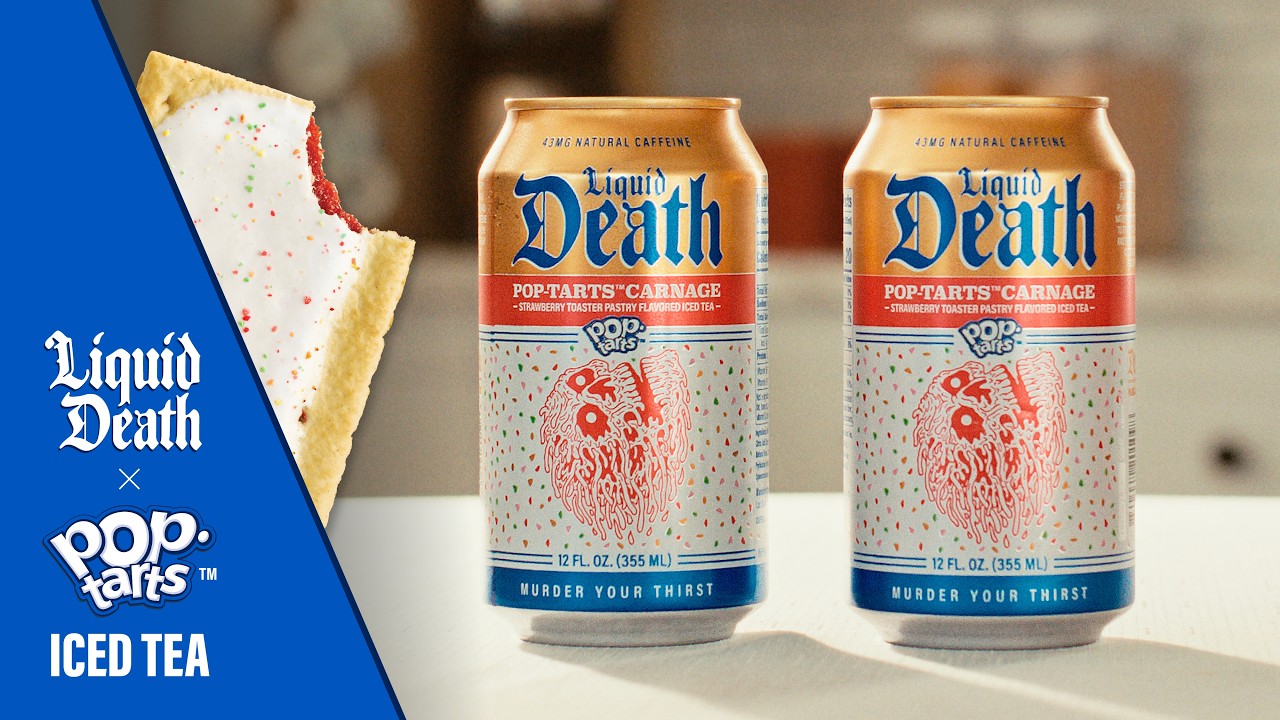
What makes a product something people screenshot, argue about on Reddit, and quietly add to their Amazon basket at 11pm? In the case of Liquid Death Pop-Tarts Carnage Iced Tea, the answer is not the flavour. It's that both brands brought something the other couldn't fake.
Liquid Death didn't just unlock a taste (however disgusting it might seem to some). They bought permission: permission to play in the nostalgia of a fearless childhood, a territory that no amount of death metal branding could have accessed alone. And Pop-Tarts didn't find a new audience. They gave one a reason to come back.
For more branding excellence, see the best rebrands of all time.
Why snacking became the frontier
The snack aisle, or more precisely, the snack moment, has become one of the most contested spaces in branding, and it's not hard to see why.
Most categories interrupt. They ask for your attention at a moment of their choosing, deliver a message, and leave. Snacking doesn't work like that. It's already there. On the desk during a late-night League of Legends session. On the sofa during a rewatch of Ted Lasso.
Snacks don't interrupt life. They're woven into the fabric of it.
This is why brands across categories are scrambling to get into this space. Not because snacking is a growth category, but because snack culture offers something advertising fundamentally cannot: a place in the moments consumers already own.
But you can't buy your way into a consumption ritual. You have to earn it.
Tonal coherence: the price of entry
Earning it means understanding the culture well enough to contribute something real. And that starts with a question most brands don't ask honestly enough: do we actually belong here?
The collaborations that work tend to share what I'd call tonal coherence. Both brands occupy the same emotional register, even if the categories are miles apart. The ones that fail tend to have a passenger. One brand brought the equity, the other brought the distribution, and the result feels like a brand hitchhiking on someone else's identity. Sometimes cynical. Sometimes, just desperate. Either way, consumers feel it immediately.
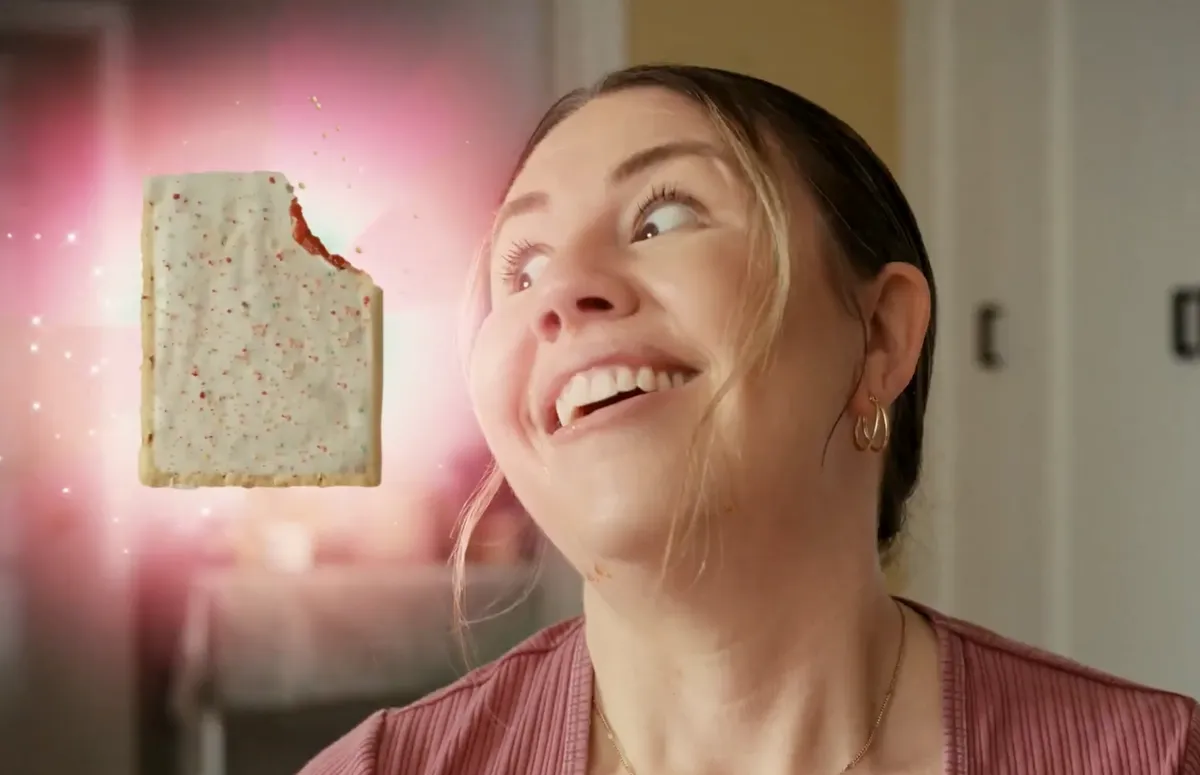
Liquid Death and Pop-Tarts works because both brands brought actual currency to it. Pop-Tarts brings four decades of Frosted Strawberry deposited into our collective memory. It's not a flavour; it's a feeling.
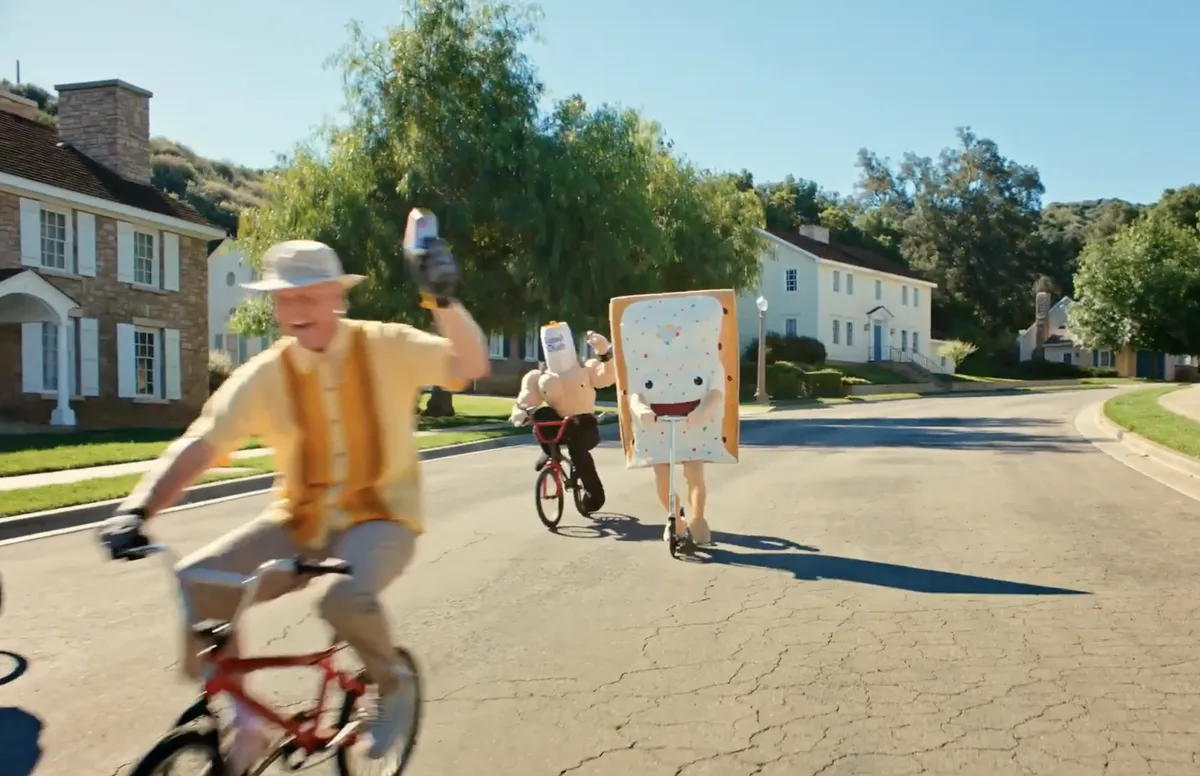
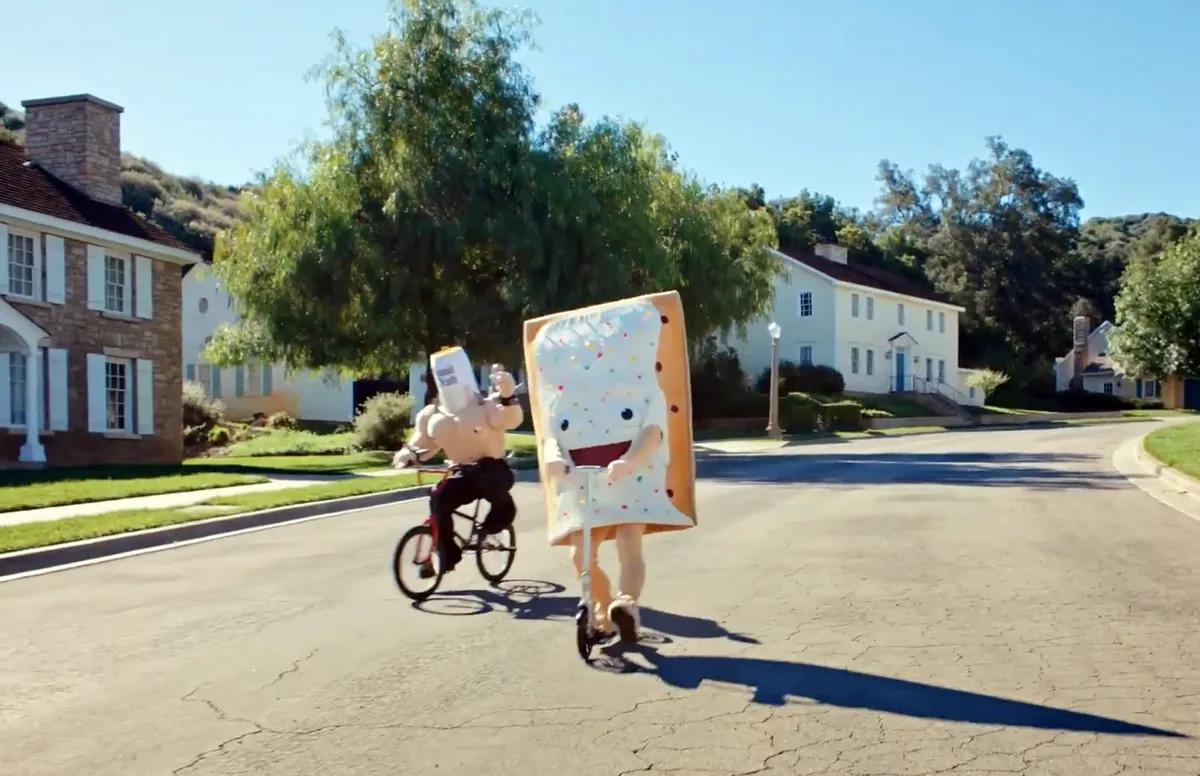
Liquid Death brings the campaign: suburban chaos, vandalism, elderly couples discovering their feral side, set to the tune of Nothing to Prove by American punk rock band H2O. Pure Liquid Death. It's just another day in the office. Shock, in this context, isn't a strategy; it's a vocabulary. And the difference matters enormously.
Two promises, not two logos
Before any collaboration brief gets written or discussed over a few non-alcoholic beverages, two questions are worth sitting with.
First, intent. What is this actually trying to do? Is it building something or spending something? The honest answer usually tells you everything.
Second, impact. Is the result mutual? Nature offers a useful lens here. Relationships between organisms tend toward mutualism (both benefit), commensalism (one benefits, one is indifferent), or parasitism (one benefits, one is drained). What nature doesn't produce is the fourth option: the relationship that damages both parties. Evolution filters those out rather efficiently. Branding has no such filter.
RESPAWN by Razer, the gaming snack brand we built at Elmwood with Mars and Razer, is what mutualism looks like in practice. Razer brought genuine cultural belonging inside gaming. Mars brought product credibility. Neither brand was the passenger. Both came out with more than they went in with. Not just awareness. Actual equity.
Compound interest, or: the activation trap
When every brand is collaborating, the only way to stay visible is to get weirder. That's how you end up with KFC x Crocs (featuring a realistic Kentucky Fried Chicken pattern), Heinz ketchup luggage, and Dunkin'-scented deodorant. Each lands, generates its moment, and disappears slightly more famous, no more meaningful. Escalation is what happens when nothing is accumulating.
At Elmwood, we talk about the compound interest of branding: the idea that the most valuable brand-building is additive. Every collaboration should deposit something into a growing body of identity, not just spend it. Liquid Death's entire collaboration history is coherent. Oreo has run so many partnerships that the collab itself has become part of who they are. The limited edition is now expected. It compounds.
For most brands, a collaboration is a moment. For the best brands, it's an instalment.
The can doesn't lie
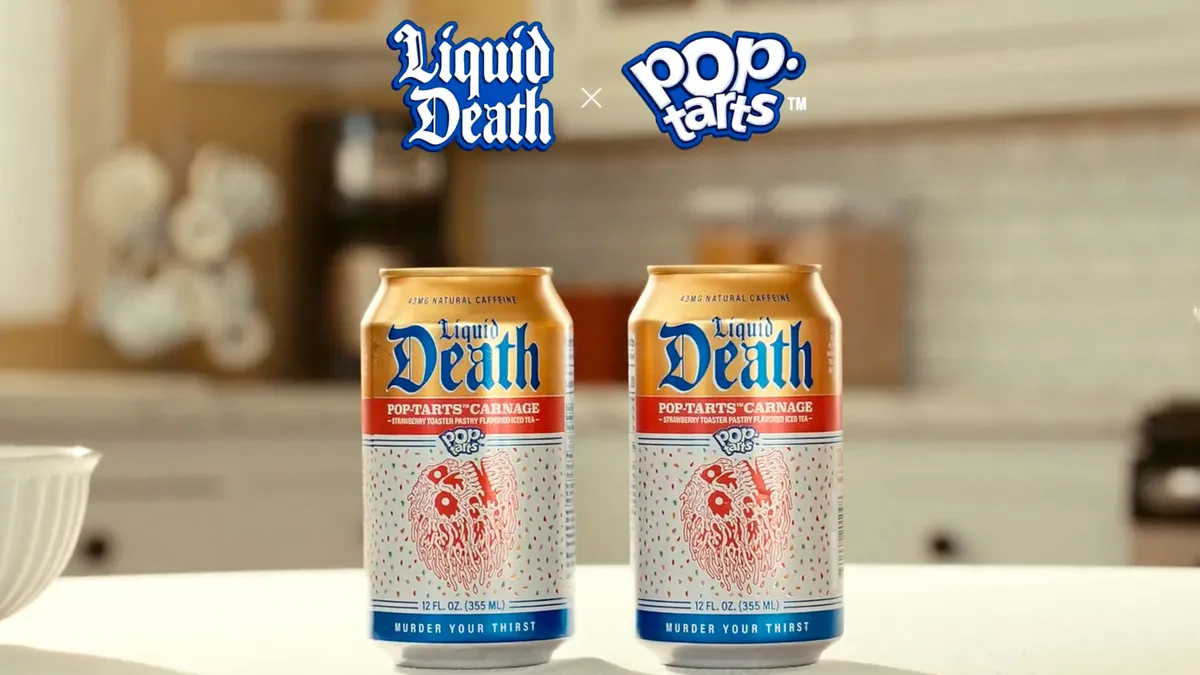
So, back to Liquid Death Pop-Tarts Carnage Iced Tea. Remove the Pop-Tarts name, and you have a line extension. Remove Liquid Death's identity, and you have a Frosted Strawberry iced tea that belongs on a spa menu.
What makes it neither of those things is that both brands brought their actual selves to it: not a sanitised, brand-safe approximation, but the full, slightly unhinged version. Tonal coherence. Mutual benefit. A genuine place in the ritual moments of the people they're talking to. And a campaign chaotic enough that you remember it, but coherent enough that you know exactly who made it.
That's not an activation. That's brand identity doing its job.
The snack aisle is no longer just a shelf. It's a proving ground. And the brands that treat it as one, with intent, with distinctiveness, with something worth compounding, are the ones that will still mean something when the limited edition is long gone.
Creative Bloq is now easier to access than ever before with our on-the-go app, which brings you all the content you know and love from our website, but in a super-streamlined design.