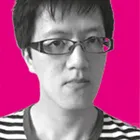
The history of video games can often be framed through technological advancement where developers move from low-resolution 2D to more realistic 3D creations. But it would be a mistake to place 2D art as nostalgic when it can evolve based on the artist’s own developing tastes and influences, such as with Adam Vian.
Having spent more than 20 years making games with his brother Tom, from when they were still teenagers, he has made a large number of browser-based games and animations as the Super Flash Bros, before the two founded SFB Games where they have worked with major platform holders like Nintendo and Apple.
While the studio has tried its hand at different types of games, it also has its own series in Detective Grimoire, a murder-mystery adventure originally inspired by Capcom’s Ace Attorney series. With the upcoming release of The Mermaid Mask, the fourth outing for the eponymous detective, Adam shares his insight into how this series’ aesthetic has evolved over the years since its Adobe Flash debut.
If you're inspired, see our guides to the best laptops for game development and the best game engines.

Adam, how did you begin your career in games?
With my brother Tom, we got started with Flash back in the early 2000s on a website called Newgrounds. It seemed kind of accessible, like something a teenager could make. Video game parodies were a big thing, and the internet didn’t have copyright detection, so you could just post stuff with copyrighted characters or music.
Technically, our first game was called Kirby’s Star Scramble, because Kirby is easy to draw, and it did okay on Newgrounds. Then we were making a game in a week, really quickly, with Tom as the programmer and me as the artist and animator.

How did making Flash games help you develop as an artist and game developer?
It was a blissful existence because you could make a game quickly, throw it online immediately, and you start getting feedback and reviews that second. I always think that was this amazing kind of accelerant for us, where we got through all of our bad ideas really quickly.
They say everyone has a thousand bad drawings in them and you have to get them out of the way before you can do a good drawing. For us, it’s like everyone has a hundred bad games in them, and we did them really quickly.

How did Detective Grimoire emerge from this prolific period?
We had just played Ace Attorney: Phoenix Wright. We’d grown up playing adventure games like Monkey Island and Indiana Jones and the Fate of Atlantis, and then we played Phoenix Wright and thought it was amazing that this is a game where all you really did is click on things and talk to people, and the characters are wacky and it’s funny, and we wanted to make something like this.
I was probably 17 when we started, and I wasn’t very creative or pushing boundaries. The detective was just a guy in a brown trenchcoat with brown hair, just like the go-to protagonist probably inspired by Guybrush Threepwood and also Detective Gumshoe in Ace Attorney.

How has the character design evolved since the first game?
When we made the first one, I was in foundation college, and I didn’t have weird cool influences. I was just drawing whatever came to mind – a basic go-to cartoon style. Then for the next three years, I went to art school [University for the Creative Arts] studying art for illustration and animation.
My art style finally took in interesting influences. I also met amazingly talented artists, namely Catherine Unger, who came on board to work on every Grimoire game since. Not only is she a fantastic artist, but she’s so useful to have around during pre production.
I basically use her as a sounding board all day, every day, on ideas, and then we’ll bash them out together. That’s a really healthy thing. Not only is she bringing her own ideas, but she’s providing me with someone to bounce ideas off all the time.

What artistic influences characterise the Grimoire series?
For Secret of the Swamp, the characters suddenly had this style with pure white skin, as I really wanted the characters to be cleanly visible against the backdrop. I think that was influenced by The Thief and the Cobbler, a famously unfinished film by Richard Williams. I was also really inspired by Genndy Tartakovsky, who created Dexter’s Laboratory and Samurai Jack.
His philosophy is that a good shape is good character design, and that’s all it is. So I really tried to push the shape of the characters, they’ll be big, long, thin, heads up here and mouths down here, and all over the place. When we did Tangle Tower, Catherine and I got better at art, and we felt Secrets of the Swamp had aged, so we started again, designing Grimoire with more colour, rounded the edges a bit, made it more blobby, soft, and cartoony.
Then The Mermaid Mask is the first time that we didn’t chuck out the art style – we were able to just reuse the engine, character design and some animations. It’s the first one that actually reads as a sequel in the sense that it’s not starting from scratch in any regard.

As creative director, how do you collaborate with other artists during development?
The Grimoire games have this long pre-production phase where we’re designing the world, we’re designing the story, we’re designing the characters, and we’re designing the clues, and it takes a long time, and a lot of iteration.
We’ll start with a vague location and basic ideas, then Catherine and I will start sketching what we think someone might look like, and we just draw loosely. For this game in particular, we both independently went away to draw our idea of what the character would look like and didn’t show each other until we have both done at least one drawing.

Then we come together and compare them. Then we both draw again, now being influenced by each other’s thoughts, and create a sort of mix of the two. We go back and forth on that. Then the animator, Charlotte Harris, also draws the characters a lot because she has to work out how they’ll look when they move, and what they look like from the side.
We had to basically design each character with a full range of emotion. How do they look when they blink? What do their teeth look like? The kind of body language they might have is so much that goes into the process of designing the characters because you end up staring at them for most of the game, so they have to be really complete and good.

How did you introduce 3D into The Mermaid Mask without compromising the series’ hand drawn 2D style?
There were a couple of artists online who posted 3D fan art of Catherine’s personal artwork, turning her painting style into 3D. We looked at those and were like, that’s so cool. It was also born out of a desire to make the clues more interesting. In Tangle Tower, they’re just one drawn picture, and that’s it. But wouldn’t it be more fun if you could look behind it, or if it’s a book, wouldn’t you want to open it?
We found a 3D artist called Kindra Dantone, and they matched Catherine’s style exactly. So Catherine would paint the clue up to the final concept phase, and then Kindra would model it and paint a texture to match what Catherine would have painted. The final step is that Tom has programmed a bit of tech art that dynamically generates a coloured outline around the edge of the model, which is what it would have looked like if Catherine painted it, with a dynamic wobble to look like a brushstroke.
I really think the 3D clues are the big selling point in the game because there’s so much juice in them. It’s a lot more like an interactive video game where you get a lot more hands-on rather than like a visual novel.


What advice would you give artists wanting to make games today?
I made lots of small games really quickly. That was the Flash game scene. An equivalent today might be making something in Unity, then putting it on itch.io for free. If you can make it so it’s playable in the browser, you can link your friends to it on social media and they can play it and leave a review.
The best thing you can do to gain experience is to actually finish a project, because finishing something – getting it ready for release – is half the battle. So if you pick a small project, you get to that phase quicker and you actually experience it. The worst mistake is making your magnum opus too early and never finishing it.
There are lots of people who have grand ideas, like making an open-world RPG, and it never ever gets made because they didn’t have the skills, then they become frustrated and disappointed.
Detective Grimoire's latest murder mystery, The Mermaid Mask, is out now on PC, PlayStation 5, Switch 2 and 1.
This article originally appeared in ImagineFX. Subscribe to ImagineFX to never miss an issue. Print and digital subscriptions are available.
Creative Bloq is now easier to access than ever before with our on-the-go app, which brings you all the content you know and love from our website, but in a super-streamlined design.
Download the Creative Bloq app for iOS
Download the Creative Bloq app for Android