






Every interactive story faces the same temptation: give the player more. More branches, more endings, more ways to bend the script until it snaps. Dispatch, AdHoc Studio's episodic superhero workplace comedy, went the other way. It stars Breaking Bad's Aaron Paul as former hero Robert Robertson, who now sends a team of reformed villains out on call-outs.
As the breakout indie game celebrates its one-year anniversary with the Dispatch Deluxe Edition, which lets you play the storyboard art, I caught up with the team. We've heard how Four video tracks and a doughnut shop got it started and how AdHoc made Dispatch feel like an animated TV series, so now I want to know how a choice-driven game gets that far by holding choices back. We put the question to AdHoc co-founders Nick Herman and Dennis Lenart, the studio's COO and CTO and both co-creative directors.
Choice has to fit the character
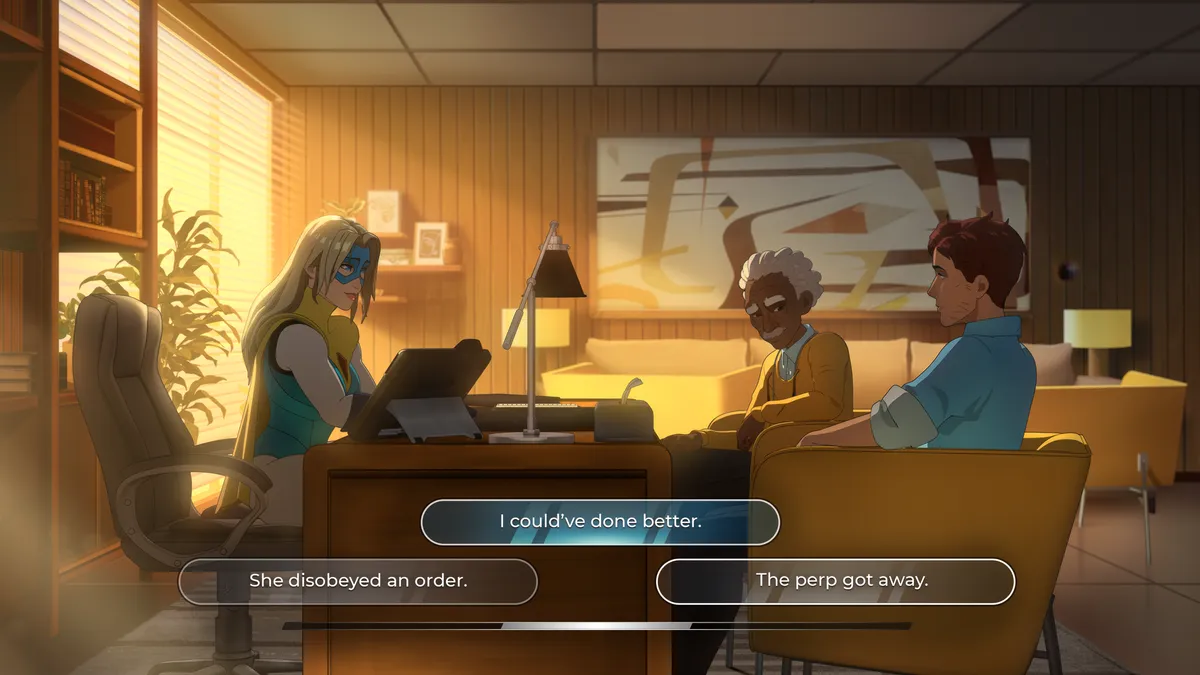
AdHoc starts with the belief that most developers get the equation backwards. "When folks set out to make an interactive narrative game, they incorrectly assume that it's all about the branching narrative that makes it exciting," Herman says. "We believe it's about the quality of that narrative at the core, and then you have to branch that quality narrative."
That's easy to say and hard to do, he admits, and harder still when you have to write multiple good stories at once, which is what the team signed up for. So the development team works from the story's spine and its characters, then figure out what choice space could believably exist alongside them.
Robert Robertson arrives with a backstory and a personality, so options that betray him are off the table. Herman sees that as a gift: it "eliminates blue sky" and lets the team concentrate on a believable character. It's also why he's wary when people ask for thousands of endings. Would 10,000 of them really be as compelling as a six or seven that the team has made as satisfying as possible?
Lenart describes the whole process as "almost an exercise in restraint at times". Picture 10 developers in a room discussing a scene where a character is aggressive towards you. A couple of them will say they wish you could just punch him. "The thing we have to filter that through is, 'Would Robert conceivably punch him in this situation?'" says Lenart. "A lot of times the answer is no."
It isn't a flat ban. If everyone agrees that punching him would be thrilling but there's no motivation for it, Herman says the conversation becomes how to make it a viable choice. Lenart says you go back into the scene and the story and set it up "so that that choice feels like it's a payoff to something that exists".
Skip that groundwork and the cost is steep. "The more you do that, the more you start diluting your character and then they kind of become a little bit faceless," Lenart warns. Herman puts it more bluntly: the story starts to feel like "a narrative toy" and less like one with believable characters.
Consequence without a different game
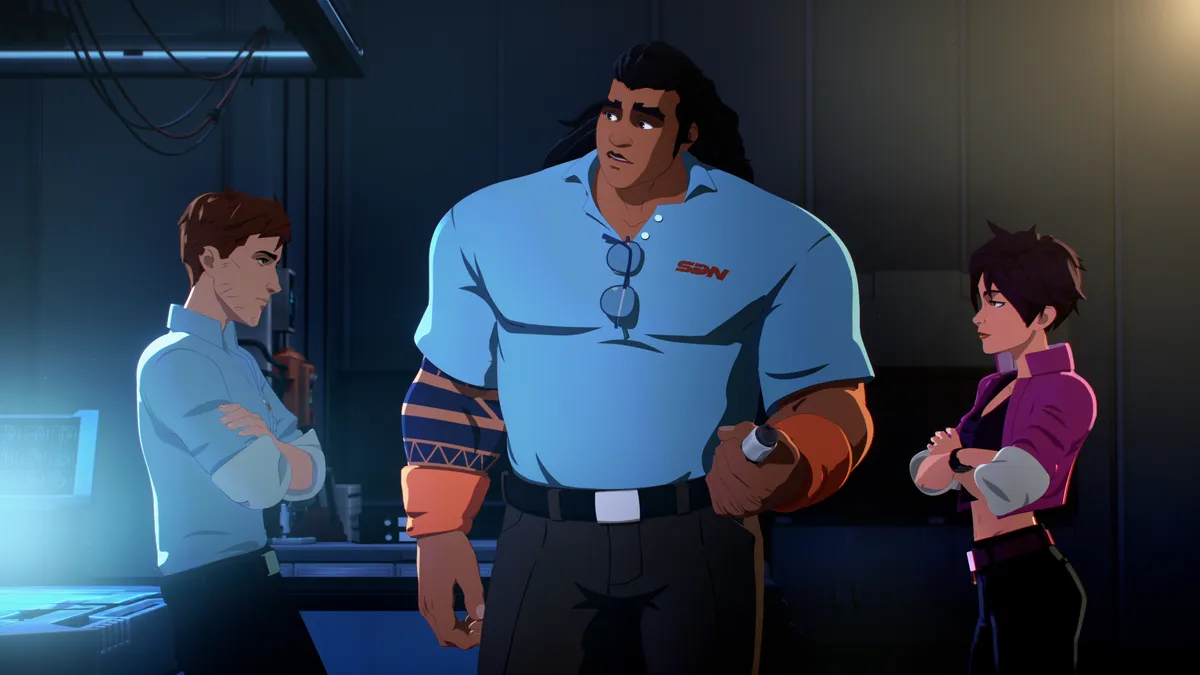
So how do you make a choice feel weighty without animating an entirely new story? Lenart says, "A lot of the magic in these types of games is the story that people are telling in their heads". The most effective choices, he says, are the ones where "you're affecting how another character in the story thinks about you".
Treat someone a certain way in front of the group, and players will assume that character's later behaviour is motivated by it. Every glance in a later scene gets read as payback for what you said earlier, which Lenart compares to real life. AdHoc builds on that expectation on purpose.
Herman calls it "the grease between the major cogs of choices". Players carry a decision forward for an hour or so, until the grease runs out and they need an injection of new stuff. If a scene doesn't land that way, he says, "it's probably because something's broken". Contrivance, or a sense of being guided, are the signs to go back and fix.
There's a hard budget reason for the discipline too. "It's also just so expensive to do it the way we're doing it," says Herman, with a vision for cinematic quality and animation that makes 30 different endings impossible.
Lenart gives an example of a branch the team could have offered. Imagine letting players choose at the start whether Robert works as a dispatcher or makes a new suit and heads off to be a hero in another city. It sounds great on a flowchart, but "you'd end up animating an entirely different game", with two separate stories, and Robert's arc would stop being about redemption.
Herman is generous about other approaches. He points to Slay the Princess, The Stanley Parable, and Detroit: Become Human as games where their branchiness and reactivity are major selling points. "Interactive narrative games are not one thing," he says. "The beauty of the medium is that everyone finds ways to express it in different ways."
Who holds the pen
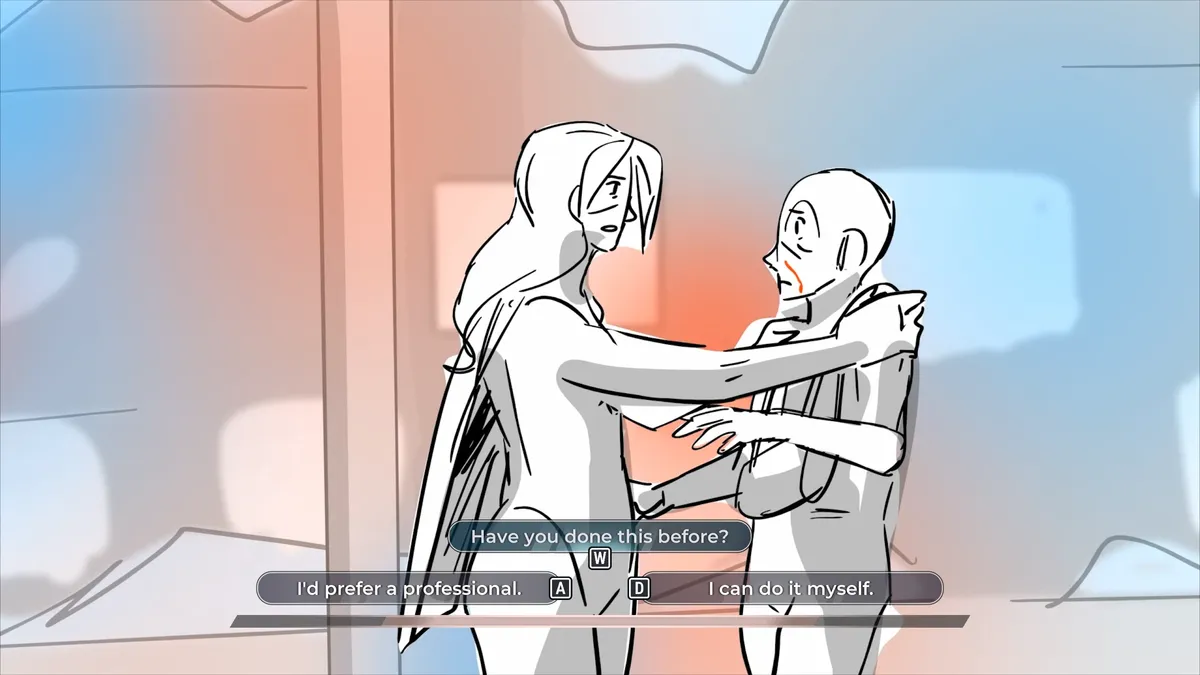
Where does the line fall between what the player controls and what stays with the writers and developers? Lenart says it comes down to how much agency AdHoc is willing to hand over in order to tell a story it believes in. The more it gives up, the greater the risk of versions that aren't great. "Our goal was always to make it so that any path you play through is compelling and satisfying."
There's a cost, and AdHoc accepts it. Herman says some players will end up on a path that isn't their preference, and with stories it gets personal: "this isn't how I wanted it to go."
Lenart has seen the other side of the argument. On earlier games, multiple endings were mandated as a studio priority, and the takeaway was that "some of them worked". Some people had good playthroughs, others got endings they weren't satisfied with, and some were upset they didn't get the endings their friends did.
He doesn't count loose ends as a failure, either. "Not every story or movie you watch ends with you thinking everything is perfect and wrapped up," he says, and the threads people talk about afterwards are part of the experience. But "it can get out of hand if you don't keep it under control".