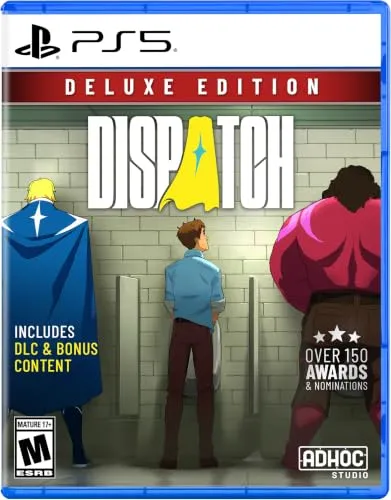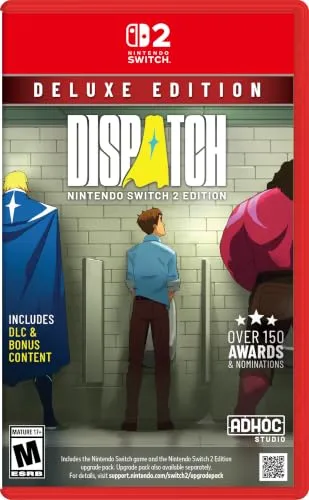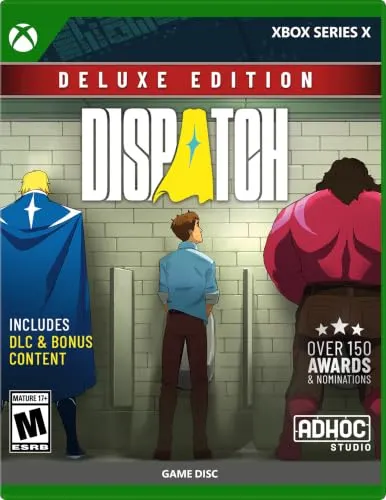





A year ago, Dispatch released a game that surprised many people, including me. It's a superhero game about managing reformed villains from behind a desk, launched on PC and PlayStation 5. It has since sold five million copies, and a mobile version arrives on iOS and Android on 9 December, following October's Dispatch anniversary Deluxe Edition.
Dispatch was made in Unreal Engine and stars Breaking Bad's Aaron Paul as former hero Robert Robertson, alongside Jeffrey Wright, Laura Bailey, and members of the Critical Role cast. It's an animated, episodic workplace comedy that plays like a TV series, but it wasn't always a game, and that's perhaps why it feels so unique. AdHoc was founded in Los Angeles in 2018 by Telltale Games alumni who planned to make interactive experiences with real actors on screen, and Dispatch began that way.
I asked co-founders Nick Herman and Dennis Lenart, the studio's COO and CTO and both co-creative directors, what survived the jump from live-action series to animated game, and what had to change.
- Read our guide, 'How to make an FMV game: 10 pro tips' for advice
How a live-action browser test shaped Dispatch’s doughnut shop scene
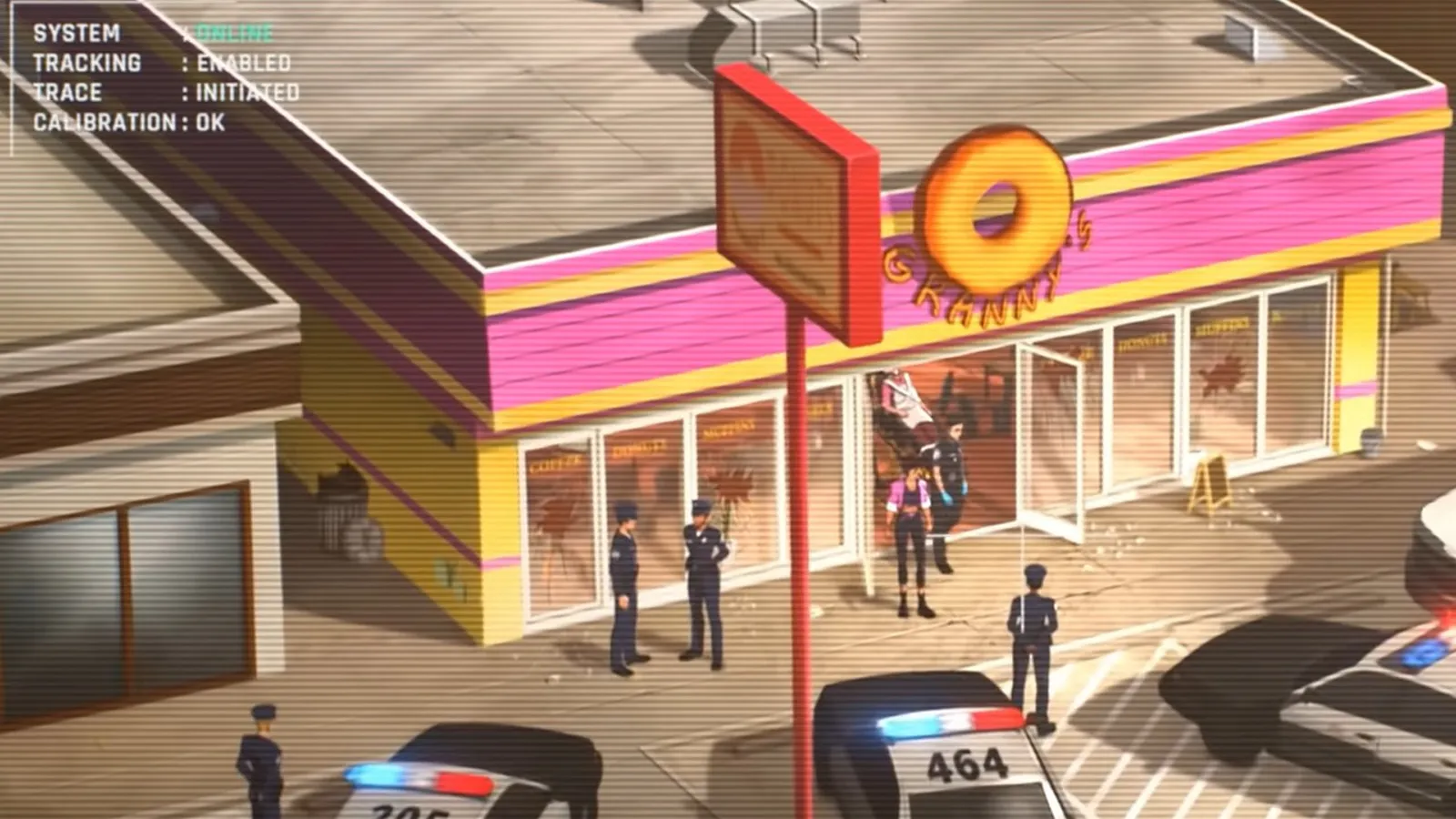
One piece of the original script made it through every draft: the doughnut shop scene in episode two. Lenart says it was "one of the pieces from the early script that just kind of kept hanging around through every draft all the way from live action into the animated game".
The set-up was different back then. You watched a camera feed as the hero Invisigal dealt with a thief, and your job was to feed her the information she needed to succeed. In the live-action version, that meant switching cameras and pulling information from what each camera showed. Herman says the scene was "purely built around the technology" AdHoc was using to create its interactive live action. It ran in a browser and had hard limits, including, as Herman recalls, “I think it was like four simultaneous tracks of video”.
The team turned that restriction into a mechanic. Watch the alley behind the shop, and you couldn't see what was happening inside the front. "By choosing where you were going to give your attention, the game would adjust, and you'd learn different things based on where you were looking," says Herman, calling it the perfect place to test the idea.
Because they'd spent so long on it, they carried it forward. In the game, Lenart says, they wove in mechanics from the final design, such as hacking, "to make it feel a little bit more like Robert was helping out Invisigal".
Why Dispatch’s story changed: how the Z-Team was created
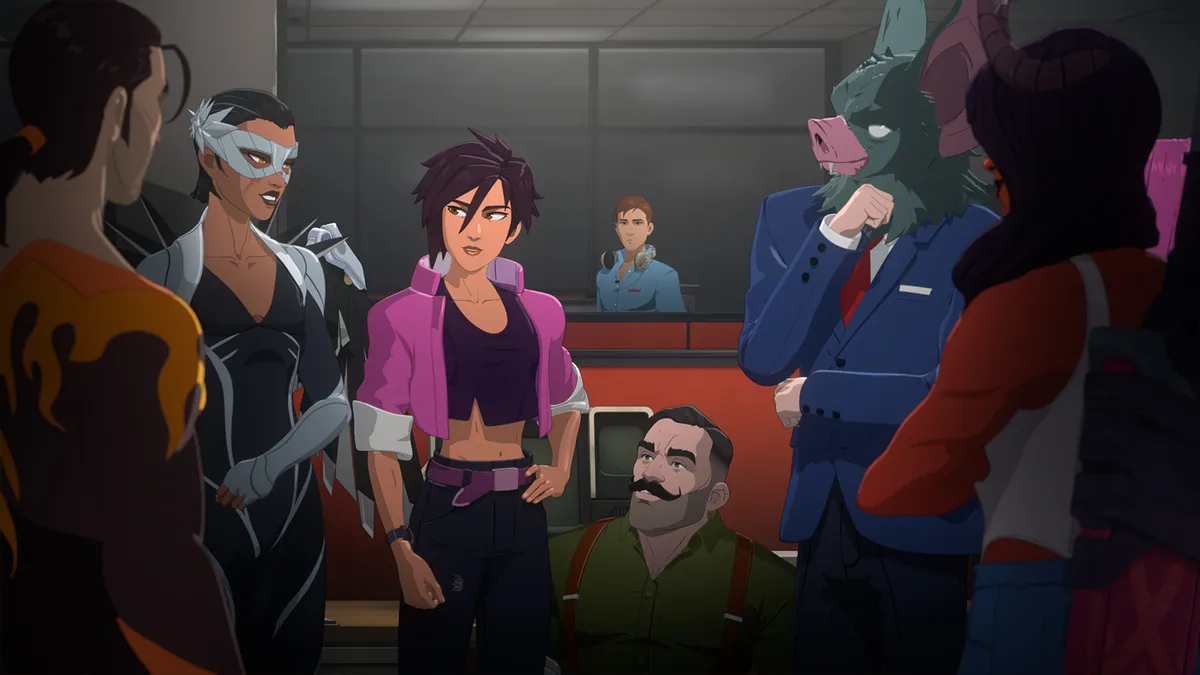
The original story was a mentorship, centred on the one-on-one relationship between Robert and Invisigal. Pivoting it into a game changed that. AdHoc wanted a dispatch mechanic, with the player sending heroes out on calls, and that needs a roster. "So the Z-Team was created to support the gameplay," Lenart says, "which then informed the story, and then changed the overall arc of the season, which brought a whole team into it as opposed to just a one-on-one mentorship with Invisigal."
It's a neat illustration of how the studio works. "Everything at AdHoc starts with story," says Herman, contrasting that with studios that pick a genre first, polish the mechanics and the game-feel, and only later ask what the story is. AdHoc begins with the world, the characters and who the player is, then asks what that means for gameplay. "Oh, well, you're a superhero dispatcher, so maybe we should have some sort of dispatching mechanic, right?"
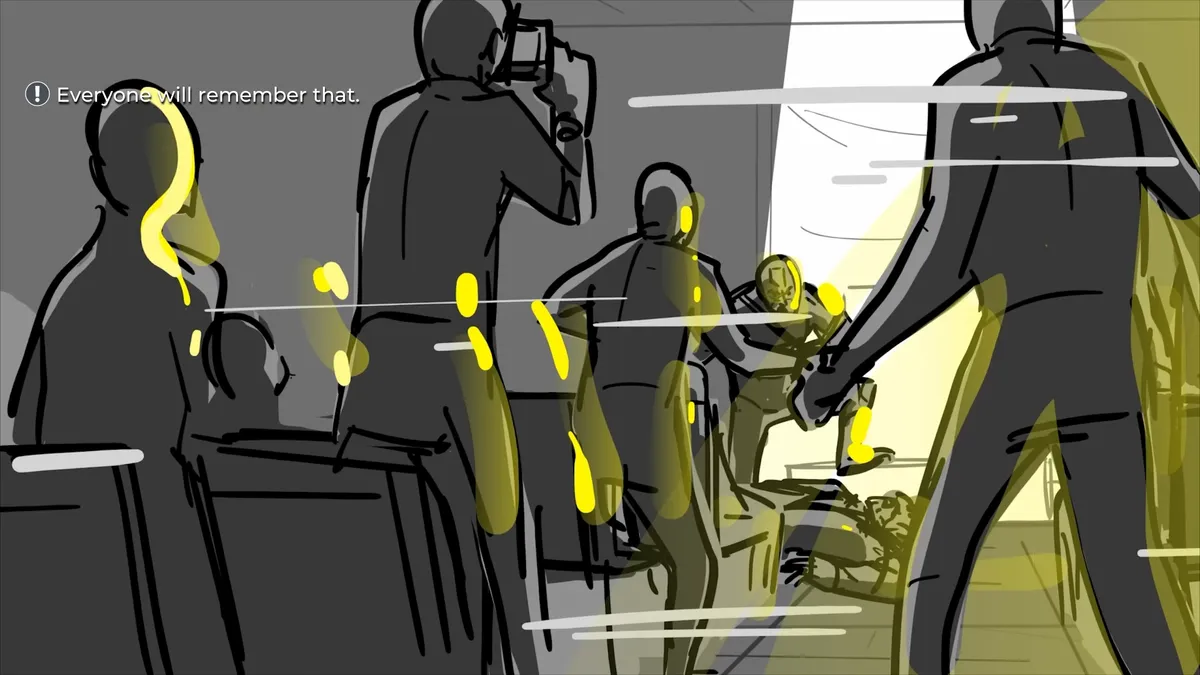
Once there's a script, it moves on to storyboards, animatics and animation. That storyboard stage is now part of the product: the anniversary Deluxe Edition update adds Storyboard Mode, which plays the whole game through its original animatics. It's a new mode that offers genuine insight into how a scene was planned, scripted and animated.
Why Dispatch switched from live action to animation
The move to animation was driven by budget constraints, to an extent, because they could do more with a little extra, and it also changed the game's scale, given Dispatch's live-action origins; Lenart says the team knew they were "severely limited from a budget standpoint compared to big-budget superhero tentpole movies". For budgetary reasons, the story was largely set in an office with a small cast.
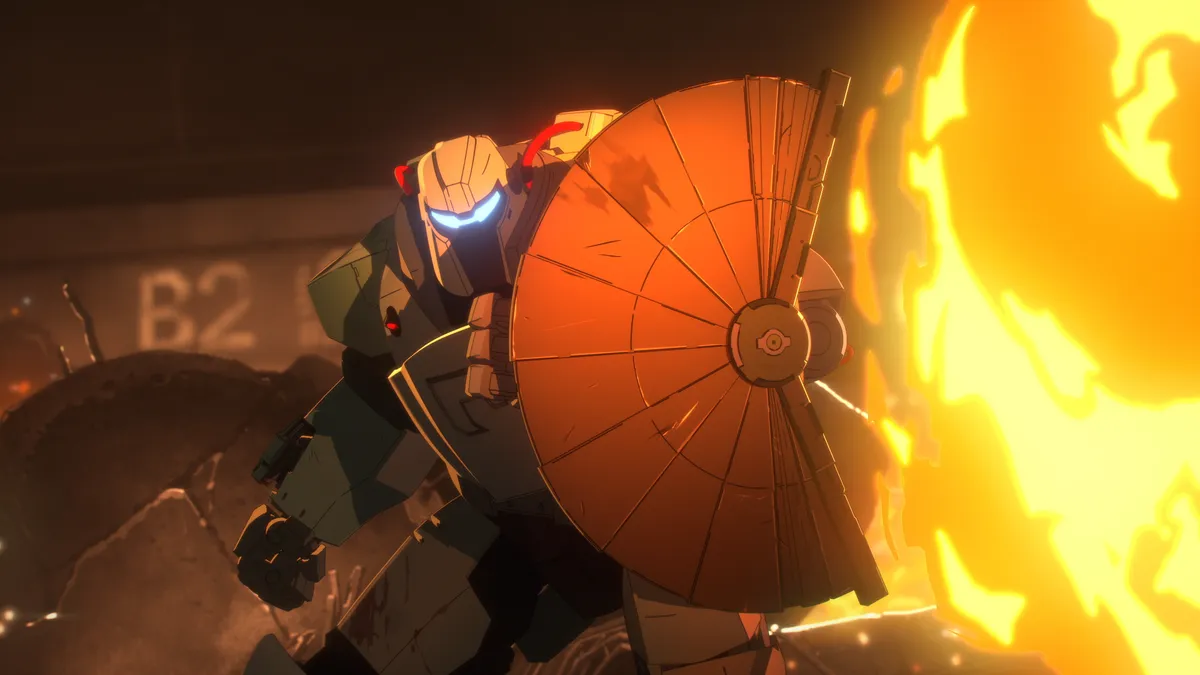
Animation flipped that constraint and aligned with trends like Mixtape's hand-made animation, giving the team room to grow and aim higher within the new art form. "We're able to have a giant action scene because it doesn't cost that much more than having a bunch of characters walking around talking," Lenart explains. That let AdHoc expand the moments that deserved spectacle: "Let's really go all out and try to compete with some of the other best-in-class versions of these scenes in animation."
What Dispatch’s success means for narrative games
Ask whether players have done anything that made AdHoc rethink how interactive stories should work, and Herman is refreshingly honest. “I don’t know that there have been any major epiphanies,” he says, before steering to a different answer: launching Dispatch “was a labour of love”, the culmination of a lot of work distilled into one experience the team felt was exciting and high quality.
He adds: "The success of the game has just really injected a lot of confidence into us and other developers making similar types of games. For a long time, there hadn't been a really clear or recent example of something like this reaching a level of success that a developer could go out and raise funding for."
He's proud of who found it, too. Dispatch "was able to pierce a new audience who perhaps thought gaming wasn't for them". Lenart agrees, saying the success feels like "motivation to keep making these types of games and expand our possibilities even more".
The Dispatch Deluxe Edition is out now on PlayStation 5, Xbox Series X, and Nintendo Switch / Switch 2, and $10.99 digital upgrade path for existing owners
Where to buy Dispatch Deluxe Edition