Every June, I make the same promise: this year I'll plan for the heat rather than be ambushed by it. And every June, I break it. Usually somewhere around afternoon 3 of staring at a blank screen, my brain slowly turning to soup.
This year, though, things are getting serious. Western Europe's endured its worst heatwave on record, with more than a thousand British schools closed and hospital admissions climbing. Spain and France have seen temperatures 20 degrees above normal, for weeks on end. And the central and eastern USA is bracing for its own scorcher ahead of the 4 July.
All of which is great if you're relaxing on a beach. But if you're freelance and your job depends on fine motor control, sustained focus or colour accuracy, not so much. An illustrator told me recently that her productivity had become non-existent, and she was struggling to make simple decisions – even something as basic as geometric composition. That's what heat can do to a working brain.
So recently, I've started treating heat as a variable I plan for, just like deadlines or client feedback. Here's what's actually helped.
Shifting my hours
The biggest change has been accepting that my best working hours aren't fixed. If it's going to hit 32C by lunchtime, the important stuff needs to happen before breakfast.
Concepting, writing, editing, pitching – anything that requires actual thinking – gets done while the house is still cool. The hotter afternoons become admin time: emails, invoicing, file organisation, or the kind of mindless production work that doesn't require my last remaining brain cell to overextend itself.
I've also stopped treating my workspace like it's sacred. If the coolest room in the house is the dining room, that's my office for the day. If a local library, gallery café or shared workspace has air conditioning (unlike my home), even better.
Caring for my kit
I've learned that keeping my kit cool matters too. Turns out my laptop throttles performance when it overheats, my monitor generates surprising amounts of warmth, and every unnecessary device that's switched on or plugged in adds a little more heat to the room. So I've started closing browser tabs with the same enthusiasm I close windows facing the sun. A laptop stand, a quick blast of compressed air through the vents, and switching off equipment I'm not using: it's all made a difference.
Then there's hydration. The trick is not waiting until you're thirsty. A bottle of cold water within arm's reach is infinitely more effective than remembering to get a drink three hours later.
Lunch helps too. And through necessity, I've learned what should have been common sense: watermelon, cucumber, salads and anything that doesn't require the oven are all kinder on your body than a heavy meal that leaves me feeling even sleepier.
Being honest with expectations
Perhaps my biggest mindset shift, though, has been lowering expectations for my productivity. Heat isn't laziness; it's a genuine cognitive load. So if I'm making slower decisions or finding it harder to solve problems, I've started to accept that's not a personal failing; it's biology.
So rather than fighting it, I've broken projects into smaller chunks, taken more frequent cooling breaks, and learned to recognise that today's masterpiece might simply be tomorrow's rough draft.
All of which might sound like a great deal of faff. But here's the thing: heat waves like this are becoming less unusual. And if creative work is increasingly happening during prolonged periods of extreme heat, then adapting isn't a nice-to-have; it's increasingly part of the job.
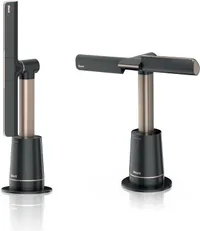
And if all else fails, then at least invest in a fan that isn't an eyesore, see our pick below.