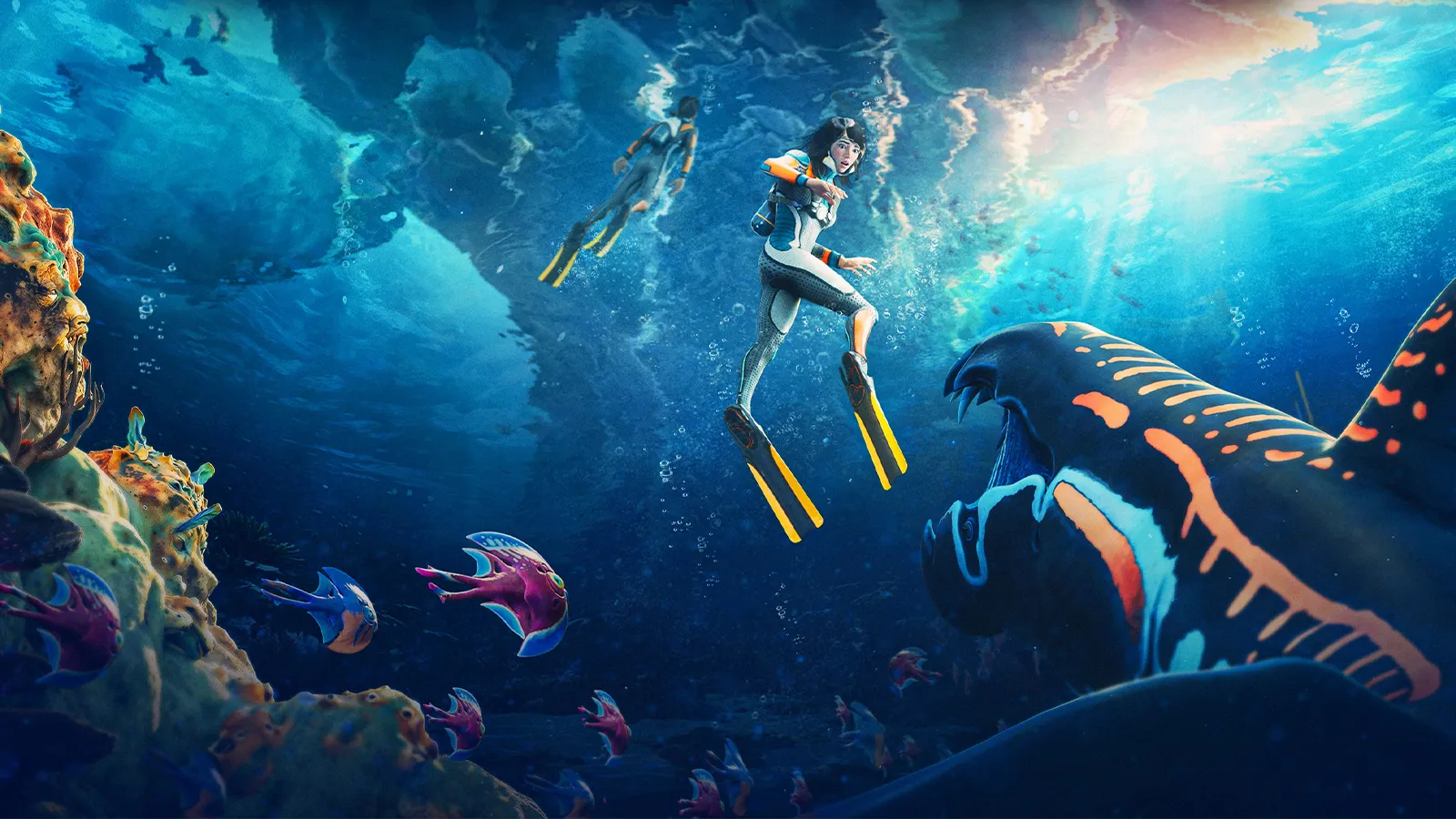
During the Subnautica 2 gameplay deep dive ahead of today's early access there’s a moment where the conversation shifts away from pure tech talk and starts sounding more like a discussion about horror cinematography, and that’s really where the game stops being just another ‘look at our realistic Unreal Engine 5 water’ showcase and becomes a more deliberate demo of how Subnautica 2’s world will be experienced, which is one of eerie dread mixed with colourful beauty.
Subnautica 2, like its predecessor, lands in a sweet spot where exploration can be fun, the world is so beautifully realised you'll want to see what's down there, but it also plays with the fear of the unknown. The game’s visual design, use of Unreal Engine 5, and gameplay loop are all built to play with visibility, distance, and the way our own imaginations happily fill in the gaps that the darkness at the bottom of an alien ocean keeps hidden. The ocean in Subnautica 2 isn’t being tuned for realism as such, even though it looks physical and reacts in real ways, but it is playing on the fear of uncertainty.
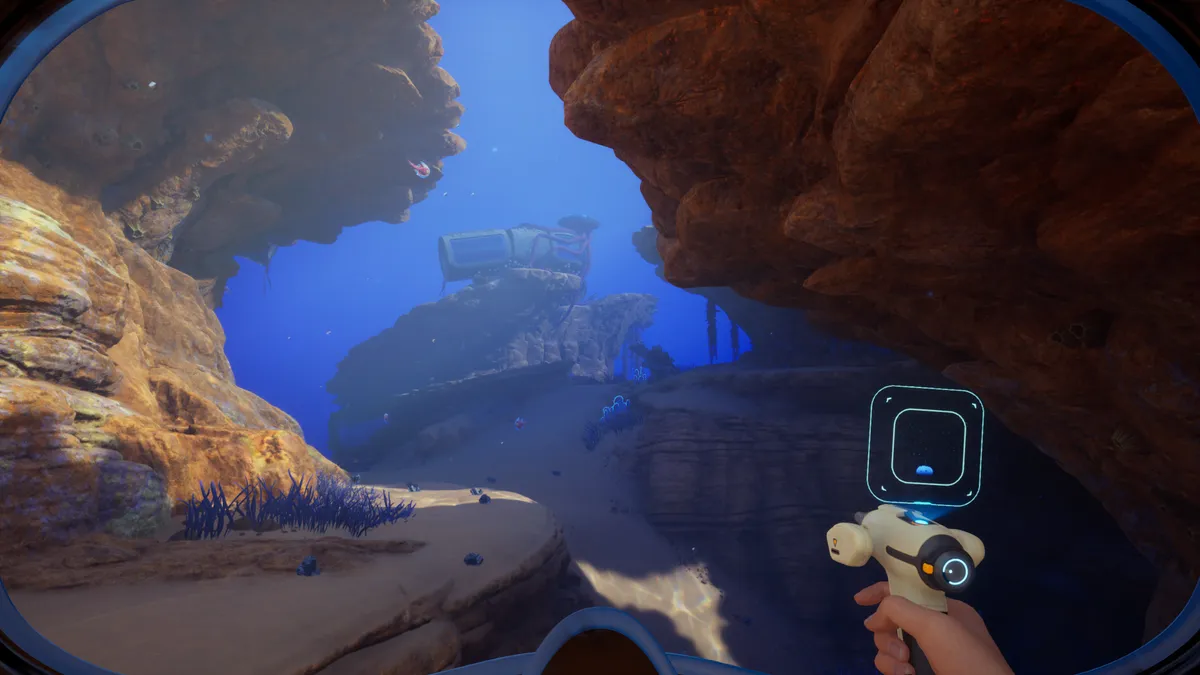
“We really try and hide the stuff that’s on the horizon so that you still get those blurry, moving creatures on the edge of your view,” explains lead game designer Anthony Gallegos during the presentation, and it’s one of those lines that neatly sums up why thalassophobia – the fear of deep, dark, empty bodies of water – works so well in games like this. The original Subnautica was great at presenting a watery space that darkened and teased shifting shapes just out of sight, and this sequel is making use of Unreal Engine 5 to really take that idea and give more realism.
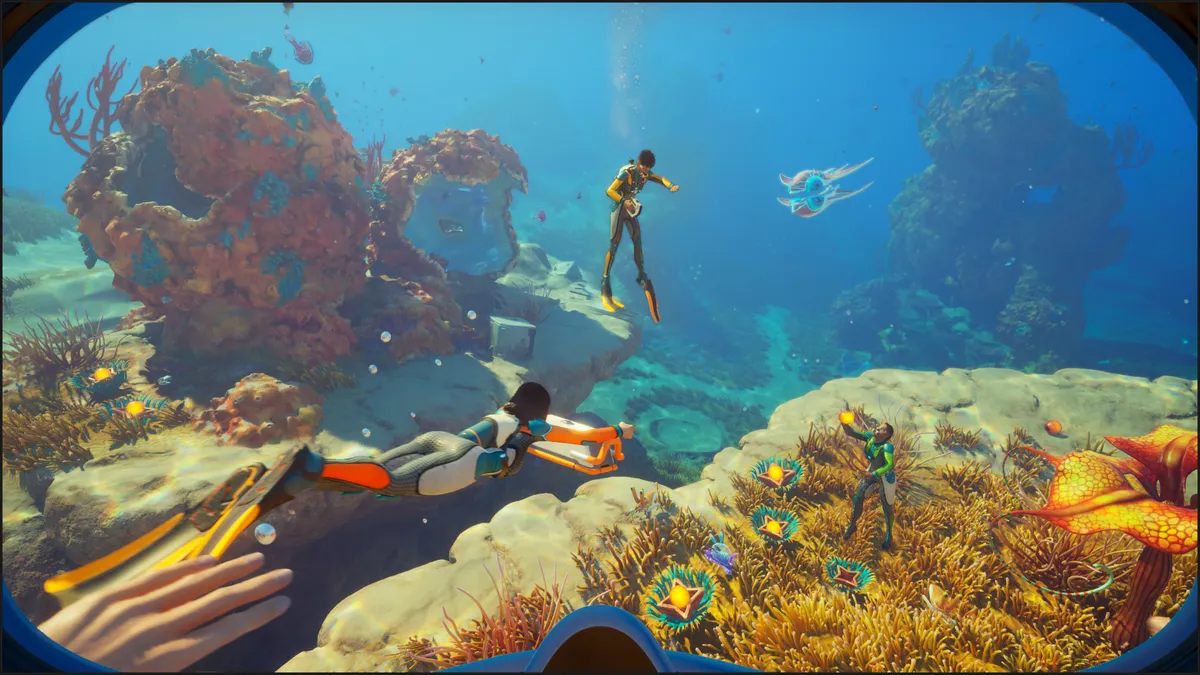
I can see this in the demo as Gallegos explores the sea in the hands-on demo, with vibrant deep blues, light diffused and reflecting off rocky outcrops, and the shimmer of sea creatures and alien fish just up ahead, somewhere over a sandy. But for all its beauty, below the camera is darker, teasing hidden depths and perhaps something not quite so serene.
UE5 lights the seas
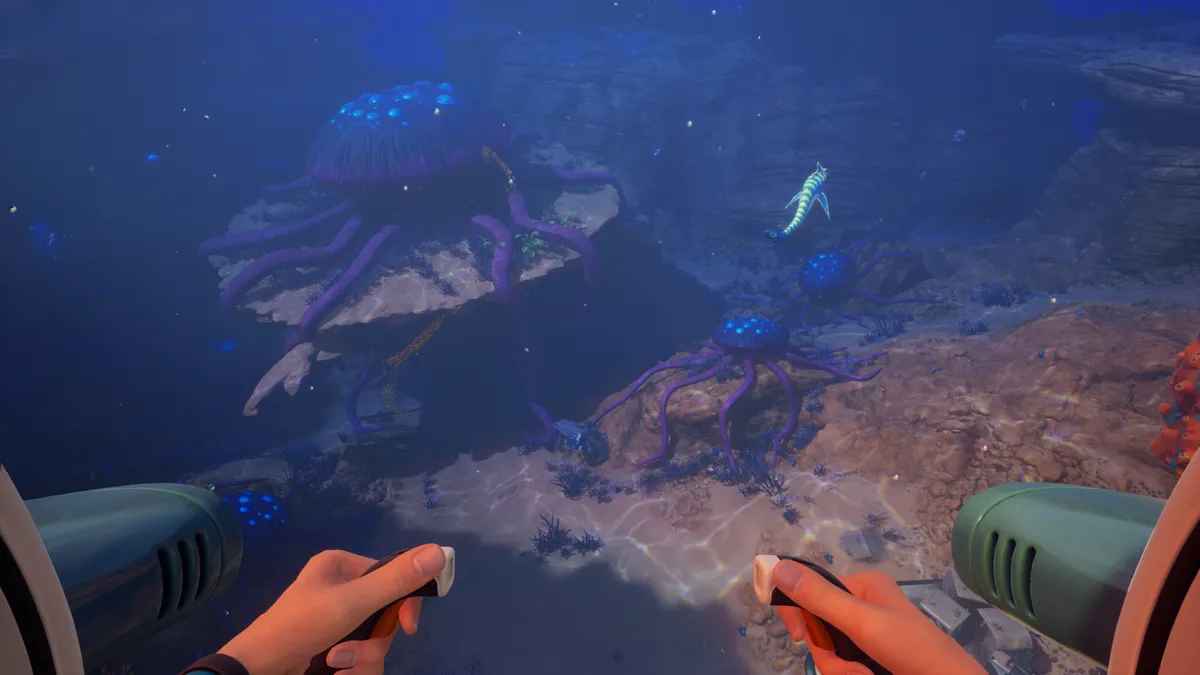
A lot of that tone, the blend of realism and unearthly suggestive design, is now being driven by Unreal Engine 5’s lighting and rendering systems, which makes a big difference. Gallegos points to the jump in fidelity from Nanite and the “lighting opportunities for us to create some really beautiful areas” enabled by Lumen, but beauty in Subnautica has never really been about safety; it’s more like a lure, with early biomes leaning heavily on bioluminescence to keep things readable and inviting, before gradually stripping away light as you descend into deeper, more oppressive waters where visibility collapses, and direction starts to feel uncertain.
That new advanced lighting is directly tied to how the new alien world is experienced, as Subnautica 2 includes infected “Bloom” zones, where the palette becomes more desaturated, visibility turns murky, and corrupted root systems spread across the seabed. The sealife in these areas is more aggressive and features different behavioural patterns from the standard marine life you’ll come across. Gallegos describes infected creatures almost like ‘underwater zombies’, but is careful to frame them not as evil but as sick, stressing this isn't a horde shooter, because that's never been the series gameplay, and toward something more ecological and uneasy.
That ecological thread runs through everything the team talks about. Creatures in Subnatica 2 are no longer designed purely as encounters for the player, but as part of a living system that continues whether you’re there or not. The demo shows a Hammerhead-like species crash through coral as part of its own behaviour loop, leviathans drift through deep water doing whatever leviathans do, and smaller creatures interact with each other rather than simply waiting for you to trigger them.
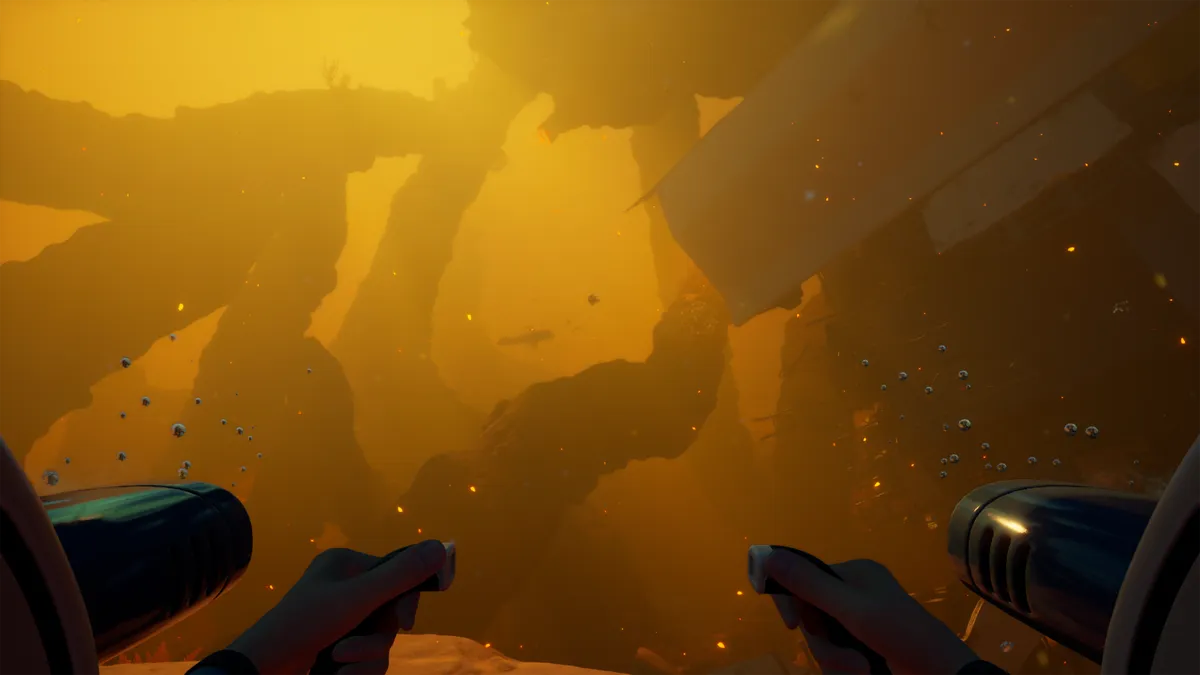
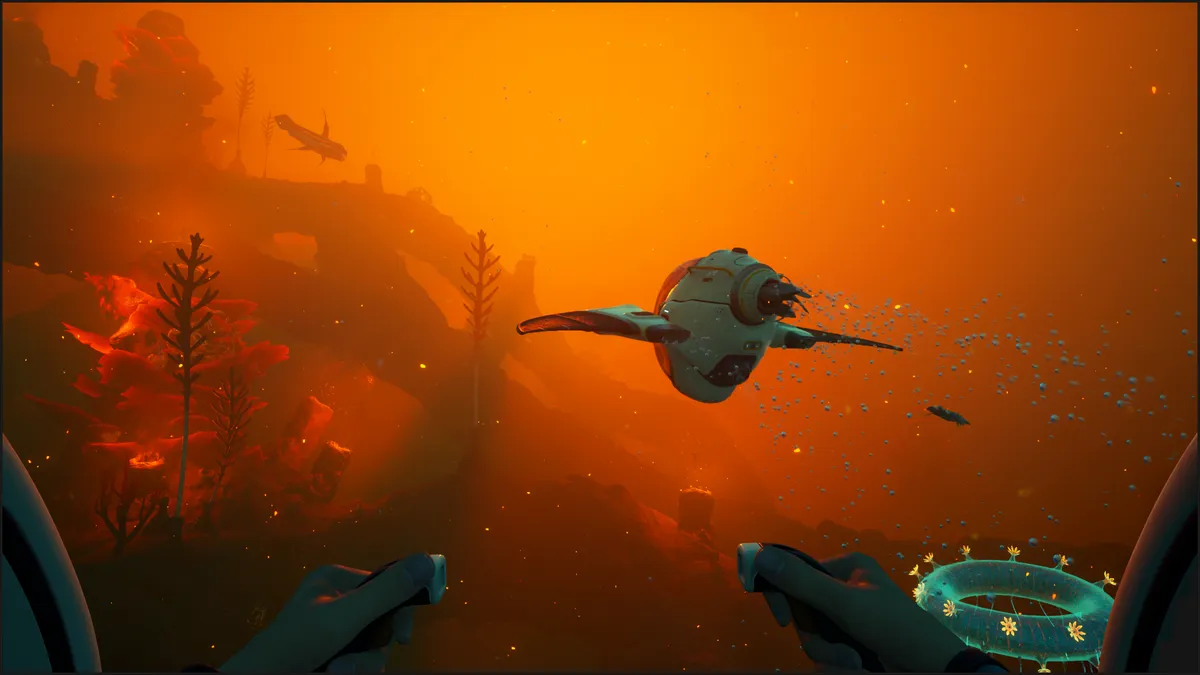
Creative media producer Scott MacDonald notes that much of this ambition for autonomous AI was present in the original Subnautica but had to be cut because the hardware simply couldn’t handle it at the time. “Creatures will be able to think of more than one thing at one time,” he explains, and while it’s a technical way of describing AI complexity, what it really points to is a world that feels less staged and more continuous. When it comes to upping the sense of dread, the idea that life beneath these alien waves is doing its own thing regardless of you adds to the fear of these deep, dark bodies of water.
With modern hardware and Unreal Engine 5, the team is revisiting systems that were effectively out of reach a decade ago. It doesn’t sound like a sequel trying to inflate scope for its own sake, but more like a long-delayed set of ideas finally becoming possible to build properly. But it doesn’t mean the game's core loop is being overridden. Gallegos says many fans already treat Subnautica like “a David Attenborough Earth type thing”, where scanning, cataloguing, and reading taxonomy logs are as much the draw as surviving the alien seas.
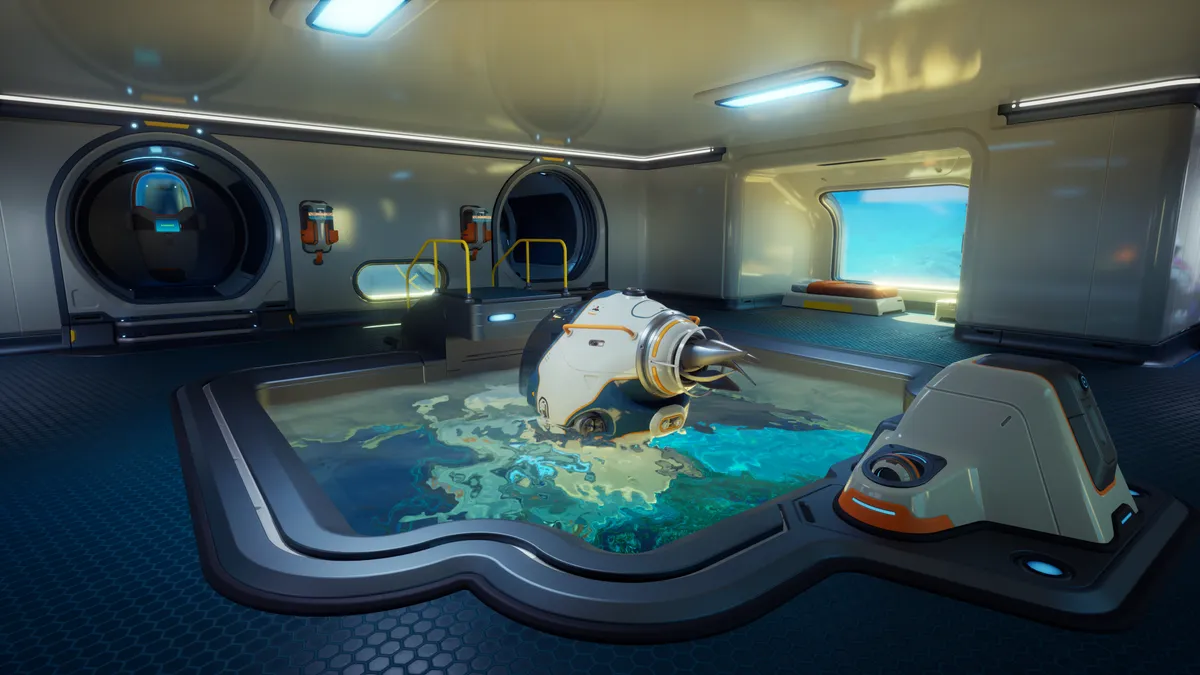
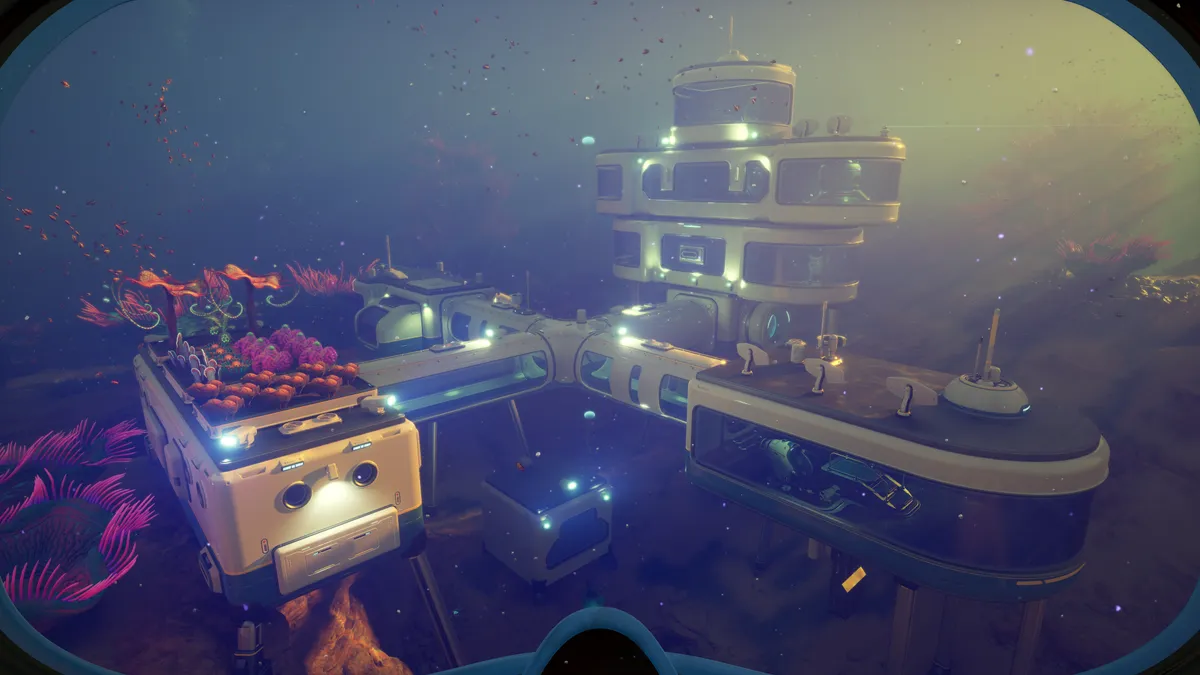
While the core loop remains in a revamped form, Subnautica 2 has taken the original game's base-building and turned it into something closer to underwater architectural design. The old modular snap-together system has been redesigned with what the dev team refer to as a “sculptural” approach to crafting. MacDonald explains that the team looked to clay-extrusion tools used in modelling software, I'd imagine Maya and Blender, for inspiration. Instead of assembling rigid rooms, players can now push, pull, and reshape spaces organically, forming curved interiors, stretched corridors, oversized moon pools, and wide viewing galleries that feel far closer to digital architecture than traditional crafting systems.
Building on the seabed
Gallegos mentions small details like reshaping furniture around corners or scaling windows from small portholes into full wall-sized openings for scenic views, and because lighting uses Lumen, it behaves dynamically through these structures. This means your bases are now less utilitarian spaces for storing stuff and more artistic expressions of mood. Earlier experiments with more traditional piece-by-piece construction were ultimately abandoned because they disrupted immersion, especially when underwater spaces had to be flooded or drained during construction. The sculptural system avoids that entirely, preserving the fantasy while opening up far more expressive possibilities.
Despite the introduction of optional co-op, the studio is equally careful about preserving the series’ defining sense of isolation. There’s no enforced proximity system, no leash, no requirement to stay together. As Gallegos puts it, Subnautica 2 is still “a single player game that you can add people into”, and in practice, that means it’s entirely possible to drift kilometres away from friends and suddenly find yourself alone in deep water again, surrounded only by movement at the edge of visibility.
Once you are out there alone, Gallegos explains the intent is still to push players toward adaptation and avoidance rather than domination, you can’t go out into this ocean seeking to hunt and kill its large, dangerous creatures, partly because that’s not the purporse of Subnautica 2 but also because this is a game centered on survival, dread and removing the source of that tension would sink the game’s core ideas.
Taken together, and with the new realism Unreal Engine 5 offers, it all feeds back into the same idea, that Subnautica 2 isn’t trying to make the ocean more controllable but more uncertain. This is where the use of Unreal Engine 5 lands most effectively, not in its ability to make these oceans simply more spectacular, which it does, but in heightening discomfort, pushing the psychology of fear further, and in that sense that the ocean is still doing things you’re not meant to fully understand, and you’re just alone out here trying to survive.
Subnautica 2 launches in Early Access on Steam today.