No doubt you’ve heard the buzz; the next generation of NVIDIA RTX graphics cards were unveiled last month and they are surpassing expectations. Two new cards have launched: the GeForce RTX 4090 and the GeForce RTX 4080, the latter of which comes in 16GB and 12GB variants.
GeForce RTX GPUs are well-known for transforming the performance of your creative apps, and the 40 Series cards offer a significant jump up compared to their predecessors. If you’re tempted to upgrade, the top-line information is that NVIDIA’s benchmarks for the RTX 4090 are showing that performance for 3D rendering, video export and AI tools is up to twice that of the previous generation RTX 3090 Ti card—which is a seriously hefty piece of kit in its own right. The overall performance of the RTX 4080 is around 1.5 times that of the RTX 3090 Ti.
But there’s much more to it than that. For both cards, benchmarks are showing even greater performance gains for particular tasks within creative apps. So we’re going to summarise the main benefits for you as a creator and also take a deeper look at how an RTX 40 Series card makes a difference to the workflow of an individual artist.
Next-gen architecture and processing cores

The first thing to know is that GeForce RTX 40 Series graphics cards are based around the next-generation Ada Lovelace architecture. It’s extremely efficient, delivering more than twice the performance of the previous generation Ampere architecture at the same power. They also have the next generation of Tensor and Ray Tracing Cores.
On top of this, there’s a new version of DLSS. If you haven’t heard about it, DLSS is an amazing technology that upscales frame resolution on the fly using AI techniques. This means that games and applications can render frames quickly at low resolution and DLSS will upscale them just before they’re displayed, giving you a high frame rate at high resolution.
The new version, DLSS 3, delivers even greater frame rates, which does wonders for your workflow in 3D applications. It means that you can work with a fully ray-traced scene that renders in real time in your viewport. NVIDIA’s benchmarks are showing a 60-70 percent improvement in render times compared to the RTX 3090 Ti in a number of top 3D apps.
Livestreamers and video editors will also see a significant boost with the 40 Series cards in the form of new NVIDIA Encoders (NVENC), which now support AV1 encoding. AV1 dual encoders export video twice as fast, and livestream quality is improved by around 40 percent. If you’re a fan of NVIDIA Broadcast, an app that uses AI to clean up audio and video for calls and streams, all those effects are also accelerated with the new GPUs.
Get access to NVIDIA Studio
It’s also worth remembering that when you buy an NVIDIA RTX graphics card you get access to the whole suite of NVIDIA Studio creative apps that help you to make the most of its power. To get a deeper sense of what the NVIDIA Studio platform does for creators, take a look at 'In the NVIDIA Studio', a blog series exploring how artists and other creators use RTX graphics cards and NVIDIA Studio apps to do amazing things in their workflows.
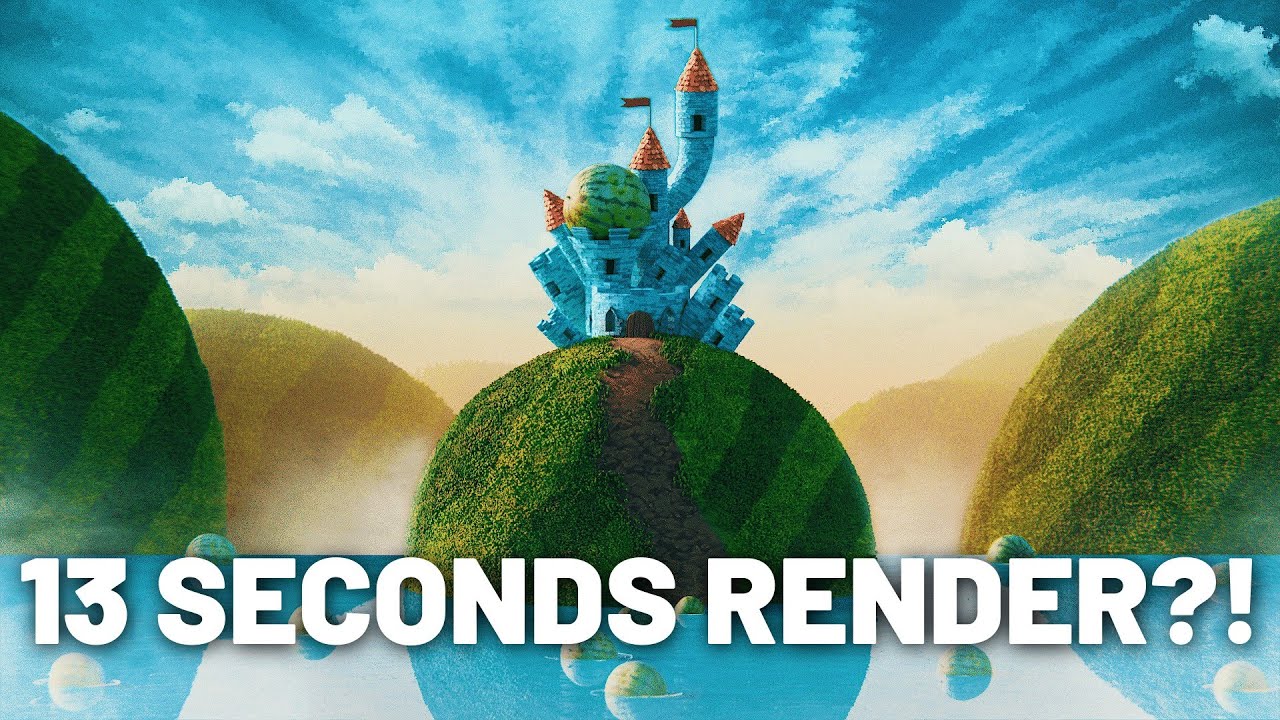
In a post this week, 3D artist SouthernShotty explains how he used Blender and Substance 3D with a GeForce RTX graphics card to create scenes for his short film, Watermelon Girl. Most of the work was done on an NVIDIA Studio laptop with an RTX 3080 GPU, but he has now switched to an RTX 4090 for the final stages of the project.

From the outset, the workflow for Watermelon Girl was enhanced by the RTX card and NVIDIA technology. Scenes and characters were built up in Blender using the Cycles renderer with NVIDIA’s OptiX ray tracing engine, accelerated by the RTX GPU. This setup allows for interactive, photorealistic rendering in the viewport – so artists can manipulate complex scenes smoothly and get a preview of the final result as they work.
Textures for Watermelon Girl were created in Substance 3D Painter, where NVIDIA’s Iray technology came into play. Iray uses a range of different technologies to create photorealistic results very quickly, again allowing for an interactive workflow instead of sitting back and waiting for textures to bake. This technology is engineered to take advantage of Tensor and Ray Tracing Cores on RTX GPUs to achieve results even faster.

Substance 3D Stager was the next port of call in this workflow, where textures were applied and the scene was lit. RTX graphics cards excel at speeding up denoising, which is a great benefit at this stage because it makes interactive rendering smoother. This enables the artist to adjust the scene without waiting for what’s in the viewport to catch up.
Enter GeForce RTX 4090
The final stages of this project will be completed using the RTX 4090 and the artist believes he will render the entire short film using this card, with no need for a render farm.
Now that he has the RTX 4090 card installed, the artist has discovered some seriously impressive performance within the Blender Cycles render preview screen. NVIDIA’s OptiX AI denoiser accelerated by the RTX 4090 makes it possible to see animations at a quality close to the final look in the viewport. This saves a lot of time because it means you won’t need to do as many re-renders.
The artist also experimented with rendering an unoptimised scene with his new card and was again impressed by the speed—it was so fast that it made the process of optimising redundant. He noted that optimisation might take up 30-40 percent of your time on a project, so this is another massive time-saver.
Take a look below to see how SouthernShotty got on with his new GeForce RTX 4090, and remember to check In the NVIDIA Studio in the coming weeks and months to see how artists, live-streamers and other creatives are benefitting from NVIDIA Studio and 40 Series GPUs.

