



Creative Bloq Verdict
The HEDDphone DX is an open-back headphone that builds on the incredibly popular HEDDphone D1. It has more sub-bass and a more spiky treble, and that's a double-edged sword. Everyone will appreciate its more confident design and its improved comfort, thanks to a new Capra-created headband. But when it comes to tuning, the DX is a softer, warmer take on the lean, mean neutral D1, and I expect that'll enrage as many as it'll delight. For me, the DX is an exciting, musical set that swaps a little detail and imaging for a more fun sound. But at $400 more than the D1, and with a new Capra-created headband released for the D1 early next year, the DX runs the risk of remaining in its older sibling's shadow.
Reasons to buy
- +
Confident design
- +
Very comfortable
- +
Musical, big bass
- +
Smooth treble
Reasons to avoid
- -
Clamp force
- -
$1,199 is a confusing price point
- -
Soft focus mids
Why you can trust Creative Bloq Our expert reviewers spend hours testing and comparing products and services so you can choose the best for you. Find out more about how we test.
In the world of audiophile headphones and in-ear monitors (IEMs), second generations of popular products are thick on the ground. Last year the divisive Grell OAE was followed with the far better-received Grell OAE 2. Last month the ground-breaking Kiwi Ears KE4 got a second iteration.
Price: $1,199 / £999
Release: 24 November 2026
Driver & housing: 50mm dynamic driver with thin-ply carbon diaphragm (TPCD); open-back
Material: Polymer and metal chassis, soft fabric suspension strap, replaceable velour ear pads
Cable: Detachable dual-sided 3.5 mm ear cup connectors; textile-sleeved cables terminated in 3.5 mm (with screw-on 6.35 mm adapter) and 4.4 mm balanced
Impedance: 32 Ω (at 1kHz)
Sensitivity: 100dB @ 1mW
Weight: 310g
So it would be simple to think of the new HEDDphone DX as take two of the best-selling (and my favourite open-back headphone) HEDDphone D1. Simple, but wrong.
HEDD have described it as 'the musical D1', but I think they're playing a risky game. Yes, they took on feedback from their audience, some of whom thought the D1 was a little lean and a touch too clean (not I, for the record). And they also took note of critics of the D1's unforgiving headband (yeah, that thing sucks). But instead of giving us a second take of the D1, I think they've tried to give us the HD 650 to the D1's HD 600. If that was the plan, I don't think they achieved it – but it's a fantastic failure nonetheless.
Big picture: If I were reviewing the HEDDphone DX purely on its tuning, design and comfort, it would be an easy recommendation to all. But the DX costs $400 more than the D1, so it becomes more complicated. To muddy the water further, this January HEDD plans to release the excellent DX headband as a $100 add on for the D1. That will make the D1 far more appealing – and still $300 cheaper than the DX!
So, there's plenty to consider when evaluating the new HEDDphone DX. One thing's for certain: The top spots of my list of the best-sounding wired headphones run the risk of being cluttered with HEDDphones.
Sound profile
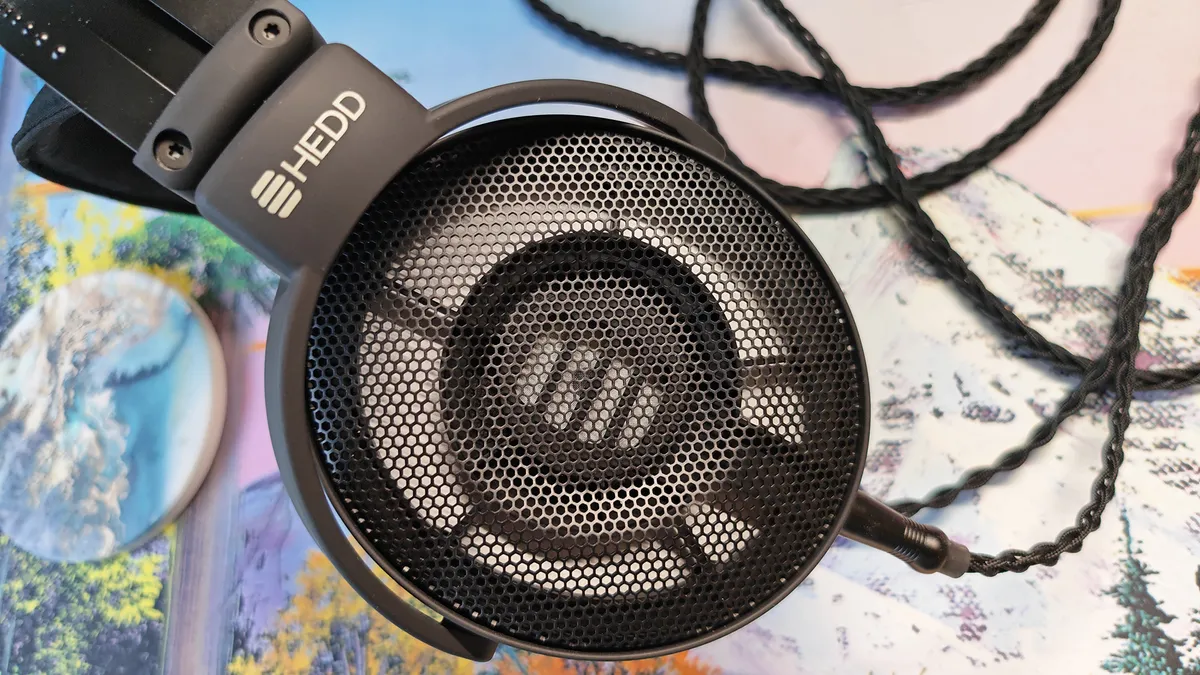
Overall, the HEDDphone DX is an exciting, warm open-sounding set, with a very well extended lower frequency, and an immersive midrange. With that lower touch of warmth, it loses much of the crystal clarity of the D1, and some of that higher-end detail. But I still hear a spacious presentation with above-average imaging (the perceived placement of instruments), and enough of what makes the D1 great but with a whopping amount of sub-bass.
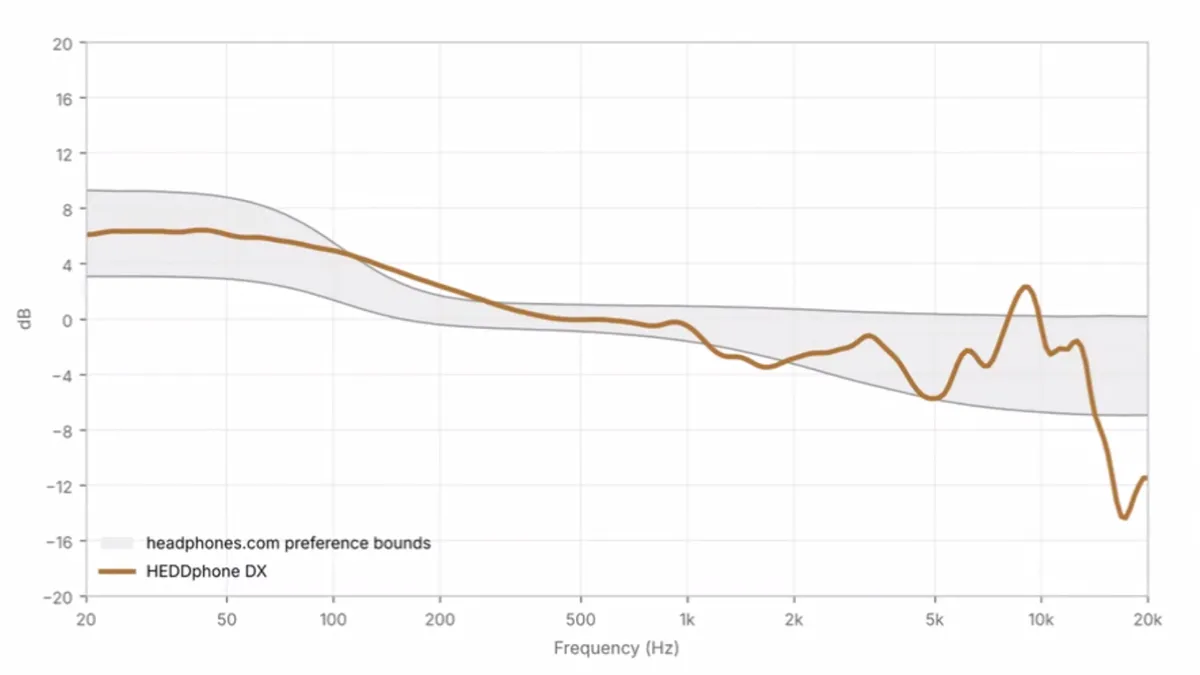
HEDD shared a B&K 5128 measurement of the DX with me (above), and it largely replicates what I hear. I definitely hear that slight recession in the 1-2kHz region, and an elevation in 3.5kHz. But for me, the treble's squiggly lines differ ever so slightly (all detailed below). What's clear is that HEDD want the DX to walk the tightrope of warmth and richness, while offering relaxed higher frequencies that give us detail without getting sibilant. And they nail it.
This tuning suits diverse music genres and immersive gaming sessions, delivering clean transient speed, rich tonal body, and fatigue-free playback across dense, complex, layered multi-track studio recordings. I absolutely love it for EDM, but it's not peerless when it comes to vocal tracks, as we will see in the competition section below.
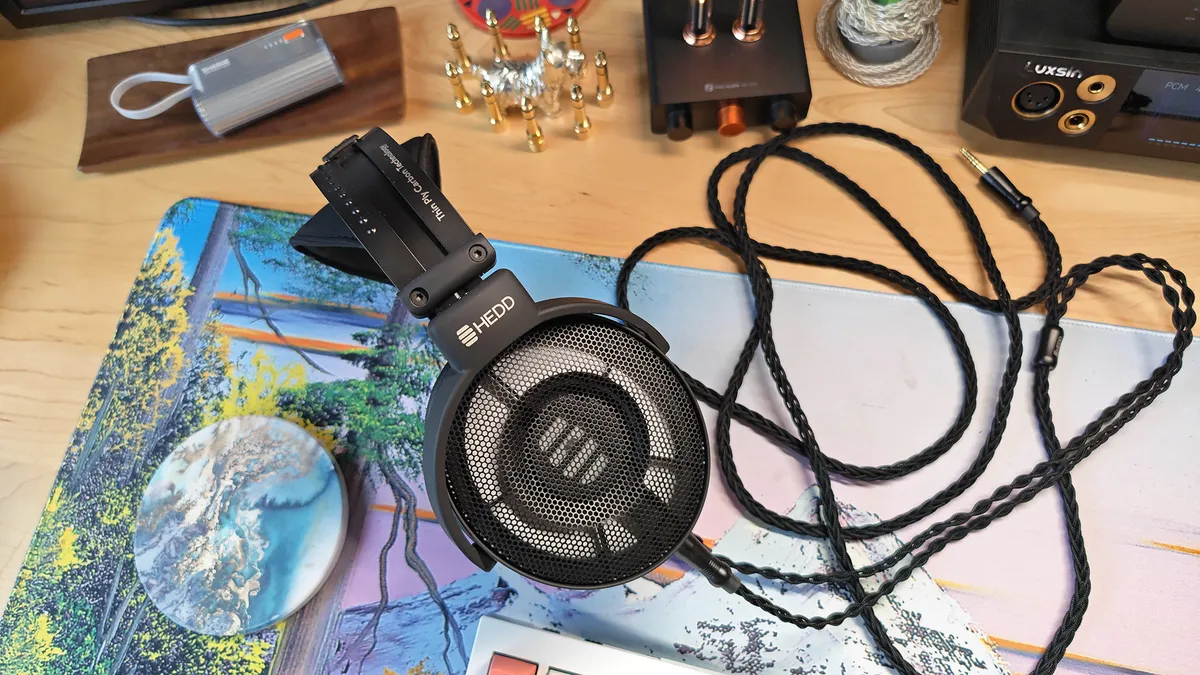
Bass: Most open-back dynamic headphones suffer from sub-bass roll-off, and that's generally been seen as a tradeoff for all that open, expansive presentation of music. The DX holds full sub-bass extension to 20Hz, smack in the middle of the new Headphones.com preference bounds on B&K 5128 measurements.
Warmth between 100Hz and 250Hz reaches the upper edge of that preference band, adding body and fullness to bass guitars and kick drums. According to HEDD's literature, the high-excursion carbon driver moves air with low - basically zero – distortion, meaning we get clean separation in the bass during complex musical passages.
Now, I don't really know how much of that is audible to the human ear. What I do know is that the bass is about as big and fun as I can enjoy before things start getting claustrophobic. You see, when bass gets overbearing, lower mids in particular can get swamped by it, and a lot of subtlety is lost. However, what the DX does to combat this is add a treble elevation around 10.5kHz, keeping things from getting too swampy. What you get is a big, detailed, but not bloated bass.
It's a tightrope, but the DX does a fantastic job walking it.
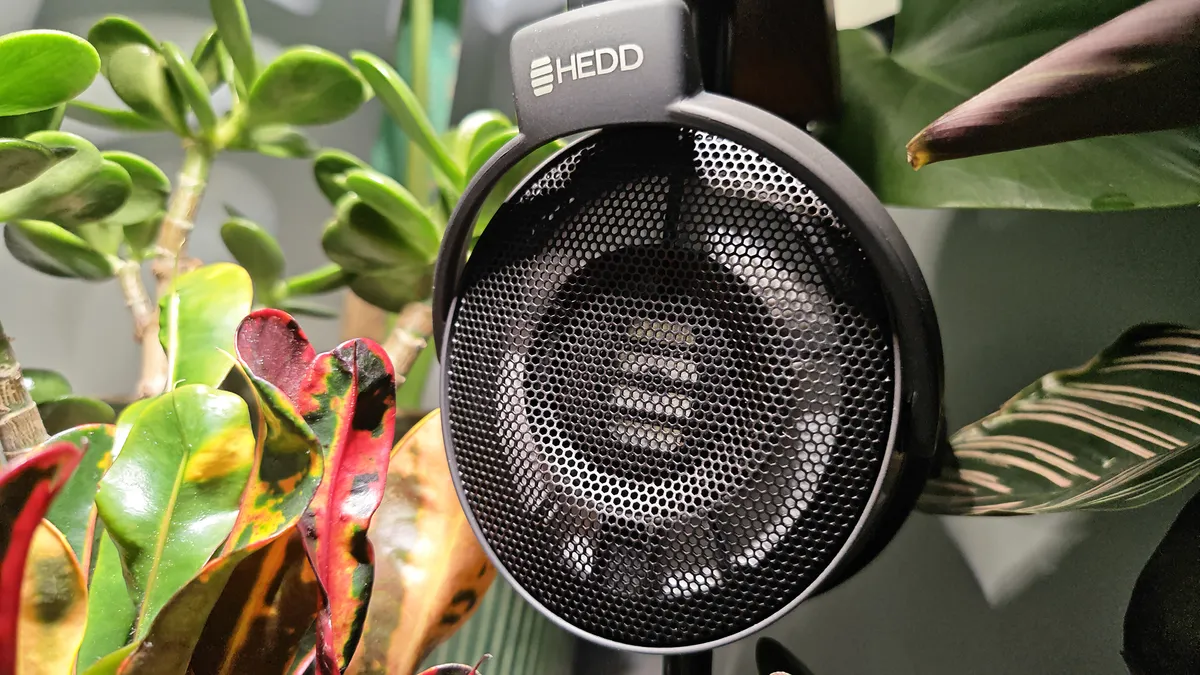
Midrange: With its bombastic bass and sneaky treble (more on that later), the mids of the DX are not really the star of the show. Not at first, at least.
But there's plenty going on. From 300Hz to 1kHz, the lower midrange sounds correct, not coloured, giving vocals, and string instruments solid weight. Then things get fun. Around 1.5 kHz there's a dip that comes across as relaxed, then a spike around 3.4kHz for me, which is only emphasised more due to the following dip around 5kHz.
All of which is to say, I can really crank the volume with the DX, and the upper midrange doesn't punish me for it. There's no shoutiness, and instead I get fatigue-free listening with coherent vocal articulation that's proportional against the rich low-end. What's more surprising, considering this rollercoaster, is that the timbre of the DX is natural sounding.
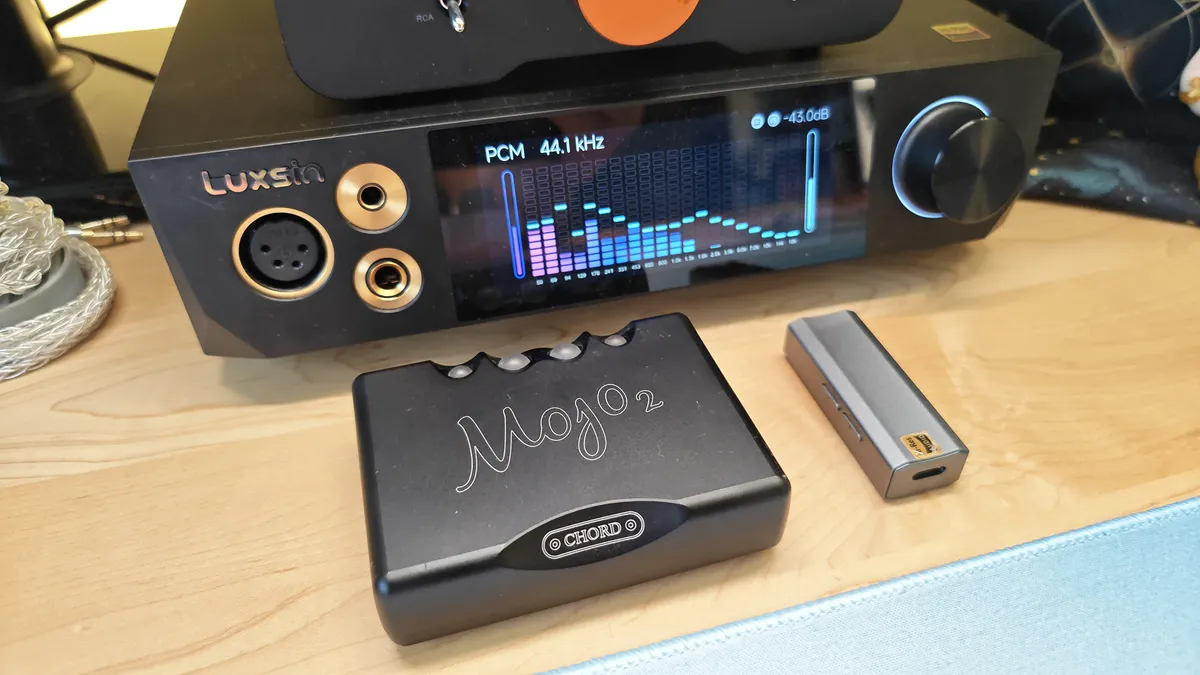
For my HEDD DX review I played them through the Luxsin X8 and the Chord Mojo 2 DAC/Amps. These pairings provided ample power delivery and headroom for the headphones, maintaining an uncoloured signal path from source to transducer. Music streamed via Spotify Lossless.
Treble is largely relaxed with the DX, trading sharp brightness for a smooth, fatigue-free approach. I hear reduced energy at 7kHz that lowers sibilance on a brightly mixed track like Sweet Old World by Lucinda Williams. That's not to say there's no bite here, but it never gets in the way of the music.
Though HEDD's B&K 5128 graph shows a narrow peak at 9-10kHz from their test pinna, for me I got clean treble extension without any glare. Strings, hi-hats, and room ambience retain a crisp texture over longer listening sessions.
I definitely got a bit of spice around 12 kHz, which isn't punishing, but brings with it some micro details, including the mouth clicks of female singers, as with Erykah Badu's Other Side of the Game.
To call the HEDDphone DX's treble dark is totally wrong. It's balanced, but edges towards modest rather than bright, and I think it'll be enjoyable to a lot of people.
Price, value, alternatives
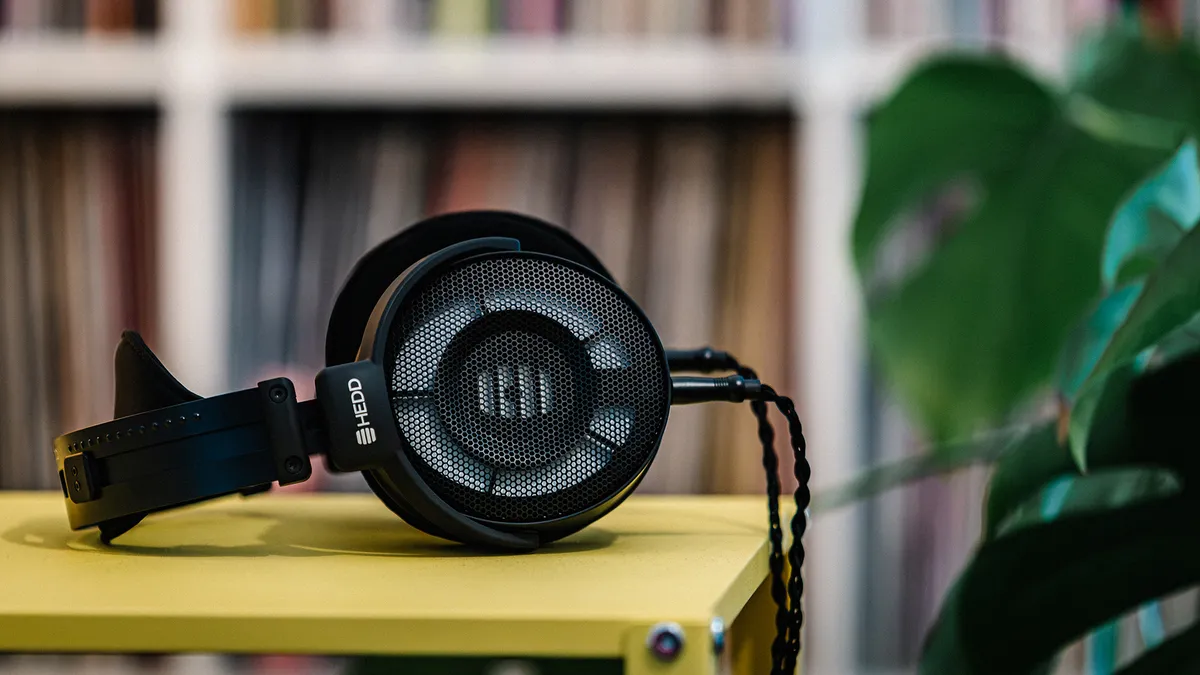
I think the asking price of the HEDDphone DX is a hard sell. Yours for $1,199/£999, the DX enters a crowded open-back tier, and though I think it does well against many of them, thanks to its excellent German assembly, full part replaceability, and a five-year warranty, I think people will be expecting a truly exotic tuning for that price. That's not what the DX is about.
The HEDD DX matches the planar Audeze LCD-X at $1,199 but at half the weight, measuring 310g. It undercuts the Aune AR9000 ($1,399), HIFIMAN Arya Unveiled ($1,449), Focal Clear MG Pro ($1,490), and Sennheiser HD 800s ($1,999.95), but of course we're talking about a lot of different tunings there.
I think one of its strengths is its chic German design, and its matte black and subtle cream white does a lot to make it stand out from the crowd. The comfort is something many of the heavier contenders could learn from.
I think because the DX is not going for a risky, exotic tuning – which wins over fewer yet more ardent fans – it makes sense to compare it in detail to two mainstream, best-selling alternatives: The HEDD D1 and Sennheiser HD 650.
HEDD DX vs HEDD D1
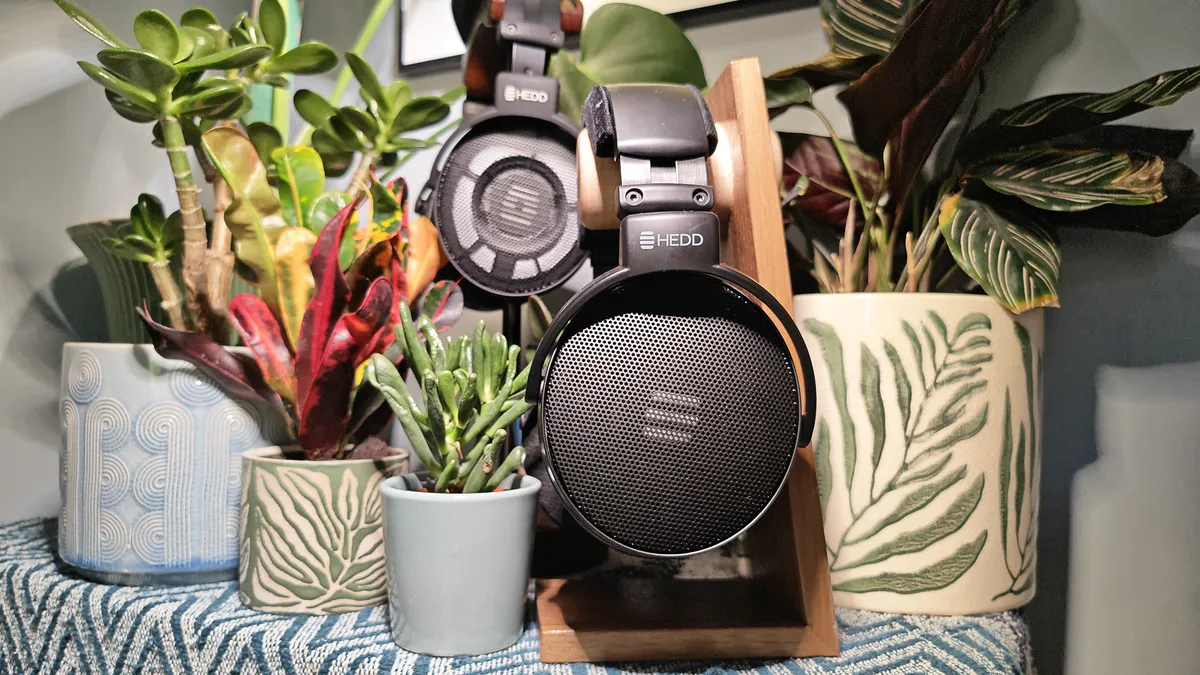
For those that missed it, HEDD shook the audiophile world last November with the release of the exquisitely-tuned HEDDphone D1. It was neutral, it was balanced, and for me it didn't seem to have any weaknesses at all. It wasn't warm, but it didn't come across as overly bright. It was about as lean as I can take it before things start sounding cold and clinical. But there was something about its tonal balance where its neutrality came across as rich (though I'd usually use that word to describe warmer sets). It remains my favourite over-ear, open-back headphone to date.
So, the HEDDphone DX has big shoes to fill. But ultimately, comparing them is like pitting Converse against DMs. They're trying to achieve different things... and yet, since they're coming from the same company, and at very different prices, I think the comparison is required.
The D1 is about clarity without exaggerating any part of the mix. The DX is about a good time – whacking up the bass, cranking up that 10.6kHz region to balance it... basically giving you one of the more refined V-shaped sound signatures in a high end pair of headphones.
Of course they share the same DNA when it comes to design and technology. Both headphones share thin-ply carbon drivers, though as said, HEDD positions the DX as "the experience" and the D1 as "the analyst". But that framing understates the musicality of the D1, which remains immersive and engaging despite its neutral focus.
In practice, the DX adds sub-bass weight, upper-bass warmth, a wider soundstage, and a spike up in the treble, whereas the D1 offers tighter bass and overall more focus. Then there's the price. The 'Refreshed' D1, with the new DX headband and travel case, will sell for $899/£699 in January, while the DX costs $1,199/£999.
For my tastes, and considering the price difference, the D1 remains the one I'd recommend to most people. It has more detail, and due to its neutrality presents music as a massive landscape of sound. The DX is more engaging with its bass and 10kHz shot in the arm, but it's still in its bigger brother's shadow.
However, if you find the D1 too lean, the DX could be what you want.
HEDD DX vs HD 650
Both headphones share a warm-leaning, relaxed, largely fatigue-free tuning, but even though it feels neat to make a comparison between the D1 and DX with the HD 600 and HD 650, they're all actually slightly different headphones, with distinct tunings.
The Sennheiser HD 650's sub-bass rolls off from around 90Hz, and even though I think the HD 650's punchy mid-bass is criminally understated by critics, it's still easy to see someone wanting more sub bass than it offers. That's exactly what the HEDD DX does – a sub bass that extends deep to 20Hz.
Their midrange presentations are highlights for both headphones, though in subtly different ways. Both offer rich and realistic-sounding vocals and instruments, but I think the HD 650 offers slightly more forward, honeyed vocals, offering more around the 1-2kHz region than the DX, and less around 2.5kHz, giving a sense of space compared to the DX. The timbre of the HD 650 is pretty unbeatable, but the DX gives it a valiant effort.
The HD 650 is more heavy handed with the upper frequencies, which helps bring texture and grip to the mid-bass that it offers, whereas the DX takes a tamer approach to this region. For me, that makes the DX sound a touch soft, and less striking than the HD 650.
And so, I feel like the DX is actually somewhere in between the HD 600 and 650, rather than neatly comparing directly with the latter.
Though I don't believe it has any impact on the sound profile, it's still worth thinking of the different power needs. The 32ohm DX will run off anything, while the 300ohm HD 650 requires dedicated desktop amplification. Weighing 260g and costing around $500, the HD 650 also remains far more accessible, compared to the still-light 310g but slightly eye-watering $1,199, of the DX. Of course, you have to factor in the far superior build of the DX to the plastic fantastic HD 650.
If you're not going to miss the sub-bass, I'd still recommend the HD 650 over the DX. It's still my favourite out of the two. But if you know the HD 650 has a little too much spice in the upper frequencies, and you're after a soft, rich midrange – and you're willing to pay over twice the price – the HEDD DX should be on your radar.
DAC/Amp requirements
Rated at 32ohms with a sensitivity of 100dB at 1mW, the DX is super easy to drive. I had no issues running it on my Fosi Audio DS2 dongle DAC.
Looking at price point brethren, unlike the 300ohm Sennheiser HD 800 S or the 94dB HIFIMAN Arya Unveiled, it reaches comfortable listening levels from such portable dongles and modest desktop units. A clean solid-state DAC and amplifier with low output impedance gives you excellent driver control, keeping the DX's elevated sub-bass articulate even during dynamic peaks.
Build & comfort
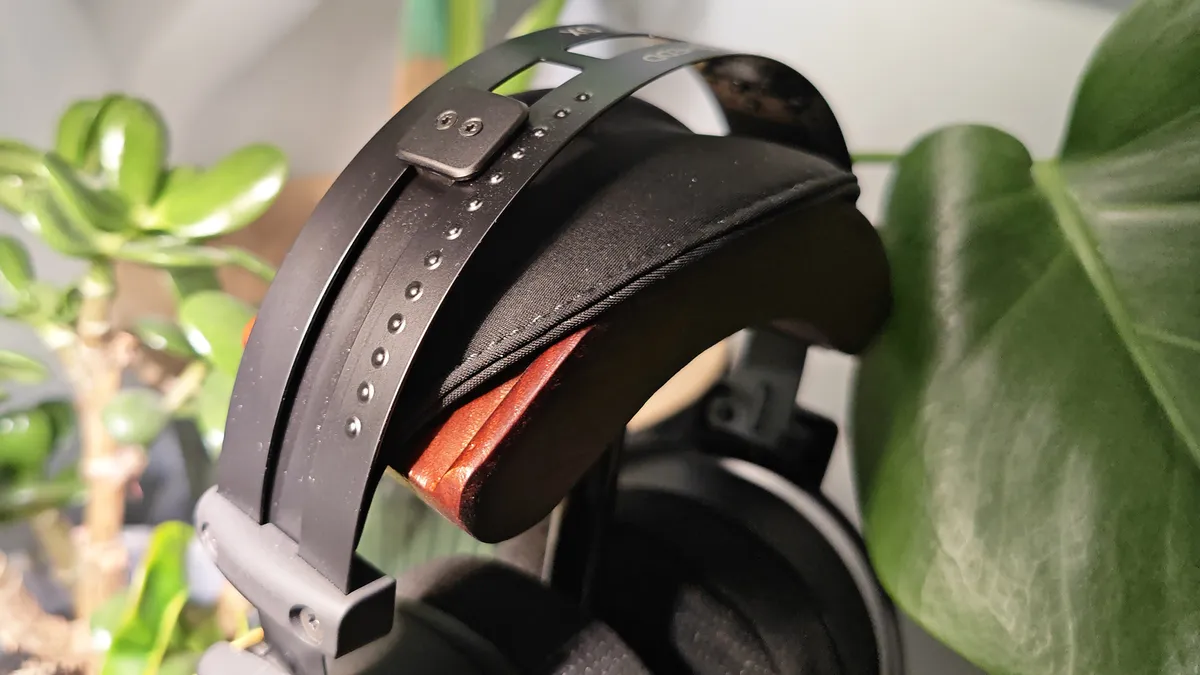


The HEDDphone DX gets 10/10 for build and comfort. It really does excel in these areas, and I feel that this should be the new standard at this price point.
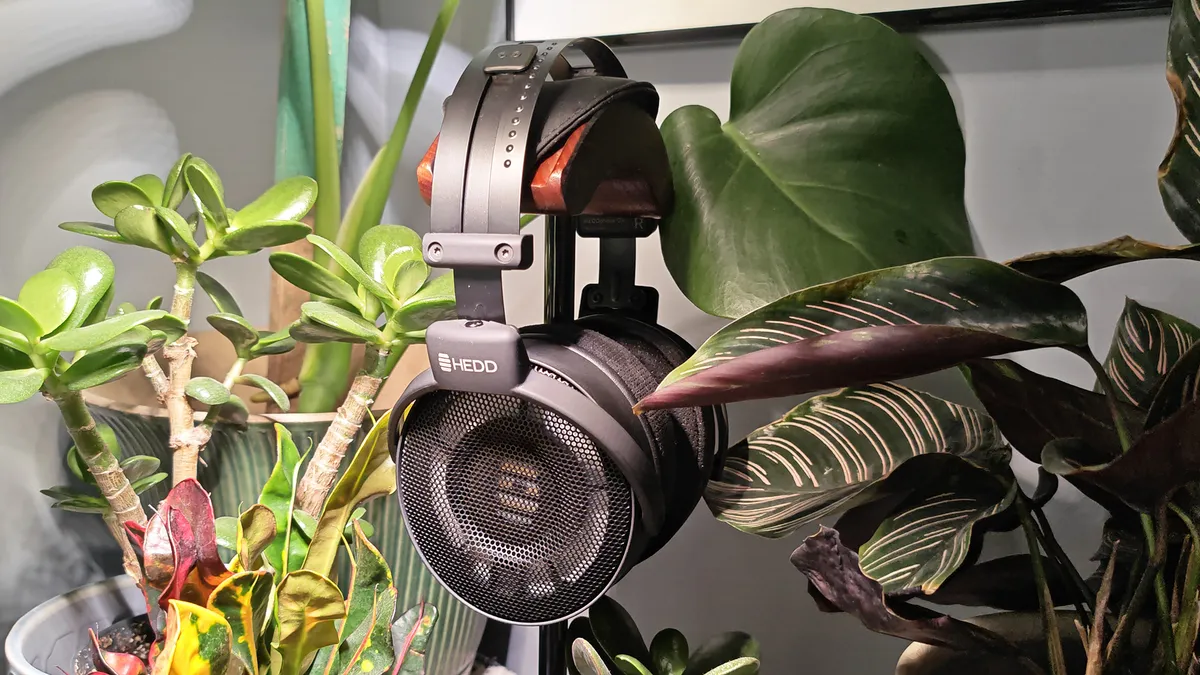
At 310g, it undercuts most rivals in its price point on weight. A built-in soft, silky suspension strap, designed by the king of headband comfort Capra Audio, is as good as it gets, distributing the weight across your head. We also get updated, super soft velour ear pads.
Clamp force feels firm on initial wear and may bother listeners sensitive to that, though it was fine for me across many hours of music and gaming sessions.
I also love the subtle matte charcoal metal finish, and updated indented metal mesh around the outer-ear. Add to that subtle white patterns on the outer-ear, making the HEDD logo come through, and you've got a very pretty pair of headphones here.
For $1,199, I'm glad that the DX comes with modular, user-replaceable parts and a five-year warranty. If the tuning is for you, you can expect this headphone to bring you joy for many, many years to come. Excellent work HEDD!
Should you buy it?
If you've read this review in full, you'll know it's no puff piece – I've made it clear where I think the HEDD DX is lacking. For example, it's less rich and detailed than the cheaper D1. Its above average timbre still doesn't compete with Sennheiser's HD 650, 20 years its senior and a third of its cost. For a sophisticated V-shape tuning, I think its $1,199/£999 price is steep and confusing.
So why 4.5 stars out of 5? Because the two headphones I've compared to the DX are two of my favourite headphones, and as close to perfect as I've heard.
Taken by itself, I think the DX offers exquisite build and comfort, and sounds fantastic. That half star deduction is because of its price. It's priced so much higher than the (in my opinion) better D1. That's confusing to me. Make them the same price, at least! Make it competitive, HEDD!
If you prefer a little bit more warmth, a far more forceful lower end and less overall clarity up top, then I could imagine that you'd prefer the DX to the D1. But until the HEDDphone DX dips under $1,000, I'm going to find it hard to recommend over the D1.