I have reviewed the Juzear Harrier after a few weeks use – check it out here.
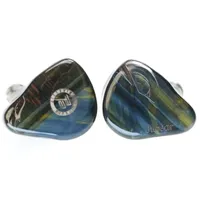
The JUZEAR Harrier is a new in-ear monitor that feels refreshingly uninterested in showing off. Yes, it has nine drivers per side and eye-catching stone faceplates, but the real story here is its tuning.
Why? Because the Harrier is the first IEM that's officially, “Tuned with Squiglink”; the huge, crowd-sourced library of headphone and IEM frequency-response measurements used by reviewers, engineers and serious listeners worldwide."
Instead of chasing a fashionable house sound or one reviewer’s preferences, JUZEAR leans on Squiglink data to understand what people actually like at this price... and, crucially, what they buy! Early reports suggest the result is a calm, balanced listen designed to work across genres, long sessions and real-world use, rather than impress in the first 30 seconds but unbearable for hours on end.
At $329.99 they're not going to make my list of the best audiophile headphones, but they might still be the perfect splurge for IEM addicts.
Why Squiglink makes sense
Plenty of earphones promise “reference” sound. The Harrier’s pitch is more grounded. Its tuning is based on analysing thousands of Squiglink measurements and usage patterns. It's effectively a snapshot of collective listening behaviour, rather than a single idealised target curve.
That leads to an IEF neutral-with-bass-boost profile that feels measured rather than exciting-for-the-sake-of-it. The carbon-coated dynamic driver delivers low-end weight without smothering detail. Six balanced armatures keep the midrange clear and steady, which helps with vocals, dialogue and layered mixes. The dual micro planar drivers extend the treble cleanly, adding space without the brittle edge that can creep into cheaper hybrids.

For creative pros, this translates into something valuable: an earphone you can wear for hours. Imaging is tidy, tonal balance is predictable, and nothing jumps out to distract you from the job. If you want exaggerated sub-bass or sparkly, show-floor tuning, this probably isn’t it... and that’s kind of the point.
Good value, bad value?
At $329.99 / £246.74, the Harrier lands in one of the most competitive parts of the IEM market. Many rivals at this level force a trade-off between tuning quality, driver complexity and build. But here, JUZEAR has managed to tick most boxes without pushing the price north.
You get a nine-driver tribrid setup, a proper four-way crossover with independent acoustic tubes, low distortion figures, and a pressure-balancing vent system that genuinely improves comfort over long sessions. The included cable offers both 3.5mm and 4.4mm terminations; still not a given at this price.
There are compromises, of course. The design is bold and won’t suit everyone, and while the Harrier is easy to drive, it will clearly benefit from a decent DAC or audio interface. Still, taken as a whole, this feels less like a spec-sheet flex and more like a carefully judged tool. In a market obsessed with novelty, the Harrier’s restraint is its biggest strength.