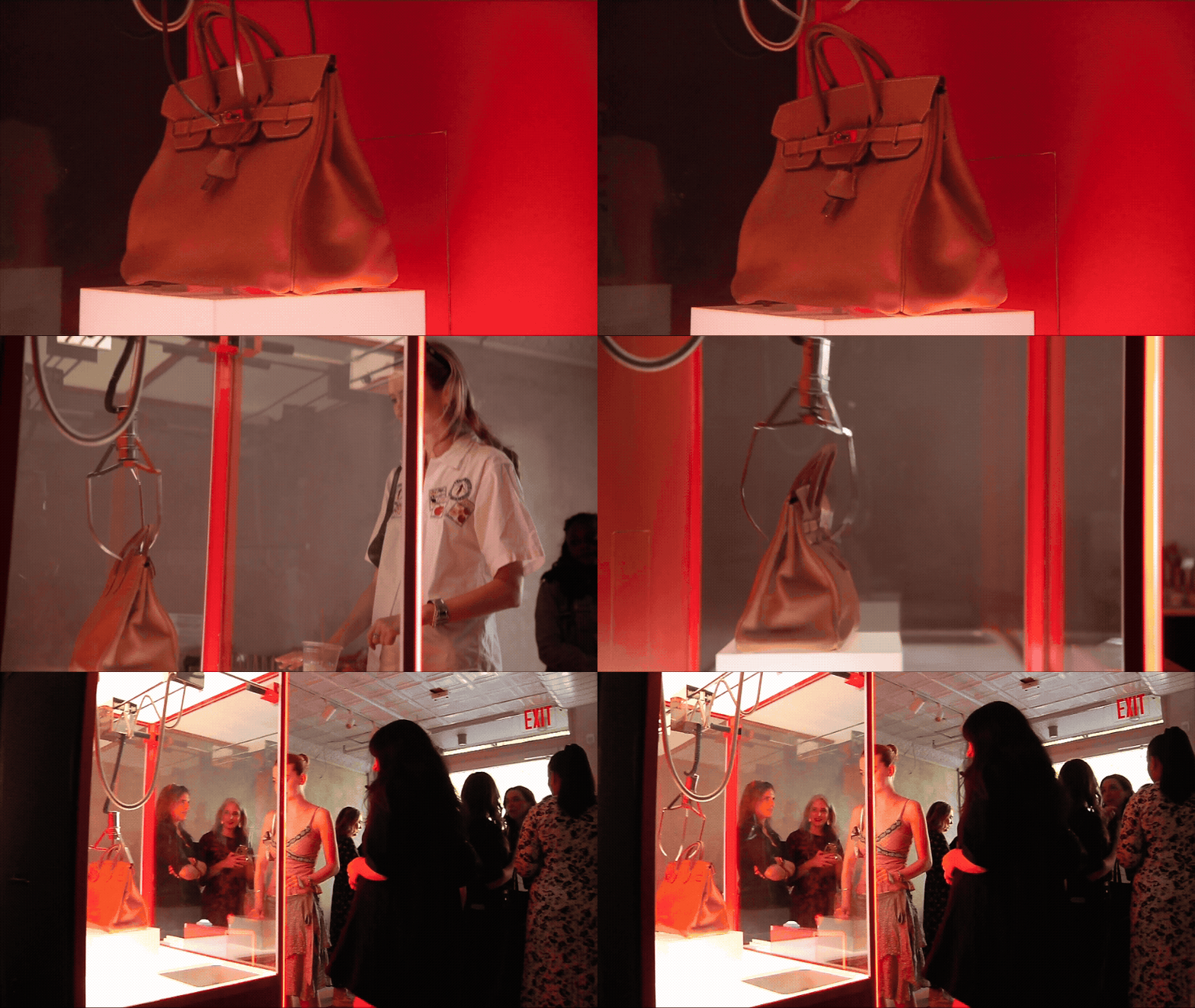
There's a claw machine sitting in Moco Museum in London right now, and inside it hangs an authentic Hermès Birkin bag worth over £10,000. You're invited to play. Interested? Well, who wouldn't be?
There's just one problem. You will not win. The game is, by the creators' own cheerful admission, completely and utterly rigged.
The installation is called PAIN. It was made by Uncommon Creative Studio, and it has arrived in London just in time for Fashion Week. And I want to make the case that this is one of the most honest pieces of communication our industry has ever produced. More honest perhaps than many of the best adverts ever made or even the best rebrands.
Advertising usually lies. This doesn't
The central premise of most advertising is a fiction: that buying this thing will make you happier, more attractive, more successful, more complete. The gap between promise and reality is the engine of the entire industry. And those of us who work in it have learned not to look at it too directly.
PAIN does the opposite. It takes the fundamental logic of aspirational marketing (desire, proximity, the tantalising sense that the good life is just within reach) and makes it viscerally, uncomfortably literal.
The Birkin is right there. You can see it. You can almost touch it. You have absolutely no chance of taking it home. The game is rigged. It always was. Uncommon just had the nerve to say so out loud.

As Nils Leonard, Uncommon's co-founder, puts it, the machine "seduces you into playing, knowing it will almost always let you down. You reach anyway." But that cycle of temptation and disappointment isn't just the artwork. It's a fairly precise description of how luxury branding works. PAIN doesn't create that feeling; it just holds up a mirror to it.
The medium is doing the work
What makes this genuinely brilliant design, rather than just a clever concept, is the choice of the claw machine. It is universally understood. It is associated with childhood, with the frustration of near-misses, with coins fed hopefully into a mechanism that was never on your side. Everyone who approaches PAIN brings all of that with them, before they've read a single word of explanatory text.
This is a lesson worth considering for any artist or designer. The claw machine doesn't need a lengthy rationale. It arrives pre-loaded with meaning. Uncommon has simply redirected that meaning with surgical precision.
What it teaches us
So why am I calling this snarky artwork a "piece of advertising"? Because while it presents as an ad for a luxury bag, it's actually an ad for Uncommon itself; a design studio using its own resources to make a public statement about its own values and sensibility. That's a confident move, and it works because the idea is strong enough to carry the weight.
And let's set this in context. Most studios, most agencies, most creative businesses talk about having a point of view. Glance at the About Me page of their website, and there's bound to be oodles of text about their mission statement, their values and so on. But very few are willing to plant a flag in public, on their own coin, saying something that might make potential clients slightly uncomfortable.
Uncommon, though, is doing just that. They're essentially telling the fashion industry, the luxury market, and anyone else within earshot, that the game they're running is rigged. Then inviting them to come and play anyway.
That takes nerve. And in an industry that too often mistakes polish for honesty, I reckon that nerve is rather refreshing.
Find out more about Uncommon Creative Studio and Moco Museum.